
Introduction
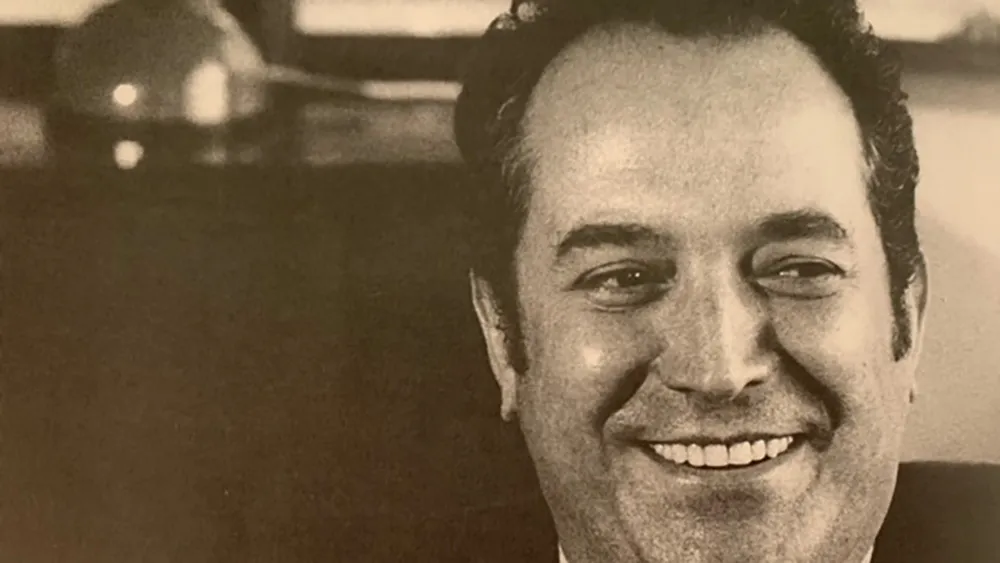
Alberto Grimaldi (March 28 1925 – January 23 2021) was a formidable figure in European and international cinema whose career as a producer spanned four decades and whose films ranged from the gritty dust of spaghetti westerns to provocative art-films to Hollywood-scale epics. Born in Naples and initially trained as a lawyer, Grimaldi went on to found his own production company and emerge as one of the most adventurous producers in Italian cinema, known for his willingness to take risks and bridge the worlds of genre and art. He facilitated collaborations with major filmmakers—Sergio Leone, Federico Fellini, Pier Paolo Pasolini, Bernardo Bertolucci, and later Martin Scorsese—and in doing so helped shape both European and American cinema.
In this article I explore his background, his entrance into film production, his role in Italian cinema’s era of transformation, the breadth of his production strategy (from spaghetti western to auteur cinema to big international co-production), his major films and partnerships, his achievements and legacy.
Early Life and Entry into Production
Alberto Grimaldi was born in Naples in 1925. His father Pasquale was a lawyer; after the early death of his father when Alberto was a child, he was raised by his mother on the Vomero hilltop neighbourhood, where he completed his schooling at the Liceo Antonio Genovesi. He pursued law at university, became an attorney and initially worked within the legal profession. During this period, some of his clients were film distributors and he gradually became involved with the film business through legal counsel.
In 1962 Grimaldi founded his own production house, Produzioni Europee Associati (PEA). His first feature credit came in 1962/63 with the Spanish western L’ombra di Zorro (Shadow of Zorro), marking his initial foray into the western genre. From such modest beginnings, he would move quickly into what became the spaghetti western boom. He recognised both the commercial potential of western-set, location-based European productions and the rising appetite for stylised genre films in the 1960s.
Thus his legal background, entrepreneurial instinct, and willingness to engage with international co-production laid the foundation for a career that would span art film, genre, cross-border finance and high-profile names.
Italian Cinema in Transition: Grimaldi’s Role
In post-war Italy, cinema was rebuilding. The immediate neorealist wave had begun to fade by the early 1960s, while genre films, co-productions with Spain, Germany and other partners, and increasing international collaborations were becoming a major model for Italian producers. Grimaldi entered production precisely at this moment of transition. He combined Italian creative freedom with budget realities, and he was willing to push boundaries—both in terms of narrative and aesthetic.
His company PEA specialised initially in westerns and action co-productions, but Grimaldi soon expanded into more ambitious territory: art-films with major Italian directors; controversial, boundary-pushing cinema; and international projects with American and European stars. In doing so he typified the “bridge-producer” able to connect Italian filmmakers and the global marketplace.
Grimaldi’s significance in Italian cinema lies in this dual capability: producing commercially viable genre films, and simultaneously supporting auteurs and controversial works. His portfolio demonstrates a rare versatility. Where some producers stayed within one niche, he traversed multiple terrains and enabled Italian cinema to reach both mass-market audiences and discerning critics.
Strategic Production: Genre, Art-Films and International Ambition
One of the defining features of Grimaldi’s career is the breadth of his production strategy. We can summarise his strategy across three major axes.
1. Genre & Spaghetti Westerns
After founding PEA, Grimaldi quickly recognised the market for spaghetti westerns—Italian-led western productions often co-funded with Spain or West Germany, shot on location in Spain’s arid terrain, and with American stars or rising European actors. In 1964 he produced I due violenti (Two Violent Men) as one of his first westerns. He then partnered with Sergio Leone on Per qualche dollaro in più (For a Few Dollars More, 1965) and Il buono, il brutto, il cattivo (The Good, the Bad and the Ugly, 1966), both of which became canonical. These films brought Clint Eastwood to global prominence and set the spaghetti western tradition in stone.
What is critical is that Grimaldi handled the financing, co-production deals, international distribution, star negotiation and production logistics of these films—thus enabling Italian producers to compete in a global genre market.
2. Art-Cinema & Auteur Collaborations
Parallel to the genre work, Grimaldi made serious commitments to art-cinema. He produced works by Fellini (Satyricon, Ginger and Fred), Pasolini (The Decameron, The Canterbury Tales, Salò, or the 120 Days of Sodom), Bertolucci (Last Tango in Paris, 1900), Petri, Rosi, Pontecorvo and more. These films were often controversial, visually bold, ethically charged and internationally circulated. Grimaldi’s willingness to produce them speaks to his belief in cinema as cultural challenge, not just entertainment. He was often publicly subject to censorship battles or legal cases (for example around Salò) yet he persisted.
3. International / American Co-Productions
In the later phase of his career Grimaldi turned to larger international projects, including American cinema. His final major producer credit was Gangs of New York (2002) directed by Martin Scorsese—a film shot partly in Italy (Cinecittà) and one that garnered multiple Academy Award nominations. This full-blown engagement with Hollywood shows that Grimaldi’s career did not end in Italy’s 1960s or 70s, but extended into the global production system of the 21st century.
—
This strategic diversity allowed Grimaldi a career lasting decades and across continents—something rare among producers of his generation. He navigated the transition from national cinema to co-production networks to global media-film culture.
Signature Films & Collaborations
Some key films and partnerships illustrate Grimaldi’s impact.
- For a Few Dollars More (1965) and The Good, the Bad and the Ugly (1966) with Sergio Leone and Clint Eastwood. These two films cemented his place in the spaghetti western genre and in international cinema.
- Last Tango in Paris (1972) with Bernardo Bertolucci and Marlon Brando. A film of international controversy and acclaim, showing Grimaldi’s willingness to engage with provocative content.
- 1900 (1976) another Bertolucci epic, large-scale, politically charged, co-produced across borders.
- Ginger and Fred (1986) with Federico Fellini—representative of his ongoing collaborations into the 1980s.
- Gangs of New York (2002) with Martin Scorsese—an American-Italian production that shows his final leap into Hollywood territory.
Each of these films demonstrates a different facet of his production identity: genre, auteur, cross-border, blockbuster scale.
Achievements and Recognition
While Grimaldi did not often publicly parade awards, his recognition within Italian film circles was strong. He won the Nastro d’Argento (Silver Ribbon) for Best Producer for his body of production in 1970 and again in 1973. Internationally, his last major film Gangs of New York was nominated for the Academy Award for Best Picture (among others) in 2003. These honours reflect his dual success in national cinema and in the global arena.
Legacy and Influence
From the perspective of a film expert analysing his career, several elements stand out:
- Bridge-Figure in Cinema: Grimaldi spans the era when Italian cinema was inward-looking and regional, to the era when productions were international, global and co-produced. He helped Italian producers enter the global market.
- Risk-Taking Producer: He invested in controversial, ambitious works—films that challenged censorship, moral norms, formal conventions. His support enabled directors like Pasolini and Bertolucci to make bold artistic statements.
- Genre and Art Duality: The ability to move back and forth between spaghetti westerns and art cinema is rare. Grimaldi represents the producer who did not choose either/or but embraced both.
- Longevity and Adaptability: His career lasted into the 2000s; many Italian producers of his generation faded by the 1980s. He remained relevant in a changing film economy.
- Influence on Production Models: His use of co-production, location shooting, international stars, European financing became models for subsequent producers.
In short, Grimaldi’s legacy is not only the films he produced, but the possibility he embodied: a European producer who could think local and global, commercial and art-ful, genre and auteur.
Conclusion
Alberto Grimaldi was one of Italian cinema’s most dynamic and far-reaching figures. From his early days as a lawyer in Naples to his founding of PEA and the production of some of the most iconic spaghetti westerns, to his support of provocative art-films, and ultimately to his involvement in major American productions, his career is an exemplar of productive versatility, ambition and cross-cultural engagement.
For anyone studying film production, international co-productions, or the history of Italian cinema, Grimaldi offers a rich case: how to negotiate budgets and markets, how to balance risk and commerciality, how to shepherd auteur visions, how to navigate censorship and culture wars, and how to adapt across decades of change.
In an era when many producers choose either commercial mainstream or high-art niche, Grimaldi did both—and did them well. He reminds us that a producer can be more than a financier; he can be a facilitator of art, a builder of bridges, a cultural agent.