There are filmmakers, and then there is Tarkovsky. I don’t say this lightly. After spending countless nights in dark rooms, watching everything from the frantic energy of Godard to the cold precision of Kubrick, from the poetic realism of Ozu to the surreal nightmares of Lynch, I’ve come to a conclusion that might sound arrogant but feels undeniably true: cinema can be divided into two categories. There’s Tarkovsky. And then there’s everyone else.
This isn’t about better or worse. It’s about something more fundamental. It’s about what cinema is. For most directors, film is a way to tell stories—beautifully, powerfully, sometimes even transcendentally. For Tarkovsky, film was something else entirely. A meditation. A way of sculpting with time itself.
A Warning Before We Begin
If you’ve never watched a Tarkovsky film, let me prepare you. You will be bored. At first. You’ll check your phone. You’ll wonder why the camera hasn’t moved in three minutes. You’ll ask yourself what exactly is happening. And then—if you surrender—something shifts. The boredom dissolves into something else. A kind of trance. A state of deep, almost sacred attention. That’s the Tarkovsky effect.
He doesn’t grab you. He waits. And if you wait with him, he rewards you with moments that will stay with you for the rest of your life.
Who Was This Man?
Andrei Arsenyevich Tarkovsky was born on April 4, 1932, in a small village called Zavrazhye, somewhere in the vast, unspeakable expanse of the Soviet Union. His father, Arseny, was a poet—and not just any poet, but one whose words would later echo through his son’s films like ghosts returning home. His mother, Maria, worked as a proofreader, shaping words on paper while her son would one day shape images on film.
Growing up in a household filled with art and literature, Tarkovsky didn’t just learn about poetry; he absorbed it. It seeped into his bones. Poetry wasn’t something you studied; it was something you breathed. That understanding—that art is not separate from life but is life distilled, intensified, made visible—would define everything he ever made.
When he eventually made his way to VGIK, Moscow’s prestigious film school, he studied under Mikhail Romm—a director who understood that cinema could be something more than entertainment. Romm saw something in the young Tarkovsky. Something restless. Something searching. Something that refused to be contained.
But even Romm couldn’t have predicted what would emerge.
The First Masterpiece: Ivan’s Childhood
Tarkovsky’s first major work, Ivan’s Childhood (1962), arrived like a thunderclap. On the surface, it’s a war film—a story about a young Soviet scout navigating the hellscape of World War II. But watch it, and you’ll immediately sense something different. Something that doesn’t fit the standard war film mold. The dream sequences. The way nature breathes through every frame. The profound sense of existential dread mixed with childlike wonder.
The film won the Golden Lion at Venice. Critics were stunned. Here was a young director who seemed to have emerged fully formed, with a vision that felt ancient and revolutionary all at once. He was only thirty years old.
The Tarkovsky Difference: What Made Him Special
Let me try to explain what sets Tarkovsky apart. But I should warn you—it’s not easy to put into words. Film theorists have written entire books trying to capture it. And they’ve failed. Because Tarkovsky isn’t something you can capture in theory. He’s something you feel. But I’ll try.
Sculpting in Time
Tarkovsky loved long takes. Not just long—excruciatingly long. Minutes-long shots that would make any Hollywood producer nervous. But here’s the thing: these weren’t gimmicks. They weren’t about showing off technical prowess. They were about time itself.
He once said something that changed how I watch movies. He called his approach “sculpting in time.” Imagine that—not telling a story, but carving time like a sculptor carves marble. Those extended shots aren’t just stylistic choices; they’re invitations. Tarkovsky is saying: Stop rushing. Breathe. Be present in this moment with me.
Time in a Tarkovsky film doesn’t move forward in the way we’re used to. It flows. It circles. It pools. It opens up and swallows you whole. You don’t just watch his films; you live inside them.
Nature as a Living Presence
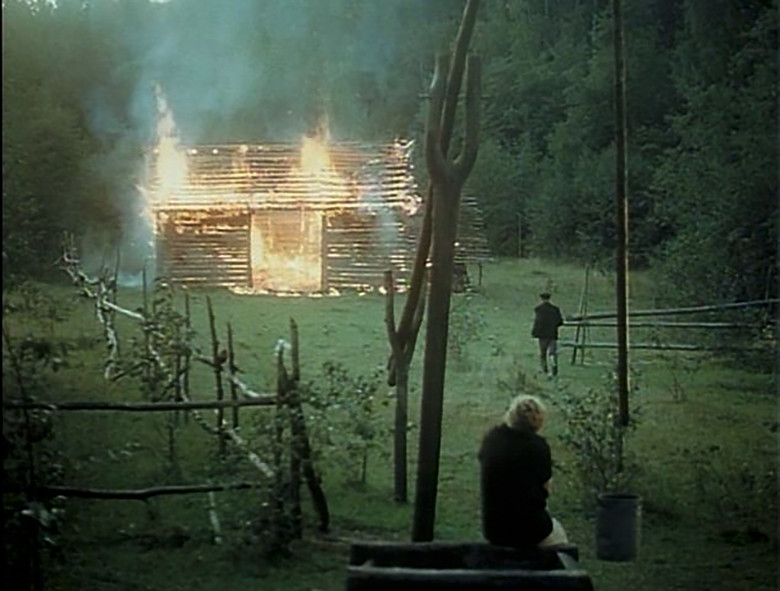
In Tarkovsky’s films, nature isn’t just a backdrop. It’s alive. Rain falls with purpose. Wind whispers secrets. Water moves with the weight of memory. Fire crackles with meaning. You can’t separate his characters from the landscapes they inhabit because the landscapes are the characters—silent, ancient, bearing witness to everything.
Watch any Tarkovsky film closely, and you’ll notice: nature never feels like a location. It feels like a force. A presence. Something that existed before the characters arrived and will continue long after they’re gone. In a world that increasingly tries to dominate nature, Tarkovsky reminds us of our smallness.
Dreams and Memory
Tarkovsky blurs the line between memory and reality so masterfully that you often can’t tell which is which. Is that a dream? A memory? A vision of something yet to come? He doesn’t give you comfortable answers. He leaves you in that uncertain space, and somehow, that uncertainty feels more true than any explanation could.
For Tarkovsky, memory wasn’t a record of the past. It was a living thing. Something that could grow, change, haunt, and heal. Something that could reveal truths that ordinary consciousness couldn’t reach.
The Absence of Explanation
Here’s something that drives some people crazy about Tarkovsky: he never explains anything. In Solaris, you never really understand what the planet is or how it works. In Stalker, the Zone remains mysterious. The Room remains enigmatic. And that’s the point.
Tarkovsky understood that some things are beyond human comprehension. The mystery isn’t a flaw; it’s the entire point. He wasn’t interested in providing answers because he knew—deeply, intuitively—that the most important questions don’t have neat answers. They have presence. They demand to be lived with, not solved.
The Rhythms of the Soul
There’s a particular pacing to Tarkovsky’s films that’s unlike anything else. It’s not slow for the sake of slowness. It’s slow because that’s how the soul moves. That’s how real thought happens. That’s how memory works.
In our modern world, we’ve become addicted to speed. To distraction. To the constant flicker of stimulation. Tarkovsky offers the opposite. He offers silence. He offers stillness. He offers the terrifying, beautiful experience of being alone with your own thoughts.
Solaris: Not Sci-Fi, But Something Deeper
Let’s talk about Solaris. If you go into this film expecting Star Wars, you’ll be baffled. If you go in expecting 2001: A Space Odyssey, you’ll still be surprised. Tarkovsky himself said his film was about “the problem of conscience,” not space travel.
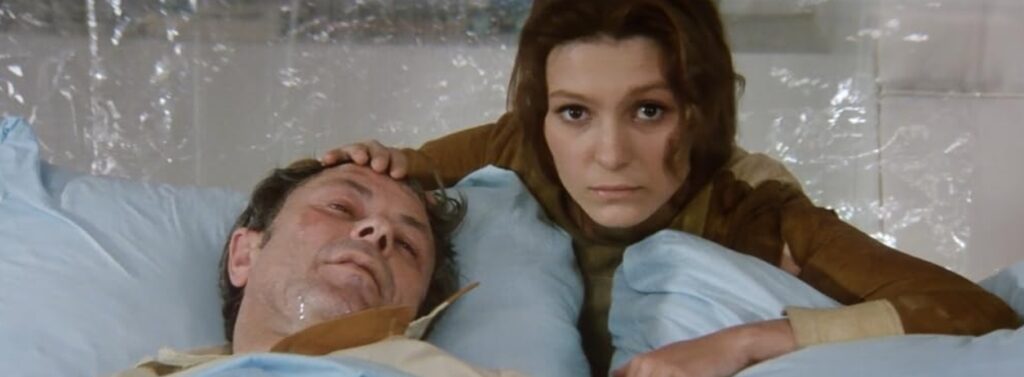
The premise seems simple enough: psychologist Kris Kelvin travels to a space station orbiting the mysterious planet Solaris. The planet appears to be conscious. It manifests the crew’s deepest traumas, their most painful memories, their lost loves—made real and physical. Kelvin is forced to confront his own past when the planet creates a physical copy of his long-dead wife, Hari.
But here’s the thing—Solaris isn’t about aliens or spaceships. It’s about loss. It’s about the impossibility of truly moving on from those we’ve loved and lost. It’s about the question: What would you do if you could see them again?
There’s a sequence in Solaris that still haunts me. A long, hypnotic car ride through Tokyo. It goes on and on. At first, you might wonder why it’s there. But then you realize—this is the journey into the unknown. This is what it feels like to leave everything you know behind.
The film won the Grand Prix at Cannes. But more importantly, it proved that sci-fi could be about the soul, not just the stars.
Stalker: The Journey That Changed Everything
And then there’s Stalker.
If Solaris is Tarkovsky’s exploration of grief, Stalker is his meditation on faith. The setup is deceptively simple: three men—a Writer, a Professor, and a Stalker—travel into a forbidden zone. At the center of the zone lies a Room that grants a person’s deepest desire.
But nothing is that simple in a Tarkovsky film.
The zone is a ruined wasteland, overgrown with vegetation, filled with rusting machinery and decaying structures. It’s both post-apocalyptic and strangely beautiful. Tarkovsky uses color brilliantly here—the world outside the zone is sepia-toned, drab, oppressive. The zone itself? Full color. Vibrant. Alive.
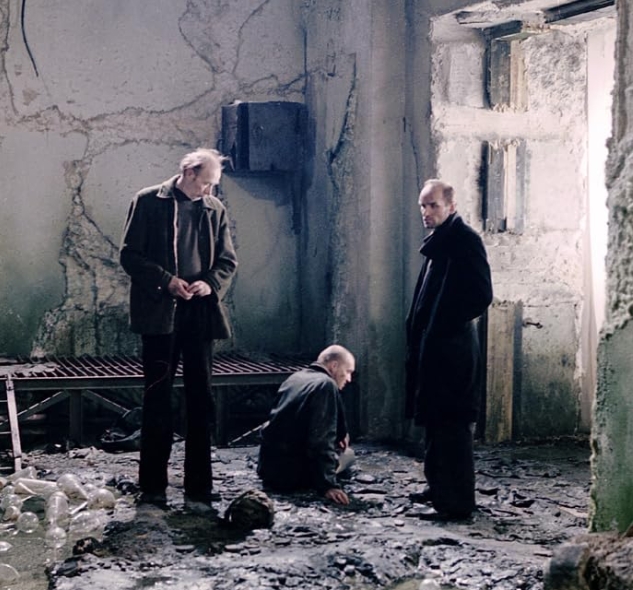
The journey through the zone is slow, meditative, almost ritualistic. The three men argue about faith, about the meaning of art, about whether humanity is even worth saving. They face dangers—some physical, but most psychological. The zone tests them. It demands something from them that they’re not sure they can give.
What is that something? Faith. Pure, simple, unshakeable faith—the kind that doesn’t need proof or explanation.
The Writer says: “I want to write again.” The Professor says: “I want to destroy the Room.” The Stalker says: “I just want to help people.” But the film gently suggests that perhaps they all misunderstand. Perhaps the Zone doesn’t give you what you think you want. Perhaps it gives you what you truly need—and that can be terrifying.
Stalker is widely considered Tarkovsky’s masterpiece. And it’s easy to see why. It’s a film that works on every level—visual, philosophical, emotional, spiritual. It’s a film that doesn’t just ask questions; it teaches you how to live with the questions themselves.
The Other Masterpieces
While Solaris and Stalker are the most famous, Tarkovsky’s other films are equally essential.
Andrei Rublev (1966) is a sprawling epic about the medieval icon painter. But it’s not a biography. It’s a meditation on art, faith, and national identity. It’s a film about what it means to create in a time of chaos. About whether art matters when the world is falling apart.
Mirror (1975) is Tarkovsky’s most personal film. It’s not really a story at all. It’s more like a poem. A collage of memories, dreams, and images from his childhood. It’s a film about his parents, about Russia, about the ache of time passing. If you want to understand Tarkovsky’s soul, watch Mirror.
Nostalghia (1983) is his first film made outside Russia, and you can feel the exile in every frame. It’s about a Russian poet in Italy who becomes obsessed with a local mystic. It’s about homesickness—not just for a place, but for a way of being in the world.
The Sacrifice (1986) is his final film, made while he was dying of cancer. It’s about a man who offers to sacrifice everything he loves in order to save the world from nuclear annihilation. It’s a film about faith in the face of death. About whether hope is foolish or necessary.
The Legacy That Refuses to Fade
Tarkovsky made only seven feature films in his short life—he died at 54 in 1986. But those seven films changed cinema forever.
Directors like Bela Tarr, Terrence Malick, Lars von Trier, and Andrey Zvyagintsev have all cited him as a massive influence. You can see his fingerprints on Christopher Nolan’s more introspective work, on Denis Villeneuve’s contemplative sci-fi, on anything that dares to slow down, to breathe, to ask big questions without offering easy answers.
But his influence extends beyond filmmakers. His book, Sculpting in Time, remains one of the most profound works ever written about the art of cinema. It’s essential reading for anyone who wants to understand what film can truly be.
Despite all his brilliance, Tarkovsky’s career wasn’t easy. He faced constant censorship from Soviet authorities. He was forced into exile. His final films were made far from his homeland. They feel like final statements—deeply personal, deeply spiritual, deeply human.
Why Tarkovsky Still Matters
So why does any of this matter? Why should you care about a dead Russian director who made films that are slow, strange, and often difficult?
Here’s why: because in a world that’s increasingly fast, increasingly shallow, increasingly distracted, Tarkovsky reminds us what it’s like to be fully present. To sit with uncertainty. To contemplate the big questions. To feel time passing—not as something to be filled or killed, but as something sacred.
His films aren’t entertainment in the traditional sense. They’re not escapism. They’re the opposite. They force you to confront yourself, your memories, your regrets, your hopes. They ask: What are you really looking for? What do you really believe? Are you ready to face the answer?
If that sounds heavy, well—it is. But it’s also beautiful. Tarkovsky’s films are infused with a kind of aching tenderness, a profound love for humanity despite all our flaws. He believed in something, even if he wasn’t always sure what it was. And that belief—that searching, questioning, longing for meaning—is what makes his work eternal.
The Silence After the Film Ends
The most remarkable thing about Tarkovsky’s films is what happens after they end. You sit there. In silence. In darkness. The credits roll, and you don’t move. You can’t move. Something has happened to you. Something you can’t quite name.
That’s the Tarkovsky gift. He doesn’t just show you a film. He deposits something inside you. A seed. A question. A longing. And that seed grows over time, changing how you see the world, how you hear rain, how you feel the weight of a memory.
Final Thoughts
I’ve watched thousands of films. I’ve written about dozens of directors. But I keep returning to Tarkovsky. Not because he’s easy. Not because his films are comfortable. Because they feel like home. A strange, melancholic, mysterious home where time moves differently and reality is just a suggestion.
Tarkovsky once said: “The artist must be a creator, not an imitator.” He lived that. He didn’t imitate anyone. He invented an entirely new language for cinema—one that speaks directly to the soul.
If you’ve never seen a Tarkovsky film, I envy you. You have a journey ahead—one that might frustrate you, confuse you, bore you, and ultimately transform you. Sit with the long takes. Let the rain wash over you. Accept the mystery.
And remember: there’s Tarkovsky, and then there’s everyone else.
A Final Note from Me
When I’m ready—when I’ve had enough time to sit with his films again, to read his words again, to feel that strange, aching beauty in my chest again—I will prepare a deeper, more detailed article about Tarkovsky himself and his philosophy. About what he believed. About what he was searching for. About why his work continues to matter in a world that seems to have forgotten how to be still.
Until then, I’ll keep watching. I’ll keep waiting. I’ll keep allowing myself to be transformed by the man who understood that cinema is not about showing us something new. It’s about helping us see what was already there—if only we had the patience to look.