Introduction
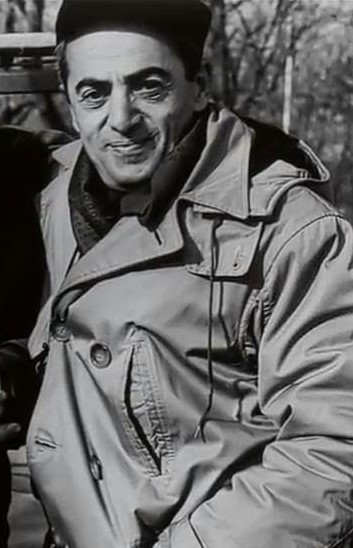
Boris Kaufman is one of the most fascinating yet often overlooked figures in the history of world cinema. A cinematographer whose career spanned from the experimental avant-garde of 1920s Europe to the socially conscious dramas of postwar America, Kaufman’s work forms an invisible bridge between two cinematic worlds. His lens captured both the dreamlike lyricism of L’Atalante (1934) and the harsh, tactile realism of On the Waterfront (1954), two films that stand as milestones in entirely different eras and aesthetic traditions.
Though his name rarely appears beside those of his collaborators—Jean Vigo, Elia Kazan, Sidney Lumet—Kaufman’s contribution to visual storytelling is immense. His approach combined the intellectual discipline of his Russian avant-garde roots with a deeply human sensitivity that gave even the grittiest images emotional texture. His life story, marked by exile, adaptation, and reinvention, mirrors the twentieth century’s upheavals. Through it all, his commitment to realism—both poetic and social—remained unwavering.
This article explores Kaufman’s journey from the turbulent revolutionary atmosphere of Eastern Europe to the studios and streets of New York City, tracing how his artistry evolved and why his influence remains enduring in both European and American cinema.
Early Life and Intellectual Formation
Boris Kaufman was born in Białystok, then part of the Russian Empire (now Poland), in 1897. He came from an intellectually vibrant and politically conscious Jewish family. His older brothers, Dziga Vertov (born David Kaufman) and Mikhail Kaufman, were towering figures of the Soviet documentary avant-garde. Vertov’s “Kino-Eye” theory and his groundbreaking film Man with a Movie Camera (1929) would change the language of cinema forever.
In that context, Boris grew up surrounded by ideas about film as a tool for truth and social observation. Yet his path diverged from his brothers’. While they embraced revolutionary Russia’s ideological fervor, Boris left the country after the Bolshevik Revolution, settling first in Poland and later in France. This exile, though forced, became the seed of his distinctive style: detached from political dogma, he developed a visual philosophy rooted in observation, intimacy, and empathy.
He studied at the University of Paris (Sorbonne), absorbing not only modern European art but also literature and philosophy. These influences sharpened his aesthetic awareness, helping him see cinema not only as technology or propaganda but as a form of poetic expression. By the late 1920s, Kaufman had started to work as a cinematographer in the French film industry, where his disciplined eye and experimental instincts quickly attracted attention.
Collaboration with Jean Vigo: The Birth of Poetic Realism
The defining moment of Kaufman’s early career came through his collaboration with Jean Vigo, the young French filmmaker whose short life produced two masterpieces: Zéro de conduite (1933) and L’Atalante (1934). Both films owe much of their power to Kaufman’s camerawork.
Zéro de conduite (1933)
Shot on a minuscule budget, Zéro de conduite is a rebellious, surreal depiction of life in a French boarding school. Kaufman’s camera transforms this mundane environment into a space of anarchy and liberation. His fluid movements, high-contrast lighting, and inventive use of slow motion give the film a dreamlike rhythm. The pillow-fight sequence, where feathers float in the air like snow, remains one of cinema’s most enchanting visual moments—a perfect fusion of chaos and beauty.
Kaufman achieved this effect not through elaborate equipment but through ingenuity. He experimented with improvised lighting setups, unusual camera angles, and soft-focus techniques to create an ethereal atmosphere. His sensitivity to texture—whether the soft fabric of a pillow or the harsh geometry of the school’s architecture—reveals a painter’s understanding of visual composition.
L’Atalante (1934)
With L’Atalante, Kaufman and Vigo reached their peak. The film’s story—a simple tale of newlyweds living on a barge—is transformed by the cinematography into a lyrical exploration of love, isolation, and the passage of time. Kaufman’s camera captures both the intimacy of human faces and the vastness of the river landscapes. The result is a deeply emotional film that feels alive with movement, mist, and melancholy.
One of Kaufman’s most celebrated visual inventions appears in the underwater sequence where Jean (Jean Dasté) imagines seeing his wife’s face beneath the water’s surface. Kaufman achieved this by superimposing two shots: one of the actor submerged and another of the wife’s face filmed separately. The result is haunting and poetic—a metaphor for memory and desire rendered through pure image.
L’Atalante would later be recognized as one of the greatest films ever made, influencing directors from François Truffaut to Jim Jarmusch. Kaufman’s work in it set the foundation for what became known as French Poetic Realism—a style characterized by naturalistic settings, emotional intimacy, and an undercurrent of fatalism. Though the movement was short-lived, it directly influenced Italian Neorealism and, later, American social realism, where Kaufman would again play a pivotal role.
Exile and Reinvention: From Europe to America
The rise of fascism in Europe and the outbreak of World War II changed Kaufman’s life dramatically. As a Jewish émigré in France, he faced mounting danger under Nazi occupation. He joined the French Army, served with distinction, and later escaped to Canada and then the United States.
By the time he arrived in New York, Kaufman was already an accomplished cinematographer—but in a new country, he had to start from scratch. His European credentials meant little in the Hollywood studio system, and his accented English posed a barrier. Yet Kaufman, resilient and disciplined, began working on documentaries and short films, applying the same visual precision that had defined his French work.
During the 1940s, he shot a series of educational and wartime documentaries, which gradually earned him recognition for his authentic, unpolished realism. These works were not glamorous, but they allowed him to refine his documentary instincts—skills that would later prove essential in the American urban dramas he helped define.
The Breakthrough: On the Waterfront (1954)
Kaufman’s major American breakthrough came with Elia Kazan’s On the Waterfront, a film that not only revitalized social realism in Hollywood but also earned him the Academy Award for Best Cinematography (Black-and-White).
Visual Philosophy
Kaufman approached On the Waterfront with a strong sense of authenticity. Rejecting the artificial lighting and static framing typical of studio productions, he insisted on shooting on location in Hoboken, New Jersey, using natural light whenever possible. The result was a film that looked and felt unlike anything else in 1950s American cinema—gritty, cold, and vividly real.
His use of low winter light, fog, and shadow emphasized the moral ambiguity of the story. The docks, warehouses, and tenements became more than settings; they were psychological landscapes mirroring the internal struggles of the characters. Kaufman’s experience with Vigo’s poetic realism allowed him to infuse even these harsh industrial scenes with lyrical intensity.
Emotional Realism
Perhaps Kaufman’s greatest gift was his ability to capture the emotional truth of a moment. In On the Waterfront, the famous taxi scene between Marlon Brando and Rod Steiger is lit and framed with heartbreaking simplicity. Kaufman used tight close-ups, soft side-lighting, and a minimal depth of field to isolate the characters from their environment, visually underscoring their isolation and moral conflict. The intimacy of the shot, combined with Brando’s performance, creates one of the most unforgettable scenes in American film.
The Documentary Aesthetic
Critics at the time noted how On the Waterfront felt almost like a documentary. That was no accident. Kaufman’s visual realism derived not from raw spontaneity but from rigorous control. He knew how to balance movement, texture, and contrast to simulate the immediacy of real life while maintaining aesthetic order. His European background—particularly his exposure to Vertov’s documentary theories—gave him a visual grammar that Hollywood was only beginning to understand.
Collaboration with Sidney Lumet: Realism in Motion
After his success with Kazan, Kaufman became one of the most respected cinematographers in the American industry, particularly among directors seeking a more naturalistic visual language. His partnership with Sidney Lumet, another master of realism, produced some of the most acclaimed films of the late 1950s and 1960s.
12 Angry Men (1957)
In 12 Angry Men, Lumet and Kaufman transformed a single claustrophobic room into a visual battlefield of moral tension. The challenge was enormous: the entire film takes place almost in real time, with twelve men debating inside one space. Kaufman’s cinematography was crucial in maintaining visual dynamism and psychological depth.
He began the film with wide, high-angle shots, allowing space between the jurors. As the story progresses and the tension tightens, Kaufman gradually lowers the camera angles and switches to longer lenses, compressing the visual space. By the final scenes, the walls seem to close in. The audience feels the suffocation of moral pressure. This gradual visual transformation—almost imperceptible at first—demonstrates Kaufman’s mastery of cinematic rhythm.
The Pawnbroker (1964)
Another of Kaufman’s masterpieces with Lumet, The Pawnbroker, stands as a powerful example of his mature style. The film tells the story of a Holocaust survivor (Rod Steiger) living in New York, haunted by trauma and alienation. Kaufman used stark black-and-white cinematography to externalize the character’s psychological torment. Harsh light, fragmented compositions, and handheld shots create a fractured visual texture that mirrors memory and trauma.
Kaufman’s decision to overexpose certain flashback sequences and use sudden, jarring cuts introduced a new kind of expressive realism—one that blended documentary immediacy with emotional subjectivity. The visual language of The Pawnbroker would later influence generations of filmmakers dealing with psychological realism and urban alienation.
Style and Philosophy: The Discipline of Seeing
Across his career, Kaufman’s cinematography maintained several defining characteristics that reveal his unique philosophy of image-making.
1. Light as Moral Texture
Unlike many cinematographers who treated light as decoration, Kaufman saw it as the emotional and moral foundation of a scene. His lighting choices always reflected the internal state of the characters or the ethical tone of the story. In On the Waterfront, light often cuts through fog or smoke, suggesting fragile hope amid corruption. In The Pawnbroker, the harshness of the light becomes a metaphor for the inescapable past.
2. Realism Without Romanticism
Kaufman’s realism was not the naive pursuit of “truth” through mere naturalism. He understood that cinematic realism required stylization to convey emotional truth. His compositions were precise, his movements deliberate. Even when working handheld or on location, he maintained formal control. This balance between spontaneity and structure is what gives his images both authenticity and beauty.
3. Human Faces as Landscapes
Throughout his filmography, Kaufman displayed extraordinary sensitivity to faces. He treated them like landscapes—terrains of emotion shaped by light and shadow. His close-ups never felt invasive; they revealed dignity even in suffering. This approach reflects his deep humanism, perhaps inherited from his experiences of displacement and exile.
4. Bridging Two Cinemas
Kaufman’s greatest legacy may be his ability to synthesize European poetic realism and American social realism. In Europe, he learned how to express emotion through atmosphere and light; in America, he learned how to capture social truth through direct observation. His work formed a continuum between the lyrical and the political, the intimate and the collective.
Later Career and Legacy
By the late 1960s, Kaufman had established himself as one of Hollywood’s most respected cinematographers. Yet he remained modest and largely uninterested in fame. His later works include Long Day’s Journey Into Night (1962), another Lumet collaboration, where his use of light and shadow mirrored the emotional decay of the Tyrone family, and Splendor in the Grass (1961), a luminous depiction of youth and repression.
Though he retired in the 1970s, Kaufman’s influence continued to ripple through both American and European cinema. Directors like Martin Scorsese, Sidney Lumet, and John Cassavetes drew on his commitment to realism and emotional authenticity. Cinematographers such as Haskell Wexler and Gordon Willis acknowledged his pioneering use of natural light and location shooting as an inspiration for the “New Hollywood” visual style.
Kaufman passed away in 1980, but his legacy endures not only in film history but in the very grammar of visual storytelling that defines modern cinema.
Kaufman and His Brothers: The Shared Vision of Reality
An intriguing dimension of Boris Kaufman’s life is his relationship—philosophical rather than practical—with his brothers Dziga Vertov and Mikhail Kaufman. Though separated by geography and ideology, all three shared a belief in cinema as a medium for truth.
Vertov’s “Kino-Eye” theory proposed that the camera could reveal reality more accurately than the human eye, and Mikhail Kaufman’s documentaries explored everyday life with radical objectivity. Boris, working within narrative cinema, applied these ideas in a subtler, more humanistic way. His realism was not mechanical but empathetic—less about capturing society as a machine and more about portraying the soul within it.
In this sense, Boris Kaufman’s work represents the emotional counterpart to Vertov’s intellectual revolution. Where Vertov deconstructed reality to expose its mechanisms, Boris illuminated it to reveal its humanity.
Influence on Later Movements
Kaufman’s contribution to the evolution of cinematic realism cannot be overstated. His work prefigured several key movements that reshaped modern film:
- Italian Neorealism: His natural lighting and on-location shooting in L’Atalante anticipated the techniques of De Sica and Rossellini a decade later.
- French New Wave: Truffaut and Godard admired Kaufman’s collaboration with Vigo as a foundation for their own experiments with improvisation and emotional spontaneity.
- American New Cinema: His urban realism in On the Waterfront and The Pawnbroker directly influenced the gritty visual style of the 1970s, from Scorsese’s Mean Streets to Lumet’s Serpico.
Kaufman’s visual philosophy thus serves as a hidden thread linking the poetic realism of the 1930s to the moral realism of postwar cinema and beyond.
Personality and Work Ethic
Colleagues frequently described Boris Kaufman as quiet, disciplined, and intensely focused. Unlike many cinematographers who cultivated public personas, Kaufman preferred anonymity behind the camera. He was known for his meticulous preparation, often scouting locations for hours to study natural light at different times of day.
His collaborators appreciated his humility. Elia Kazan once remarked that Kaufman “saw the world like a poet but worked like a soldier.” This combination of sensitivity and rigor defined his art. He demanded perfection from himself, yet he remained open to improvisation when the moment demanded it—a flexibility that made him invaluable to directors working in volatile emotional registers.
Recognition and Awards
While Kaufman’s European work gained critical reverence only posthumously, his American career brought formal recognition. His Academy Award for On the Waterfront established him as a leading figure in Hollywood cinematography. He was also nominated for The Pawnbroker and Baby Doll (1956), and received several awards from cinematographers’ associations.
Yet, despite these honors, Kaufman’s reputation never reached the celebrity level of some contemporaries. This was partly due to his modesty and partly to the collaborative nature of cinematography itself. However, within professional circles, he was revered as a master craftsman and a moral artist—a man whose camera never lied but always felt.
A Bridge Across Continents
To understand Boris Kaufman fully, one must see him not as a French or American cinematographer, but as a transnational artist—a creative exile whose identity was shaped by movement between cultures. His visual language absorbed Russian intellectualism, French lyricism, and American pragmatism, merging them into a seamless whole.
His story also reflects the larger history of twentieth-century cinema: from the utopian experiments of the Soviet avant-garde, through the poetic melancholy of prewar Europe, to the moral realism of postwar America. In that sense, Kaufman’s life and art form a bridge not just between continents but between epochs—between the idealism of early cinema and the complexity of the modern age.
Conclusion: The Invisible Visionary
Boris Kaufman’s name may not appear on posters or film studies syllabi as frequently as his collaborators’, yet his images have shaped how generations of filmmakers and audiences see reality on screen. He was a poet of light and a craftsman of truth, whose artistry lay not in spectacle but in subtlety. His camera did not impose meaning; it revealed it.
From the ethereal waterways of L’Atalante to the fog-shrouded docks of On the Waterfront, Kaufman’s vision remained remarkably consistent: to find beauty in imperfection, poetry in pain, and humanity in the ordinary. He showed that realism in cinema is not the absence of artifice but the presence of empathy.
In an age when visual effects often overwhelm emotional truth, Boris Kaufman’s legacy feels more vital than ever. His films remind us that the most powerful image is not the most spectacular one, but the one that sees with compassion.