
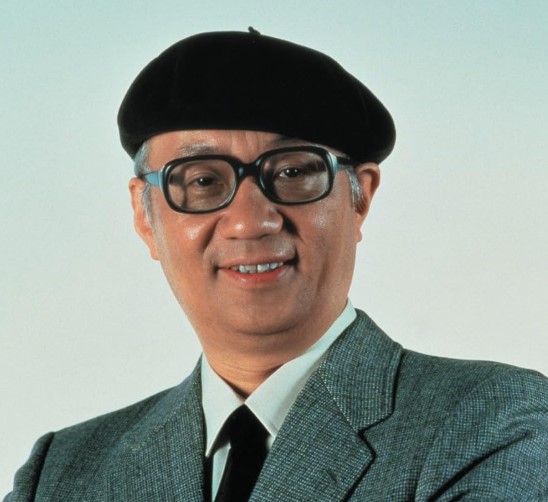
When discussing the most influential figures in the history of visual storytelling, few names carry as much weight as Osamu Tezuka. Known as the “Father of Manga”, Tezuka’s contributions to both manga and anime fundamentally transformed these mediums from their nascent forms into the sophisticated art forms recognized worldwide today. His career, spanning from the post-World War II era until his death in 1989, produced over 700 manga titles comprising more than 170,000 pages of work, alongside pioneering achievements in television animation that established the foundation for Japan’s modern anime industry.
Early Life and Formative Influences
Born on November 3, 1928, in Toyonaka, Osaka Prefecture, Japan, Osamu Tezuka grew up during a period of tremendous upheaval in Japanese history. His childhood coincided with Japan’s militaristic expansion and the devastating years of World War II, experiences that would profoundly influence his later work’s humanistic themes and anti-war messages.
Tezuka’s family environment nurtured his creative inclinations from an early age. His mother, a voracious reader, encouraged his interest in books and storytelling, while his father’s enthusiasm for film and early animation exposed young Osamu to the possibilities of moving images. The family frequently attended Takarazuka Theater performances, where the all-female musical revue troupe left an indelible mark on Tezuka’s aesthetic sensibilities. The theatrical staging, dramatic narratives, and the concept of performers taking on roles regardless of gender would later manifest in his manga’s cinematic techniques and complex character portrayals.
During his youth, Tezuka developed a passionate interest in insects, particularly beetles. This fascination was so profound that he adopted the character for “insect” (虫, mushi) as part of his pen name, changing the second character of his given name from 治 to 虫, both pronounced “Mu” in the name Osamu. This love of entomology reflected his broader scientific curiosity and would persist throughout his life, even as he pursued medicine alongside his artistic career.
The war years brought hardship and horror that Tezuka witnessed firsthand. As a teenager, he experienced Allied bombing raids, saw classmates die, and worked in a munitions factory. These traumatic experiences cultivated in him a deep commitment to pacifism and humanism that would become central themes in his most important works. Unlike some artists who avoided confronting wartime trauma, Tezuka repeatedly returned to these themes, exploring the darkness of human nature alongside his hope for peace and understanding.
Medical Studies and the Dual Path
Despite his obvious artistic talents, Tezuka followed a more conventional path by enrolling in Osaka University’s medical school in 1945, just as the war ended. This decision reflected both familial expectations and Tezuka’s genuine interest in biology and human physiology. He would eventually earn his medical degree in 1961, completing a thesis on spermatogenesis in the freshwater planarian.
However, Tezuka never practiced medicine in the traditional sense. Instead, his medical training profoundly informed his artistic work in unexpected ways. His understanding of anatomy enhanced the expressiveness and dynamism of his character drawings. More significantly, his scientific education shaped his approach to storytelling, particularly in his science fiction works, where he grappled with ethical questions surrounding medical technology, genetic engineering, and the nature of life itself.
This dual expertise in both art and science made Tezuka uniquely positioned to create works that bridged disciplines. His manga “Black Jack,” featuring an unlicensed but brilliant surgeon, drew directly from his medical knowledge to present complex ethical dilemmas about healthcare, mortality, and the responsibilities of medical practitioners. Similarly, “Phoenix” (Hi no Tori) incorporated biological and evolutionary concepts into its sweeping meditation on life, death, and reincarnation.
Revolutionary Manga Techniques
Tezuka’s first major success came in 1947 with “New Treasure Island” (Shin Takarajima), created in collaboration with author Shichima Sakai. This work is often credited as the first modern manga, though this designation is somewhat contested among scholars. What is undeniable is that “New Treasure Island” introduced techniques that would become fundamental to manga storytelling.
Prior to Tezuka, most Japanese comics consisted of static panels with text-heavy dialogue, more akin to illustrated stories than what we recognize as manga today. Tezuka revolutionized this format by incorporating cinematic techniques he had absorbed from watching films, particularly the works of Walt Disney and Max Fleischer, as well as European cinema. He introduced varying panel sizes and shapes to create rhythm and pacing, used close-ups and wide shots to establish spatial relationships, and employed motion lines and sound effects to convey movement and action.
Perhaps most significantly, Tezuka pioneered what became known as the “cinematic” approach to manga. He treated the page as a director might treat a film, with panels serving as frames in a larger sequence. His use of “camera angles” — presenting scenes from above, below, or at canted angles — created dramatic tension and guided reader attention in ways that made manga a genuinely dynamic visual experience. This approach transformed manga from a children’s diversion into a legitimate storytelling medium capable of handling complex narratives and sophisticated themes.
Tezuka’s character designs also broke new ground. His “big eye” style, inspired by the expressive character animation in Disney films, allowed for greater emotional range and helped readers connect with characters on a deeper level. These large, expressive eyes became a defining characteristic not just of Tezuka’s work but of manga and anime generally. While some critics have debated the cultural implications of this aesthetic choice, particularly regarding the perceived “Westernization” of character features, Tezuka himself explained that large eyes simply allowed for more nuanced emotional expression, essential for conveying the psychological depth he sought in his storytelling.
The Star System and Character Development
One of Tezuka’s most innovative approaches was his development of the “star system” (スターシステム, sutā shisutemu). Drawing inspiration from how film studios used contracted actors across different productions, Tezuka created a stable of recurring character designs that appeared in different roles across his various manga series. For instance, the character design he used for Acetylene Lamp appeared as different characters in “Metropolis,” “Next World,” and other works, each time in a different role with a different personality.
This system served multiple purposes. Practically, it allowed Tezuka to work more efficiently during periods of intense productivity when he was simultaneously creating multiple series. Artistically, it created a sense of continuity across his body of work, rewarding loyal readers who could spot familiar “faces” in new contexts. Most importantly, it emphasized Tezuka’s belief that characters were performers, vehicles for storytelling rather than fixed identities. This meta-fictional awareness added layers of meaning to his narratives and demonstrated his sophisticated understanding of the relationship between creator, creation, and audience.
The star system also allowed Tezuka to explore how the same “actor” could embody heroism in one story and villainy in another, demonstrating his nuanced view of human nature. This moral complexity, unusual in comics of the era, elevated manga as a medium capable of philosophical and ethical exploration.
Major Works and Thematic Explorations
Astro Boy (Tetsuwan Atomu)
No discussion of Tezuka’s legacy is complete without examining “Astro Boy” (Tetsuwan Atomu), which debuted as a manga in 1952 and ran intermittently until 1968. The story of a robot boy created by a grieving scientist to replace his dead son became Tezuka’s most internationally recognized creation and one of the most important works in manga history.
Astro Boy operated on multiple levels simultaneously. On the surface, it was an exciting adventure series about a super-powered robot fighting evil and injustice. Beneath this, it explored profound questions about consciousness, identity, discrimination, and what it means to be human. Astro, programmed to be good and possessing emotions despite being artificial, often proved more humane than the humans around him. This ironic juxtaposition allowed Tezuka to critique human cruelty, prejudice, and violence without didacticism.
The series also addressed nuclear anxiety in post-war Japan, with Astro powered by an atomic heart. Rather than demonizing nuclear technology, Tezuka presented it as morally neutral — capable of great good or terrible evil depending on human choices. This nuanced treatment reflected the complex feelings of a nation that had experienced atomic bombing yet was embracing nuclear energy for peaceful purposes.
Phoenix (Hi no Tori)
If “Astro Boy” was Tezuka’s most popular work, “Phoenix” (Hi no Tori) was arguably his most ambitious. This sprawling series, which he worked on from 1954 until his death in 1989, alternated between stories set in Japan’s distant past and far future, gradually moving toward a convergence point that Tezuka never lived to complete.
“Phoenix” represented Tezuka’s attempt to grapple with humanity’s eternal questions: Why do we live? What happens after death? What is the meaning of existence? The titular phoenix, an immortal bird whose blood grants eternal life, serves as a narrative device connecting disparate stories across millennia. Those who encounter the phoenix must confront the implications of immortality, often discovering that eternal life brings its own forms of suffering.
The series showcased Tezuka’s versatility, with each volume adopting different artistic styles appropriate to its setting and tone. Historical volumes featured detailed period research and classical Japanese aesthetics, while future-set volumes incorporated science fiction elements and more experimental visual approaches. This stylistic range demonstrated that manga could be as artistically flexible as any other medium.
Thematically, “Phoenix” expressed Tezuka’s Buddhist-influenced worldview, emphasizing the interconnectedness of all life, the cyclical nature of existence, and the importance of accepting mortality as essential to finding meaning. Despite or perhaps because of its philosophical depth, “Phoenix” never achieved the commercial success of Tezuka’s more accessible works, but it remains critically regarded as his masterpiece.
Black Jack
Debuting in 1973, “Black Jack” marked a shift toward more mature storytelling in Tezuka’s career. The titular character, an unlicensed surgeon with a scarred face and mismatched skin, performs medical miracles for exorbitant fees while grappling with complex ethical dilemmas.
Drawing directly from Tezuka’s medical knowledge, “Black Jack” explored questions about healthcare accessibility, medical ethics, euthanasia, organ transplantation, and the commercialization of medicine. Each largely self-contained chapter presented a medical case that served as the basis for examining human nature. Black Jack himself embodied Tezuka’s own contradictions — cynical yet compassionate, mercenary yet principled, isolated yet deeply connected to humanity.
The series’ medical accuracy and willingness to address controversial topics made it popular among actual medical professionals in Japan. It also demonstrated that manga could handle adult themes and moral ambiguity without abandoning the medium’s visual appeal and narrative accessibility.
Buddha
Perhaps Tezuka’s most audacious work was his eight-volume manga biography of Buddha, published between 1972 and 1983. This massive undertaking retold the life of Siddhartha Gautama, from his privileged childhood as a prince through his enlightenment and the establishment of Buddhism.
What made this work remarkable was Tezuka’s willingness to humanize Buddha while treating Buddhism itself with genuine respect. He incorporated fictional characters and storylines alongside historical and legendary elements, creating a narrative that explored Buddhist philosophy through dramatic storytelling rather than didactic explanation. The series addressed caste discrimination, violence, mortality, and the nature of suffering, making ancient teachings relevant to modern readers.
Tezuka’s “Buddha” demonstrated that manga could handle religious and philosophical subject matter with sophistication and nuance. The work has been praised by Buddhist scholars for its insights while remaining accessible to readers unfamiliar with Buddhist tradition. This balance between education and entertainment exemplified Tezuka’s broader philosophy about the purposes of manga.
Pioneer of Japanese Animation
While Tezuka’s manga achievements alone would secure his legendary status, his contributions to anime were equally revolutionary. In 1963, he founded Mushi Production and produced “Astro Boy” as Japan’s first weekly animated television series. This achievement essentially created the modern anime industry, establishing production methods, aesthetic conventions, and business models that persist today.
However, this pioneering success came with significant compromises. The economics of producing a weekly animated series on a television budget forced Tezuka to develop cost-cutting techniques that would define anime’s visual style. Rather than producing “full animation” with 24 drawings per second like Disney films, Mushi Production used “limited animation” with as few as 8 drawings per second, employing techniques like static backgrounds, minimal character movement, and repeated animation cycles.
These limitations, born of necessity, became anime’s distinctive aesthetic. Rather than trying to replicate Western animation’s fluid movement, Tezuka and his team emphasized composition, dramatic staging, and expressive character designs. They used techniques like speed lines, freeze frames, and dramatic angles to create the impression of movement and excitement without requiring extensive animation. This approach made weekly anime production economically viable while creating a visual language distinct from Western animation.
Tezuka’s animation studio produced numerous influential series beyond “Astro Boy,” including “Kimba the White Lion” (1965), which later became the subject of controversy due to its similarities to Disney’s “The Lion King” (1994). Other notable productions included “Princess Knight” (1967), which challenged gender roles through its story of a princess raised as a prince, and experimental works like the anthology film “A Thousand and One Nights” (1969), which demonstrated anime’s potential for adult-oriented storytelling.
However, Mushi Production faced chronic financial difficulties. Tezuka’s decision to underbid for the “Astro Boy” television contract, accepting a price per episode far below production costs in hopes of recouping losses through merchandising, established an unsustainable economic model that continues to plague the anime industry. This decision reflected both Tezuka’s idealism — his desire to bring quality animation to children regardless of commercial considerations — and perhaps a lack of business acumen that would haunt him professionally.
Mushi Production eventually went bankrupt in 1973, a devastating blow to Tezuka both financially and emotionally. However, he quickly established Tezuka Production, which continues operating today, managing his legacy and producing new adaptations of his works.
Themes and Philosophy
Throughout his diverse body of work, certain themes consistently emerged, reflecting Tezuka’s core beliefs and concerns:
Humanism and Anti-War Sentiment: Having experienced World War II’s devastation firsthand, Tezuka repeatedly emphasized the sanctity of life and the horrors of war. Works like “Adolf” directly confronted wartime atrocities, while others like “Phoenix” explored the broader human capacity for both cruelty and compassion.
Environmentalism: Long before environmental concerns became mainstream, Tezuka’s works warned against ecological destruction and emphasized humanity’s connection to the natural world. His love of insects and biological science informed narratives that portrayed nature not as a resource to exploit but as an interconnected system of which humans were merely one part.
Skepticism Toward Technology: Despite creating numerous robot characters and setting stories in futuristic worlds, Tezuka maintained a nuanced view of technological progress. Technology in his works was morally neutral, capable of liberation or oppression depending on human choices. This skepticism reflected Cold War anxieties while anticipating contemporary concerns about artificial intelligence and biotechnology.
Interconnectedness of Life: Influenced by Buddhism, Tezuka frequently explored themes of reincarnation, karma, and the cyclical nature of existence. His stories often featured characters discovering unexpected connections across time and space, emphasizing that all actions have consequences and all lives have value.
Social Justice: Tezuka’s works consistently championed the marginalized, whether robots facing discrimination in “Astro Boy,” outcasts finding redemption in “Black Jack,” or lower castes struggling against oppression in “Buddha.” This progressive stance sometimes created controversy, but Tezuka remained committed to using his platform to advocate for equality and dignity.
Working Methods and Personal Life
Tezuka’s productivity was legendary and arguably unsustainable. At his peak, he simultaneously worked on multiple manga series while overseeing anime production, maintaining a schedule that regularly involved all-night work sessions. He famously kept apartments near his editors’ offices so he could continue working until deadlines, catching brief naps before resuming.
This punishing schedule took a toll on his health and personal relationships. Tezuka married Etsuko Okada in 1959, and they had three children: Macoto, Rumiko, and Chiaki. However, his workaholic tendencies meant extended absences from family life, a sacrifice he later expressed regret about. Despite this, his children have remained involved in preserving and promoting their father’s legacy, with Macoto Tezka becoming a filmmaker and Tezuka Production maintaining family involvement.
Tezuka’s working method involved meticulous research and planning. He maintained extensive reference libraries, filled sketchbooks with observational drawings, and studied film techniques constantly. Yet he also worked intuitively, often developing stories as he drew them, allowing narratives to evolve organically in response to his imagination and current events.
Legacy and Continuing Influence
Osamu Tezuka died on February 9, 1989, from stomach cancer, reportedly with a pencil still in his hand and his final words expressing a desire to continue working. His death marked the end of an era, but his influence continues to shape manga and anime production worldwide.
Virtually every major figure in manga and anime cites Tezuka as an influence. Hayao Miyazaki, Katsuhiro Otomo, Naoki Urasawa, Rumiko Takahashi, and countless others have acknowledged their debt to his innovations. The techniques he pioneered — cinematic panel layouts, expressive character designs, genre diversity, and thematic sophistication — have become so fundamental to manga that they’re now taken for granted.
Beyond technique, Tezuka’s greatest legacy may be his demonstration that comics and animation could address any subject with any level of sophistication. He created manga about Buddha, about Hitler, about doctors and robots and phoenixes and all of human history. He proved that the medium’s limits were only those of the creator’s imagination and ambition.
Tezuka’s work has been translated into numerous languages and adapted repeatedly for television, film, and stage. The Osamu Tezuka Manga Museum in Takarazuka preserves his legacy and introduces new generations to his work. Academic studies continue examining his contributions to visual culture, narrative theory, and Japanese popular culture’s global influence.
Contemporary manga’s diversity — encompassing everything from children’s adventure stories to sophisticated literary works, from romance to horror to philosophical treatises — owes much to the foundation Tezuka established. He demonstrated that manga could be anything, appeal to anyone, and address any subject, fundamentally transforming what had been dismissed as children’s entertainment into a respected and versatile art form.
Critical Perspectives and Controversies
Despite his towering reputation, Tezuka’s work and legacy have faced criticism. Some feminists have noted that many of his female characters, particularly in his earlier works, occupied passive or sexualized roles, though others point to works like “Princess Knight” as progressive for their time. His animation production methods, while innovative, established economic models that continue contributing to poor working conditions in the anime industry.
Additionally, some critics argue that Tezuka’s influence became constraining, with his visual style and storytelling approaches becoming so dominant that they limited manga’s evolution. The alternative manga movement (gekiga) partly emerged as a reaction against Tezuka’s more cartoon-like aesthetic, seeking grittier, more realistic artwork and mature themes.
Tezuka himself acknowledged these criticisms in his later years, particularly regarding the anime industry’s economic problems. He expressed regret about the “Astro Boy” television deal and its long-term consequences, though by then the patterns were deeply entrenched. His willingness to reflect critically on his own legacy demonstrated the thoughtfulness that characterized his best work.
Conclusion
Osamu Tezuka’s contributions to manga and anime cannot be overstated. He fundamentally transformed both mediums, establishing visual languages, narrative techniques, and thematic possibilities that continue shaping global popular culture. His work demonstrated that comics and animation could achieve the artistic sophistication and cultural significance of any other medium, paving the way for manga and anime’s worldwide appreciation.
More than his technical innovations, Tezuka’s lasting impact lies in his humanistic vision. Through stories about robots, doctors, phoenixes, and historical figures, he consistently explored what it means to be human — our capacity for both cruelty and compassion, our struggles with mortality and meaning, our potential for growth and transcendence. His work posed difficult questions without offering easy answers, trusting readers to grapple with moral complexity and philosophical depth.
Today, manga and anime are recognized globally as legitimate art forms with passionate audiences spanning demographics and cultures. This acceptance owes everything to pioneers like Tezuka who refused to accept artificial limitations on what comics and animation could be or say. His legacy lives on not just in his own extensive body of work, but in every manga artist who dares to push boundaries, every anime director who experiments with new techniques, and every creator who believes that comics and animation can change hearts and minds.
In an era of increasing specialization, Tezuka’s Renaissance approach — combining scientific knowledge with artistic creativity, entertainment with philosophical depth, commercial appeal with artistic integrity — offers inspiration. He proved that dedication, imagination, and craft could transform entire mediums, leaving a legacy that will continue influencing storytellers for generations to come. The title “Father of Manga” may seem hyperbolic, but for the medium and industry he fundamentally created, it may simply be accurate.