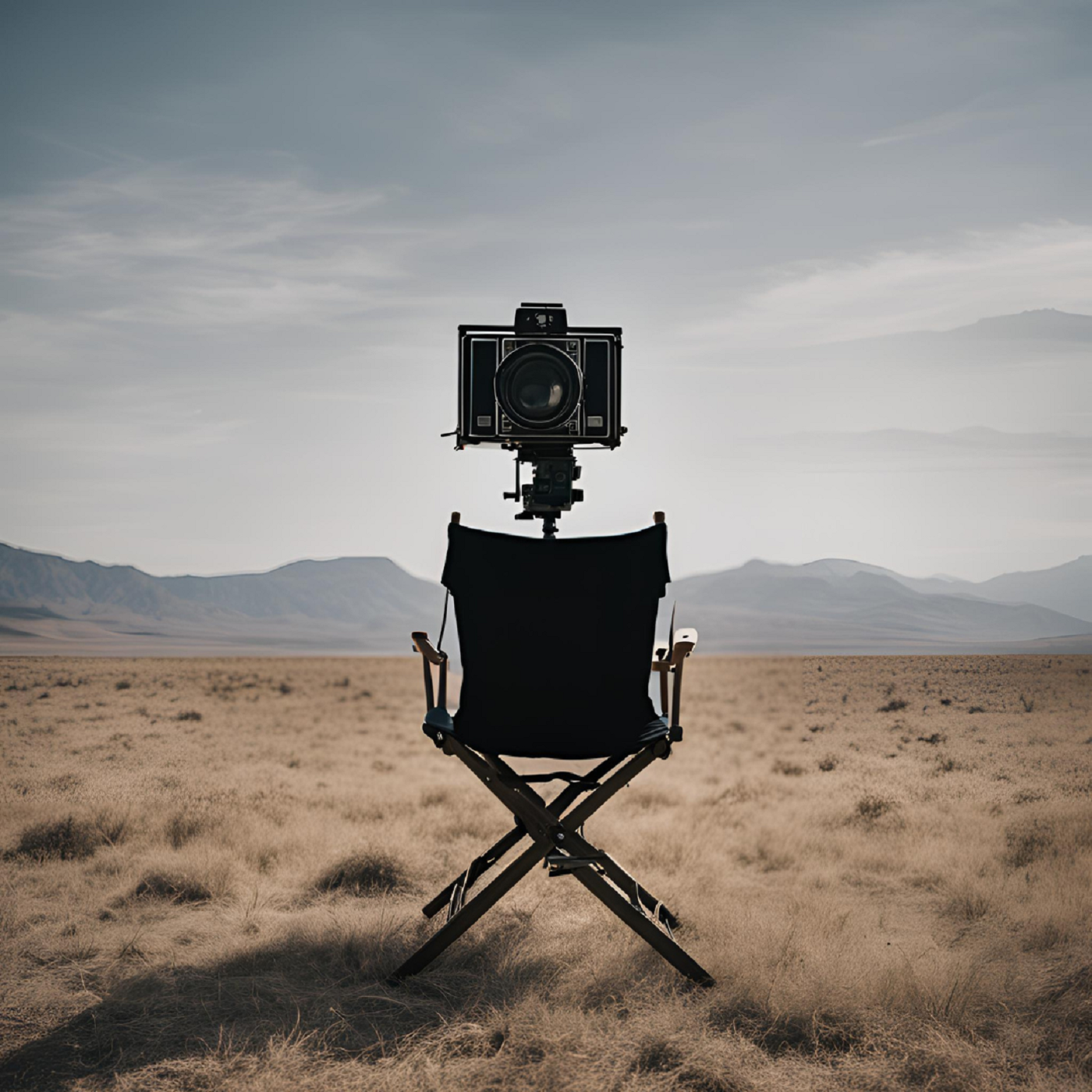
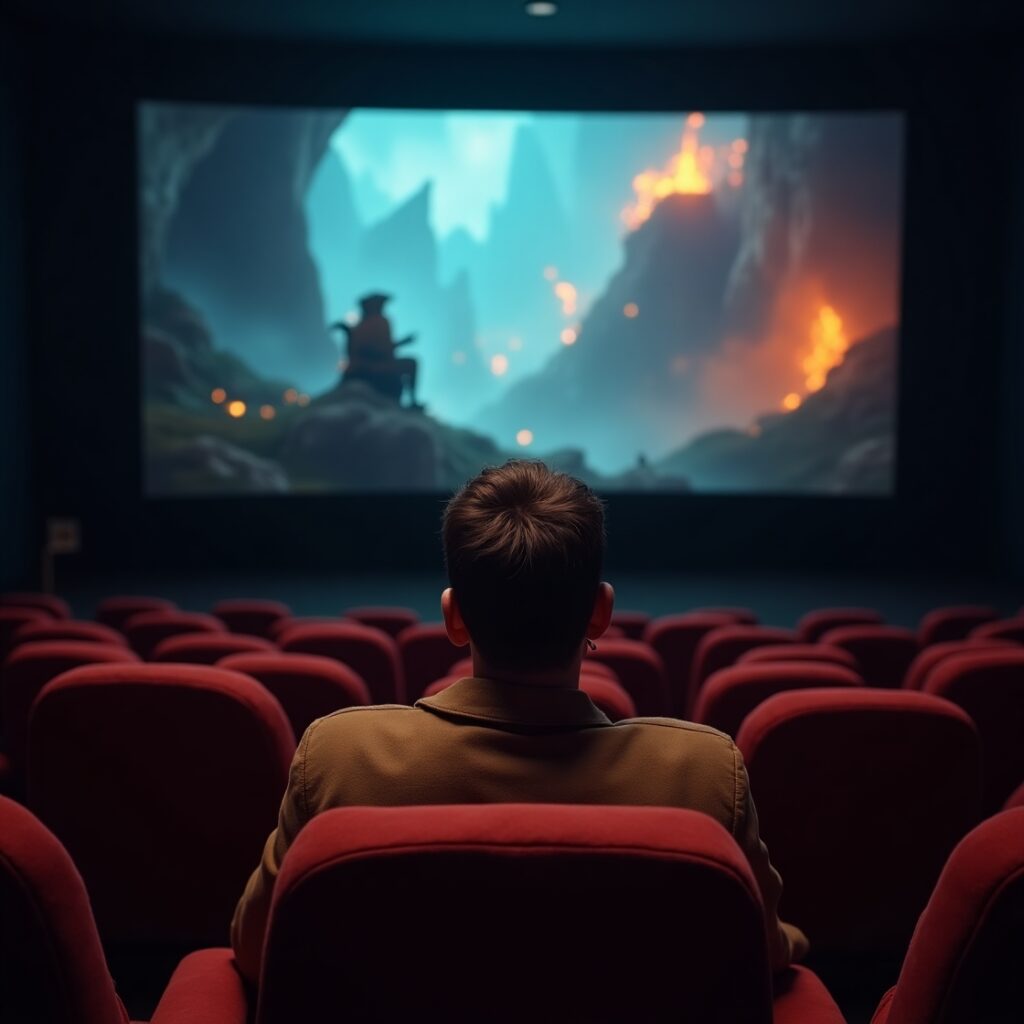
For a long time, cinema was not a discipline, not an art form, not a field I studied with seriousness. It was something far simpler and more personal. My earliest memories of watching films are tied to ordinary days—school, work, daily routines, the quiet fatigue that accumulates in life. Back then, cinema was my shortcut out of those moments. I watched films because they made the world feel lighter. They helped me forget responsibilities, soften anxieties, and silence whatever noise was filling my mind at the time.
Film was my escape before it was ever my education.
Those first years of watching movies were innocent, driven purely by emotion. I wasn’t looking for masterpieces or cinematic poetry. I was looking for comfort, for excitement, for distraction. I was looking for something to take me somewhere else, even if just for two hours. And without realizing it, those moments—the laughter, the suspense, the relief—were preparing me for a much deeper appreciation of cinema that would come years later.
The Foundations: Popcorn Cinema, Family Nights, and Early Obsessions
My early taste in films was built the way most people build theirs: through commercial cinema. Big Hollywood productions were my first cinematic teachers. Action movies, comedies, thrillers, adventure stories—this was the world I lived in. These films gave me rhythm, pacing, structure, and emotion long before I knew those words had technical meaning.
One of the films that shaped me deeply in those early years was Michael Mann’s Heat. It became more than a movie for me; it was a ritual. I would watch it again and again, fascinated by its atmosphere, the stylized streets of Los Angeles, the electric tension between Pacino and De Niro, and that unforgettable downtown shootout that felt like a symphony of chaos. Heat was the first film that made me realize the difference between a “cool movie” and a work of controlled artistic craft. Even though I didn’t have the vocabulary to explain it back then, I could feel that Mann was doing something special with mood, character, and precision.
Family movie nights were also a big part of this stage. There is a unique joy in gathering around the TV, sharing popcorn, arguing about what to watch, laughing together at silly scenes. These moments taught me that cinema was not only a personal escape but also a way of connecting with the people I loved. Those evenings were warm, chaotic, and cozy in the best way. Even now, when I watch certain films, I’m pulled back into those memories.
I also explored fantasy worlds with childlike enthusiasm. Filmmakers like Jean-Pierre Jeunet opened doors to universes that felt handmade, imaginative, and alive. Films like Amélie or The City of Lost Children created a kind of visual magic that fascinated me. Jeunet’s whimsical absurdity and meticulous production design offered a mix of dream and darkness that perfectly fit my mindset at the time. His films felt like alternate realities—strange enough to escape into, warm enough to stay in.
During this period, I also found myself gravitating toward dark, absurd, and quirky films. They became a perfect refuge when reality felt heavy. Absurdity can be surprisingly therapeutic; it breaks the logic of the real world and gives you permission to breathe. Dark humor, strange characters, grotesque settings—these films didn’t solve anything in my life, but they made everything more manageable.
And then there was my love for survival films and post-apocalyptic stories. Something about humans pushed to the limit, struggling against nature or desolation, fascinated me. Films like The Road, Children of Men, or even more modest survival adventures gave me a strange mixture of anxiety and comfort. Watching characters endure the worst made my own daily problems feel smaller, almost trivial. It was a different kind of escape—a reminder of both the fragility and the resilience of human beings.
These early obsessions shaped my foundations, even though I didn’t know it yet. They taught me to enjoy cinema emotionally first. They taught me that films could be thrilling, funny, dark, absurd, comforting, and awe-inspiring. But they also planted a question in my mind that would grow louder over time:
If movies can already do so much, what else can they do?
The Shift: When Curiosity Opens Another Door
A transformation began slowly, almost quietly. It wasn’t pushed by one event or one sudden revelation. It was more like a gentle accumulation of curiosity—things I heard, scenes I stumbled upon, names I didn’t recognize but kept seeing.
A YouTube video essay on classic directors.
A friend talking passionately about a film I’d never heard of.
A random scene from a foreign movie that felt completely different from anything I knew.
That’s how the door to another world first cracked open.
I began noticing that cinema didn’t have to follow the familiar patterns of commercial storytelling. It didn’t have to be fast. It didn’t have to be loud. It didn’t have to explain everything. Some films invited you to slow down, to think, to observe rather than react.
At first, these films felt difficult—and sometimes even boring. My instincts, trained by years of Hollywood pacing, resisted the slowness. But something else in me was intrigued. There was a strange pull, a feeling that these films held meanings beneath the surface. That their silence was speaking in its own language.
I didn’t fully understand what I was looking for, but I felt that cinema had more to teach me if I stayed open.
Discovering the Masters: The Moment Cinema Became Art
Everything changed when I encountered the filmmakers who weren’t merely storytellers, but poets who used the camera the way a painter uses a brush or a composer uses notes. These directors didn’t care about conventions. They weren’t trying to entertain. They were exploring ideas, memories, spiritual questions, and human fragility in ways cinema uniquely allows.
Tarkovsky: The Turning Point
The first real shock came with Tarkovsky.
Watching Stalker or Nostalgia for the first time felt like entering a different mental space. His films don’t speak to the mind first—they speak to the soul. They don’t rush. They drift. They meditate. They leave long stretches of silence that force you to confront your own thoughts.
Tarkovsky’s idea of “sculpting in time” changed my understanding of what cinema could be. His long takes felt like memories unfolding. His images carried metaphysical weight. His pacing wasn’t slow because he lacked ideas—it was slow because he had too many.
At first, I didn’t grasp everything. But I felt something profound:
That cinema could be a form of spiritual reflection.
That realization marked the beginning of my lifelong journey into true film artistry.
Other Voices That Reshaped My Sensibility
From Tarkovsky, a new path opened, leading me toward filmmakers who each offered their own philosophy of cinema:
- Bergman, whose close-ups turned faces into landscapes of suffering and grace
- Ozu, who taught me that the most ordinary moments contain the deepest truths
- Antonioni, who explored silence, emptiness, and alienation with architectural precision
- Kiarostami, whose simplicity revealed the most complex human emotions
- Kurosawa, who showed how movement, weather, and nature could become characters
- Parajanov, who painted films like living tapestries
- Béla Tarr, whose cosmic slowness felt like watching the world age in real time
Their films didn’t just entertain me—they changed me. They taught me patience. They sharpened my senses. They trained me to appreciate rhythm, framing, lighting, stillness, and intention. I began watching films not only with emotion but also with awareness.
Cinema was no longer just a window into different worlds. It became a mirror, a teacher, a companion.
Learning to Watch: A New Sensitivity
As my taste matured, my entire way of watching films transformed.
I learned to pay attention to silence—because silence is a decision.
I noticed camera movements—because movement is meaning.
I studied framing—because framing is how a director chooses what to reveal and what to hide.
I appreciated slowness—because slowness gives space for reflection.
I embraced ambiguity—because not every truth needs to be spoken aloud.
I no longer watched films to run away from life.
I watched them to understand it.
Even when returning to childhood favorites like Heat, I started seeing them with new eyes. I noticed the precision of Mann’s lighting, the moral code embedded in his characters, the obsessive professionalism that drives both police and criminals. A movie I once watched for pure excitement suddenly revealed layers of craftsmanship I had never noticed before.
My early love for fantasy and post-apocalyptic films also evolved. I began appreciating not only their escapism but also the underlying metaphors—how they reflect our fears, our hopes, our anxieties about society and the future.
Everything I had once loved casually, I now loved with intention.
The Personal Layer: Cinema as a Lifelong Companion
Cinema today is a complex presence in my life.
It is still sometimes escape—because escape is not weakness; it is survival.
It is still comfort—because comfort is human.
It is still entertainment—because joy matters.
But beyond all that, cinema has become a language through which I understand myself and the world around me.
When I watch a Tarkovsky sunset, I feel connected to something beyond words.
When I revisit Heat, I feel the nostalgia of my early film experiences.
When I watch a survival film, I reflect on resilience.
When I enjoy a dark comedy or absurdist piece, I let myself breathe.
When I watch a film with my family, I am reminded that cinema is also a shared ritual.
This journey—from casual viewer to cinephile—didn’t happen suddenly. It happened organically, shaped by my own emotional needs, curiosity, and evolving understanding of what films can be.
Today, cinema is one of the most important parts of my daily life. It informs my writing, influences my creativity, shapes my YouTube content, and connects me with other film lovers around the world.
Cinema, for me, is no longer an escape from life.
It is a way into life—deeper, clearer, and richer.