
Rangel Petrov Vulchanov (sometimes transliterated as Valchanov), born on October 12, 1928, in the village of Krivina near Sofia, and passing away on September 30, 2013, stands as one of the most influential and original voices in the history of Bulgarian film. Over a career spanning more than four decades, he cultivated a body of work that navigated the tensions between individual imagination and collective identity, political constraint and artistic freedom, traditional storytelling and bold cinematic experimentation. His films engaged intimately with the social currents of his time while asserting a personal aesthetic that remains distinct in Eastern European cinema.
Early Life and Formative Influences
Rangel Vulchanov was born in a rural setting — a Bulgarian village that would inform his lifelong fascination with how tradition, folklore, and personal memory shape human experience. Growing up in that environment imbued in him an acute sensitivity to social rhythms and cultural textures — qualities that would later animate his work.
His formal education began when he enrolled at the Krastyo Sarafov National Academy for Theatre and Film Arts (then VITIZ), graduating in 1953 with a degree in theatrical directing under the tutelage of Professor Boyan Danovski, a significant figure in Bulgarian theater. This grounding in theater equipped Vulchanov with a profound understanding of performance, mise-en-scène, and narrative structure — tools he would adapt and reinvent for cinematic purposes.
Upon graduation, he joined the Boyana Film Studios in Sofia, initially working as an assistant director. His early involvement in the Bulgarian film industry followed a pattern common for Eastern Bloc filmmakers: mastering craft traditions within state-sponsored cultural institutions before gaining autonomy as an auteur.
The Emergence of an Auteur
Debut: “On a Small Island” (1958)
Vulchanov’s directorial debut came with On a Small Island (Na malkiya ostrov, 1958), a film that instantly distinguished him from his contemporaries. Rather than adopting the standardized socialist realist approach prevalent in state-sanctioned cinema, he forged a lyrical narrative that blended poetic realism with social commentary. The film earned international acclaim — including recognition at the Prague and Melbourne festivals — marking him as a filmmaker with both national grounding and global reach.
From the outset, Vulchanov demonstrated a rare capacity to render localized, intimate stories that nonetheless resonated universally. His camera lingered on the small, human gestures — conversations, glances, the rhythm of rural life — that reveal larger truths about belonging and change.
Early European Festival Recognition
His next notable success, First Lesson (Parvi urok, 1960), secured a place in the 1960 Cannes Film Festival, a significant achievement that underscored his early international visibility and creative promise.
Vulchanov’s early films thus established the dual contours of his artistic identity: a deep connection to Bulgarian society’s lived realities and a cinematic language open to international dialogue.
Complexities of Style and Theme
Rangel Vulchanov’s oeuvre defies easy categorization because it evolves across genres, forms, and thematic preoccupations while maintaining a distinctive creative core. Across political comedies, social dramas, and allegorical fables, his films explored human agency within structures of power — whether institutional, cultural, or psychological.
The 1960s: Satire, Social Critique, and Formal Experimentation
Sun and Shadow (1962)
In Sun and Shadow (Slantseto i syankata), Vulchanov turned to a nuanced meditation on the pervasive anxieties of the nuclear age and modern existential unease. This film’s reception at festivals including San Francisco, Karlovy Vary, Moscow, Melbourne, and Cannes reflected international recognition of its thematic ambition and visual inventiveness.
The Inspector and the Night (1963) and The She-Wolf (1965)
These two films further solidified his engagement with social satire and symbolic storytelling. In The Inspector and the Night, Vulchanov reveals societal contradictions, using procedural narrative as a vehicle for subtle critique. The She-Wolf similarly complicates genre expectations, combining wit with sociopolitical reflection.
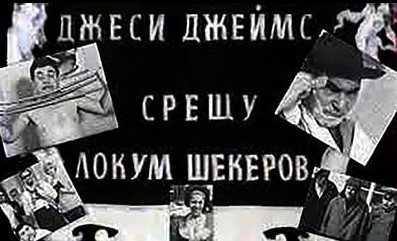
His 1966 comedy Jesse James vs. Lokum Shekerov — a parody blending western motifs with Bulgarian absurdist humor and kind of a reflection of 60s pop culture— shows Vulchanov’s willingness to play with genre even when it diverged from mainstream expectations.
International Engagement and Creative Crossroads: 1970–1972
At the turn of the decade, Vulchanov worked in Czechoslovakia, an opportunity that expanded his aesthetic horizon. There, he directed films like Chance and Face Under the Mask — works that brought him closer to the formal experimentation associated with the Czech New Wave yet always grounded in his own narrative sensibilities.
This period abroad also reflects broader tensions facing Eastern European artists of the time: while state systems offered stability and production resources, they also imposed ideological constraints. Vulchanov navigated these tensions with agility, producing work that engaged with political themes indirectly, through allegory, satire, and richly layered characterization.
Mature Mastery: The Late 1970s and Beyond
Judge and the Forest (1975)
In Judge and the Forest, Vulchanov melds crime drama conventions with philosophical inquiry. The film was entered into the 26th Berlin International Film Festival, highlighting his continuous profile on the international stage.
This film reflects a deeper interrogation of institutional authority and moral ambiguity — themes resonant in societies where juridical power often mirrors political power. Vulchanov’s camera refuses easy binaries, instead staging moral questions as puzzles that challenge viewer assumptions.
The Unknown Soldier’s Patent Leather Shoes (1979) — A Signature Achievement
Perhaps Vulchanov’s most celebrated and complex work is The Unknown Soldier’s Patent Leather Shoes (1979). Shot from the imagined perspective of a child while deeply rooted in Bulgarian cultural memory, the film is part fairy tale, part social chronicle, and part existential reflection. It follows a middle-aged narrator revisiting his childhood memories and the traditions of rural life as seen through a kaleidoscopic fusion of real and dreamlike imagery.
In this film, Vulchanov synthesizes the autobiographical, the folkloric, and the political — offering not merely a narrative but an immersive sensory experience. The structure mirrors the way memory operates: associative, fragmented, yet emotionally coherent. This complexity has led critics to describe Vulchanov as blending narrative realism with an almost surrealist sensibility.
1980s: Global Recognition and Social Reflection
Where Are You Going? (1986)
Where Are You Going? (Za kude putuvate), one of Vulchanov’s most internationally recognized films, was screened in the Un Certain Regard section of the 1986 Cannes Film Festival and entered into the main competition at the 15th Moscow International Film Festival — a testament to its artistic significance and cross-cultural resonance.
The film’s formal humor and poignant social observation deepen Vulchanov’s exploration of personal identity within larger communal and national narratives.
Whither Now? (1988) and Later Works
Following this, Vulchanov continued to explore shifting cultural landscapes and existential questions in films such as Whither Now? and others into the late 1980s and early 1990s. His later works often delved into individual experience against the backdrop of broader social transformations.
Themes and Artistic Hallmarks
Humanism and Memory
A central pillar of Vulchanov’s work is his commitment to portraying characters with emotional depth and dignity. Whether in comedies or dramas, his films often foreground personal narratives as microcosms of wider cultural and historical currents.
Formal Innovation Within Constraint
Working within a socialist state cinema system, Vulchanov neither fully embraced orthodox socialist realism nor rejected all conventions; instead, he experimented with genre, structure, and visual symbolism, crafting films that could subtly undermine official narratives while remaining accessible to wide audiences.
Blending Local and Universal
Throughout his body of work, Vulchanov maintains a balance between the particularities of Bulgarian life — its traditions, landscapes, and social mores — and universal questions about autonomy, belonging, and moral responsibility. This interplay anchors his films in a recognizable cultural context while resonating with international audiences.
Recognition and Legacy
By the end of his life, Rangel Vulchanov had achieved a remarkable degree of recognition. He was voted the best Bulgarian film director of the 20th century, a distinction conferred by his peers and critics alike.
In 2012, shortly before his death, he was elected a member of the Bulgarian Academy of Sciences, reflecting his stature as a cultural figure whose work transcended mere entertainment to engage with intellectual and artistic discourses.
Beyond institutional honors, his influence persists through the filmmakers he inspired and the audiences who continue to discover his films. Documentaries such as Pateshestvie mezhdu dva filma explore his life and perspective, offering insight into his creative process and worldview.
Conclusion: A Cinematic Bridge Between Worlds
Rangel Vulchanov’s contributions to cinema are both deeply rooted in the specific cultural and political fabric of 20th-century Bulgaria and expansively relevant to global film history. He stands as a figure who cultivated a cinematic language that was human, reflective, playful, critical, and resonant. His films confront questions of identity, memory, and agency with artistic rigor and imaginative verve.
Through a career that balanced artistic integrity with broad cultural engagement, Vulchanov emerged not just as a national treasure but as a bridge between local traditions and global cinematic discourse — an auteur whose films remain compelling, challenging, and profoundly human.