A Journey Through the Dust and Dreams of Early Western Film
I’ve spent years diving into the origins of cinema, tracing the luminous threads that connect the Lumière brothers to Griffith, studying the evolution of narrative technique, dissecting the birth of montage. I thought I had mapped the territory pretty thoroughly. But every time I venture deeper into the silent era, I’m humbled by how much remains obscured by time’s dust—how many titans have been half-forgotten, their contributions diminished to footnotes when they deserved entire chapters. Tom Mix is one of those figures who stops you in your tracks and makes you reconsider everything you thought you knew about the birth of American cinema.
When we talk about westerns, we inevitably reference John Ford, we genuflect before The Searchers, we trace the genre’s evolution through Leone’s operatic violence and the revisionist deconstructions of the 1970s. But before any of that—before Ford ever pointed a camera at Monument Valley, before Wayne perfected his swagger—there was Tom Mix, a man who didn’t just star in westerns but fundamentally invented what a western hero looked and moved like on screen. He made over 330 films. Let that number sink in for a moment. Three hundred and thirty films. And yet, ask most contemporary film enthusiasts about him and you’ll get blank stares or vague recognition at best.
This is the maddening paradox of film history: the architects often become invisible while their structures stand eternal.
The Man Behind the Stetson: Separating Legend from Life
Tom Mix’s life story is itself a western—complete with embellished myths, genuine adventure, and the kind of larger-than-life contradictions that make for compelling characters. Born Thomas Edwin Mix on January 6, 1880, in Mix Run, Pennsylvania (a town that would later change its name to honor its most famous son), he grew up in a working-class family far removed from the frontier mythology he would later embody.
The real Tom Mix served in the military, worked as a ranch hand, performed in Wild West shows, and eventually found his way to the Selig Polyscope Company in 1910. But the publicity machine of early Hollywood—which Mix himself enthusiastically participated in—created a more sensational biography: tales of heroism in the Spanish-American War, adventures as a Texas Ranger, exploits as a championship rodeo rider. Mix understood something profound about celebrity and cinema that many of his contemporaries didn’t: the line between the performer and the persona could be deliberately blurred, and audiences wanted to believe the man on screen was the man in life.
This wasn’t mere deception—it was mythmaking in the truest sense. Mix was crafting an archetype, and he did so with complete commitment. Whether he had actually lived every adventure attributed to him became less important than the fact that he could have, that his physicality and skills made those stories plausible. And that plausibility translated directly into his screen presence.
The Selig Years: Learning the Craft (1910-1917)
Mix’s entry into film was almost accidental, born from his work with the Miller Brothers 101 Ranch Wild West Show. The Selig Polyscope Company was shooting westerns in the American Southwest, and they needed someone who could actually ride a horse, rope a steer, and perform the physical feats their stories required. Tom Mix wasn’t an actor learning to ride; he was a horseman learning to act—and that distinction would prove revolutionary.
During his years with Selig, Mix appeared in dozens of one- and two-reel westerns, gradually learning the vocabulary of cinema. But here’s what fascinates me about this period: Mix wasn’t just learning—he was innovating. From very early on, he understood that westerns could be more than filmed melodrama. They could showcase physical prowess, genuine horsemanship, and what we’d now call “practical stunts” performed by the stars themselves.
Many of these early Selig films are lost, which is one of those tragedies that keeps film historians up at night. We can piece together Mix’s evolution from surviving prints, production stills, and contemporary accounts, but there are gaps—frustrating, tantalizing gaps where we know groundbreaking work occurred but can’t witness it ourselves. From what survives, we can see Mix’s increasing comfort with the camera, his developing sense of how to convey character through action rather than title cards, his growing understanding that the western could be a vehicle for genuine spectacle.
By 1917, Mix had also begun directing his own films at Selig, taking control of his image and stories. This is crucial to understanding his later impact: Mix wasn’t content to be a performer; he wanted to shape the entire production. He directed himself in films like The Wilderness Trail (1919) and dozens of others, developing a visual style that emphasized landscape, action, and the hero’s relationship to both.
The Fox Years: Perfecting the Art (1917-1928)
When Tom Mix signed with Fox Film Corporation in 1917, he was already a established star. What happened next was the refinement of everything he’d been working toward into something approaching perfection—at least in terms of silent western entertainment. The Fox years represent Mix at his creative and commercial peak, producing film after film that defined what audiences expected from the genre.
At Fox, Mix had resources that Selig couldn’t match: bigger budgets, better production values, a studio system that supported his vision. But more importantly, he had creative freedom. Mix continued to direct many of his own films, and even when he didn’t hold the director’s title, he exercised enormous control over the productions bearing his name. This wasn’t ego—or not merely ego—it was artistic necessity. Mix had a specific vision for how westerns should look and feel, and he was determined to realize it.
Consider The Great K & A Train Robbery (1926), one of the few Mix films from this period that survives in reasonably good condition. Directed by Lewis Seiler but unmistakably a Tom Mix vehicle, the film showcases everything that made him revolutionary. The action sequences aren’t just competent—they’re breathtaking. Mix doesn’t merely ride horses; he becomes part of the animal, performing stunts that wouldn’t look out of place in modern action cinema. There’s a sequence where he leaps from a speeding train to his horse that, even knowing it was performed with early film trickery, remains thrilling. But what’s more impressive is the way Mix uses action to develop character. His hero isn’t violent for violence’s sake; every punch, every chase, every stunt serves the story.
Or look at The Last Trail (1927), directed by Lewis Seiler. Here, Mix is working with a more complex narrative, dealing with themes of loyalty, justice, and the cost of violence. The film demonstrates that Mix—often dismissed as mere escapist entertainment—was capable of nuance. His characters weren’t one-dimensional white hats; they were men tested by circumstances, making difficult choices. Mix’s performance style, influenced by his Wild West show background, was physical and demonstrative by necessity (silent film required clear, readable gestures), but he found ways to convey interior conflict through stillness, through the set of his shoulders, through the way he handled his hat or his gun.
During these years, Mix also cemented his image: the elaborate, custom-made costumes with intricate embroidery and tooled leather; the pristine white Stetson that became his trademark; his horse Tony (billed as “Tony the Wonder Horse”), who was as much a star as Mix himself. This wasn’t cowboy realism—it was cowboy romanticism, a deliberately constructed fantasy that nevertheless felt authentic because of Mix’s genuine skills and commitment.
The Director’s Vision: Tom Mix Behind the Camera
Here’s where we need to pause and really consider Tom Mix’s contributions as a director and creative force, because this aspect of his career is consistently undervalued. Between 1916 and 1920, Mix directed over 30 films, sometimes starring in them, sometimes not. His directorial work demonstrates a sophisticated understanding of visual storytelling that was evolving rapidly during the silent era.
Mix understood landscape in a way that most of his contemporaries didn’t. He’d lived and worked in the American West; he knew its rhythms, its dangers, its beauty. When he framed a shot, he didn’t just place actors in front of scenery—he integrated them into the environment. Watch any surviving Mix-directed film and notice how often the landscape becomes a character itself, how the vast distances of the desert or the confined spaces of canyons create dramatic tension.
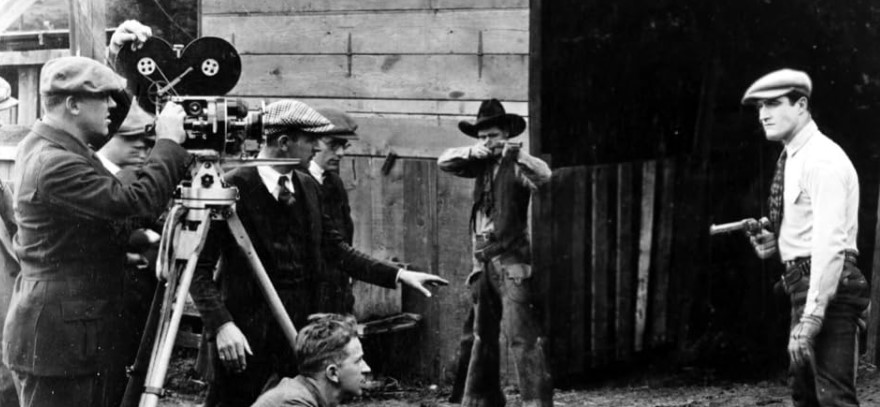
He was also an innovator in action cinematography. Mix worked closely with his cinematographers to develop techniques for capturing fast-moving action clearly and dramatically. This was no small feat in an era when cameras were heavy, film stock was slow, and the technical limitations were enormous. Mix pushed for multiple camera setups on action scenes, for careful planning that would allow stunts to be filmed safely but dynamically. He understood that westerns lived or died on the credibility of their action, and he was meticulous in ensuring that credibility.
Perhaps most significantly, Mix as director showed an understanding of pacing that many silent filmmakers struggled with. Silent westerns could feel static, with long stretches of plot exposition followed by brief action sequences. Mix’s films maintained momentum; they moved. Even in quieter character moments, there was energy, a sense that the next complication was just around the corner. This wasn’t just good action filmmaking—it was good filmmaking, period.
His directorial work also reveals a subtle but important philosophical stance: Mix’s westerns were essentially optimistic. His heroes were good men in a difficult world, but goodness could prevail. Violence was sometimes necessary, but it was never celebrated for its own sake. Justice was possible, even if it required sacrifice. In an era when westerns were often morality plays with clear villains and heroes, Mix’s work had shading, had texture. His villains weren’t always irredeemable; sometimes they were men who’d made bad choices and could be redeemed. His heroes weren’t perfect; they made mistakes, lost battles, struggled with doubt.
The Writer’s Touch: Crafting Narratives
Beyond directing, Mix frequently received story or scenario credit on his films. This means he was involved in developing the narratives themselves, shaping the tales that would become his vehicles. While we must be careful about over-attributing creative control (studio filmmaking was and is collaborative), Mix’s story involvement wasn’t nominal—he genuinely participated in crafting his films’ narratives.
Mix’s storytelling instincts drew heavily from the dime novels and Wild West show narratives he’d grown up with, but he adapted them for cinema in smart ways. He understood that film was a visual medium, that stories needed to be told primarily through action and image rather than through the title cards that many silent films relied on too heavily. His scenarios typically featured clear, uncomplicated plots that could be followed entirely visually, with title cards used sparingly for necessary dialogue or exposition.
Common Mix story elements included: a hero with special skills (usually horsemanship and sharpshooting); a community or individual threatened by villains; a romantic interest who was often capable and active rather than merely a damsel in distress; complications that tested the hero’s ingenuity as well as his physical prowess; and a climactic confrontation that combined action with character resolution.
These story patterns might sound formulaic—and they were, deliberately so—but Mix and his collaborators found endless variations within the formula. The threat might be rustlers, crooked businessmen, foreign agents, or even natural disasters. The hero might be a ranger, a ranch foreman, a federal agent, or just a wandering cowboy. The resolution might involve chases, fights, rescues, or clever stratagems. The formula provided structure; the variations provided interest.
Mix also had a knack for incorporating contemporary concerns into his westerns. His films often dealt with modernization (railroads, telegraph, automobiles occasionally appearing in otherwise traditional western settings), with the tension between law and frontier justice, with questions of loyalty and betrayal. While never overtly political, Mix’s westerns engaged with the anxieties of their audiences in subtle ways, giving them not just escapism but a framework for thinking about change and values.
Pioneering the Western Genre: Mix’s Revolutionary Impact
It’s difficult to overstate how thoroughly Tom Mix shaped the western genre as we know it. Before Mix, westerns were often static, theatrical affairs that happened to be set in the West. After Mix, the western became defined by movement, by action, by spectacle. Let’s enumerate the specific ways Mix transformed the genre:
Physical Authenticity Through Performed Stunts: Mix insisted on performing his own stunts, a practice that was unusual and dangerous. This wasn’t machismo—it was craft. Mix understood that audiences could sense the difference between a star genuinely performing a feat and obvious stunt doubling or trick photography. His commitment raised the bar for all western stars who followed.
The Hero’s Costume as Character: Before Mix, western heroes dressed functionally, often in whatever the costume department had available. Mix made the hero’s outfit part of his identity—elaborate, distinctive, iconic. This influenced everyone from Gene Autry to Roy Rogers to countless other singing cowboys and later TV western stars. The idea that a western hero should be visually distinctive, should stand apart from regular folks through his dress, comes directly from Mix.
The Horse as Co-Star: While other performers certainly featured their horses, Mix elevated Tony to genuine co-star status. Tony had his own publicity, his own fan following, his own “acting” moments in films. This established the tradition of named horse characters that ran through the genre’s history: Trigger, Silver, Champion, etc.
Integration of Romance and Action: Earlier westerns often segregated romantic subplots from action. Mix’s films wove them together, understanding that romance was part of the hero’s journey, not separate from it. His on-screen romances with actresses like Victoria Forde and later others felt earned because they emerged from shared danger and adventure.
Moral Complexity Within Genre Constraints: While working within the clear good-versus-evil framework that audiences expected, Mix’s films often featured more nuanced character work than credited. His heroes struggled with decisions, his villains sometimes had understandable (if not justifiable) motivations, and redemption was possible for those who sought it.
Production Value and Spectacle: Mix pushed for higher budgets and better production values in westerns, arguing (correctly) that audiences would respond to well-made action pictures. His Fox films often featured elaborate set pieces, large casts of extras, and carefully choreographed action sequences that rivaled any genre of the period.
The Western as Pure Cinema: Perhaps most importantly, Mix demonstrated that westerns could be cinema at its purest—visual storytelling that transcended language barriers and cultural differences. His films were enormously popular internationally, proving that well-executed action and clear visual narrative could communicate universally.
The Sound Transition and Declining Years
The coming of synchronized sound in the late 1920s disrupted countless careers, and Mix’s was among them. He made several sound films, including some for Universal and later FBO/RKO, but the magic didn’t translate fully. His voice was fine—pleasant, masculine, appropriate—but sound westerns required different pacing, different approaches. The balletic physicality that made his silent films soar became just one element among many in the talkie era.
There’s something poignant about watching Mix’s sound films (and I’ve sought out every one I could find). You can see him trying to adapt, to find his place in this new medium. Destry Rides Again (1932) is actually quite good, with Mix giving a solid performance as a retired lawman drawn back into action. But it’s not revolutionary the way his silent work was. The genre had moved on, or rather, it had absorbed his innovations so thoroughly that he was no longer distinctive.
Mix made his last film in 1935, a serial called The Miracle Rider. By then, he was 55 years old, still performing stunts, still committed to the craft, but clearly out of step with where westerns were heading. The genre was becoming more psychological, more talky, moving indoors more often. The wide-open spaces and pure physical action that Mix excelled in were giving way to Gene Autry’s singing cowboys and the more complicated narratives that sound made possible.
Legacy: The Eternal Cowboy
Tom Mix died in 1940 when his car crashed in Arizona. He was 60 years old. There’s a memorial at the site, a riderless horse sculpture that marks where one of cinema’s great innovators ended his journey. It’s fitting, somehow, that he died in the desert, in the landscape he’d spent decades making iconic.
His legacy is both everywhere and nowhere in contemporary film culture. Everywhere in that every action hero who performs their own stunts, every western that features spectacular horsemanship, every film that understands costume as character, every movie that makes landscape a crucial element of storytelling—all of these owe something to Tom Mix. The DNA of his innovations is woven throughout cinema, particularly in the action and western genres.
But his legacy is nowhere in that his name has faded from popular memory in ways that contemporaries like Chaplin, Keaton, and even lesser stars have not. This is partly the tyranny of availability: most of Mix’s 330+ films are lost or survive only in fragments. We’re left evaluating a career through a tiny percentage of its output, like judging Hitchcock based solely on his British films or assessing Kurosawa knowing only Rashomon and Seven Samurai.
Film scholars and western enthusiasts recognize Mix’s importance, but he deserves wider acknowledgment. He was there at the beginning, helping to establish cinema’s grammar for action and spectacle. He proved that genre films could be artistically ambitious within their constraints. He demonstrated that star persona was something that could be consciously constructed and maintained. He showed that authenticity—even stylized authenticity—mattered to audiences.
When directors like George Lucas and Steven Spielberg talk about crafting their action sequences, about the importance of physical stunts and practical effects, about making the audience believe what they’re seeing—they’re echoing principles that Tom Mix established a century ago. When stunt coordinators plan elaborate set pieces for modern blockbusters, they’re walking paths Mix pioneered. When costume designers create iconic looks for action heroes, they’re following a tradition Mix began.
The Films That Survive: Windows Into Genius
I’ve been fortunate enough to see about 30 of Mix’s films, which sounds impressive until you remember he made over 330. It’s like judging Shakespeare knowing only a tenth of his plays—you get a sense of the artistry, but you’re always aware of how much is missing. Still, from what survives, we can construct a picture of Mix’s achievement.
Sky High (1922) demonstrates his gift for integrating comedy into action. The film features Mix as an agent investigating a smuggling ring, and the tonal shifts are handled expertly—funny without being silly, thrilling without being grim. There’s a sequence involving an early airplane that showcases Mix’s willingness to embrace modernity even in traditional western settings.
Three Jumps Ahead (1923) is nearly perfect entertainment, with Mix playing a man framed for murder who must clear his name. The action sequences are brilliantly staged, particularly a chase sequence that uses landscape and editing in ways that feel remarkably modern. Mix’s performance balances determination with vulnerability, showing us a hero who isn’t invincible but refuses to quit.
The Deadwood Coach (1924) features some of the most impressive stunt work of Mix’s career, with elaborate coach chases and transfers between moving vehicles that remain thrilling a century later. What’s remarkable is how these stunts are integrated into the narrative—they’re not show-off moments but essential to the story being told.
Riders of the Purple Sage (1925), based on Zane Grey’s novel, shows Mix working with more prestigious source material and rising to the challenge. It’s a more somber film than much of his work, dealing with religious hypocrisy and forced marriage, but Mix brings his trademark physical dynamism to even the quieter moments.
Each surviving film offers glimpses of what made Mix special: his easy physicality, his understanding of how to work with horses and landscapes, his ability to convey character through action, his commitment to doing things for real. And each surviving film makes me mourn all the lost ones, wondering what innovations and achievements turned to dust because nitrate film is desperately fragile and archives were woefully underfunded for decades.
Reflection: What Tom Mix Teaches Us About Film History
As I write this, sitting among my film books and reference materials, I keep coming back to a central frustration: why isn’t Tom Mix better remembered? Why do we let pioneers fade when their innovations persist?
Part of it is certainly the tyranny of the talkies—our film history has an unfortunate tendency to treat silent cinema as primitive prologue rather than as a fully mature art form with its own achievements. Part of it is the general cultural devaluation of westerns, a genre often dismissed as simplistic despite producing some of cinema’s most sophisticated work. Part of it is simple availability—you can’t appreciate an artist if you can’t see their work.
But I think there’s something else: Tom Mix represents a kind of filmmaking that doesn’t fit neatly into auteurist frameworks or critical discourse. He wasn’t an “artist” in the way we typically construct that term in film studies. He was a showman, an entertainer, a craftsman who worked within genre constraints and commercial imperatives. His films weren’t “about” anything in the way that critics like to discuss—they were adventures, spectacles, entertainments.
Yet that entertainment was crafted with intelligence, skill, and genuine innovation. Mix understood cinema’s potential as a medium for physical storytelling, for creating genuine excitement and wonder through the documentation of human capability. His work anticipated everything from Jackie Chan to Tom Cruise, from Mad Max to John Wick—the tradition of action cinema that prioritizes practical achievement over digital fabrication, that understands visceral thrills are amplified by authenticity.
Studying Tom Mix has reminded me, yet again, that film history is vast and deep, that every time you think you’ve mapped its territory, you discover new continents. It’s humbled me, honestly. I came into this thinking I’d write about an early western star, and I’ve come out with a deeper appreciation for how much intelligence and artistry went into creating the genre conventions we take for granted, how much individual talent shaped the medium’s evolution.
Conclusion: The Cowboy Eternal
Tom Mix made over 330 films. He pioneered action cinematography. He established visual and character templates for western heroes that persist today. He performed stunts that would make modern insurance companies faint. He directed innovative films that pushed the boundaries of what westerns could be. He wrote scenarios that balanced action and character. And yet, his name prompts only faint recognition from most film lovers.
This isn’t right. This isn’t acceptable. Film history shouldn’t be only about the directors that critics champion or the stars whose films happened to survive in archives. It should encompass everyone who moved the medium forward, who showed us new possibilities, who entertained millions and did it with craft and commitment.
Tom Mix deserves to be remembered not as a footnote but as a pioneer, an innovator, a genuine artist working in a commercial medium. He took a fledgling genre and gave it shape, style, and soul. He showed that entertainment could be ambitious, that action could be artful, that working within constraints could produce genuine creativity.
Every time you watch a western, every time you thrill to a spectacular stunt, every time you appreciate a hero who demonstrates capability through action rather than exposition—you’re experiencing Tom Mix’s legacy. He’s there in the shadows, grinning under that white Stetson, reminding us that cinema has always been about wonder, about showing us things we’ve never seen before, about making us believe in the impossible.
I thought I knew film history. Tom Mix taught me I’ve barely scratched the surface. And that’s the most exciting realization a cinephile can have—that there’s always more to discover, always another genius to uncover, always another reason to marvel at what remarkable artists created in cinema’s first wild decades.
The frontier may have closed in American history, but in film history, it stretches endlessly forward, with pioneers like Tom Mix lighting the way for all who follow. We owe him recognition, remembrance, and gratitude. We owe him a place in the pantheon alongside the other architects of cinema. Because without Tom Mix, movies wouldn’t move the same way, thrill the same way, or matter the same way.
The cowboy rides eternal, whether we remember his name or not. But we should remember. Yes, we should remember!