
To understand the soul of Soviet comedy is to understand Leonid Iovich Gaidai, a director whose name may not resonate in Western film schools but whose influence on Russian-speaking audiences rivals that of Charlie Chaplin or Buster Keaton in their respective domains. As someone who has spent years exploring the intersection of physical comedy across cultures—from the silent era’s pantomime masters to the anarchic energy of Italian commedia all’arte—I can say with confidence that Gaidai occupies a singular position: he created a distinctly Soviet form of slapstick that somehow thrived within the constraints of a repressive regime, turning censorship into creative fuel and producing comedies that remain culturally omnipresent more than half a century later.
Born in 1923 in the Amur Oblast of the Russian Far East, Gaidai came of age during the most turbulent period of Soviet history. His youth was marked by Stalin’s purges, his early adulthood by World War II, where he served in the Far Eastern Front. This biographical detail matters because Gaidai’s comedy, unlike the propagandistic cheerfulness of much Stalinist-era entertainment, carries an undercurrent of genuine human warmth earned through suffering. When he entered VGIK (the All-Union State Institute of Cinematography) in 1947 to study directing under the legendary Grigori Kozintsev, he was a war veteran who understood both the absurdity of authority and the necessity of laughter as survival.
The Gaidai Style: Visual Poetry in Motion
What separates Gaidai from mere competent comedy directors is his mastery of visual language. Having studied the American silent comedians obsessively—particularly Keaton and Harold Lloyd—he understood that the camera itself could be a comedian. His frames are meticulously composed for maximum comic impact, with every element contributing to the gag. Unlike many Soviet directors of his era who treated the camera as a passive recording device for theatrical performances, Gaidai used dynamic camera movement, precise editing rhythms, and spatial relationships that would make Jacques Tati nod in approval.
Consider the famous apartment chase sequence from “Operation Y and Shurik’s Other Adventures” (1965). The scene functions on multiple levels simultaneously: there’s the physical comedy of bodies moving through space, the escalating absurdity of the situation, the commentary on Soviet communal living conditions, and beneath it all, a balletic precision in how each gag builds upon the previous one. Gaidai understood what Keaton knew instinctively—that slapstick works best when it appears inevitable, when the audience can see the disaster approaching but cannot look away.
His visual style also incorporated a distinctly Soviet aesthetic that paradoxically enhanced the universal appeal. The drab grays of Soviet architecture, the cramped communal apartments, the bureaucratic offices—these became comic playgrounds. Where Western slapstick often relied on abundance (think of the elaborate sets of Hollywood comedies), Gaidai created humor from scarcity and constraint. A simple park bench, a crowded trolleybus, a narrow corridor—these everyday Soviet spaces became stages for carefully choreographed chaos.
The director’s approach to physical comedy was notably different from his Western counterparts in one crucial aspect: the integration of ensemble work. While Chaplin and Keaton typically positioned themselves as solo protagonists against the world, Gaidai developed a repertory system of comic actors who played off each other like a well-rehearsed jazz ensemble. This wasn’t just practical filmmaking; it reflected Soviet collectivist ideology transformed into genuine artistic collaboration.
The Coward, the Fool, and the Seasoned Pro: The Immortal Trio
No discussion of Gaidai can proceed without examining his greatest creation: the trio of hooligans who appeared across multiple films, played by Yuri Nikulin, Georgy Vitsin, and Yevgeny Morgunov. These three characters—Balbes (the Fool), Byvaliy (the Seasoned Pro), and Trus (the Coward)—became so embedded in Soviet consciousness that their nicknames entered everyday language. They first appeared in “Bootleggers” (1962) and reached their apotheosis in the “Operation Y” and “Kidnapping, Caucasian Style” films.
What made this trio work was the precision of their characterization. Trus (Vitsin), small and nervous, represents anxiety incarnate. Balbes (Morgunov), large and dim-witted, embodies brute physicality without intelligence. Byvaliy (Nikulin), the leader with his striped shirt and world-weary expression, suggests experience without wisdom. Together, they form a complete portrait of human incompetence, yet their schemes never feel malicious—they’re too bumbling for that. They’re Soviet everymen as lovable losers, and Gaidai’s genius lay in making us root for their failures because their failures were more entertaining than anyone else’s successes.
The visual comedy of the trio drew heavily from the silent tradition. Morgunov’s physicality recalled Fatty Arbuckle’s bulk used for comic effect, while Vitsin’s nervous energy evoked Lloyd’s eager go-getter doomed to fail. But Nikulin—ah, Nikulin was special. A trained circus performer before becoming an actor, he brought an elastic, rubber-limbed quality to his movements. His face could register an entire emotional journey in a single take, and Gaidai’s camera loved him for it, often holding on Nikulin’s reactions as the true punchline to a physical gag.
These three weren’t merely comic relief; they were social commentary disguised as buffoons. Their constant scheming to avoid work, their petty theft, their cowardice in the face of authority—all reflected aspects of Soviet life that couldn’t be addressed directly. Gaidai had found a way to critique the system while appearing to mock individual failings. The censors laughed along, missing the point entirely.
Aleksandr Demyanenko and the Shurik Cycle: The Everyman Hero
If the trio represented Soviet society’s failures, then Aleksandr Demyanenko’s character Shurik embodied its aspirations—or at least, a lovably naive version of them. Shurik appeared in three of Gaidai’s films: “Operation Y and Shurik’s Other Adventures” (1965), “Kidnapping, Caucasian Style” (1967), and the masterpiece “Ivan Vasilyevich Changes Profession” (1973). Each film was structured as a series of vignettes or a single extended comic scenario, with Shurik as the earnest, bespectacled student or young professional who stumbles into extraordinary circumstances.
Demyanenko’s Shurik was the anti-action hero. Physically unimposing, socially awkward, perpetually distracted by his studies or inventions, he succeeded through a combination of pure accident, naive persistence, and the fundamental decency that villains underestimate. In “Operation Y,” he defeats the trio of criminals not through strength but through their own incompetence and his stubborn refusal to accept intimidation. In “Kidnapping, Caucasian Style,” his genuine love for the heroine Nina drives him to heroism despite his obvious unsuitability for physical confrontation.
The Shurik character allowed Gaidai to explore a different comic register. Where the trio’s segments were pure slapstick, the Shurik films incorporated romantic comedy, social satire, and even science fiction (in “Ivan Vasilyevich”). Demyanenko played Shurik with a wide-eyed earnestness that was completely sincere yet inherently comic. He never winked at the audience; he inhabited the character completely, which made the absurd situations feel grounded.
What’s remarkable about Gaidai’s collaboration with Demyanenko is how the director used the actor’s natural qualities rather than transforming him. Demyanenko wasn’t a trained physical comedian like the trio’s actors, but Gaidai built comedy around his everyman ordinariness. When Shurik fights, it’s awkward and desperate. When he falls in love, it’s clumsy and sweet. This made him relatable to Soviet audiences in ways that polished heroes never could be. Every young Soviet man could see himself in Shurik’s struggles, which made his unlikely triumphs all the more satisfying.
The visual comedy in the Shurik films often involved the character being literally out of sync with his environment—studying at a construction site while chaos erupts around him, conducting experiments that accidentally unlock time travel, courting a woman while completely missing social cues. Gaidai used shallow focus and blocking to create frames where Shurik occupied his own oblivious reality while the background teemed with comic activity. This layered approach to visual storytelling showed Gaidai at his most sophisticated, creating humor through contrast and spatial relationships.
Mikhail Pugovkin: The Character Actor as Comic Virtuoso
While Demyanenko’s Shurik and the trio are Gaidai’s most famous creations, Mikhail Pugovkin deserves recognition as perhaps the director’s most versatile collaborator. Pugovkin appeared in multiple Gaidai films, often in supporting roles, but his contribution to the director’s comic universe was immeasurable. A character actor with a face built for comedy—hangdog eyes, a drooping mustache, an expression of perpetual befuddlement—Pugovkin could steal scenes from the leads through sheer commitment to the bit.
Pugovkin emerged as the director’s secret weapon for crafting unforgettable, scene-stealing character roles. Their partnership, spanning several films, showcased Pugovkin’s incredible versatility within Gaidai’s meticulously constructed farces. He possessed the unique ability to deliver Gaidai’s precise, gag-driven humor with a profound warmth and humanity. Gaidai, a master of timing and satire, knew exactly how to harness Pugovkin’s expressive face, distinctive voice, and impeccable comic instinct, often placing him at the center of the film’s most memorable and quoted sequences.
The working relationship between Gaidai and Pugovkin exemplified the best of Soviet cinema’s repertory system. Because they worked together repeatedly, they developed a shorthand. Gaidai could choreograph increasingly complex comic sequences knowing that Pugovkin would execute them precisely. This trust allowed for the kind of elaborate sight gags that require perfect timing from every participant. Watch Pugovkin in any Gaidai film, and you’ll see an actor who understands that in slapstick, precision is everything—a beat too early or too late, and the gag dies.
The Masterpieces: Films That Defined Soviet Comedy
“Operation Y and Shurik’s Other Adventures” (1965) was Gaidai’s breakthrough to massive popularity. Structured as three separate short films, it allowed him to showcase his range within comedy. The first segment, “Obsession,” featured Shurik dealing with hooligans on a trolleybus, demonstrating Gaidai’s ability to mine comedy from confined spaces. The second, “Operation Y,” became the template for heist-comedy parodies, with the trio attempting to stage a fake robbery at a warehouse. The third, “Moonshiners,” returned to rural comedy but with Gaidai’s characteristic edge.
The film’s success wasn’t just commercial (it sold over 69 million tickets, making it one of the highest-grossing Soviet films ever); it proved that comedy could be both politically safe and artistically ambitious. Gaidai had cracked the code: make the villains bumbling rather than threatening, keep the hero virtuous but flawed, and layer in enough visual invention to satisfy both mass audiences and cinephiles.
“Kidnapping, Caucasian Style” (1967) took the Shurik formula and amplified it. Set in the Caucasus, it tackled the sensitive topic of bride kidnapping through farce. The film’s political subtext—criticizing backward cultural practices while celebrating Soviet multiculturalism—was delivered with such a light touch that it never felt like propaganda. Instead, audiences remember the perfectly choreographed chase scenes, the absurd villain played with gleeful menace by Frunzik Mkrtchyan, and the romantic chemistry between Shurik and Nina.
The film showcased Gaidai’s growth as a visual storyteller. The Caucasian landscape became a character itself, with mountain roads providing natural settings for vehicular comedy and traditional architecture framing physical gags. The director also experimented with faster cutting and more elaborate stunt work, pushing Soviet comedy toward action-comedy hybrids years before Western filmmakers would fully explore that territory.
“The Diamond Arm” (1968) might be Gaidai’s most perfectly constructed film. Starring Yuri Nikulin (without his usual trio partners) as an ordinary Soviet citizen who accidentally becomes involved with international smugglers, the film functioned as both a parody of spy thrillers and a showcase for Nikulin’s dramatic range. The plot’s complications allowed Gaidai to stage increasingly elaborate set pieces, including a memorable sequence in a restaurant where Nikulin’s character, trying to appear drunk to his criminal pursuers, must actually perform drunkenness while sober.
The film’s visual sophistication marked a new level for Soviet comedy. Gaidai employed techniques borrowed from Hitchcock—subjective camera angles, suspenseful editing, the innocent man wrongly accused narrative—but filtered them through his comic sensibility. The result was a film that worked as both thriller and comedy, never sacrificing one for the other. Andrei Mironov’s performance as the vain, cowardly accomplice provided a perfect foil to Nikulin’s everyman heroism.
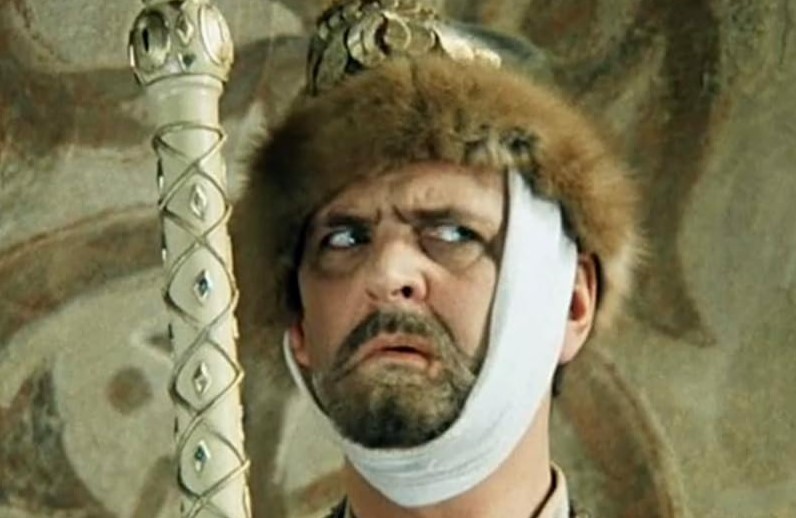
“Ivan Vasilyevich Changes Profession” (1973) represents Gaidai’s most ambitious film, a science-fiction comedy based on a Mikhail Bulgakov play. When a Soviet inventor’s time machine accidentally swaps Ivan the Terrible with a modern apartment building manager who resembles him, chaos ensues in both eras. The film allowed Gaidai to deploy his entire arsenal of comic techniques: slapstick, satire, farce, character comedy, and visual absurdism.
What makes “Ivan Vasilyevich” special is how it used its fantastical premise for genuine social commentary. The past and present weren’t that different in their absurdities—tyrannical behavior finds expression whether in 16th-century oprichnina or Soviet bureaucracy. Yet Gaidai delivered this observation through meticulously crafted comedy rather than heavy-handed messaging. The film’s ending, where order is restored and everyone returns to their proper time, carried a melancholy undertone: perhaps Soviet citizens and their historical counterparts were all trapped in their respective eras, unable to truly escape.
Gaidai’s Place in World Cinema
Comparing Gaidai to Western comedy directors requires acknowledging both similarities and fundamental differences. His visual style owes debts to the American silent masters—the geometric precision of Keaton’s compositions, the escalating chaos of Lloyd’s thrill comedies, the balletic movement of Chaplin’s chases. Yet Gaidai was working within a completely different cultural and political context that shaped his comedy in unique ways.
Unlike Billy Wilder or Blake Edwards, who could directly satirize contemporary politics and social mores, Gaidai had to operate within Soviet censorship. This constraint paradoxically sharpened his comedy. Unable to attack institutions directly, he focused on human types that existed within those institutions—bureaucrats, petty criminals, corrupt officials—making them so specifically absurd that the critique became universal. His villains were never threatening revolutionaries or political dissidents; they were small-time operators, which made them safe targets while still allowing commentary on systemic problems.
In the tradition of slapstick, Gaidai shares more with Jacques Tati than with his contemporary American comedy directors. Both Tati and Gaidai were visual purists who believed that comedy should be primarily visual, with dialogue as accompaniment rather than driver. Both created meticulously designed frames where multiple gags could occur simultaneously. Both used sound design as a comic element—Gaidai’s films are filled with precisely timed sound effects that punctuate physical gags, much like Tati’s soundscapes in “Playtime.”
However, Gaidai’s films are warmer than Tati’s, more invested in character and narrative. Where Tati created comic distance to observe modern life’s absurdities, Gaidai wanted audiences to identify with his characters. This difference reflects their cultural contexts: Tati could afford detachment as a French artist exploring modernity, while Gaidai, as a Soviet filmmaker, needed to maintain connection with his audience to survive professionally and emotionally.
Italian comedy, particularly the work of directors like Mario Monicelli and Pietro Germi, offers perhaps the closest parallel. Both Italian and Soviet cinemas in the postwar period developed comedy traditions that balanced popular entertainment with social observation. Both used comedy to process traumatic national histories and critique present realities through seemingly apolitical narratives. Gaidai’s trio of bumbling criminals shares DNA with the hapless protagonists of Italian commedia all’italiana—both represented societies struggling with modernization, inequality, and the gap between official ideology and lived reality.
The Music of Meaning: Soundtrack as Comic Element
One cannot discuss Gaidai’s films without acknowledging composer Alexandr Zatsepin’s crucial contributions. Zatsepin’s scores for Gaidai’s films are inseparable from their comic impact. Unlike typical comedy scoring that underlines gags with musical stings, Zatsepin created themes and songs that became cultural phenomena in their own right.
The song “Song of Hares” from “The Diamond Arm,” “Somewhere in This World” from “Kidnapping, Caucasian Style,” and the various musical numbers in “Ivan Vasilyevich” transcended their films to become beloved standards. Zatsepin understood that comedy music should enhance rather than explain, providing rhythm and emotional texture without overwhelming the visual comedy. His work with Gaidai demonstrated perfect collaboration—two artists who understood that every element must serve the whole.
The music also functioned as emotional counterpoint. In “The Diamond Arm,” the romantic ballads provided sincere emotional moments that made the comedy deeper. We laugh harder at the absurd situations because we care about the characters’ genuine feelings. This balance between irony and sincerity is difficult to achieve; Gaidai and Zatsepin managed it through mutual trust and shared vision.
Legacy and Influence
Leonid Gaidai’s influence on Russian comedy cannot be overstated. His films remain in constant television rotation, their lines quoted reflexively in everyday conversation. The characters he created have achieved folkloric status—every Russian speaker knows the trio, knows Shurik, knows the situations and gags from his films. This cultural penetration exceeds what almost any Western comedy has achieved in its own culture.
For subsequent generations of Russian filmmakers, Gaidai represents both inspiration and intimidation. His films set a standard for comedic craftsmanship that few have matched. Directors like Eldar Ryazanov (Gaidai’s contemporary and friendly rival) worked in a different register—more lyrical, more romantic—but even Ryazanov acknowledged Gaidai’s mastery of pure visual comedy. Later directors like Yuri Mamin and Alexander Rogozhkin would incorporate Gaidai’s techniques, particularly his ability to find absurdity in everyday Soviet life.
Internationally, Gaidai remains sadly underappreciated, a victim of the language barrier and limited distribution of Soviet films. Unlike Tarkovsky or Eisenstein, whose films were positioned as art cinema for international festivals, Gaidai’s comedies were seen as too culturally specific for export. This represents a significant loss for world cinema scholarship, as Gaidai’s work demonstrates sophisticated visual comedy comparable to the best the West produced.
The fall of the Soviet Union and the subsequent chaos of the 1990s made Gaidai’s films even more precious to Russian audiences. As the certainties of Soviet life dissolved, his films represented a kind of golden age—not because Soviet life was actually better (Gaidai’s comedies often highlighted its absurdities), but because they captured a shared cultural experience. Watching “The Diamond Arm” or “Ivan Vasilyevich” became an act of cultural continuity, a connection to a world that had vanished.
The Human Touch
What ultimately distinguishes Gaidai’s work is its humanity. Despite working in broad comedy, despite the slapstick and farce, his films never mock their characters with cruelty. The trio are bumbling criminals, but we see their friendship and loyalty. Shurik is naive, but his naivety comes from fundamental decency. Even villains receive moments of humanity that complicate our response to them.
This humanism wasn’t just artistic choice; it was moral position. Gaidai lived through Stalin’s terror, fought in World War II, worked within a repressive system that could end careers (or lives) on a whim. His choice to make comedy that celebrated human resilience and foolishness rather than cynically exploiting it reflected hard-won wisdom. Laughter, in Gaidai’s films, is never cruel—it’s a form of recognition, a way of saying “we’re all in this absurd world together.”
His collaboration with actors like Demyanenko and Pugovkin exemplified this humanism. He didn’t use actors as mere comic instruments but as creative partners. The performances in his films feel lived-in and specific because he allowed actors to bring their own understanding to the roles. This collaborative spirit extended to his entire crew—cinematographers, composers, writers—all working toward a unified comic vision.
Conclusion: The Master’s Enduring Gift
Leonid Gaidai died in 1993, shortly after the collapse of the system within which he had created his masterpieces. One wonders what he thought of the new Russia emerging from Soviet ruins—would it have been a better environment for his comedy, or would the loss of shared cultural reference points have made his type of filmmaking impossible?
What remains undeniable is his achievement: a body of work that brought joy to millions while maintaining artistic integrity and subtle social critique. His films demonstrate that comedy can be simultaneously popular and sophisticated, visually inventive and emotionally resonant, culturally specific and universally understandable. He proved that slapstick wasn’t a primitive form to be outgrown but a sophisticated language capable of expressing complex human truths.
For those of us who love cinema in all its forms, Gaidai’s work offers endless rewards. Watch how he constructs a gag across multiple shots, how he uses space and timing to maximize comic impact, how he balances ensemble work with star performances. Study how he navigates censorship through indirection, how he makes social commentary through apparently apolitical stories. Observe how he respects his audience’s intelligence while giving them accessible entertainment.
Leonid Gaidai deserves recognition not as a mere Soviet curiosity but as one of the great comedy directors of the 20th century. His films have survived political systems, cultural shifts, and generational changes because they tap into something fundamental: the human need to laugh at life’s absurdities while affirming our shared humanity. In an era when comedy often feels either toothless or cynically mean-spirited, returning to Gaidai reminds us of comedy’s higher purposes—to entertain, yes, but also to unite, to critique, and to celebrate the beautiful foolishness of being human.