There is a moment that arrives, sooner or later, for anyone who spends enough time with Tarkovsky, Bergman, Béla Tarr, Ozu, or Nuri Bilge Ceylan. You begin to sense a deeper current beneath their differences — a shared seriousness about time, silence, suffering, and moral weight. The camera stops being a window and becomes something closer to a conscience. At that point, curiosity naturally pulls you backward, toward the sources. And sooner or later, you arrive at Carl Theodor Dreyer.
Dreyer does not announce himself as a “master” in the way cinema culture often does. There are no flamboyant signatures, no instantly quotable visual tricks, no stylistic excess that can be clipped into a montage. Instead, his films confront you quietly, almost sternly. They demand not admiration but attention. They ask you to slow your breathing, to look harder at faces, to endure stretches of time where nothing happens except the gradual revelation of inner states.
For viewers already attuned to the spiritual patience of Tarkovsky, the moral austerity of Bergman, the durational severity of Béla Tarr, the compositional restraint of Ozu, or the existential stillness of Nuri Bilge Ceylan, Dreyer feels uncannily familiar — and yet more extreme. He is where many of these tendencies converge before diverging into separate traditions. Watching Dreyer is not about discovering a forgotten pioneer; it is about recognizing a foundation that still quietly holds much of serious cinema together.
Dreyer and the Idea of Cinema as Moral Space
What separates Dreyer from many of his contemporaries — and even from many later auteurs — is his belief that cinema is not merely expressive, poetic, or psychological, but fundamentally moral. Not moral in the didactic sense, and certainly not moralistic. Rather, Dreyer treats cinema as a space where ethical pressure is applied, where human beings are tested by belief systems, institutions, and their own capacity for truth.
This is one of the reasons Dreyer resonates so strongly with filmmakers like Bergman and Tarkovsky. Like them, he does not use cinema to provide answers. He uses it to pose questions that are uncomfortable, unresolved, and often unbearable. Faith in Dreyer is not reassuring. Love is not consoling. Silence is not peaceful. Everything is stripped of sentimentality.
Where Tarkovsky finds transcendence through time and nature, and Bergman through confession and psychological exposure, Dreyer finds it through severity — through reduction, restraint, and an almost brutal clarity of gaze. He removes everything non-essential until only the human face remains, confronted by power.
Early Life: Discipline, Illegitimacy, and Emotional Austerity
Carl Theodor Dreyer’s biography is not incidental to his cinema; it is etched into it. Born in 1889 to an unmarried mother and adopted into a strict Lutheran household, Dreyer grew up surrounded by discipline, emotional coldness, and moral absolutism. His adoptive mother’s controlling nature and eventual death following an attempted abortion created a lifelong preoccupation with guilt, punishment, and the suffering of women under patriarchal authority.
This background matters because Dreyer never approaches suffering abstractly. Unlike some modernist filmmakers who aestheticize pain, Dreyer treats it as something imposed — often by institutions convinced of their righteousness. His films return obsessively to women accused, judged, silenced, and destroyed in the name of morality.
You can feel this personal history most acutely in The Passion of Joan of Arc, but its echoes reverberate through Day of Wrath, Ordet, and even Gertrud. Dreyer’s cinema is not autobiographical in plot, but it is profoundly autobiographical in spirit.
Silent Cinema and the Refusal of Melodrama
Dreyer entered cinema during the silent era, a time often associated with exaggerated gestures and theatrical emotion. Yet from the beginning, he resisted this mode. Even in his early works like The President (1919) and Leaves from Satan’s Book (1921), Dreyer demonstrates a discomfort with spectacle and narrative excess.
Compared to contemporaries such as Griffith or even Eisenstein, Dreyer’s approach feels almost anti-cinematic — at least by the standards of his time. He avoids crowd-pleasing rhythms and instead gravitates toward moral stasis, moments where characters are trapped in ethical dilemmas with no clear escape.
This resistance to melodrama would later place him closer, spiritually, to Ozu — another filmmaker who refused expressive excess in favor of emotional precision. But where Ozu finds gentleness, Dreyer finds severity. Where Ozu’s cinema flows like acceptance, Dreyer’s feels carved in stone.
The Passion of Joan of Arc: The Face as Battlefield
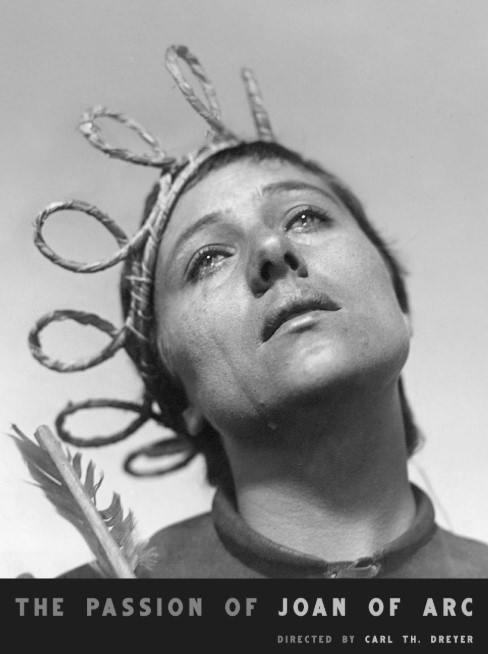
It is impossible to overstate the importance of The Passion of Joan of Arc (1928). Even for cinephiles already fluent in modernist cinema, the film feels shockingly radical. Nearly a century later, it still seems to exist outside of time.
Dreyer’s decision to construct the film almost entirely out of close-ups was not merely stylistic; it was ethical. By eliminating spatial comfort and narrative distance, he traps the viewer in the same claustrophobic ordeal as Joan herself. There is no escape into scenery, no relief through spectacle. Only faces — judging, doubting, suffering.
Maria Falconetti’s performance is often described as transcendent, and rightly so. But what makes it extraordinary is not emotional excess; it is vulnerability. Dreyer films her without protective lighting, without flattering angles, allowing her face to become raw terrain. Tears, tremors, moments of quiet terror — all are recorded with a severity that borders on cruelty.
And yet, the cruelty is never aestheticized. Dreyer does not invite us to admire Joan’s suffering. He forces us to endure it. In this sense, Joan of Arc anticipates the ethical cinema of Bresson, where performance is stripped of expressiveness until only essential movement remains.
The judges, too, are filmed in close-up, their faces grotesque not because they are villains, but because they believe completely in their authority. This is one of Dreyer’s great insights: evil rarely appears as malice; it appears as certainty.
Sound Cinema and the Retreat into Silence
The transition to sound was difficult for many silent-era directors, but for Dreyer it marked a turning inward. Vampyr (1932) is often miscategorized as a horror film, but it is better understood as a cinematic dream — dislocated, melancholy, and deeply personal.
Unlike expressionist horror, Vampyr avoids shocks. Its terror is atmospheric, rooted in uncertainty and decay. The drifting camera, the washed-out imagery, the sparse use of dialogue — all create a sense of existential unease rather than narrative fear.
For cinephiles familiar with Tarkovsky’s Mirror or Béla Tarr’s Werckmeister Harmonies, Vampyr feels like a distant ancestor. It is cinema untethered from plot, organized instead around mood and metaphysical anxiety. Its failure at the box office would haunt Dreyer, limiting his opportunities and reinforcing his reputation as an uncompromising artist.
Day of Wrath: Repression as Social System
Made during the Nazi occupation of Denmark, Day of Wrath (1943) is one of the great films about repression — not only religious, but political and social. Set during the witch trials, the film portrays a community where fear is institutionalized and desire is treated as sin.
Dreyer’s visual style here is austere but precise. The compositions are rigid, the interiors oppressive, the pacing deliberate. There is no catharsis, no release. Instead, the film accumulates moral pressure, showing how easily communities participate in cruelty when it is sanctioned by authority.
For viewers familiar with Bergman’s explorations of religious guilt or Nuri Bilge Ceylan’s portraits of moral inertia, Day of Wrath feels uncannily contemporary. Its insight is timeless: systems of belief become most dangerous when they cease to question themselves.
Ordet: Faith Without Sentimentality
If Joan of Arc is Dreyer’s most formally radical film, Ordet (1955) is his most philosophically complex. Based on a play by Kaj Munk, the film revolves around faith, skepticism, and the possibility of miracles — but it refuses to resolve these tensions comfortably.
The film’s style is deceptively simple: long takes, minimal camera movement, restrained performances. Yet this simplicity is precisely what gives the film its power. Dreyer allows time to unfold without manipulation, forcing the viewer to confront belief as lived experience rather than dramatic device.
The famous final scene — often discussed, often misunderstood — does not function as affirmation or denial. It functions as rupture. Faith in Ordet is not something one adopts; it is something that destabilizes social order.
Tarkovsky admired Ordet deeply, and its influence can be felt in his own refusal to separate the spiritual from the material. But where Tarkovsky finds poetry, Dreyer insists on clarity. The miracle in Ordet is not beautiful; it is disturbing.
Gertrud: Absolute Love and Absolute Solitude
Dreyer’s final film, Gertrud (1964), is often regarded as his most inaccessible work. It is slow, talkative, and seemingly static. And yet, for those willing to surrender to its rhythm, it reveals itself as one of the most radical statements about love in cinema history.
Gertrud demands absolute love — not companionship, not comfort, not social harmony, but total emotional truth. Her refusal to compromise alienates everyone around her and ultimately leaves her alone. Dreyer does not judge her. He simply observes the cost of integrity.
Formally, the film is extreme. Long monologues unfold in uninterrupted takes. Camera movement is minimal. Editing is almost invisible. In this, Gertrud anticipates Béla Tarr’s durational cinema and Ceylan’s later explorations of existential solitude.
The film asks an uncomfortable question: is compromise wisdom, or betrayal? Dreyer offers no answer.
Dreyer and His Cinematic Descendants
Dreyer’s influence does not manifest in imitation. No one films quite like him. Instead, his legacy appears as a shared seriousness of intent.
- Bresson inherits Dreyer’s asceticism and moral focus.
- Bergman inherits his confrontation with faith and doubt.
- Tarkovsky inherits his belief in cinema as spiritual inquiry.
- Béla Tarr inherits his patience and ethical endurance.
- Ozu, though culturally distinct, shares Dreyer’s commitment to restraint.
- Nuri Bilge Ceylan inherits his attention to silence, moral inertia, and inner conflict.
What unites these filmmakers is not style, but conviction: the belief that cinema can bear moral weight without collapsing into ideology.
Legacy: Why Dreyer Endures
In an age dominated by speed, content, and distraction, Dreyer’s films feel almost antagonistic. They refuse to accommodate the viewer. They insist on slowness, discomfort, and attention.
For cinephiles already immersed in slow cinema and modernist traditions, Dreyer is not a relic but a reference point — a reminder that rigor and compassion can coexist, that images can still interrogate rather than reassure.
To watch Dreyer is to encounter cinema at its most stripped-down and most demanding. It is to be reminded that the medium, at its best, does not exist to entertain us, but to ask us who we are — and whether we are willing to look.
Pingback: From Tarkovsky to TikTok: The Collapse of Time in Cinema - deepkino.com