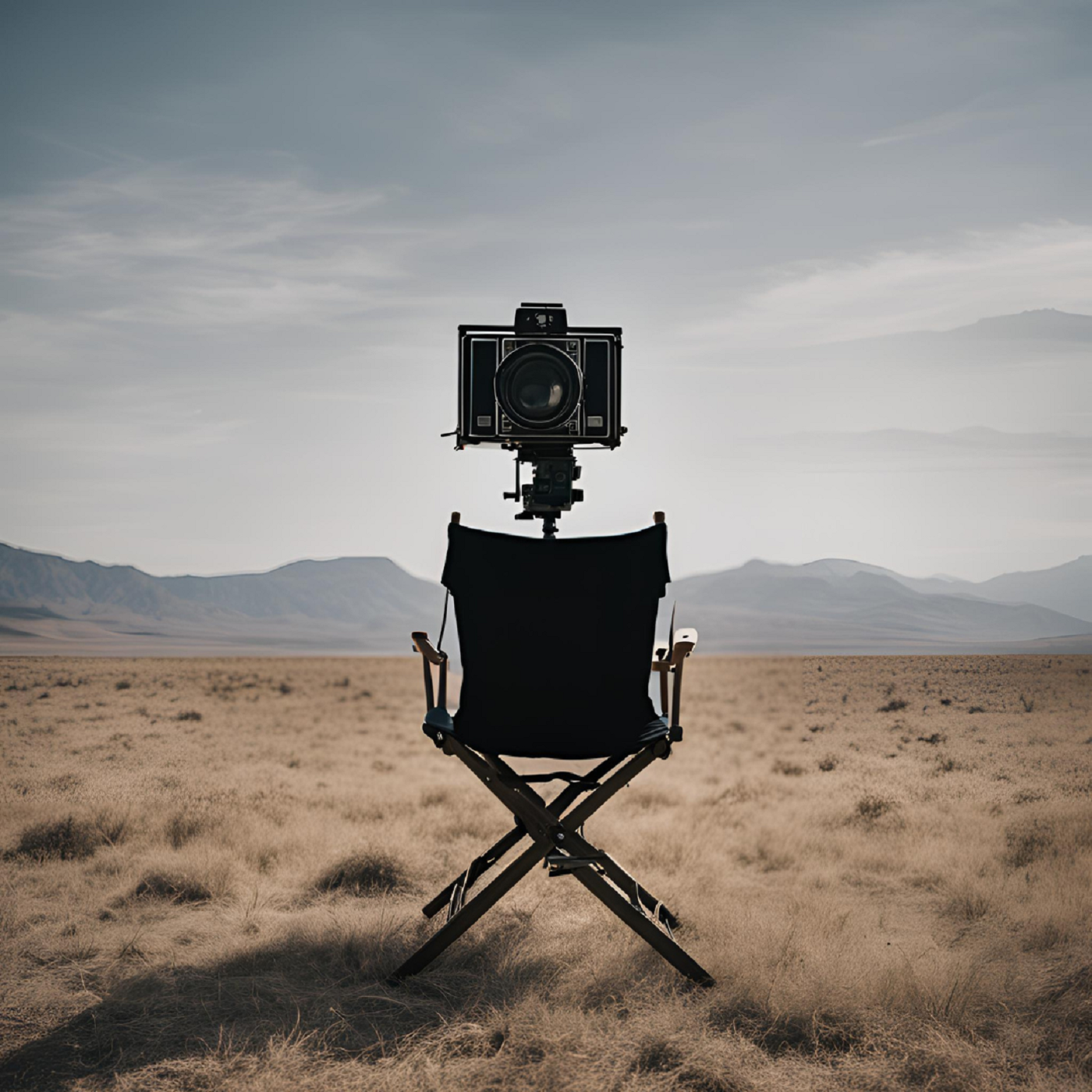
Introduction: The Crucible of the 20th Century and the Birth of Modern Cinema
The 20th century, a period of unprecedented upheaval and transformation, served as a profound crucible for the nascent art form of cinema. From its flickering beginnings at the turn of the century, film rapidly evolved from a mere novelty into a powerful medium capable of reflecting, shaping, and even distorting collective consciousness. The seismic shifts in global politics, societal structures, and technological advancements during this era did not merely influence cinema; they fundamentally forged its identity, imbuing it with a capacity for mass communication and ideological dissemination that was both exhilarating and terrifying. This first part of our exploration delves into the foundational period of 1900 to 1945, examining how the cataclysmic events of World War I, the Russian Revolution, the rise of Fascism and Nazism, and the devastating expanse of World War II irrevocably altered the trajectory of filmmaking, laying the groundwork for its role as a mirror and a shaper of mass ideology.
For the cinephile, this era is not merely a collection of historical dates but a series of aesthetic ruptures. It is the moment when the “sculpting in time”—as Andrei Tarkovsky would later describe the essence of cinema—began to grapple with the heavy, often blood-soaked, weight of history. The 20th century demanded a new language of images, one that could encompass the scale of industrial slaughter, the fervor of revolutionary hope, and the chilling precision of state-sponsored propaganda.
World War I: The Great War and the Reshaping of Global Film Landscapes
The outbreak of World War I in 1914 marked a brutal turning point for humanity, and its impact on the burgeoning film industry was equally profound. Before the war, European nations, particularly France and Italy, dominated global film production, boasting vibrant studios and a flourishing international trade. However, the conflict brought this golden age to an abrupt halt. As national resources were diverted to the war effort, film production in many European countries suffered immensely. Studios closed, talent was conscripted, and international markets became inaccessible. France’s Pathé, once a titan of the industry and a major supplier to the American market, saw its operations grind to a near standstill. Italy, renowned for its epic historical spectacles like Cabiria (1914) and the allure of its silent divas, also experienced a significant decline in its cinematic output.
The French Impressionist Response: Photogénie and the Internal War
In France, the war did not just destroy production; it altered the very soul of the films being made. Emerging from the trauma of the conflict, a group of filmmakers known as the French Impressionists—including Abel Gance, Louis Delluc, Jean Epstein, and Germaine Dulac—sought to move beyond mere narrative. They developed the concept of photogénie, the idea that the film camera could reveal a hidden, poetic truth within the material world that was invisible to the naked eye.
Abel Gance’s J’accuse (1919) stands as a monumental cinematic response to the Great War. Filmed partly on actual battlefields while the conflict was still raging, Gance used real soldiers as extras—men who were on leave and would soon return to the front, many never to survive. The film’s most haunting sequence, the “Return of the Dead,” where fallen soldiers rise from their graves to ask if their sacrifice was worth it, remains one of the most powerful anti-war statements in history. Gance’s use of rapid-fire editing and subjective camerawork was a direct attempt to replicate the fragmented, traumatized consciousness of a generation that had witnessed the end of the old world.
The Rise of Hollywood: A New Hegemony
In stark contrast to Europe’s cinematic struggles, the United States, entering the war late in April 1917, experienced an unprecedented boom. Before the war, the U.S. produced just over half of the world’s movies; by 1919, this figure had soared to ninety percent of films exhibited in Europe and nearly all of those shown in South America . This period saw the consolidation of what we now recognize as Hollywood. Independent production gave way to a centralized studio system, driven by the increasing length and cost of films. Practical considerations, such as coal rationing and electricity shortages on the East Coast, also pushed filmmakers westward to the more conducive climate of California, establishing Los Angeles as the global epicenter of film production .
While Hollywood began to project its dreams globally, it often overlooked the narratives of its own diverse population. This led to independent efforts, such as Oscar Micheaux’s adaptation of his 1917 novel The Homesteader, to tell African American stories largely absent from mainstream screens . The war also profoundly transformed cinema’s role as a tool for propaganda. Britain, already adept at using film for wartime messaging, set a new standard with The Battle of the Somme (1916). This feature-length documentary offered audiences a visceral, if curated, glimpse of the Western Front, showcasing the grim realities of trench warfare and barbed wire, and proving film’s immense power as a governmental tool .
Germany and the Birth of Ufa: Propaganda and Expressionism
Germany, initially lagging in cinematic propaganda, recognized its importance by mid-1917. A July 1917 letter to the country’s Ministry of War urged action, noting that the war had demonstrated the “supremacy of picture and film as instruments of education and influence.” This led to the establishment of Ufa (Universum Film AG) on December 18, 1917, through the consolidation of leading studios. Ufa was designed to be a pro-German propaganda machine, but it also became the cradle of German Expressionism.
The Expressionist movement, which flourished in the wake of Germany’s defeat, was characterized by distorted sets, high-contrast lighting (chiaroscuro), and exaggerated performances. Films like Robert Wiene‘s The Cabinet of Dr. Caligari (1920) used these techniques to reflect the psychological instability and moral decay of post-war Germany. The sharp, jagged lines of the sets and the oppressive shadows were not merely stylistic choices; they were the visual manifestation of a nation’s collective nightmare, a theme that would later be analyzed by Siegfried Kracauer in his seminal work From Caligari to Hitler.
The Russian Revolution: A New Dawn for Cinematic Ideology
The October Revolution of 1917 in Russia was not merely a political upheaval; it was a radical reordering of society that sought to harness all forms of art, including cinema, for the construction of a new socialist state. For the Bolsheviks, film was not just entertainment but a potent instrument for mass education and ideological indoctrination. Vladimir Lenin famously declared, “Of all the arts, for us cinema is the most important.” This conviction led to the rapid nationalization of the film industry and the emergence of a groundbreaking cinematic movement: Soviet Montage.
The Science of the Shot: Kuleshov and the Foundation of Meaning
Soviet Montage theory, championed by filmmakers and theorists such as Sergei Eisenstein, Dziga Vertov, and Lev Kuleshov, revolutionized film grammar. Rejecting the notion of film as a mere recording of reality, they believed that meaning was created through the juxtaposition of images – the “montage” of shots. Lev Kuleshov’s famous experiments demonstrated how the same shot of an actor’s neutral face could evoke different emotions depending on whether it was followed by a bowl of soup (hunger), a coffin (sorrow), or a child (affection). This “Kuleshov Effect” proved the audience’s active role in constructing meaning and provided the ideological foundation for manipulating perception.
Sergei Eisenstein: The Architect of Conflict
Sergei Eisenstein became the most iconic figure of Soviet Montage, using his films to dramatize historical events and celebrate the revolutionary spirit. Eisenstein viewed montage not as a smooth transition but as a “collision” of shots that would strike the viewer’s consciousness and generate new ideas. In his masterpiece, Battleship Potemkin (1925), he applied five distinct types of montage: metric, rhythmic, tonal, overtonal, and intellectual.
| Montage Type | Function in Battleship Potemkin |
| Metric | Cutting based on the absolute length of the shots, creating a mechanical tempo. |
| Rhythmic | Cutting based on the movement within the frame, such as the rhythmic descent of soldiers’ boots. |
| Tonal | Cutting based on the emotional “tone” or lighting of the shots (e.g., shadows vs. light). |
| Overtonal | A synthesis of metric, rhythmic, and tonal montage to produce a complex emotional effect. |
| Intellectual | Using images to convey abstract concepts (e.g., the rising stone lions representing the waking proletariat). |
The Odessa Steps sequence remains the ultimate crystallization of these theories. Through the rapid juxtaposition of “inflammatory images”—a mother carrying her dead child, a runaway baby carriage, the faceless, robotic advance of the Tsar’s soldiers—Eisenstein bypasses the viewer’s logic and appeals directly to their emotions and revolutionary instincts. The sequence is a technical marvel of temporal expansion; the massacre, which would have taken minutes in reality, is stretched through editing into a monumental, agonizing experience that demands the viewer’s solidarity with the oppressed.
Dziga Vertov and the Kino-Eye: The Truth of the Machine
Dziga Vertov, another pioneer, advocated for the “Kino-Eye”—a belief that the camera, unburdened by human perception, could capture a deeper, more objective truth. His Man with a Movie Camera (1929) is a dazzling, experimental documentary that showcases urban life in Soviet cities. Vertov uses double exposures, fast motion, slow motion, and split screens to celebrate industrialization and collective labor. For Vertov, the filmmaker was a “constructor” who used the machine (the camera) to reveal the hidden structures of the world. His work embodied the avant-garde spirit of the early Soviet era, pushing the boundaries of what cinema could be before the state-mandated shift toward Socialist Realism.
Fascism and Nazism: Cinema as a Weapon of the State
The rise of Fascism in Italy under Benito Mussolini and Nazism in Germany under Adolf Hitler ushered in an era where cinema was explicitly recognized and exploited as a potent instrument of state power and propaganda. Both regimes understood the unparalleled ability of film to shape public opinion, disseminate ideology, and mobilize populations. Mussolini famously declared, “Cinema is the most powerful weapon,” a sentiment echoed by Hitler and his propaganda minister, Joseph Goebbels.
Fascist Italy: The Spectacle and the White Telephone
In Fascist Italy, the regime systematically invested in and controlled the film industry. The establishment of institutions like Cinecittà studios in 1937—the largest film studio in Europe at the time—and the Centro Sperimentale di Cinematografia aimed to create a robust national cinema that would promote Fascist values. However, the Italian approach was often more complex than mere didacticism. The regime favored “Cinema of Distraction,” exemplified by the telefoni bianchi (white telephone) comedies. These films depicted an affluent, idealized upper-class world, distracting the public from the economic hardships of the Depression and the political realities of the dictatorship.
Yet, within this system, the seeds of something more profound were being sown. Alessandro Blasetti’s 1860 (1934), while celebrating the unification of Italy to serve Fascist nationalism, used non-professional actors and location shooting in a way that prefigured the Neorealist movement. Similarly, Mario Camerini’s films, like The Rails (1929), introduced a sense of everyday realism that would later be radicalized by filmmakers like De Sica and Rossellini.
Nazi Germany: The Aestheticization of Politics
In Nazi Germany, Joseph Goebbels exerted even tighter control over the film industry through the Reich Film Chamber. Goebbels believed that propaganda should be effective rather than obvious, stating, “Propaganda is good when it is successful, and not so good when it is not.” Nazi cinema produced a range of films, from blatant anti-Semitic screeds like Jud Süß (1940) to seemingly innocuous entertainment films that subtly embedded Nazi ideology.
The most significant cinematic figure of this era was Leni Riefenstahl. Her work for the Nazi regime represents the ultimate “aestheticization of politics,” a term coined by Walter Benjamin to describe how Fascism uses art to turn political life into a spectacle. Riefenstahl’s Triumph of the Will (1935), a documentary of the 1934 Nuremberg Rally, used innovative techniques to create a quasi-religious experience.
Key Cinematic Techniques in Riefenstahl’s Propaganda:
•Low Angles: Shooting Hitler from a low perspective to make him appear monumental and god-like.
•Moving Cameras: Using elevators on flagpoles and cameras on tracks to capture the scale and geometry of the massed crowds.
•Wagnerian Music: Employing a stirring, orchestral score to evoke a sense of national destiny and mythic grandeur.
•Rhythmic Editing: Cutting the images of marching soldiers and cheering crowds to create a hypnotic, unified tempo that suggested a nation in perfect, mechanical harmony.
In Olympia (1938), her documentary of the 1936 Berlin Olympics, Riefenstahl shifted her focus to the “neoclassical” beauty of the human body. By using slow motion, underwater cameras, and reverse motion, she transformed athletic competition into a timeless, mythic struggle. While ostensibly a celebration of international sport, the film’s emphasis on physical perfection and racial vitality was deeply aligned with Nazi racial ideology.
World War II: Global Conflict and the Cinematic Response
World War II, a conflict of unprecedented scale and devastation, profoundly reshaped global cinema, transforming it into a vital component of national war efforts and a powerful medium for reflecting the human experience of total war.
Hollywood at War: The Bureau of Motion Pictures
In the United States, Hollywood fully mobilized for the war effort. The Office of War Information (OWI) established the Bureau of Motion Pictures to coordinate with studios. Films served multiple purposes: boosting morale, demonizing the enemy, and glorifying Allied forces. Directors like Frank Capra produced the Why We Fight series, which repurposed footage from enemy propaganda films (like Triumph of the Will) to explain the war’s causes to American soldiers.
A cinematic masterpiece of this era is Michael Curtiz’s Casablanca (1942). While ostensibly a romantic melodrama, the film is a sophisticated piece of interventionist propaganda. Rick Blaine’s transition from cynical neutrality (“I stick my neck out for nobody”) to committed sacrifice mirrors the American shift from isolationism to global involvement. The film’s “La Marseillaise” sequence—where the patrons of Rick’s Café drown out the singing of Nazi officers—remains one of the most emotionally resonant examples of cinema as a tool for political resistance.
Soviet Cinema: The Great Patriotic War
Soviet cinema during the war was defined by the “Great Patriotic War.” Filmmakers created heroic epics and poignant dramas that depicted the bravery of the Red Army and the immense suffering of the Soviet people. Sergei Eisenstein’s Ivan the Terrible (1944), though set in the 16th century, was commissioned by Stalin as a historical allegory for the need for a strong, centralized leader during a time of national crisis. However, the film’s second part was suppressed because its portrayal of the Tsar’s psychological decline and the “Iron Guard” was seen as a critique of Stalin’s own secret police and paranoia.
The Birth of Neorealism: From the Ashes of War
The most significant cinematic development born from the ashes of WWII was Italian Neorealism. Emerging from a nation devastated by war and occupation, filmmakers like Roberto Rossellini and Vittorio De Sica rejected the escapism of the telefoni bianchi era. They took their cameras to the streets, using non-professional actors and natural lighting to depict the harsh realities of post-war Italian life.
Luchino Visconti‘s Ossessione (1943), often cited as the first Neorealist film, was made while the war was still ongoing. It brought a gritty, dark realism to the Italian landscape that was a direct challenge to the regime’s idealized images. Rossellini’s Rome, Open City (1945), filmed shortly after the liberation of Rome, used actual locations and a raw, documentary-like style to tell the story of the Italian resistance. These films were a radical attempt to reclaim reality from the distortions of ideology, asserting the dignity of the individual amidst the ruins of history.
Deep Dive: The Philosophical Soul of Early Cinema
To truly understand how these events shaped cinema, one must look beyond the screen and into the philosophical shifts they triggered. For a filmmaker like Andrei Tarkovsky, cinema was a way of “sculpting in time,” of capturing the spiritual essence of a moment. The filmmakers of the early 20th century were the first to discover this power, and they did so under the most extreme conditions.
The Tarkovsky Connection: Precursors to Spiritual Cinema
While Tarkovsky’s major works came later, his cinematic DNA was forged in the theories of the 1920s. He admired the Soviet pioneers’ commitment to the image, even as he eventually rejected Eisenstein’s aggressive montage in favor of the “inner rhythm” of the shot. The early 20th century was the moment when cinema moved from being a recording of the world to being an interpretation of the soul.
When we watch the “Return of the Dead” in Gance’s J’accuse, we see the beginning of what Tarkovsky would call the “spiritual life of the image.” It is a moment where the physical reality of the film—the celluloid, the light, the actors—is transcended by a higher, moral truth. The trauma of WWI demanded this transcendence; a purely realistic cinema could not encompass the scale of the tragedy.
The Legacy of the 1900-1945 Era
By 1945, cinema had become the primary medium through which humanity understood its own history. It had been used to build nations, to incite revolutions, to justify genocide, and to offer hope. The language of film—the close-up, the montage, the moving camera—was now fully developed, a powerful and dangerous tool in the hands of both artists and dictators.
As we move into Part II, we will see how the trauma of this period gave way to a new kind of fear—the existential dread of the nuclear age—and how cinema evolved once again to meet the challenges of a divided world.
Global Ripples: Beyond the Western Front
While the major cinematic ruptures of the early 20th century are often associated with Europe and Hollywood, the seismic shifts of the era were truly global. In Asia and Latin America, filmmakers were not merely passive observers; they were developing their own unique responses to the pressures of modernization, disaster, and colonial influence.
Japan: The Great Kantō Earthquake and the Pure Film Movement
In Japan, the 1920s were a period of radical transition. The Great Kantō Earthquake of 1923 was a literal and metaphorical rupture. It obliterated the metropolitan hub of Tokyo, destroying most of the existing film archives and studios. From these ashes, a more modern Japanese cinema emerged.
Before the earthquake, Japanese cinema was heavily influenced by traditional theater, particularly the benshi (live narrators) and onnagata (male actors playing female roles). However, the post-earthquake reconstruction provided an impetus for the Pure Film Movement (Jun’eiga-geki undō). This movement, led by critics and filmmakers like Kaeriyama Norimasa and Kinugasa Teinosuke, advocated for a cinema that was “purely” cinematic—free from the constraints of theater. They called for the use of female actresses, more realistic acting styles, and sophisticated editing techniques inspired by Western films.
Kinugasa Teinosuke’s A Page of Madness (1926) is a masterpiece of this era. An experimental silent film set in an asylum, it uses rapid editing, subjective camerawork, and double exposures to reflect the internal state of its characters. It is a stunning example of how global modernist trends, like German Expressionism and Soviet Montage, were “indigenized” and transformed within the Japanese context.
India: Mythologicals and the Seeds of Social Reform
In India, the early 20th century saw the birth of a cinematic tradition that would eventually become the largest in the world. Dadasaheb Phalke’s Raja Harishchandra (1913), the first Indian feature film, established the mythological film as a foundational genre. These films used the new technology of cinema to bring ancient stories and religious epics to life, resonating deeply with a population under British colonial rule.
By the 1920s and 1930s, however, Indian cinema began to turn its gaze toward contemporary social issues. The “social film” emerged as a powerful tool for disseminating ideas of social reform, particularly concerning caste, gender, and the independence movement. Films like Malapilla (1938), which addressed untouchability, demonstrated how cinema could be a site of political and social contestation even before the full-fledged independence of 1947. The transition to “talkies” with Alam Ara (1931) further solidified the unique Indian cinematic form, integrating music and dance in a way that would define the industry’s identity for decades.
Latin America: Mexico, Brazil, and the Challenge of Hollywood
In Latin America, the impact of World War I was felt through the sudden dominance of Hollywood. Before the war, French and Italian films were widely exhibited; after 1914, American films flooded the market, often exceeding 80% of screen time. This economic hegemony made it difficult for local industries to flourish, yet significant developments occurred in the larger countries like Mexico, Argentina, and Brazil.
In Mexico, the silent era was characterized by a strong documentary tradition, often focusing on the events of the Mexican Revolution. Filmmakers captured the real-life conflict, creating a visual record of the struggle that blurred the lines between newsreel and narrative. In Brazil, the early 20th century saw the emergence of “cycles” of production in different regions, with filmmakers experimenting with various genres and styles. However, the introduction of sound in the late 1920s presented a significant barrier, as many Latin American countries lacked the capital to invest in the new technology, leading to a temporary halt in production in several regions.
The Architecture of the Studio: Hollywood’s Vertical Integration
As the 1920s progressed, Hollywood evolved from a collection of independent producers into a sophisticated, vertically integrated industry. The “Big Five” (Paramount, MGM, 20th Century Fox, Warner Bros., and RKO) and the “Little Three” (Universal, Columbia, and United Artists) controlled every aspect of the film business: production, distribution, and exhibition.
This vertical integration allowed the studios to maintain a consistent quality and style, giving birth to the “Classical Hollywood Cinema.” This style was characterized by:
•Invisible Editing: Techniques like continuity editing and the 180-degree rule were designed to make the film’s construction invisible, allowing the viewer to be fully immersed in the narrative.
•Star System: The cultivation of “stars” whose public personas were meticulously managed to attract audiences.
•Genre Conventions: The standardization of genres (westerns, musicals, comedies) to ensure predictable commercial success.
While this system was highly efficient and produced many masterpieces, it also enforced a degree of ideological conformity. The “Hays Code” (Motion Picture Production Code), adopted in 1930 and strictly enforced from 1934, set rigid moral guidelines for what could be shown on screen, further shaping the content and ideology of American cinema for decades.
The Great Depression: Cinema of Survival and Escape
The 1929 stock market crash and the subsequent Great Depression were not just economic events; they were profound psychological shocks that fundamentally altered the relationship between the audience and the screen. In the 1930s, cinema became the most accessible form of mass entertainment, a “dream factory” that offered both a refuge from reality and a way to process the collective trauma of poverty and unemployment.
Hollywood: Between Escapism and Social Realism
In Hollywood, the response to the Depression was two-fold. On one hand, there was a surge in high-budget musicals and screwball comedies. Busby Berkeley’s choreographed spectacles, like 42nd Street (1933) and Gold Diggers of 1933, used the camera to create kaleidoscopic patterns of human bodies, offering a dazzling visual escape. These films often acknowledged the Depression—the opening of Gold Diggers features the song “We’re in the Money”—only to whisk the audience away into a world of glamour and abundance.
On the other hand, the 1930s also saw the rise of the gangster film and the social protest film. Films like Mervyn LeRoy’s I Am a Fugitive from a Chain Gang (1932) and Little Caesar (1931) depicted a world where the American Dream had curdled into a nightmare of crime and injustice. These films were gritty and unflinching, reflecting the desperation of a society where traditional institutions had failed. Charlie Chaplin’s Modern Times (1936) provided a brilliant, satirical critique of industrial labor and the dehumanizing effects of the Depression, using his “Little Tramp” persona to highlight the plight of the common man in a world of machines and breadlines.
The Breen Office and the “Moral” Recovery
The desperation of the Depression also led to a perceived breakdown in social morals, which in turn triggered a conservative backlash. The Motion Picture Production Code, enforced by the Breen Office from 1934, dramatically altered the content of Hollywood films. It restricted the depiction of crime, sexuality, and social rebellion, pushing Hollywood toward more wholesome, family-oriented narratives. Paradoxically, this enforcement also led to more sophisticated screenwriting, as filmmakers had to find subtle, “coded” ways to address mature themes.
The New Woman and the Flapper: Redefining Gender on Screen
The 1920s were a period of radical change in gender roles, driven by the aftermath of WWI and the suffrage movement. Cinema played a central role in constructing and disseminating the image of the “New Woman.”
The Flapper, characterized by her short hair, bobbed skirts, and independent spirit, became a global icon through stars like Clara Bow (“The It Girl”) and Joan Crawford. These characters were self-assertive, sexually liberated, and often sought romance outside of traditional class boundaries. In films like It (1927), Bow’s character used her charm and independence to navigate the modern world, challenging the Victorian ideals of femininity.
However, this liberation was often contained within the narrative. While the Flapper was allowed to be rebellious and modern for most of the film, the ending usually saw her safely married off, suggesting that her independence was a temporary phase before returning to domesticity. Nevertheless, the visual presence of these women on screen provided a powerful model for female audiences worldwide, contributing to a broader cultural shift in the perception of women’s place in society.
Precursors to Noir: Shadows of the 1930s
While “Film Noir” is typically associated with the 1940s, its stylistic and thematic roots were firmly planted in the 1930s, particularly in Europe. The existential anxiety and fatalism of the era found expression in two major movements: German Expressionism and French Poetic Realism.
Fritz Lang: The Architect of Paranoia
Fritz Lang‘s work in Germany before his flight to Hollywood represents a pinnacle of cinematic sophistication. Metropolis (1927) used monumental sets and expressionist lighting to create a dystopian vision of class struggle and industrialization. His first sound film, M (1931), is a chilling study of a child murderer, but it is also a profound critique of a society that is itself becoming increasingly mechanized and paranoid. Lang’s use of sound—the whistling of “In the Hall of the Mountain King”—as a leitmotif for the killer was a revolutionary development in film language.
French Poetic Realism: Lyrical Fatalism
In France, the 1930s saw the emergence of Poetic Realism, a movement that combined realistic settings with a lyrical, fatalistic atmosphere. Filmmakers like Jean Renoir, Marcel Carné, and Julien Duvivier focused on marginalized characters—criminals, workers, outcasts—who were trapped by their circumstances and their past.
Jean Renoir’s The Grand Illusion (1937) is a profound meditation on class and national identity set in a WWI prisoner-of-war camp. His The Rules of the Game (1939), released on the eve of WWII, is a scathing critique of the French upper class, using a complex, deep-focus style to depict a society that is literally dancing on the edge of a volcano. These films, with their moral ambiguity and sense of impending doom, directly influenced the development of American Film Noir when many European filmmakers fled to Hollywood.
The Social Impact of the First Talkies
The transition from silent to sound film (1927–1935) was perhaps the most disruptive technological change in cinema history. It was not just a technical upgrade; it was a social revolution.
The “Talkies” fundamentally changed the audience’s relationship with the stars. Voices had to match personas, and many silent stars saw their careers end overnight. More importantly, sound introduced a linguistic barrier to global cinema. While silent films were truly universal, sound films were tied to specific languages, leading to the rise of dubbing, subtitling, and the growth of national film industries that could cater to local linguistic groups. In countries like India and Egypt, the introduction of sound allowed for the integration of traditional music and storytelling, fostering a sense of national identity and cultural pride through the medium of film.
The Animated World: From Novelty to Industry
The early 20th century was also the period when animation evolved from a simple camera trick into a sophisticated industry and art form. This development was driven by a series of technological innovations and the creative rivalry between two major studios: Disney and Fleischer.
Disney and the Multiplane Revolution
Walt Disney’s studio, founded in the 1920s, became the leader in “character animation.” The introduction of synchronized sound in Steamboat Willie (1928) made Mickey Mouse a global sensation. In the 1930s, Disney pushed the technological boundaries with the multiplane camera, first used in the Silly Symphony short The Old Mill (1937) and later in the first feature-length animated film, Snow White and the Seven Dwarfs (1937). This camera allowed for a sense of three-dimensional depth and complex lighting that was previously impossible in animation, elevating the medium to the status of “high art.”
The Fleischer Brothers: Rotoscoping and Urban Surrealism
Max and Dave Fleischer offered a starkly different vision of animation. While Disney sought realism and fairy-tale charm, the Fleischers embraced the surreal, urban energy of New York City. Their characters, like Betty Boop and Popeye the Sailor, were often gritty and sexually suggestive, reflecting the more adult atmosphere of the pre-code era. Max Fleischer’s invention of rotoscoping—a process where live-action footage is traced to create fluid, realistic movement—gave their characters a unique, uncanny quality. Their films often felt like fever dreams of the industrial age, capturing the chaotic, mechanical pulse of the modern city.
The First Red Scare: Hollywood and the Fear of Subversion
The Russian Revolution of 1917 did not just change Soviet cinema; it sent shockwaves through Hollywood. The First Red Scare (1919–1920) led to an atmosphere of paranoia and suspicion regarding “subversive” elements in the film industry.
Under pressure from the government and conservative groups, movie executives began to monitor the political affiliations of their employees. This period saw the first instances of “blacklisting,” where suspected radicals were barred from employment. The fear of being labeled “Red” led many studios to produce films that explicitly celebrated American capitalism and warned against the dangers of foreign ideologies. This early suppression of political dissent set a precedent for the much more severe Hollywood Blacklist that would occur during the Cold War in the 1940s and 50s.
The Birth of the Documentary: Framing Reality
The 1920s and 1930s also saw the emergence of the documentary as a distinct cinematic genre. Before this, non-fiction films were mostly simple newsreels or “travelogues.”
Robert Flaherty: The Romantic Vision
Robert Flaherty’s Nanook of the North (1922) is often cited as the first feature-length documentary. Flaherty sought to capture a “poetic truth” rather than a literal one, often using reenactments to depict the traditional life of the Inuit. While criticized today for its lack of authenticity, Flaherty’s work established the idea of the documentary as a narrative art form that could elicit empathy and wonder.
John Grierson: Cinema as Social Utility
In Britain, John Grierson took a different approach. He coined the term “documentary” and saw the medium as a tool for social education and government reform. Grierson’s movement, exemplified by films like Drifters (1929), focused on the dignity of labor and the workings of the industrial state. For Grierson, the documentary was a way of making the “complexities of the modern world” understandable to the average citizen, a mission that was particularly urgent during the economic slump of the 1930s.
The Soviet Documentary: The Machine and the Mass
As discussed earlier, Dziga Vertov’s work in the Soviet Union represented the most radical end of the documentary spectrum. For Vertov, the documentary was not just about showing reality; it was about using the “Kino-Eye” to deconstruct and reassemble the world according to revolutionary principles. His work was a direct challenge to the “romantic” documentaries of the West, asserting that the machine and the collective mass were the true subjects of the modern age.
The Spanish Civil War: A Global Rehearsal
The Spanish Civil War (1936–1939) was a crucial turning point that mobilized filmmakers from around the world. It was seen as a struggle between democracy and fascism, a rehearsal for the global conflict that was soon to follow.
Filmmakers like Joris Ivens (The Spanish Earth, 1937, with narration by Ernest Hemingway) and André Malraux (Espoir: Sierra de Teruel, 1939) used the camera to document the struggle and rally international support for the Republican cause. These films were often experimental and deeply partisan, pushing the boundaries of documentary and propaganda. The conflict also saw the use of film as a direct weapon of war, with both sides using mobile cinemas to screen propaganda to soldiers and civilians.
The Invisible Enemy: The 1918 Flu Pandemic and the Studio System
While World War I was a visible cataclysm, the 1918–1919 Influenza Pandemic was an invisible one that had a profound, if often overlooked, impact on the film industry. The “Spanish Flu” killed millions and led to the widespread closure of movie theaters across the United States and Europe for months at a time.
This crisis forced a major structural reorganization of the industry. Small, independent theater owners, unable to survive months of zero revenue, were often bought out by larger production companies. This accelerated the move toward vertical integration, as studios realized they needed to control their own exhibition outlets to ensure financial stability. The pandemic also changed audience behavior; when theaters reopened, there was a surge in demand for high-quality, “feature-length” entertainment, further cementing the dominance of the major Hollywood studios over the smaller, regional producers.
The Thinking Eye: The Birth of Film Theory
As cinema became a dominant social force, a new generation of thinkers began to ask: What is film? The 1920s and 1930s saw the birth of film theory, as intellectuals sought to distinguish cinema from the older arts of theater and painting.
•Hugo Münsterberg: In The Photoplay: A Psychological Study (1916), he argued that cinema was unique because it followed the laws of the human mind (attention, memory, emotion) rather than the laws of the physical world.
•Béla Balázs: In Visible Man (1924) and The Spirit of Film (1930), Balázs celebrated the close-up as a revolutionary tool that could reveal the “micro-physiognomy” of the human soul, creating a new kind of visual intimacy.
•Rudolf Arnheim: In Film as Art (1932), Arnheim argued that cinema’s artistic value lay precisely in its limitations (lack of color, lack of 3D depth). He believed that these “deficiencies” forced the filmmaker to use creative techniques like lighting and composition to interpret reality rather than just record it.
These early theorists provided the intellectual framework for the avant-garde movements of the era, from Soviet Montage to French Impressionism, asserting that the filmmaker was an artist-philosopher who “sculpted” reality through the lens of the camera.
Cinema and the Machine Age: The Urban Symphony
The early 20th century was the era of the Machine Age, characterized by rapid urbanization, industrialization, and the speed of the automobile and the airplane. Cinema, itself a product of the machine, was uniquely suited to capture this new, frantic reality.
The “City Symphony” films of the 1920s—such as Walter Ruttmann’s Berlin: Symphony of a Metropolis (1927) and Alberto Cavalcanti’s Rien que les heures (1926)—used rhythmic editing and experimental camera angles to depict the city as a living, breathing organism. These films were not just documentaries; they were visual poems that celebrated the mechanical pulse of the modern world. They reflected the “New Objectivity” (Neue Sachlichkeit) in art, which sought to capture the world with a detached, industrial precision.
This fascination with the machine also had a darker side. As seen in Metropolis and Modern Times, the machine was often depicted as an oppressive force that threatened to consume the individual. The “aesthetic of the machine” influenced everything from set design to lighting, creating a cinematic world that was increasingly defined by geometry, shadow, and mechanical movement.
The Movie Palace: Architecture of Dreams
The 1920s also saw the rise of the Movie Palace, grand, atmospheric theaters that were designed to provide an immersive, luxurious experience for the mass audience. Architects like S. Charles Lee and Thomas W. Lamb created “temples of cinema” that drew on exotic styles—Egyptian, Mayan, Baroque—to transport the viewer even before the film began.
These palaces were social equalizers; for the price of a ticket, a factory worker could sit in a velvet seat under a crystal chandelier, enjoying the same luxury as a millionaire. This democratization of luxury was a key part of cinema’s social power, making it the “cathedral of the 20th century” where the collective dreams and anxieties of the masses were played out on a monumental scale.
The Dawn of Color: Technicolor and the New Aesthetic
While black and white cinema dominated the first half of the 20th century, the 1930s saw the gradual introduction and refinement of Technicolor, a process that would fundamentally alter cinematic aesthetics and storytelling. The three-strip Technicolor process, perfected in the mid-1930s, allowed for a full spectrum of vibrant colors, moving beyond the limited palettes of earlier two-color systems.
Early Technicolor was expensive and technically demanding, requiring specialized cameras and lighting. This meant it was primarily used for prestige productions, often musicals and historical epics, where the visual spectacle was paramount. Films like The Adventures of Robin Hood (1938) and The Wizard of Oz (1939) showcased the dazzling potential of color, using it to create fantastical worlds and heighten emotional impact. In The Wizard of Oz, the transition from the sepia-toned Kansas to the vibrant, saturated world of Oz was a powerful cinematic moment, symbolizing the journey from mundane reality to magical fantasy.
Technicolor was not merely a cosmetic addition; it influenced genre conventions and narrative choices. The heightened realism and emotional intensity that color could convey made it particularly suited for genres that relied on spectacle and escapism, providing a stark contrast to the often gritty realism of black and white films. However, some filmmakers and critics initially resisted color, fearing it would detract from the artistic integrity of cinema, arguing that black and white offered a more abstract and therefore more artistic representation of reality.
German Expressionism: Beyond Caligari and the Political Subtext
While The Cabinet of Dr. Caligari (1920) remains the most iconic example of German Expressionism, the movement encompassed a broader range of films and reflected a deeper social and political context than just post-WWI trauma. The distorted sets, exaggerated acting, and chiaroscuro lighting were not merely stylistic choices; they were a direct response to the psychological and societal anxieties of the Weimar Republic.
Fritz Lang’s Metropolis (1927), for instance, used expressionist architecture and design to create a monumental, dystopian city that reflected the anxieties of industrialization and class conflict. The film’s visual style, with its towering skyscrapers and subterranean worker cities, was a powerful commentary on the dehumanizing effects of modern capitalism. Similarly, F.W. Murnau‘s Nosferatu (1922), an unauthorized adaptation of Bram Stoker’s Dracula, used expressionist lighting and shadow to create a pervasive sense of dread and unease, tapping into the collective fears of disease and the unknown that lingered after the war and the flu pandemic.
These films often explored themes of madness, betrayal, and the struggle against oppressive forces, reflecting a society grappling with political instability, economic hardship, and the lingering trauma of war. German Expressionism, therefore, was not just an aesthetic movement; it was a profound artistic response to a turbulent historical period, laying the groundwork for later genres like Film Noir and horror.
Linguistic Barriers and National Cinemas
One of the most immediate impacts of sound was the creation of linguistic barriers. Silent films, with their intertitles, were universally accessible, allowing for a free flow of cinematic culture across borders. With the advent of dialogue, films became tied to specific languages. This led to a decline in the international exchange of films and fostered the growth of distinct national cinemas. Countries like India, which had a burgeoning silent film industry, found new opportunities to create films in local languages, integrating traditional music and storytelling forms that resonated deeply with their audiences.
Technical Challenges and Aesthetic Shifts
The early sound technology presented significant technical challenges. Cameras had to be encased in soundproof booths, limiting their mobility and leading to a more static visual style. Actors, many of whom had perfected their craft in silent films, struggled to adapt to the demands of dialogue, and some saw their careers end abruptly. However, these limitations also spurred innovation. Filmmakers experimented with sound design, using music, ambient noise, and dialogue to create new layers of meaning and emotional depth.
The Rise of the Musical and New Genres
The “Talkies” also gave birth to new genres, most notably the musical. Films like The Broadway Melody (1929) capitalized on the novelty of sound, showcasing singing and dancing in a way that was impossible in silent cinema. Sound also enhanced the realism of dramas and comedies, allowing for more nuanced character development and dialogue-driven narratives. The impact was global, forcing every film industry to adapt or risk obsolescence, and forever changing the way stories were told on screen.
Conclusion: The First Half-Century and the Shadow of the Future
As the curtain fell on the first half of the 20th century, cinema had undergone a transformation as radical as the century itself. From a simple “moving picture” novelty at the turn of the century, it had become a global industrial powerhouse, a sophisticated language of art, and a terrifyingly effective weapon of the state.
The period from 1900 to 1945 was defined by rupture. The Great War shattered the old European cinematic order, allowing Hollywood to rise as a global hegemon. The Russian Revolution birthed a new science of images that sought to re-engineer the human soul. Fascism and Nazism demonstrated the dark potential of the “aestheticization of politics,” while the Great Depression forced cinema to become both a dream factory of escape and a mirror of social despair.
Throughout this era, the filmmaker’s role evolved from that of a mere technician to that of a “constructor” of reality. Whether through the rapid-fire collisions of Eisenstein’s montage, the mythic shadows of German Expressionism, or the raw, street-level honesty of early Neorealism, cinema proved it could capture not just the physical world, but the psychological and spiritual state of a humanity in crisis.
For a cinephile like Tarkovsky, looking back at this foundational era, these films were the first to demonstrate that the camera could do more than record—it could reveal. The “sculpting in time” had begun, and the masterpieces of this era—Battleship Potemkin, The Passion of Joan of Arc, Metropolis, The Grand Illusion, and Rome, Open City—remain not just historical artifacts, but living, breathing testimonies to the power of the image.
As we move into Part II, we leave behind the world of total war and enter the world of the “Cold” war. The physical battlefields of Europe and Asia will give way to the ideological battlegrounds of the nuclear age. The fear of the machine will be replaced by the fear of the bomb, and the collective mass of the 1920s will give way to the existential individual of the 1950s. The foundations laid in these first forty-five years will be tested and transformed as cinema enters its most anxious and experimental phase.
Pingback: The Grand Illusion and its Discontents: Cinema's Century-Long Negotiation with Reality, Ideology, and Spectacle (PART II — Trauma, Fear and Reconstruction 1945–1970s) - deepkino.com