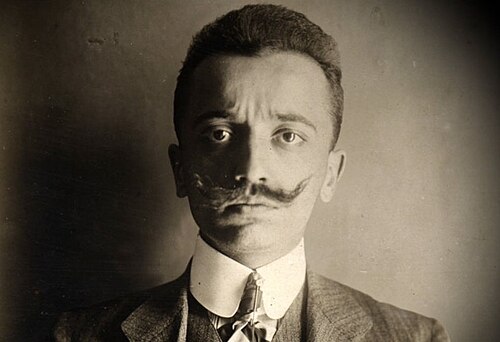
In the grand narrative of film history, certain names recur with almost ritualistic regularity—D. W. Griffith, Sergei Eisenstein, Georges Méliès—while others, equally foundational, drift toward the margins of popular discourse. Among these under-acknowledged pioneers stands Giovanni Pastrone, a towering yet often overlooked figure in early Italian cinema whose work not only helped define the grammar of film but also laid the groundwork for the epic spectacle long before Hollywood institutionalized it.
To understand Pastrone is to understand a moment when cinema was still inventing itself—when narrative, scale, and visual language were fluid, experimental, and deeply intertwined with theatrical traditions. His 1914 masterpiece, Cabiria, remains one of the most significant achievements of silent cinema, not merely for its scale but for its innovations in camera movement, mise-en-scène, and narrative ambition. It is no exaggeration to say that Cabiria represents one of the earliest fully realized epic films—arguably the first to synthesize spectacle, historical drama, and cinematic technique into a cohesive artistic vision.
Early Life and Entry into Cinema
Giovanni Pastrone was born in 1883 in Montechiaro d’Asti, Italy—a period marked by rapid industrial and cultural transformation. Italy, newly unified, was still negotiating its identity, and the arts became a crucial arena for expressing national consciousness. Cinema, then in its infancy, offered unprecedented possibilities.
Pastrone entered the film industry through the Turin-based production company Itala Film, which would become one of the most important centers of early Italian filmmaking. Unlike many of his contemporaries who approached cinema as an extension of theater or photography, Pastrone viewed it as a new medium with its own language.
By the early 1910s, Italian cinema was already distinguished by its ambition. Historical spectacles—often set in ancient Rome or biblical times—were popular, reflecting both national pride and a desire to compete with international productions. Yet even within this context, Pastrone’s vision stood apart.
The Italian Silent Cinema Context
Before delving into Pastrone’s career, it is essential to understand the environment in which he worked. Early Italian cinema was defined by the colossal genre—lavish historical productions featuring elaborate sets, large casts, and dramatic narratives.
Films like Quo Vadis? and The Last Days of Pompeii demonstrated the commercial viability of large-scale productions. However, these films often relied heavily on theatrical staging, with static cameras and tableau-style compositions.
Pastrone’s genius lay in recognizing that scale alone was not enough. Cinema needed movement—not just in narrative but within the frame itself.
Pastrone’s Career and Artistic Evolution
Pastrone worked under the pseudonym Piero Fosco, a common practice at the time, particularly in collaborations with literary figures. His early films already displayed an interest in narrative complexity and visual innovation, but it was with Cabiria that his ideas reached full maturity.
His approach to filmmaking was meticulous. He was deeply involved in all aspects of production—from set design to camera placement—anticipating the role of the modern auteur. Unlike many directors of his time, Pastrone understood the camera as an active participant in storytelling.
This perspective would culminate in one of the most important technical innovations of early cinema: the tracking shot.
The Innovation of Camera Movement
Before Pastrone, most films were shot with a stationary camera, mimicking the perspective of a theater audience. Movement, if present, occurred within the frame rather than through it.
In Cabiria, Pastrone introduced what would later be known as the “Cabiria movement”—a form of tracking shot in which the camera glides through space, revealing depth and guiding the viewer’s attention. This was achieved using a dolly system, allowing for smooth, continuous motion.
The significance of this innovation cannot be overstated. It transformed the cinematic experience from passive observation to immersive engagement. Space became dynamic, and the viewer was no longer confined to a fixed vantage point.
This technique would later be refined and popularized by filmmakers such as Orson Welles and Max Ophüls, but its origins lie firmly in Pastrone’s work.
Cabiria (1914): The Birth of the Epic Film
Historical Context and Production
Released in 1914, Cabiria is set during the Second Punic War, depicting the conflict between Rome and Carthage. The film’s narrative spans continents and years, incorporating elements of adventure, romance, and political intrigue.
The screenplay was credited in part to Gabriele D’Annunzio, one of Italy’s most prominent literary figures. Although his actual involvement in the script was limited, his name added cultural prestige, elevating the film’s status.
The production itself was monumental. Massive sets were constructed to recreate ancient cities, including the temple of Moloch—one of the most iconic images in silent cinema. Thousands of extras were employed, and the film’s runtime—over two hours—was unprecedented at the time.
Narrative Structure and Themes
At its core, Cabiria tells the story of a young girl, Cabiria, who is kidnapped and nearly sacrificed to the Carthaginian god Moloch. She is rescued by the Roman noble Fulvius Axilla and his slave Maciste, the latter becoming one of the first recurring characters in film history.
The narrative intertwines personal drama with historical events, a structure that would become a hallmark of epic cinema. By anchoring large-scale conflict in individual experience, Pastrone creates emotional resonance without sacrificing spectacle.
Themes of civilization versus barbarism, loyalty, sacrifice, and destiny permeate the film. These themes, while reflective of early 20th-century European sensibilities, also contribute to the film’s enduring appeal.
Visual Style and Mise-en-Scène
Pastrone’s use of space is perhaps the most striking aspect of Cabiria. Sets are not merely backdrops but integral components of the narrative. The temple of Moloch exemplifies the fusion of architecture and symbolism.
Lighting is used to create depth and mood, enhancing the three-dimensionality of the sets. Shadows and contrasts guide the viewer’s eye, anticipating techniques later associated with German Expressionism.
The aforementioned tracking shots allow the camera to explore these spaces, revealing details gradually and creating a sense of discovery.
The Character of Maciste
One of Cabiria’s most significant contributions to cinema is the introduction of Maciste, portrayed by Bartolomeo Pagano. A physically imposing yet morally upright character, Maciste became an early example of the cinematic strongman archetype.
The character’s popularity led to a series of spin-off films, effectively making him one of the first film franchises. This concept—building a series around a recurring character—would later become a cornerstone of commercial cinema.
Influence on Contemporary Filmmakers
The impact of Cabiria extended far beyond Italy. It was widely distributed internationally and seen by many filmmakers who would go on to shape the medium.
Perhaps the most notable among them was D. W. Griffith, whose film Intolerance bears clear traces of Pastrone’s influence. The massive sets, interwoven narratives, and emphasis on spectacle in Intolerance can be seen as a direct response to Cabiria.
Griffith expanded on these ideas, but the blueprint had already been established.
Similarly, Soviet filmmakers such as Sergei Eisenstein drew inspiration from Pastrone’s use of scale and visual composition, even as they developed their own theories of montage.
Cabiria and the Definition of Epic Cinema
What defines an epic film? Scale, certainly—but also scope, ambition, and a synthesis of narrative and spectacle.
By these criteria, Cabiria stands as one of the earliest true epics. It predates and anticipates later works such as Ben-Hur and Lawrence of Arabia, both of which share its emphasis on grand historical settings and personal drama.
The DNA of Cabiria can be traced through decades of cinema, influencing everything from classical Hollywood epics to modern blockbusters.
Pastrone’s Later Career and Decline
Despite the success of Cabiria, Pastrone’s career did not follow the trajectory one might expect. The Italian film industry faced significant challenges in the years following World War I, including economic difficulties and increased competition from Hollywood.
Pastrone gradually withdrew from filmmaking, and by the 1920s, his output had diminished considerably. Unlike some of his contemporaries, he did not successfully transition to the sound era.
This decline, combined with the shifting center of cinematic power to the United States, contributed to his relative obscurity in later years.
Legacy and Rediscovery
In recent decades, there has been a renewed interest in early cinema, leading to a reassessment of Pastrone’s contributions. Film historians and cinephiles have increasingly recognized his role as a pioneer of cinematic language.
Institutions such as Cineteca di Bologna have played a crucial role in restoring and preserving films like Cabiria, ensuring that they remain accessible to contemporary audiences.
Today, Pastrone is acknowledged not merely as a precursor to later filmmakers but as a visionary in his own right—one whose innovations continue to resonate.
Pastrone in the Context of Film History
To place Pastrone within the broader history of cinema is to recognize a pattern: innovation often precedes recognition. Many of the techniques we associate with later filmmakers were, in fact, pioneered by earlier figures whose contributions have been overshadowed.
Pastrone’s work bridges the gap between the primitive cinema of the early 1900s and the more sophisticated narratives of the 1920s and beyond. He represents a transitional figure, one who helped define what cinema could become.
Conclusion: Reclaiming a Pioneer
Giovanni Pastrone’s legacy is not merely historical—it is foundational. His work on Cabiria demonstrates a profound understanding of cinema’s potential, combining technical innovation with narrative ambition in a way that remains striking even today.
To watch Cabiria is to witness the birth of cinematic epic—not as a fully formed genre but as a bold experiment, a leap into the unknown. It is a reminder that cinema, like all art forms, is shaped by those willing to push its boundaries.
In an era where spectacle often overshadows substance, Pastrone’s work offers a different model—one in which scale serves story, and innovation enhances emotion.
For the cinephile, revisiting Pastrone is not merely an act of historical curiosity but an essential step in understanding the evolution of film itself. His influence, though sometimes indirect, is woven into the fabric of cinema, from the silent era to the digital age.
And perhaps it is time to restore his name to its rightful place—not as a footnote, but as one of the true architects of the cinematic experience.