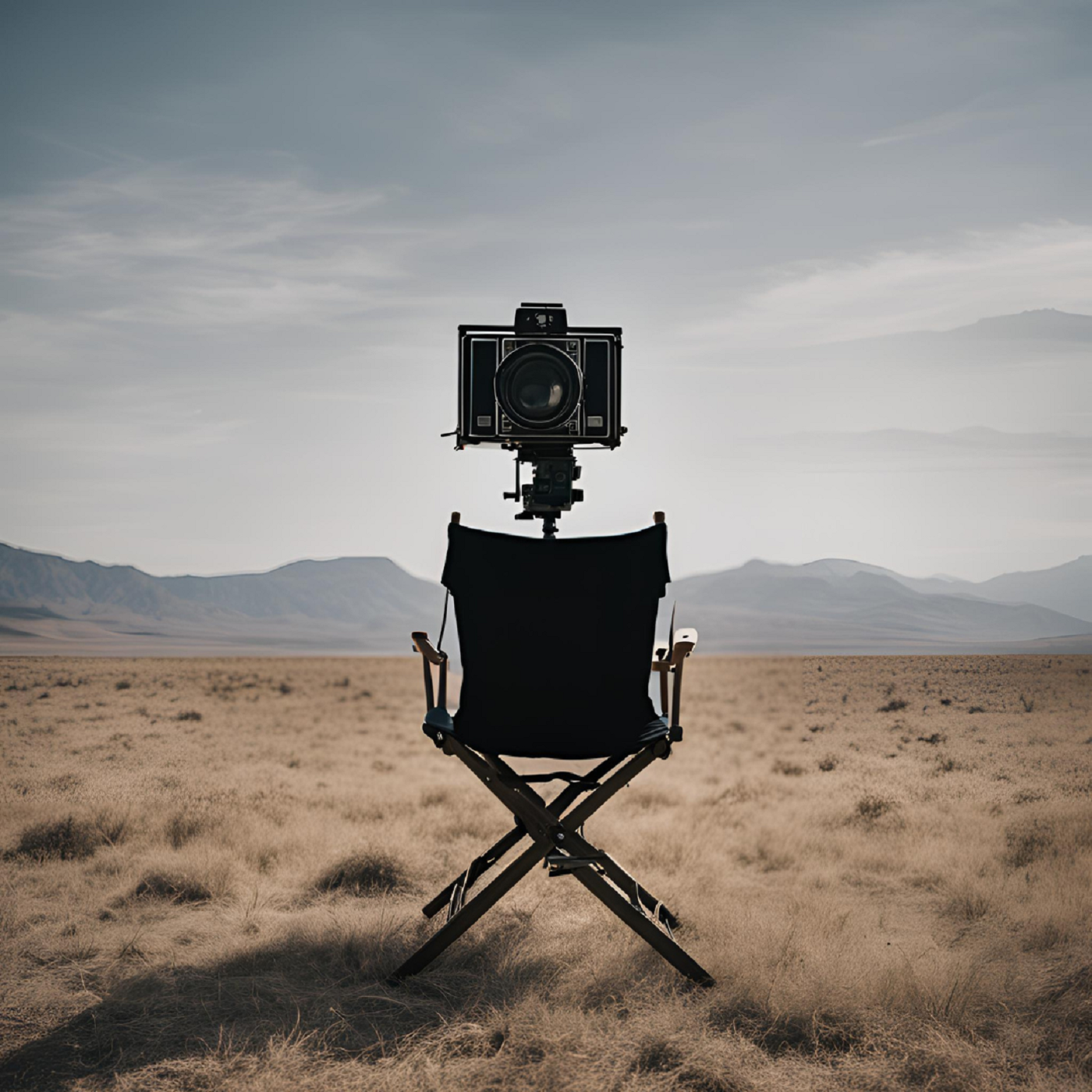
The Genesis of an Idea: Cinema’s Search for Authorship
From the earliest days of cinema, film was viewed as a collective art — a synthesis of performance, photography, music, and editing. The studio era, especially in Hollywood, reinforced this perception: directors were employees under powerful producers, and movies were products of industrial collaboration. Yet beneath this industrial surface, a question simmered — who is the true author of a film?
In literature, the answer was simple: the writer. In painting, the artist. But in cinema, the process was fragmented. This tension birthed what would later become auteur theory, a revolutionary idea that argued for the director as the creative author of a film, whose personal vision transcends the collaborative machinery of filmmaking. It was a bold assertion that redefined how we perceive artistic control in cinema.
The theory’s roots can be traced to postwar France, where critics of Cahiers du Cinéma — a film magazine founded in 1951 by André Bazin and others — began re-evaluating popular Hollywood directors through a new lens. Rather than viewing them as studio craftsmen, these critics saw certain directors as artists whose films bore distinctive thematic and stylistic signatures.
The French Origins: Truffaut and the Politique des Auteurs
The phrase politique des auteurs (“policy of authors”) first appeared in 1954 in an incendiary essay by François Truffaut titled A Certain Tendency of the French Cinema. Truffaut criticized what he called the “tradition of quality” in French cinema — films that were literary, polished, and safe. He accused many French filmmakers of being mere adapters of novels and plays, serving the prestige of screenwriters rather than asserting cinematic individuality.
In contrast, Truffaut and his fellow Cahiers critics — including Jean-Luc Godard, Claude Chabrol, Éric Rohmer, and Jacques Rivette — championed directors who expressed a unique worldview through film. They celebrated figures such as Jean Renoir, Robert Bresson, and Jean Cocteau, as well as American filmmakers like Alfred Hitchcock, Howard Hawks, and Nicholas Ray.
These directors, the Cahiers writers argued, were not merely technicians but artists who infused their work with consistent thematic obsessions, moral concerns, and visual patterns. Whether constrained by genre conventions or studio systems, their creative personalities shone through — Hitchcock’s meticulous control of suspense, Hawks’s fascination with professionalism and camaraderie, or Renoir’s humanistic fluidity of camera movement.
André Bazin’s Philosophical Foundation
Although often seen as the spiritual father of Cahiers du Cinéma, André Bazin himself had a more nuanced stance. He respected cinema’s collaborative nature and emphasized realism as the medium’s essence. For Bazin, a film’s author was not solely its director but the sum of the creative forces guided by the director’s vision. His essays explored how certain filmmakers — particularly Renoir, Chaplin, and Welles — achieved authorship through their moral relationship with reality and their unique treatment of cinematic time and space.
Bazin’s humanistic philosophy shaped the Cahiers generation. While Truffaut’s polemic ignited the fire, Bazin’s writings provided its intellectual legitimacy. The auteur theory, in its French origin, was less a doctrine than a critical attitude — a way of valuing personal expression over formula.
Crossing the Atlantic: Andrew Sarris and the American Context
In the 1960s, the idea of the director as author reached the United States, thanks to Andrew Sarris, a New York-based critic for The Village Voice. Sarris translated and formalized Truffaut’s politique des auteurs into what he called auteur theory. His 1962 essay, Notes on the Auteur Theory in 1962, proposed a systematic approach to identifying directors as auteurs based on three concentric criteria:
- Technical competence — a director must be a skilled craftsman.
- Personal style — a recognizable visual and narrative signature must recur across films.
- Interior meaning — a deeper thematic resonance connecting the director’s work.
For Sarris, auteurs were those whose personal vision transcended the material they worked with. This idea elevated the reputation of filmmakers once considered genre-bound entertainers. Directors like John Ford, Hitchcock, Hawks, Fritz Lang, and Orson Welles were reevaluated as serious artists. Hollywood cinema, long dismissed as commercial, was now recognized as capable of artistic greatness.
Auteur Theory in Practice: Signatures Across Time
The power of auteur theory lies in its ability to reveal patterns beneath surface differences. When we view cinema through this lens, each film becomes a page in a larger creative autobiography.
- Alfred Hitchcock’s films, from Shadow of a Doubt to Psycho and Vertigo, demonstrate recurring obsessions: guilt, voyeurism, control, and the duality of identity. His camera moves not just to tell stories but to mirror psychological tension.
- Stanley Kubrick, though meticulous and detached, crafted films exploring humanity’s alienation within systems — from war (Paths of Glory, Full Metal Jacket) to technology (2001: A Space Odyssey).
- Ingmar Bergman examined faith, silence, and existential despair through intimate close-ups and austere compositions.
- Federico Fellini transformed cinema into a surreal autobiography, turning the screen into a space of dreams and memory.
- Akira Kurosawa brought moral gravitas and humanism to both samurai epics and modern dramas, his rain-soaked battlefields as expressive as his silent pauses.
Each of these filmmakers embodies the auteur principle — their works feel authored, their style inimitable.
Beyond the Director: A Question of Control
Yet, auteur theory has always been controversial because film is inherently collaborative. Can a single person truly be its author? The cinematographer shapes the image; the editor defines rhythm; the composer molds emotion. Even within auteur-driven cinema, the creative process involves negotiation and collective craftsmanship.
Critics of auteur theory, such as Pauline Kael, argued that it romanticized directors while ignoring the contributions of others. Kael famously accused Sarris of “cultism” — of turning directors into saints and ignoring screenwriters, actors, and producers. She emphasized that film is a dynamic fusion of talents, not a single mind’s expression.
However, even Kael’s critique underscored the theory’s influence: it had changed the conversation. Filmmakers now had to be evaluated as creative personalities, not mere executors of scripts.
The Auteur in European Cinema
Europe provided fertile ground for auteurist expression because many directors operated with greater artistic autonomy. In Italy, Michelangelo Antonioni explored alienation in the modern world through long takes and minimalist narratives (L’Avventura, Red Desert). Pier Paolo Pasolini infused his films with poetry, myth, and Marxist critique, asserting cinema as a tool of ideological resistance.
In Sweden, Bergman turned the camera inward, making cinema a medium of metaphysical confession. In France, the New Wave directors themselves — Godard, Truffaut, Rohmer, Chabrol, and Rivette — put auteur theory into practice. Their films were not just stories but statements of form: jump cuts, handheld cameras, and improvisation reflected their personal philosophies of life and cinema.
The British New Wave and later auteurs like Ken Loach applied personal realism to social issues, while Andrzej Wajda in Poland or Béla Tarr in Hungary used cinema to reflect national trauma and metaphysical despair. Auteurism thus became both aesthetic and political — a filmmaker’s confrontation with the world.
Hollywood’s Auteurs: From the Studio to the New Wave
Ironically, auteur theory’s greatest impact occurred in Hollywood, the very system it once seemed to oppose. The American New Wave of the 1970s, from Francis Ford Coppola to Martin Scorsese, Robert Altman, and Terrence Malick, was deeply shaped by Sarris’s ideas. These filmmakers grew up reading Cahiers du Cinéma and watching European art films. They demanded creative freedom and infused mainstream cinema with personal expression.
Coppola’s The Godfather films merged operatic grandeur with intimate family psychology. Scorsese transformed urban crime into spiritual crisis, turning streets into moral battlegrounds. Altman used ensemble casts and loose narratives to capture America’s fragmentation, while Malick’s poetic meditations on nature and grace brought metaphysics to Hollywood.
Auteur theory also helped audiences appreciate older directors anew. Hitchcock’s reappraisal in the 1960s led to retrospectives and academic studies that permanently elevated him into the cinematic canon.
The Auteur and Genre: Personal Vision within Conventions
One of auteur theory’s great insights is that personal vision can flourish even within commercial or genre filmmaking. Directors like Howard Hawks demonstrated that artistry could emerge from repetition. His westerns, comedies, and adventure films all share an ethos of professionalism, male camaraderie, and stoic integrity.
Similarly, John Ford used the Western not merely as entertainment but as a vehicle for exploring American identity, myth, and landscape. His Monument Valley became a moral geography — a space where civilization and wilderness coexist uneasily.
In contemporary cinema, Christopher Nolan has redefined the blockbuster as auteurist form — merging complexity, time manipulation, and moral inquiry into popular entertainment. Likewise, Guillermo del Toro, Denis Villeneuve, and Greta Gerwig embody modern auteurship by blending personal sensibility with genre storytelling.
Challenges to Auteurism: Postmodernism and Collective Creation
By the 1980s and 1990s, postmodern theory challenged the romantic idea of the solitary genius. Thinkers such as Roland Barthes proclaimed “the death of the author,” arguing that meaning resides in the audience’s interpretation, not the creator’s intent. Cinema became seen as a text open to multiple readings.
Meanwhile, the rise of collaborative auteurs blurred authorship. The Coen brothers, Lana and Lilly Wachowski, and the Dardenne brothers all share unified visions but collective authorship. In these cases, the “auteur” is plural, a team with a shared sensibility.
Television, too, adopted auteurist language with the rise of “showrunners” like David Chase (The Sopranos) or Vince Gilligan (Breaking Bad), whose creative control resembles that of film auteurs. The auteur spirit thus migrated beyond cinema, expanding into serialized storytelling.
The Female Auteur and Marginalized Voices
Historically, auteur theory was criticized for its gender and cultural bias — early canons were overwhelmingly male and Western. Yet the framework also provided a tool for reclaiming neglected voices.
Agnès Varda, often called the grandmother of the French New Wave, used cinema to explore memory, feminism, and the politics of everyday life. Her films like Cléo from 5 to 7 and Vagabond merge documentary realism with poetic structure, asserting a distinctly female gaze.
In the U.S., Kathryn Bigelow, Sofia Coppola, Ava DuVernay, and Chloé Zhao exemplify how auteurism has evolved into a space of representation — where personal voice includes gendered and cultural identity. Internationally, filmmakers like Claire Denis, Jane Campion, and Mati Diop expand auteurism’s vocabulary to new emotional and political terrains.
The Auteur in World Cinema: Global Voices
Auteur theory’s global spread has enriched cinema’s diversity. In Japan, Yasujiro Ozu and Akira Kurosawa embody two poles of authorship — Ozu’s domestic minimalism versus Kurosawa’s moral epic. In Iran, Abbas Kiarostami turned minimalist realism into philosophical cinema, blurring fiction and reality.
In Thailand, Apichatpong Weerasethakul’s meditative films blend the spiritual and the political, while Bong Joon-ho in South Korea fuses satire, genre, and social critique — demonstrating that auteurship can thrive within globalized cinema.
Latin American auteurs like Lucrecia Martel, Alejandro González Iñárritu, and Alfonso Cuarón use personal narratives to explore history, identity, and memory. The auteur is no longer confined to Western paradigms but speaks with many tongues and textures.
Auteur Theory and Technology: The Digital Shift
In the digital era, new technologies have democratized filmmaking. Independent directors now achieve personal expression with minimal resources, echoing the spirit of the French New Wave. Sean Baker’s Tangerine (shot on an iPhone) or Robert Rodriguez’s DIY filmmaking demonstrate how authorship persists through innovation.
Streaming platforms, however, complicate auteurism. Algorithm-driven production and audience data analytics risk reducing creative individuality. Yet auteurs like David Fincher and Martin Scorsese continue to assert distinctive voices within these systems, proving that authorship endures even amidst industrial evolution.
Critiques and Counterarguments
While auteur theory remains influential, it has faced sustained critique. Some argue that it encourages hero worship, ignoring social, political, and industrial contexts. Others contend that it simplifies complex collaborations into narratives of genius.
Yet, even its critics acknowledge its heuristic power. Auteur theory is not a dogma but a tool — a way of tracing continuity, intention, and signature. It invites viewers to read films as expressions of personality and worldview, transforming passive spectators into active interpreters.
The Enduring Legacy
More than seventy years after its birth, auteur theory continues to shape film criticism, academia, and popular culture. Film festivals market “auteur cinema”; audiences recognize directors as brands — a Tarantino film, a Wes Anderson film, a Nolan film. This branding, while sometimes commercialized, speaks to the enduring fascination with artistic identity.
Auteur theory endures because it addresses something fundamental: our desire to find coherence and intention in art. Even in the most collaborative works, we search for a guiding voice — a hand behind the camera that gives shape to chaos.
Conclusion: The Author in the Age of Multiplicity
In today’s cinematic landscape — fragmented, globalized, and digital — auteur theory no longer means the solitary genius commanding absolute control. Instead, it refers to authentic vision: a consistency of moral, aesthetic, and emotional perspective across works. Whether found in the meticulous frames of Wes Anderson, the spiritual silences of Nuri Bilge Ceylan, or the social urgency of Ken Loach, auteurism remains cinema’s heartbeat — the assertion that film, despite its machinery, is still an art of expression.
Auteur theory thus survives not as dogma but as dialogue — between director and audience, between intention and interpretation, between art and industry. It reminds us that behind every great film lies a mind that dreamed it, a spirit that shaped it, and a signature that time cannot erase.