
Introduction: A Master Hiding in Plain Sight
In the vast landscape of Soviet cinema, certain names cast long shadows—Eisenstein, Vertov, Pudovkin, Dovzhenko, Tarkovsky, Parajanov. Yet among these giants, one filmmaker stands somewhat outside the canon: Boris Barnet, a director whose films are marked not by theoretical manifestos or ideological programs but by warmth, humanism, humor, and a deep affection for ordinary people. He is often called “the most Western of Soviet directors,” yet he embodied a distinctly Russian sensibility—tender, melancholic, romantic, and modest.
Barnet was a filmmaker who refused extremes. His cinema does not shock, nor does it violently innovate; it seduces, gently drawing the viewer into worlds filled with lively characters, nuanced emotions, and a painterly sense of everyday beauty.
Today, he is considered one of the greatest secret treasures in film history—an artist admired deeply by cinephiles, including figures like Jean-Luc Godard, yet rarely discussed among mainstream audiences. This gap between influence and recognition makes Barnet an especially important subject. He is a major figure whose work is central to understanding the evolution of cinematic language, Soviet culture, and the poetry of realism.
Early Life and Entry into Cinema
Boris Vasilyevich Barnet was born in 1902 in Moscow into a family of English descent. Before entering the film world, he trained as a painter and worked briefly as a boxer—two passions that later shaped the physicality and visual vitality of his cinema. His arrival into filmmaking was somewhat accidental: he joined the State Film School (VGIK) at a time when the Soviet Union was pouring resources into cinema as a revolutionary tool.
It was here that Barnet met Lev Kuleshov, under whose mentorship he began acting and eventually transitioned into directing. Unlike some of his contemporaries who approached filmmaking with an almost scientific rigor, Barnet approached cinema from a craftsman’s intuition. He was not a theorist; he was a storyteller.
From the beginning, he gravitated toward characters who existed outside ideological binaries—ordinary workers, young lovers, dreamers, villagers, adventurers. Rather than present them as workers in a socialist machine, he treated them as individuals, rich in inner life. In a political atmosphere where art was increasingly expected to serve ideological demands, Barnet quietly cultivated a distinctive personal voice.
Silent Cinema and Early Innovations
Barnet’s early silent works already demonstrated a refined visual sensibility. His debut as co-director, Miss Mend (1926), a fast-paced adventure serial, revealed his instinct for kinetic storytelling. Though influenced by American serials, it displayed something more subtle: a particular softness in emotional moments, a focus on faces, and an interest in romanticism that had no equivalent in Soviet montage cinema.
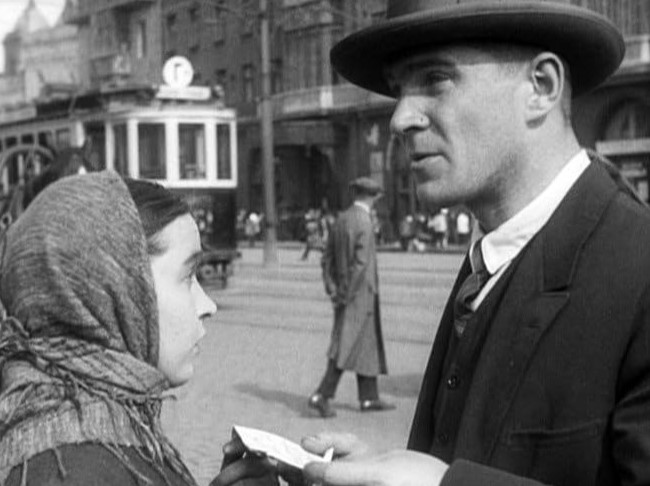
But it was The Girl with the Hatbox (1927) that marked the emergence of Barnet’s mature style. A romantic comedy starring Anna Sten, it offered a refreshing tonal balance: lighthearted, cheerful, and imbued with effortless humor. At a time when many Soviet films were pushing overt political messaging, Barnet made a film that felt almost apolitical—centered on everyday joys, misunderstandings, and the gentle absurdities of life.
Barnet’s silent films introduced:
1. A Humanistic Approach
Where Eisenstein explored the masses as a collective entity, Barnet treated individuals with empathy and dimension. His characters were rarely symbols; they were people.
2. A Poetic Visual Rhythm
Even in comedic scenes, the pacing was musical. Barnet could shift from slapstick to lyrical stillness without breaking the film’s flow.
3. A Love for Urban Spaces
His early films showcase Moscow not as a political center but as a playground for human energy—streets, rooftops, small shops, tram rides.
4. A Focus on Female Protagonists
Barnet’s women were active agents in their stories—independent, smart, and emotionally complex. In a male-dominated industry, this was refreshing and progressive.
These traits made Barnet an unusual figure in the Soviet cinematic landscape. He was neither a strict propagandist nor a formalist innovator. He was, simply, a filmmaker who understood the emotional possibilities of cinema.
Sound Era: Masterpieces of Warm Realism
The transition to sound in the early 1930s transformed Barnet’s career. While many directors struggled with early sound technology, Barnet embraced it, using dialogue and natural soundscapes to enrich the emotional environment of his films.
One of his greatest works from this period is “Outskirts” (1933), a film often regarded as his masterpiece. Set during World War I, Outskirts blends comedy, tragedy, and antiwar sentiment with astonishing ease. Rather than constructing grand political statements, Barnet focuses on the daily lives of villagers and soldiers—the small, intimate stories that accumulate into a portrait of human resilience.
Key Features of Barnet’s Style in Outskirts
1. Antiwar Ideology Through Humanity, Not Slogans
Barnet’s stance is unmistakably antiwar, but he never resorts to propaganda. Instead, he shows:
- friendships formed across enemy lines,
- the absurdity and randomness of violence,
- and the human cost of conflict.
This approach was daring for its time. The film’s empathy toward German prisoners was almost radical in an era of rigid ideological divides.
2. A Blending of Genres
Outskirts moves from romantic comedy to war drama to poetic realism. The tonality shifts feel organic, unified by Barnet’s warm observational approach.
3. A Sense of Community
Barnet constructs villages, families, and friendships with meticulous detail. Every minor character is memorable; nothing feels superficial.
4. Visual and Musical Harmony
Barnet uses sound to build mood—not through speeches or ideological declarations, but through songs, ambient noises, and musical motifs that create a living world.
Outskirts remains one of the most humanistic films of Soviet cinema—a gentle, loving, and subtly political portrait of ordinary people caught in extraordinary times.
The Lyrical Romantic: Barnet’s Comedic and Adventure Films
While some directors embraced large-scale epics, Barnet moved toward character-driven comedies and adventures that highlighted the poetic absurdity of daily life. These films include:
- By the Bluest of Seas (1936)
- A Good Lad (1942)
- The Captain of the Lucky Pike (1947)
- The Barge Haulers (1958)
Among these, By the Bluest of Seas stands as a high point in Soviet romantic cinema.
“By the Bluest of Seas”: The Sunlit Masterpiece
This 1936 film, shot on the Caspian Sea, is one of the most visually beautiful works in Soviet film history. It tells the story of two sailors who fall in love with the same woman at a collective fishery. On the surface, the plot is simple, almost folkloric. But beneath this simplicity lies an emotional depth that makes the film enduring.
What Makes It Exceptional?
1. Pure Cinematic Joy
Every frame is filled with light, wind, and movement. The film captures nature—waves, storms, sunlight—with an almost spiritual reverence.
2. A Celebration of Youth
Barnet portrays young people not as socialist heroes but as impulsive, passionate, flawed, and sincere. They laugh, argue, flirt, despair, and dream.
3. Naturalistic Acting
Actors behave like real people. The performances are spontaneous and full of life, a stark contrast to the rigid style often encouraged in Stalin-era cinema.
4. Visual Poetry
The film’s editing and cinematography create a rhythm that feels musical—more like a poem than a narrative.
5. Emotional Ambiguity
Barnet avoids easy resolutions. Love is both joyful and painful, and the film ends with a bittersweet openness. Few Soviet films of the 1930s dared to embrace emotional complexity so openly.
Barnet During the War and Postwar Years
The early 1940s brought significant challenges. The Soviet Union demanded more ideologically aligned filmmaking, and the pressures of war intensified official oversight.
Despite this, Barnet managed to create works like A Good Lad, which blended patriotism with his characteristic warmth. His films from this era retained an interest in human relationships and small communities, but his creative freedom was increasingly constrained.
In the late 1940s and 1950s, Barnet shifted to films that subtly reflected the anxieties and aspirations of Soviet society. The Barge Haulers and Alyosha’s Love show his maturity—less comedic, more introspective, yet still infused with poetic realism.
During this period, Barnet’s career was overshadowed by changes in Soviet cinema:
- the rise of socialist realism,
- increasing bureaucratic control,
- and the dominance of grand, patriotic narratives.
These trends did not suit Barnet’s quiet, humanistic approach. As a result, he worked less frequently than he deserved, and some of his projects were heavily censored or rejected.
Barnet’s Visual Style: The Poetry of Everyday Life
1. Human Faces as Landscapes
Barnet had an extraordinary ability to capture emotion through subtle expressions. He used close-ups sparingly but effectively, revealing inner worlds without melodrama.
2. Playful Movement
Whether tracking characters across city streets or following boats at sea, Barnet’s camera moves with elegance, never calling attention to itself.
3. Natural Light and Authentic Spaces
His films often used real locations, giving them a documentary-like realism. Barnet avoided theatrical lighting, preferring sunlight, shadows, and the moodiness of natural weather.
4. A Painterly Sense of Composition
His early training as an artist is visible in his frames: balanced, harmonious, and deeply attentive to texture and color (even in black-and-white film).
5. Humor Rooted in Humanity
Barnet’s comedy is gentle, never cruel. It arises from character, not exaggeration.
Recurring Themes in Barnet’s Films
1. Love and Romantic Uncertainty
Love for Barnet is not idealized. It is messy, unpredictable, and deeply human.
2. The Beauty of Ordinary Life
Barnet does not seek epic stories. He finds poetry in:
- fishing villages
- small towns
- families
- friendships
- simple joys
His worldview is that everyday life is cinematic.
3. Community and Belonging
Many of his films revolve around groups—villages, collectives, workers’ teams—but not as ideological constructs. He portrays communities as emotional ecosystems.
4. Antiwar Humanism
Barnet consistently highlights the absurdity and tragedy of war, but always through the lives of ordinary people.
5. Melancholy and Loss
Even his comedies carry undertones of longing. Barnet understood that happiness is fleeting, and this awareness gives his films emotional weight.
A Career Marked by Modesty and Tragedy
Despite his immense talent, Barnet never sought fame. He struggled with depression and often questioned the value of his work. Increasing censorship and isolation in the 1950s forced him into artistic corners where he could not fully express his creativity.
In 1965, feeling defeated and forgotten, Barnet took his own life.
His final years were marked by loneliness, yet his films remain vibrant, warm, and full of life—a painful contrast to the sadness that overshadowed his personal existence.
Barnet is a reminder of how many artists create beauty far beyond the recognition they receive.
Legacy: Why Boris Barnet Matters Today
In recent decades, Barnet’s films have experienced a renaissance among scholars and cinephiles. His work anticipates major movements in world cinema:
1. Nouvelle Vague (French New Wave)
His lyrical spontaneity influenced French critics—especially Godard, who openly admired him.
2. Italian Neorealism
Barnet’s use of real locations, natural light, and ordinary people parallels Italian postwar cinema, though Barnet achieved this style a decade earlier.
3. Modern Independent Cinema
Barnet’s humanistic storytelling resembles today’s intimate, character-driven films.
4. Poetic Realism
His blend of humor and sorrow places him alongside figures like Jean Renoir.
5. Contemporary Russian Cinema
Directors such as Kira Muratova and Aleksei German show traces of Barnet’s emotional subtlety and observational tone.
Today, Barnet is recognized as:
- a pioneer of cinematic naturalism,
- a master of romantic storytelling,
- a poet of everyday life,
- and one of the Soviet Union’s most compassionate directors.
His films remind us that cinema need not be spectacular to be profound. A smile across a boat, a wave crashing against a pier, a small misunderstanding on a village street—Barnet turned these moments into eternal images.
Conclusion: Restoring a Master to the Canon
Boris Barnet is one of the greatest filmmakers that mainstream film history has yet to properly honor. His works stand outside the ideological extremes of Soviet cinema, offering instead a universal emotional language—gentle, honest, humorous, and profoundly human.
He belongs to that rare group of directors whose films feel alive in a way that defies time. Watching Barnet today does not feel like studying history; it feels like experiencing something fresh, intimate, and real.
To engage with Barnet’s work is to rediscover the essence of cinema: a medium capable of capturing ordinary life with extraordinary tenderness.
His legacy deserves more than rediscovery. It deserves celebration.