
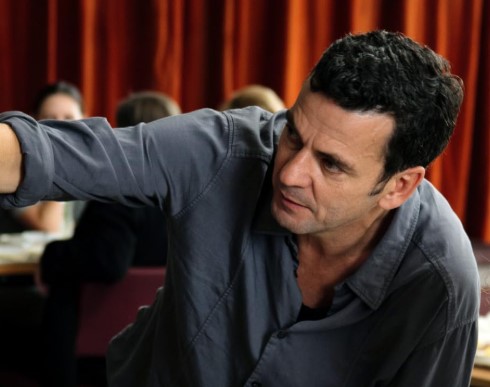
Introduction: A Filmmaker of Ghostly Realities
Christian Petzold occupies one of the most distinctive and intellectually compelling positions in contemporary German cinema. Emerging from the post-Wall generation of directors and closely associated with the Berlin School movement, Petzold has constructed a unique cinematic language defined by minimalism, emotional precision, and a fascination with ghosts—not supernatural entities, but people haunted by history, memory, and identity. His films, whether set in the present moment or reimagined within historical frameworks, revolve around characters drifting through Germany’s social, political, and cultural landscapes, suspended between past and future.
To watch Petzold’s cinema is to enter an emotional geography where silence communicates more than dialogue, where the mundane carries profound psychological weight, and where characters search not only for home but for a version of themselves that might never have existed. He is a filmmaker who works with glances, breaths, glimmers of connection, and sudden ruptures that reveal the complexities of German identity in the 20th and 21st centuries.
Over the last three decades, Petzold has become an auteur whose style is unmistakable: quiet yet forceful, intimate yet political, restrained yet emotionally devastating. His collaborations with Nina Hoss, his recurring interest in borders (literal and metaphorical), his reworking of melodrama into modern contexts, and his insistence that history is not behind us but embedded in the present—all contribute to a body of work that is both philosophically rich and startlingly accessible.
This article explores Petzold’s life, career, artistic evolution, thematic obsessions, stylistic trademarks, and the ways in which he has shaped and been shaped by contemporary German cinema. The result will be a deep, cinephile-level portrait of a filmmaker for whom the past is never dead, and the present is never stable.
I. Early Life, Education, and the Foundations of a Cinematic Voice
Christian Petzold was born on September 14, 1960, in Hilden, North Rhine-Westphalia, but he grew up in a household steeped in the shadows of displacement and divided identity. His parents were refugees from East Germany who fled shortly before the Berlin Wall was constructed. This family history of dislocation and suspicion—living between systems, languages, and political structures—would become an emotional blueprint for his later films.
Many of Petzold’s characters are migrants, outsiders, or citizens who move through German spaces without feeling at home: unemployed workers in Ghosts, immigrants in Jerichow, war survivors in Phoenix, and refugees caught in a timeless limbo in Transit. These echoes of his family’s own struggles permeate his narratives.
A Generation Formed by Divided Germany
Petzold matured artistically during a transformative moment in German history. The late 1970s and early 1980s saw the decline of the New German Cinema movement, once dominated by Fassbinder, Herzog, and Wenders. By the time Petzold began studying at the German Film and Television Academy Berlin (dffb), German identity was fractured: East vs. West, capitalism vs. socialism, memory vs. reinvention.
Petzold studied under key figures like Harun Farocki, who would later become his mentor and co-writer. Farocki’s influence was profound: a politically engaged, intellectually rigorous filmmaker who emphasized the importance of images as social documents. Petzold inherited from Farocki a skeptical, analytical view of how images construct (and distort) the world.
The dffb Years and the Berlin School
Petzold and his colleagues Angela Schanelec and Thomas Arslan would later be called the core of the “Berlin School,” a term critics applied retroactively. Although the filmmakers themselves resist being grouped as a movement, they share a set of aesthetic principles:
- rigorous minimalism
- observational camerawork
- non-sensational drama
- a focus on alienated characters
- narrative ellipsis and open endings
Petzold stands out as the most narratively driven of the group, blending the Berlin School’s intellectual clarity with accessible genre frameworks—melodrama, thriller, noir.
This dual identity makes him one of the most important European filmmakers of his generation: both a theorist and a storyteller.
II. Breaking Through: Early Work and the Emergence of Themes
Before gaining international recognition, Petzold directed several television films for ARD and ZDF. These early works reveal the DNA of his later cinema: a fascination with characters caught in transitional spaces, shot with the clarity and intensity of political cinema.
1. Pilotinnen (1995)
This early television film follows a young woman trying to escape the constraints of her small town by becoming a pilot. The film already features key Petzold elements:
- the longing for mobility
- gendered expectations
- sparse, observational framing
2. Cuba Libre (1996)
A crime film infused with Petzold’s political sensibilities, questioning the fantasies of freedom tied to pop culture and capitalism.
3. The Beginning of the Petzold Aesthetic
By the late 1990s, Petzold’s films began showing clearer signs of his signature style:
- haunting, restrained performances
- urban landscapes stripped of glamour
- characters who are physically present but emotionally detached
- narratives of displacement and identity crisis
All these themes reached maturity with The State I Am In (2000), the film widely considered to be his breakout.
III. The State I Am In (2000): Petzold’s First Masterpiece
This film centers on the teenage daughter of two former left-wing terrorists who have been in hiding for decades. It is a film about fugitives—not idealized revolutionaries but exhausted parents who cannot escape their past. Their daughter, meanwhile, belongs to a Germany that no longer recognizes the ideological battles of the 1970s.
A Portrait of Post-Idealist Germany
Petzold uses this family as a microcosm of Germany itself: a nation trying to move forward yet unable to free itself from unresolved history. The film’s emotional power lies in the daughter’s perspective: innocent, curious, yearning for normality.
Visual and Tonal Precision
Petzold’s framing is deliberate, calm, and observational. There is no sensationalism—only tension built from long takes and spatial relationships.
The State I Am In established Petzold as a cinematic voice capable of merging emotional intimacy with political critique. It also marked his first major festival success, opening doors to his later masterpieces.
IV. Collaboration with Nina Hoss: One of Cinema’s Great Actor–Director Partnerships
Nina Hoss is to Christian Petzold what Giulietta Masina was to Fellini or Gena Rowlands was to Cassavetes. Together, they have formed one of the most compelling actor–director partnerships in modern European cinema.
Their collaborations include:
- Something to Remind Me (2001)
- Wolfsburg (2003)
- Yella (2007)
- Jerichow (2008)
- Barbara (2012)
- Phoenix (2014)
Hoss brings to Petzold’s films a combination of sharp intelligence, emotional opacity, and physical expressiveness. Her performances often hinge on stillness, making small movements—eyes flickering, lips tightening—carry immense emotional force.
Why Their Collaborations Matter
- Mutual trust allows for minimalism
Petzold’s scripts often demand restraint, and Hoss has the ability to communicate complex inner turmoil without theatrics. - They share thematic sensibilities
Hoss is drawn to stories about women who are intelligent yet vulnerable, controlled yet on the edge of rupture—mirroring Petzold’s depiction of haunted survivors. - They create a unified cinematic world
Whether playing a businesswoman haunted by death (Yella), a doctor trapped in the GDR (Barbara), or a Holocaust survivor searching for identity (Phoenix), Hoss becomes the emotional center of Petzold’s universe.
Their collaboration forms the emotional backbone of Petzold’s 21st-century work and remains one of the richest actor-director partnerships in contemporary German cinema.
V. Yella (2007): Ghosts of Capitalism
Yella is a turning point in Petzold’s career—his first film to gain significant international attention. Loosely inspired by Herk Harvey’s Carnival of Souls, the film blends thriller elements with a ghostly psychological narrative.
The Story
Yella leaves her small town to pursue a new job in the West, hoping to escape her abusive husband. As she enters the world of corporate finance, her life becomes increasingly surreal. The film slowly reveals that Yella may already be dead—a victim of a car crash in the opening scenes.
Why It Matters
Petzold uses this metaphysical twist not for shock but to critique modern capitalism. Yella becomes:
- a ghost in a corporate world
- a woman trying to exist within a system that values profit over humanity
- a symbol of Germany’s east-to-west migration after reunification
Themes
- Capitalism as haunting
- Reunification-era disillusionment
- Identity as economic performance
The film’s minimalist style, precise sound design, and Hoss’s powerfully restrained performance make Yella a landmark of Petzold’s middle period.
VI. Jerichow (2008): Noir Reimagined
Inspired by The Postman Always Rings Twice, Jerichow blends American noir with German regional realism.
Characters as Social Symbols
- Ali, a Turkish-German entrepreneur, embodies the immigrant success story shadowed by vulnerability.
- Laura, his wife, is trapped in a cold marriage but desires autonomy.
- Thomas, a former soldier, represents rootlessness and post-military malaise.
Themes and Analysis
Petzold uses noir tropes—triangular desire, fatalism, betrayal—to explore:
- ethnic tensions
- class dynamics
- post-reunification rural stagnation
- the fragility of masculine identity
Though one of his lesser-discussed films, Jerichow is essential for understanding how Petzold engages with genre to illuminate social realities.
VII. Barbara (2012): A Cold War Masterpiece
Barbara, set in the East Germany of 1980, marks one of Petzold’s finest achievements. It won the Silver Bear for Best Director at the Berlinale and cemented his status globally.
Plot Overview
Barbara is a doctor who has been exiled to a rural hospital as punishment for applying to leave the GDR. She lives under constant surveillance yet continues to dream of escape.
Nina Hoss’s Tour-de-Force Performance
Hoss plays Barbara with extraordinary precision: stoic, guarded, quietly rebellious. The smallest gestures—tightening her scarf, checking a window—convey her suffocating circumstances.
Themes
- Surveillance and moral compromise
- Love under authoritarianism
- Exile not as geographical displacement but as emotional condition
Visual Style
The film’s quiet rural landscapes emphasize the claustrophobia of Barbara’s world: wide-open spaces that still feel like cages.
Petzold’s Political Maturity
Barbara shows Petzold working with history directly, rather than metaphorically. Yet the film is never nostalgic or sentimental. Its power lies in its understanding of how political systems imprint themselves on the smallest details of daily life.
VIII. Phoenix (2014): Melodrama as Historical Reconstruction
Phoenix may be Petzold’s most emotionally devastating film. It tells the story of Nelly, a Holocaust survivor who returns to Berlin with a disfigured face and undergoes reconstructive surgery. Her husband Johnny, believing her dead, fails to recognize her and asks her to impersonate his “dead” wife to claim her inheritance.
Melodrama With Intellectual Depth
Inspired by Hitchcock’s Vertigo and Fassbinder’s melodramas, Phoenix transforms a seemingly implausible premise into a powerful examination of:
- trauma
- postwar German guilt
- identity and recognition
- the impossibility of post-Holocaust normalcy
The Final Scene
The final scene—Nelly revealing herself through a song—is one of the most unforgettable in modern European cinema. It crystallizes the film’s themes with devastating emotional clarity.
Questions Raised
- Can love survive historical atrocity?
- Can a nation rebuild itself without acknowledging responsibility?
- Is personal identity stable, or is it shaped by ghosts of the past?
Phoenix is one of the greatest films about the aftermath of the Holocaust—precisely because it doesn’t show the camps but the psychological ruins that remain.
IX. Transit (2018): Time Displaced, History Reimagined
Transit is perhaps Petzold’s boldest experiment: a story set in historical wartime conditions but filmed entirely in present-day Marseille. The film adapts Anna Seghers’ 1944 novel but refuses to place it in period context.
Concept
Characters behave as if in the 1940s:
- fascist occupation
- refugees needing travel visas
- escape routes through ports
Yet we see modern buildings, modern clothing, modern cars.
Why This Works
Petzold makes history uncanny, collapsing the past into the present. The refugee crisis, rising authoritarianism, and bureaucratic cruelty echo across decades.
Themes
- Europe as a perpetual transit zone
- Historical déjà vu
- Identity through documentation (visas, papers, names)
A New Kind of Historical Film
Rather than reconstructing the past, Transit shows that the past is still with us. It is not nostalgia but an indictment of recurring patterns of displacement.
X. Undine (2020) and Afire (2023): Myth, Love, and a New Petzold Era
After decades of rigorous realism and historical narratives, Petzold turned to a more magical, mythic form with Undine. Drawing from the European water-nymph myth, he creates a contemporary fairy tale grounded in modern Berlin.
Undine: A Myth in the City
- The film blends romance, tragedy, and myth.
- Paula Beer gives a luminous performance as Undine, an urban historian and mythical being.
- Water becomes both a symbol of love and death.
Why This Matters
Petzold introduces myth without abandoning realism. Instead, he shows that myths—like history—are embedded in everyday life.
Afire (2023): A Human Story in a Burning World
Afire marks a return to psychological realism, but with a new warmth. It follows a group of young adults at a seaside home threatened by forest fires.
Themes
- creative insecurity
- friendship and desire
- climate anxiety
- emotional paralysis
Afire reveals a lighter, more humorous Petzold, yet still attentive to undercurrents of dread and fragility.
XI. Stylistic Signatures: The Petzold Cinematic Language
1. Minimalism with Emotional Precision
Petzold’s style is spare but controlled; he trusts audience intelligence.
2. Characters as Haunted Figures
Almost all characters carry trauma or unresolved histories.
3. Genre Reimagined
He uses melodrama, noir, thriller, even myth—but stripped of excess.
4. Economic Framing
Shots are simple, clean, revealing structural power dynamics.
5. Silence and Glances
Dialogue is sparse; emotion emerges from gestures.
6. Collaboration as Method
Long-term collaborators—Hoss, Farocki, Beer—shape his cinematic world.
XII. Petzold and Contemporary German Cinema
Petzold’s impact on modern German filmmaking is profound:
He revitalizes political cinema without didacticism
Unlike the New German Cinema era, Petzold embeds politics in intimate stories.
He bridges arthouse and accessible storytelling
His films are complex yet emotionally direct.
He represents a modern Germany still negotiating its past
Rather than presenting history as closed, he reveals its persistence.
He is a leading figure of the Berlin School
Arguably its most internationally recognized member.
XIII. Legacy and Influence
Christian Petzold’s legacy is still growing, but already includes:
- shaping the aesthetics of the Berlin School
- redefining German cinematic identity for the 21st century
- creating one of cinema’s great actor-director collaborations
- producing some of the most intellectually rigorous and emotionally moving films of the modern era
He is often compared to:
- Antonioni (for alienation)
- Fassbinder (for melodrama)
- Hitchcock (for structure and suspense)
- Chantal Akerman (for framing and silence)
Yet he remains unmistakably himself—an auteur who finds beauty in restraint and truth in ghostly traces.
Conclusion: The Cinema of Unresolved Lives
Christian Petzold is not a filmmaker of answers but of questions—questions about history, identity, borders, trauma, capitalism, desire, guilt, and survival. His characters rarely reach definitive conclusions; instead, they continue moving, drifting, searching. They are not stable beings but works in progress, haunted by the fragments of lives they once lived or might have lived.
In a century defined by displacement—political, emotional, ecological—Petzold’s cinema feels urgently contemporary. His films reveal how history lingers in bodies and landscapes, how love can be both salvation and illusion, and how identity is something we construct while fleeing from versions of ourselves.
To watch Petzold is to experience cinema as haunted modernity: precise, aching, quietly radical. Few contemporary filmmakers speak so clearly to the emotional and historical complexities of our world.
Christian Petzold’s cinema is a reminder that the past never leaves us. It walks alongside us, breathes through us, and shapes the stories we tell—whether we acknowledge it or not.