Introduction: The Machine That Saw the World Differently
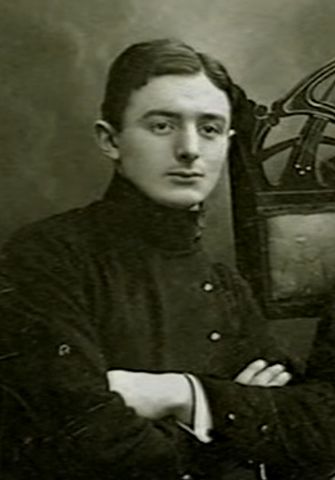
Few figures in cinema history stand as boldly avant-garde and theoretically uncompromising as Dziga Vertov. Born Denis Arkadievich Kaufman in 1896 in Białystok (then part of the Russian Empire, now Poland), Vertov became one of the most radical innovators of early Soviet film and the father of the documentary form as an art of truth rather than illusion. His 1929 masterpiece Chelovek s kino-apparatom (Man with a Movie Camera) remains one of the most analyzed and celebrated works in film history — not merely as a documentary, but as a cinematic manifesto proclaiming the power of the camera to reveal life itself.
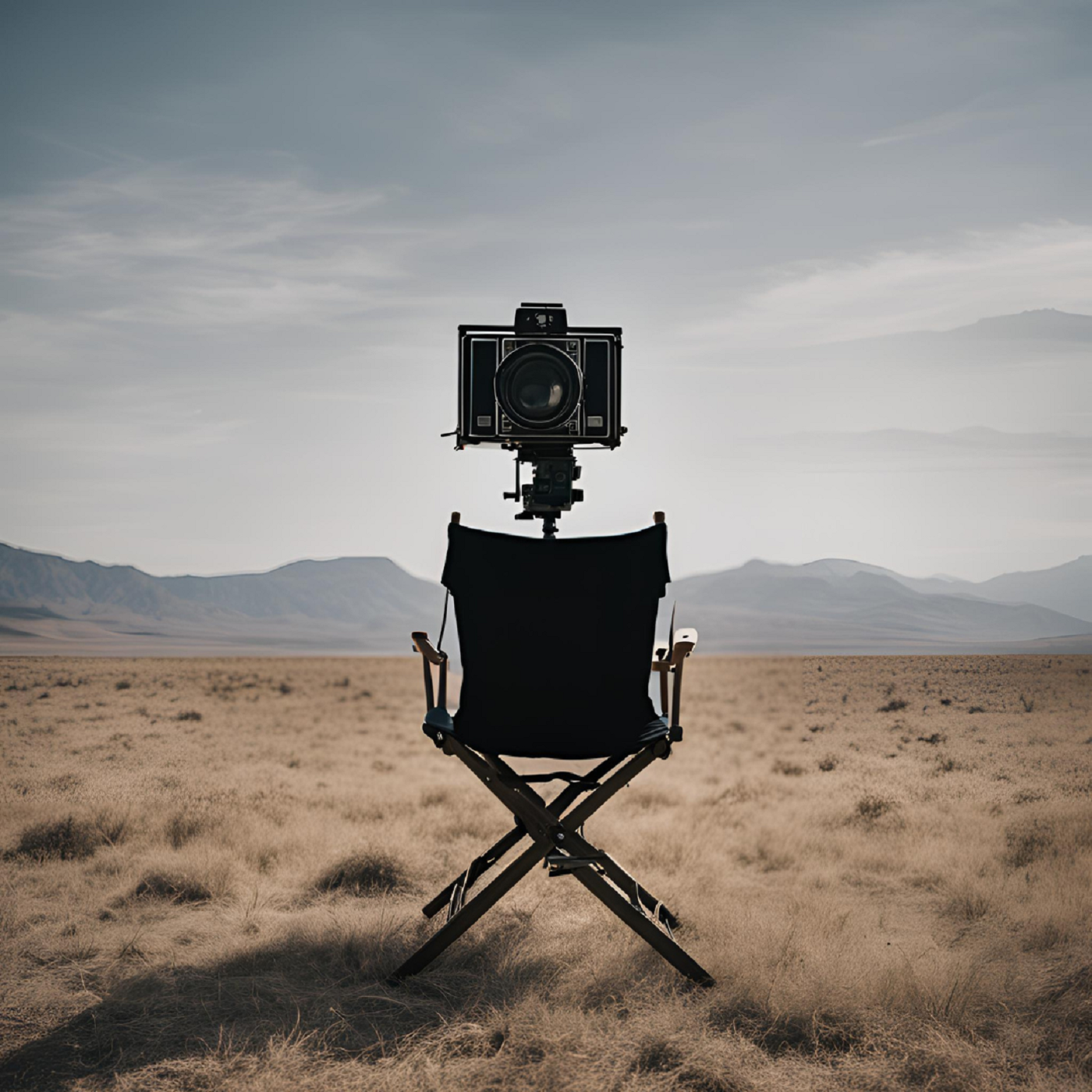
Vertov’s career sits at the crossroads of cinema, philosophy, and ideology. To understand his contribution, one must view him not only as a director but as a theorist of vision — a man who believed the mechanical eye of the camera could perceive reality better than the flawed human eye. His famous Kino-Eye concept transformed filmmaking from storytelling to a new mode of perceiving truth. Through his relentless experimentation and political conviction, Vertov helped shape modern documentary filmmaking, montage aesthetics, and the idea of cinema as a social instrument.
Early Life and the Birth of a Revolutionary Vision
Dziga Vertov’s artistic roots were both scientific and poetic. His father, a librarian, introduced him to literature and ideas; his early studies in medicine and music revealed an analytical mind fascinated by rhythm and human perception. When the Russian Revolution erupted in 1917, Vertov, like many young intellectuals of his generation, was swept into the utopian fervor of the new Soviet world. He joined the Moscow Cinema Committee, working on newsreels documenting the events of the Revolution.
From the beginning, Vertov was disgusted by fiction films, which he saw as bourgeois entertainment. He viewed actors and scripted plots as corrupting the camera’s pure potential. As he famously wrote in his 1922 manifesto:
“I am an eye. I am a mechanical eye. I, the machine, show you the world as only I can see it.”
This sentence defined his entire career. To Vertov, cinema was not imitation but revelation — a machine-based perception liberated from human bias. While others saw cinema as artifice, Vertov saw it as science.
The Kino-Eye: A Manifesto for a New Vision
In 1923, Vertov articulated his defining theory — the Kino-Eye (Кино-глаз). The concept was radical: the camera should record “life unawares” (zhizn vrasplokh), revealing truths invisible to the naked eye. The Kino-Eye was both a philosophy and a technique, merging Marxist ideals with a belief in technological objectivity.
He and his collaborators, known as the Kino-Eye Group, sought to film “life as it is” — unscripted, spontaneous, unfiltered. They rejected the studio, the actor, and the narrative, instead favoring observation, montage, and rhythm as the building blocks of meaning.
Vertov’s key idea was that the camera’s mechanical vision surpassed human perception. The human eye was limited, distracted, and emotional; the camera, by contrast, was precise, tireless, and capable of capturing multiple layers of reality simultaneously. Through editing, these fragments could be reassembled into a higher truth — what Vertov called “kino-pravda” (cinema-truth).
Kino-Pravda: The Cinema of Truth
The term Kino-Pravda first appeared as the title of Vertov’s series of newsreels between 1922 and 1925. These short films documented everyday Soviet life — workers, farmers, soldiers, and urban crowds — arranged through experimental montage. Each episode sought to transform reality into ideological clarity. Vertov’s goal was not passive documentation but the construction of a new consciousness through film.
While his contemporaries like Sergei Eisenstein used montage for dramatic effect — creating emotional and intellectual shocks through editing — Vertov’s montage was observational and dialectical. He aimed not to dramatize but to reveal.
Man with a Movie Camera (1929): The Ultimate Cinematic Experiment
Vertov’s theories reached their apotheosis in Chelovek s kino-apparatom (Man with a Movie Camera, 1929), his most famous and enduring work. The film is a self-reflexive portrait of the city, the filmmaker, and the filmmaking process itself — a movie about movies, created without actors, script, or intertitles.
Structure and Vision
Shot across several Soviet cities (Moscow, Odessa, Kiev), Man with a Movie Camera follows a day in the life of a city — from dawn to dusk — through an explosion of visual experimentation: double exposures, split screens, slow motion, reverse footage, rapid montage, and self-referential moments where we see the cameraman filming and the editor assembling the footage.
What makes Man with a Movie Camera revolutionary is that it transforms everyday life into cinematic spectacle. Factory workers, trams, sports games, marriages, and funerals become raw material for a new kind of visual rhythm. The film’s editing mirrors industrial and social energy — the city itself becomes the protagonist.
The Machine as Artist
At the core of Man with a Movie Camera lies the belief that the camera is not a passive recorder but an active participant in creation. The cameraman (played by Vertov’s brother, Mikhail Kaufman) is both artist and worker, merging human creativity with mechanical precision. The editing, performed by Vertov’s wife Elizaveta Svilova, becomes a metaphor for labor — assembling fragments into meaning, as a factory assembles materials into products.
Vertov’s fusion of ideology, technology, and rhythm created a cinematic language that felt alive, almost musical. Critics have often compared his editing to symphonic composition — an orchestration of images rather than sounds.
Between Art and Ideology: Vertov and the Soviet Context
Vertov’s career cannot be understood without the political landscape of the 1920s USSR. The Bolshevik government viewed cinema as a powerful propaganda tool for educating the masses. Lenin famously said, “Of all the arts, for us, cinema is the most important.”
Yet, Vertov’s radicalism often clashed even with Soviet expectations. His rejection of narrative and characters made his work difficult for general audiences. Many Soviet officials considered his films too abstract and formalist. By the late 1920s, as socialist realism became the official aesthetic of the regime, Vertov’s avant-garde vision began to lose favor.
While filmmakers like Eisenstein and Pudovkin could frame revolutionary messages within narrative forms, Vertov’s machine-centered poetics appeared elitist and overly intellectual. Nevertheless, his insistence that cinema could shape social consciousness through visual truth resonated deeply among intellectuals and future documentarians.
Beyond Fiction: Vertov’s Philosophy of Film
Vertov’s philosophical writings are among the most significant theoretical texts in film history. He envisioned cinema as an optical revolution, a way to reorganize human perception in alignment with socialist modernity.
Against Theater and Literature
Vertov’s contempt for fiction films stemmed from his belief that cinema must escape the influence of literature and theater. He derided actors as “hypocrites” and scenarios as “bourgeois relics.” For him, the artificiality of narrative cinema was a betrayal of film’s essence — a machine’s ability to record life.
This anti-theatrical stance was revolutionary in its implications: Vertov wanted to redefine cinema’s ontology, turning it from storytelling into seeing. His work anticipated later movements such as Italian Neorealism, Direct Cinema, and Cinéma Vérité, all of which sought authenticity through observation.
Montage as Dialectical Thinking
Vertov’s montage differed from Eisenstein’s in purpose. While Eisenstein’s montage aimed to produce emotional shock and ideological synthesis through collision, Vertov’s editing sought rhythm and revelation. For him, montage was a form of visual thinking, constructing meaning through temporal association rather than drama.
His approach made him not only a filmmaker but also a scientist of vision. Each cut, each juxtaposition was an experiment in perception — how the human mind organizes fragments of reality into coherent ideas.
Other Major Works: The Evolution of Kino-Eye
Although Man with a Movie Camera stands as Vertov’s pinnacle, his earlier and later works also illustrate his evolving vision.
Kino-Pravda (1922–1925)
This series of 23 newsreels documented the everyday reality of Soviet citizens. Vertov’s editing turned mundane moments into poetic studies of collective labor and rhythm. He often used hidden cameras to capture unposed behavior, believing that spontaneity was essential for truth.
A Sixth Part of the World (1926)
One of Vertov’s most ambitious works, A Sixth Part of the World explored the vast geography and diversity of the USSR. The title refers to the Soviet Union occupying one-sixth of the planet’s landmass. The film combined travelogue, ethnography, and montage in a lyrical celebration of Soviet unity — a cinematic hymn to the socialist project.
The Eleventh Year (1928)
This film marked a transition toward abstraction, focusing on industrial progress and the heroism of labor. Its rapid editing, rhythmic motifs, and visual metaphors illustrated Vertov’s fascination with machinery and collective energy. The Eleventh Year paved the way for the more personal and experimental Man with a Movie Camera.
Enthusiasm: Symphony of the Donbas (1931)
Vertov’s first sound film, Enthusiasm, was an auditory revolution. Instead of traditional dialogue or musical accompaniment, he used industrial sounds — factory noises, mining machines, church bells — to compose an audio-visual symphony. It was among the earliest experiments in sound montage, decades ahead of its time. The film impressed even Charlie Chaplin, who called it “one of the most exciting symphonies I have ever heard.”
The Decline of an Avant-Garde Genius
Despite his brilliance, Vertov’s career suffered under Stalin’s tightening control of Soviet art. His formal experiments were deemed “decadent” and “inaccessible to the masses.” By the mid-1930s, he was marginalized within the industry, relegated to newsreels and minor documentaries.
His later years were marked by frustration and neglect. Yet, Vertov never abandoned his faith in cinema’s revolutionary power. Even when state authorities sidelined him, he continued to write, edit, and theorize. He died in 1954, largely forgotten in his own country.
Rediscovery and Global Legacy
The 1960s brought a remarkable Vertov revival. As world cinema rediscovered its roots, filmmakers and scholars recognized him as a prophet of modern documentary form. The rise of Cinéma Vérité in France and Direct Cinema in the United States echoed Vertov’s call for unobtrusive observation and the elimination of theatrical artifice.
Jean Rouch, Chris Marker, and the Maysles brothers all acknowledged Vertov’s influence. Later, experimental filmmakers such as Godfrey Reggio (Koyaanisqatsi) and Chris Marker (Sans Soleil) extended his ideas of montage as meditation. Even modern digital artists owe a debt to Vertov’s notion of the camera as an autonomous perceiver.
The Dziga Vertov Group
In the late 1960s, Jean-Luc Godard and Jean-Pierre Gorin named their radical collective “The Dziga Vertov Group” in homage to his revolutionary ideals. They, too, sought to fuse politics and form, producing militant films that dismantled traditional cinematic language. The name was more than tribute — it was a declaration that Vertov’s spirit of experimentation lived on in the new political cinema.
Vertov’s Cinematic Style: The Poetry of Mechanization
Vertov’s films are instantly recognizable for their kinetic energy and machine aesthetics. He transformed the camera into an instrument of rhythm, abstraction, and visual metaphor.
1. Rhythmic Montage
His editing rhythm mirrors industrial modernity — repetitive, mechanical, yet dynamic. He synchronized human motion (workers, athletes, vehicles) with machine rhythms to create a visual symphony of progress.
2. Reflexivity
Vertov constantly exposed the filmmaking process. By showing the cameraman, the editor, and the projectionist within the film, he made cinema self-aware. This reflexive technique dismantled the illusion of realism and revealed the materiality of the medium — a concept that would become central to later postmodern cinema.
3. Urban Modernism
Like Walter Ruttmann’s Berlin: Symphony of a Great City (1927), Vertov’s Man with a Movie Camera captured the rhythm of urban life. But unlike Ruttmann, Vertov framed the city as a socialist organism — a collective body in motion, unified by labor and technology.
4. Human-Machine Synthesis
Vertov’s cinema celebrated the fusion of man and machine. The cameraman and the camera became extensions of one another — a prophetic vision anticipating later debates about cybernetics and post-humanism. In his films, mechanization was not dehumanization but liberation from human error.
Theoretical Influence: Cinema as Epistemology
Vertov’s writings, such as The Kino-Eye Manifesto and The Council of Three Declaration, established a philosophical foundation for visual epistemology — how we know the world through images. His belief that cinema constructs reality rather than merely reflects it reshaped the theoretical landscape of film studies.
For Vertov, film was a cognitive tool — a way of reorganizing perception to match the dialectical logic of Marxism. His camera-eye replaced individual subjectivity with collective vision. This notion anticipated structuralist and documentary theory in the 20th century, influencing thinkers from André Bazin to Bill Nichols.
Vertov and Eisenstein: Contrasts and Crossroads
Vertov’s name is often mentioned alongside Sergei Eisenstein, but the two embodied opposing tendencies within Soviet cinema. Eisenstein’s films were dramatic, ideological, and theatrical — using fiction to incite emotion and thought. Vertov, in contrast, sought pure cinematic truth through observation and rhythm.
Eisenstein dramatized revolution; Vertov documented it. Eisenstein built myths; Vertov dismantled them. Yet both shared the conviction that montage was the essence of cinema and that the medium could re-educate the masses through visual dialectics.
Their tension — between narrative and non-narrative, fiction and reality — defined early Soviet film and still echoes in debates about the function of cinema today.
The Modern Relevance of Vertov’s Vision
In the digital era, Vertov’s ideas feel astonishingly prescient. His vision of a mechanical eye observing the world parallels modern surveillance, livestreaming, and algorithmic vision. Every smartphone camera, drone, and GoPro embodies his concept of kino-glaz — the eye that never sleeps.
His dream of editing as social construction also anticipates digital montage culture, from TikTok videos to essay films. The democratization of image-making fulfills Vertov’s ideal of cinema as a collective art of the people — though perhaps in ways he never imagined.
Documentary filmmakers like Werner Herzog, Joshua Oppenheimer, and Agnès Varda continue to explore the boundary between truth and construction, a line Vertov first illuminated nearly a century ago. His belief that reality itself can be sculpted by film remains the foundation of documentary ethics and aesthetics.
Legacy: The Man Who Taught Us to See
Dziga Vertov’s legacy extends far beyond his lifetime. He redefined cinema as a way of thinking, not merely storytelling. His experiments anticipated almost every modernist and postmodernist film movement — from experimental montage to reality-based cinema, from self-reflexive narrative to the aesthetics of everyday life.
Man with a Movie Camera routinely appears at the top of critics’ polls, including the 2012 Sight & Sound documentary ranking, where it was voted the greatest documentary film of all time. Its influence permeates not only film but also visual art, video installation, and digital media.
Vertov proved that cinema could be both political and poetic, both mechanical and human. His films did not imitate reality — they constructed it. And in doing so, Vertov built the foundations for everything we now understand as modern cinema.
Conclusion: The Eye That Never Blinks
Dziga Vertov remains one of the most radical visionaries in the history of film. His Kino-Eye was not just a theory but a philosophy of perception, an attempt to rebuild human vision through technology. By rejecting illusion and embracing the machine, he opened the path toward a cinema of truth, rhythm, and social consciousness.
While his contemporaries turned film into drama, Vertov turned it into vision — an art of pure seeing. His influence spans continents and generations, from Soviet newsreels to digital art, from Godard to contemporary documentary.
To watch Man with a Movie Camera today is to feel cinema re-invent itself before our eyes — a film made of movement, energy, and optimism. Vertov believed that film could change how we see the world. A century later, his camera still does.