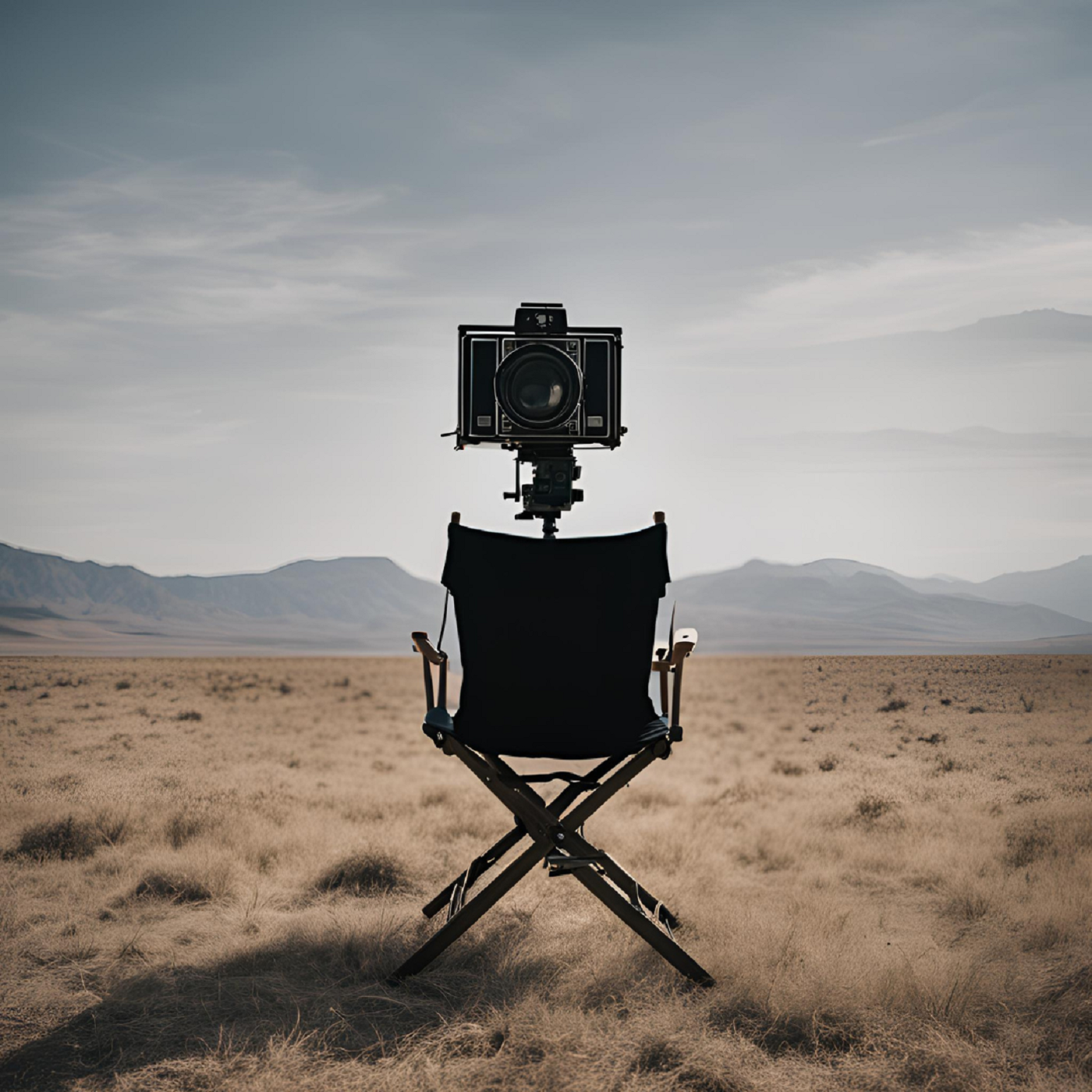

When film historians trace the roots of modern cinematic storytelling, one name bridges the silent experimentation of early motion pictures and the birth of narrative cinema — Edwin Stanton Porter. While Georges Méliès brought fantasy and illusion to the screen, it was Porter who gave film its first breath of realistic storytelling. He turned moving pictures from novelties into structured narratives, creating the visual grammar that Hollywood would build upon for the next century.
Through technical ingenuity, narrative invention, and an instinctive understanding of audience psychology, Porter transformed film into a medium capable of drama, suspense, and emotional coherence. His career, though brief in its peak, left a foundation that shaped cinematic editing, continuity, and the modern sense of film language.
The Early Life of a Tinkerer
Edwin S. Porter was born on April 21, 1870, in Connellsville, Pennsylvania. Like many of cinema’s pioneers, he began not as an artist but as an inventor and technician. His early fascination with electricity and mechanical devices defined his career path.
In the late 1880s, Porter worked as a telegraph operator — a position that required precision, rhythm, and a deep understanding of timing. These skills would later become essential in his editing work. Soon, his curiosity led him into the emerging world of electricity and optical devices. By the 1890s, he was repairing projectors and working as an itinerant projectionist, traveling with early moving picture shows.
It was a period of rapid technological innovation. The moving image was still a mechanical curiosity — a flickering spectacle shown at fairs and vaudeville houses. Porter’s keen technical mind made him invaluable to early entrepreneurs trying to capitalize on the phenomenon. He experimented with various projection systems, including the Eidoloscope and Vitascope, helping to bring the first public film screenings to American audiences.
By the late 1890s, his experience as a projectionist and mechanical repairman had made him an expert in motion picture technology. It was this expertise that brought him to Thomas Edison’s attention.
The Edison Years: From Mechanic to Storyteller
In 1899, Porter joined Edison Manufacturing Company in West Orange, New Jersey, as a mechanic and cameraman. Edison’s company was then the dominant force in American film production, responsible for manufacturing cameras, projectors, and hundreds of short films.
At first, Porter’s role was purely technical — maintaining and improving cameras and projectors. But he quickly revealed an artistic sensibility that set him apart. Edison’s early films were simple one-shot scenes: brief, unedited glimpses of boxing matches, vaudeville acts, or daily life. Porter began to see possibilities beyond these fragments.
By 1901, he was experimenting with editing, camera positioning, and narrative sequencing. Influenced by both Méliès’s theatrical storytelling and the documentary realism of the Lumière brothers, Porter sought to merge fiction and reality into something new — cinematic narrative.
Porter’s Technical and Artistic Innovations
Before delving into his most famous works, it’s essential to understand the groundbreaking techniques Porter either invented or refined. Each of these would later become fundamental to film language.
1. Parallel Editing (Cross-Cutting)
Porter was among the first to intercut between simultaneous events happening in different locations. This created tension and continuity, a method famously used in The Great Train Robbery (1903). The technique allowed audiences to experience two or more threads of action as one continuous story.
2. Continuity Editing
Before Porter, films were collections of disconnected shots. Porter realized that by maintaining consistent spatial and temporal relationships, scenes could flow logically — a cornerstone of cinematic storytelling.
3. Close-Ups and Shot Variation
Porter experimented with breaking the single, static viewpoint of early film. He introduced close-ups to emphasize emotion or detail, giving audiences a more dynamic viewing experience.
4. Narrative Montage
Porter’s work introduced early forms of montage editing, connecting images to express relationships in time and space — a precursor to the montage theories later developed by Eisenstein and Griffith.
5. Location Shooting
While most early films were shot entirely in studios, Porter often ventured outdoors, capturing real locations that added authenticity and realism to his stories.
6. Camera Movement
Porter experimented with subtle camera movements and tracking shots to follow action, making his films more fluid and natural than the stiff, stage-like productions of his contemporaries.
7. Early Color Tinting
Though he didn’t invent colorization, Porter used tinted sequences to differentiate time of day or dramatic tone, enriching the emotional atmosphere of his films.
The First Experiments in Storytelling
Porter’s early directorial experiments marked a turning point in American cinema. In 1901 and 1902, he began producing narrative films that combined multiple scenes — a radical idea at the time.
The Life of an American Fireman (1903)
This 6-minute film is one of the most important milestones in motion picture history. It dramatized the rescue of a woman and child from a burning building — a story told in multiple shots and locations.
What made The Life of an American Fireman revolutionary was its editing structure. Porter filmed both the interior rescue and the exterior fire scene, and though the two were shown sequentially rather than intercut (as later filmmakers would refine), the film created a sense of continuity and realism unknown before.
For the first time, audiences saw a story unfold across multiple perspectives, rather than as a single tableau. It was the beginning of cinematic grammar — the understanding that film could manipulate time and space to tell a cohesive story.
Jack and the Beanstalk (1902)
Inspired by Méliès’s fantasy films, Porter created one of the earliest American fairy tales on screen. The film featured stop-motion effects, dissolves, and painted backdrops, blending magic with narrative structure. It proved that American cinema could match the European imagination.
The Great Train Robbery (1903): The Birth of Modern Cinema
If there is one film that defines Porter’s legacy, it is The Great Train Robbery. Released in December 1903, this 12-minute silent Western became the most influential film of the early 20th century.
The story, simple by modern standards, was revolutionary at the time: a gang of outlaws robs a train, kills passengers, and flees — only to be pursued and defeated by a posse. But what made the film extraordinary was not its plot but its form.
Innovations in The Great Train Robbery
- Parallel Editing: Porter intercut between the robbers and the pursuing posse, creating a sense of simultaneous action. This was one of the first uses of cross-cutting, a technique that would later become essential in suspense and action films.
- Dynamic Composition: Porter used both wide shots and close-ups, most famously the outlaw firing his gun directly at the camera — an image that startled audiences and became one of the earliest examples of breaking the fourth wall.
- Movement and Energy: The film was full of dynamic motion — trains moving, people running, horses galloping — giving cinema a sense of kinetic realism.
- Editing for Narrative Flow: Each shot logically followed the previous one, guiding the viewer’s understanding of the story through visual continuity rather than stage conventions.
The film’s commercial success was enormous. Exhibitors across America played it for years, and it was often accompanied by live narrators or sound effects. It made Porter and the Edison Company famous and established film as a viable medium for storytelling rather than novelty.
Building the Language of Film
After The Great Train Robbery, Porter continued to experiment with narrative complexity and cinematic form.
The Kleptomaniac (1905)
This film combined social commentary with narrative innovation. It contrasted the fate of a poor woman who steals bread for her child with that of a wealthy woman who shoplifts for amusement. Porter used parallel editing and symbolic cross-cutting to critique class inequality — a theme that would later dominate realist cinema.
Rescued from an Eagle’s Nest (1908)
Notable for featuring a young D.W. Griffith in one of his only acting roles, this film used early special effects and daring action sequences. It also revealed Porter’s continuing interest in moral melodrama and heroic storytelling.
Dream of a Rarebit Fiend (1906)
Based on Winsor McCay’s comic strip, the film displayed Porter’s technical playfulness. Through double exposure and trick photography, it visualized the hallucinations of a man who overeats Welsh rarebit — one of the earliest attempts to depict subjective reality on screen.
The Ex-Convict (1904) and The “Teddy” Bears (1907)
These works further demonstrate his mastery of structure, mixing humor, social commentary, and innovative effects. The “Teddy” Bears, a hybrid of political satire and fairy tale, was one of his most expensive productions.
The Transition to the Narrative Age
By 1907, cinema was evolving rapidly. Films were getting longer, more narrative-driven, and more professionalized. Studios were emerging, and new filmmakers were pushing the medium toward sophistication.
Ironically, Porter — once a radical innovator — began to fall behind. Younger filmmakers like D.W. Griffith, working at Biograph, refined and expanded on Porter’s ideas. Griffith’s mastery of cross-cutting, continuity, and emotional pacing built directly upon Porter’s foundation, but took it further.
Porter, meanwhile, remained loyal to Edison’s studio model, which was becoming increasingly rigid. His technical approach was unmatched, but his storytelling began to feel old-fashioned as narrative cinema became more emotionally expressive and complex.
In 1909, Porter left Edison and co-founded the Defender Film Company, later working with Famous Players Film Company (which became part of Paramount Pictures). But as the studio system expanded, Porter’s independent craftsmanship — his hands-on, experimental spirit — no longer fit the industrial model.
By the mid-1910s, Porter’s career as a director had ended. Yet his fingerprints were all over the art form that followed.
Edwin S. Porter’s Legacy and Influence
Though his name is less recognized than those of Méliès or Griffith, Porter’s impact on cinema is immeasurable. He was both a technician and an artist, merging invention with visual storytelling in ways that defined early American cinema.
1. The Father of Film Editing
Porter didn’t invent editing, but he gave it purpose. He realized that films could be built from multiple shots assembled to create meaning — a revolutionary idea at the dawn of cinema. Every editor working today, from Hollywood blockbusters to indie filmmakers, owes a debt to Porter’s discoveries.
2. The Blueprint for Narrative Cinema
Through The Life of an American Fireman and The Great Train Robbery, Porter gave film its first sense of beginning, middle, and end. He established a linear storytelling model that remains the foundation of cinematic narrative.
3. A Bridge Between Méliès and Griffith
Porter’s work connected the fantasy-based European tradition of Méliès with the realism and emotional storytelling that Griffith would later perfect. He was the missing link — the craftsman who built the bridge between cinema as spectacle and cinema as art.
4. The Americanization of Cinema
Méliès’s films were theatrical and fantastical, but Porter’s were grounded in American themes — adventure, justice, technology, and frontier life. His work gave birth to the distinctly American film genre: the Western.
5. Inspiration for Realism and Genre Filmmaking
From Westerns to crime dramas, from melodrama to social realism, Porter’s influence extended across genres. His balance of technical precision and moral storytelling set the tone for decades of American filmmaking.
6. Technical Mastery and Innovation
As an inventor and craftsman, Porter improved the Edison Kinetograph camera, developed early editing tables, and refined film splicing and projection techniques. His work behind the scenes helped standardize film production processes still in use in adapted forms today.
7. The Visual Grammar of Cinema
Every cinematic convention we take for granted — the cut, the reaction shot, the chase, the parallel scene — began with Porter’s experiments. He discovered that film could manipulate not only what we see, but how we feel time and space.
The Forgotten Pioneer
Despite his monumental influence, Porter died in relative obscurity. After leaving film production, he ran a projection equipment company and worked in photographic supply. He lived to see sound cinema’s rise but remained largely unrecognized outside academic circles.
Yet in retrospect, his role was foundational. He was the craftsman who gave film its syntax — the editor who taught moving pictures how to speak.
Porter’s Films in Retrospect
Today, Porter’s surviving works are studied not for their glamour but for their structural genius. Watching them feels like observing the mind of an engineer designing the language of dreams.
- The Great Train Robbery is now preserved in the Library of Congress as one of the most important films ever made.
- The Life of an American Fireman is regularly screened in film schools to demonstrate the birth of cinematic editing.
- His lesser-known shorts, such as The Kleptomaniac and Dream of a Rarebit Fiend, reveal a man who saw film as both a moral instrument and a mechanical wonder.
In Porter’s films, we glimpse the moment when cinema became self-aware — when it began to tell stories, not just show motion.
Porter and the Spirit of Innovation
What makes Porter’s career so remarkable is not just what he achieved, but how quickly he achieved it. Between 1901 and 1908, he almost single-handedly moved film from the stage of novelty to that of structured art. His ability to combine technological insight with narrative instinct was unprecedented.
He worked in an era without film schools, screenplays, or industry conventions. Everything he created — from parallel editing to narrative structure — was discovered through trial and error. In that sense, Porter embodies the essence of the cinematic pioneer: curious, practical, and endlessly inventive.
The Broader Context of His Work
Porter’s innovations came at a time when America itself was transforming. The early 1900s were marked by industrial expansion, urbanization, and a new mass culture hungry for entertainment. Film was a reflection of this energy — fast, mechanical, modern.
Porter’s films captured that spirit. The Great Train Robbery mirrored America’s fascination with technology and adventure. The Life of an American Fireman reflected civic heroism and social order. His work resonated with ordinary audiences because it spoke to their experiences in an increasingly modern world.
In this sense, Porter was not just a filmmaker but a cultural engineer — shaping how Americans saw themselves on screen.
Conclusion: The Man Who Gave Cinema Its Logic
Edwin S. Porter may not have been a showman like Méliès or a poet like Griffith, but he was cinema’s first engineer of meaning. He built the tools — narrative continuity, parallel editing, shot composition — that allowed later artists to express emotion and complexity through film.
His films turned the moving picture into a visual language. Every cut that heightens tension, every edit that compresses time, every chase that unfolds across multiple locations — all carry Porter’s DNA.
More than a century later, we still live inside the cinematic structure he built. When a modern film cross-cuts between hero and villain, when a chase accelerates through quick edits, when realism meets drama — it is Porter’s silent genius at work.
He took the flicker of invention and gave it a heartbeat.