
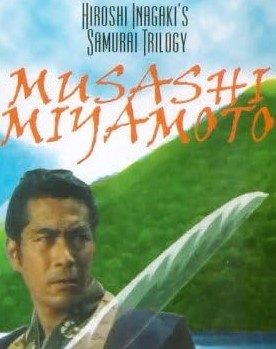
The Samurai Trilogy — Samurai I: Musashi Miyamoto (1954), Samurai II: Duel at Ichijoji Temple (1955), and Samurai III: Duel at Ganryu Island (1956) — stands as a remarkable cinematic achievement of post-war Japanese cinema. Directed by Hiroshi Inagaki and starring Toshiro Mifune in one of his most enduring roles, the trilogy recounts the storied life of Miyamoto Musashi, Japan’s most famed swordsman and philosophical warrior. Loosely adapted from Eiji Yoshikawa’s sprawling novel Musashi, serialized from 1935–1939, the films take the viewer on an expansive journey from youthful recklessness to mature enlightenment.
What distinguishes this trilogy is not merely its sweep or action, but its interpretation of samurai ethos, the evolution of self, and the psychological landscape of its protagonist — themes that resonate with audiences beyond Japan’s cultural boundaries. Below, we explore each film in depth.
1. Samurai I: Musashi Miyamoto (1954)
The Birth of a Warrior and the Making of a Legend
Samurai I introduces us to Takezo, the spirited young man who will become the legendary Miyamoto Musashi. Directed and co-written by Hiroshi Inagaki, this first installment plunges the viewer into the chaos of early 17th-century Japan, a land torn by civil strife and samurai clashes.
Narrative and Themes
From the outset, Takezo’s character is defined by raw ambition and untempered courage. The film opens in the aftermath of the Battle of Sekigahara, one of Japan’s most significant historical clashes. Takezo and his comrade Matahachi fight on the losing side, expecting glory but instead finding defeat and dishonor. They become fugitives, and their struggle for survival becomes the catalyst for Takezo’s transformation.
This part of the trilogy is rich in dramatic tension and existential turmoil. Takezo’s journey from a reckless youth to a man seeking meaning is not merely physical, but spiritual. Early in the film, he is shaped by a Buddhist mentor, whose harsh methods — including confinement with Zen texts — begin the shaping of his inner life. This early spiritual initiation sets Samurai I apart from many sword-and-sandal fare; it is as much a meditation on inner discipline as it is a tale of swordsmanship.
Performance and Cinematic Craft
Toshiro Mifune’s performance is magnetic. Already known internationally for his work with Akira Kurosawa (Rashomon), Mifune imbues Musashi with a fiery presence — both fierce and vulnerable — that anchors the narrative. Inagaki’s use of Eastman Color, still novel for Japanese cinema at the time, gives the film an emotional palette that heightens landscape, costume, and mood.
The film earned international accolades, including a Special/Honorary Academy Award for Best Foreign Language Film, a mark of its cross-cultural impact upon release.
In sum, Samurai I functions as both origin story and character study — introducing a protagonist who is at once heroic and flawed.
2. Samurai II: Duel at Ichijoji Temple (1955)
Growth, Conflict, and the Burden of Skill
The second film broadens the narrative scope and deepens Musashi’s exploration of identity and consequence. In Samurai II, Inagaki pushes his hero into confrontation with not just external foes, but with the impacts of fame and mastery.
Plot Progression and Thematic Depth
At this stage, Musashi is no longer an untested youth. He is becoming a recognizable force in the chaotic landscape of feudal Japan. The film opens with him journeying to Kyoto, where he faces the powerful Yoshioka sword school, an institution whose reputation is as formidable as any single duelist. Here, Inagaki stages some of the most ambitious large-scale combat sequences seen in Japanese cinema up to that point. These extended fight scenes serve not as mere spectacle but as visual metaphors for Musashi’s evolving mastery and isolation.
Contrasting with the visceral battles is Musashi’s complicated personal life. The tension between Musashi and the women in his life — particularly Otsu and Akemi — underscores his emotional fragmentation. While his sword arm grows steadier, his human connections fray. The duality of warrior and man — a common thread in many samurai narratives — takes center stage, reminding us that mastery of the sword does not equate to ease of the heart.
Cinematic Execution
From a technical standpoint, Samurai II demonstrates Inagaki’s growing confidence. The film’s color cinematography, choreographed combat, and editing create a visual rhythm that captures both chaos and clarity — the swirl of blades contrasted with quiet moments of introspection. Critics and historians note its careful balance between brooding character beats and exhilarating physical confrontations.
Musashi’s victory at Ichijoji Temple, where he stands essentially alone against many challengers, symbolizes his emergence as a near-mythic figure but also the cost exacted by such singular prowess. The film, therefore, stands as an exploration of isolation born of excellence.
3. Samurai III: Duel at Ganryu Island (1956)
Resolution, Philosophy, and the Final Duel
The trilogy’s final film concludes Musashi’s arc with philosophical depth and narrative closure. In Samurai III, Inagaki shifts from the energy of earlier installments toward a more contemplative and mature meditation on the warrior’s path.
Narrative and Spiritual Shift
Here, Musashi has achieved substantial renown. He is sought as a teacher and advisor even by political power brokers, yet he turns away from official patronage. Instead, he chooses a simpler life, farming and living near a small village — an existence far from the battlefield. This unexpected turn highlights the essence of samurai philosophy: strength alone is hollow without purpose and harmony.
The presence of his old love interests, particularly Otsu and Akemi, adds emotional resonance to Musashi’s isolation and gradual acceptance of life beyond combat. Amid threats from brigands and the rising tension with his ultimate rival, Sasaki Kojiro, Musashi confronts not only physical danger but his own past choices.
The Duel and Legacy
The climactic duel on Ganryu Island remains one of Japanese cinema’s most iconic showdowns. Here, Musashi strategically uses the rising sun’s light to disorient Kojiro and secure victory — a duel that elevates the story beyond brute force to a test of intellect and preparation. This final encounter is not simply a conclusion to their rivalry but a symbolic reconciliation of Musashi’s warrior self with his human self.
Cinematic Maturity
Inagaki’s direction in this final installment shows restraint and reflection. While still featuring compelling choreography and performance, Samurai III allows space for silent contemplation, for music and imagery to convey the internal rhythms of Musashi’s transformation. Critics note that this focus on introspective pacing and thematic closure lends the final installment a distinct dignity.
Legacy and Influence
Taken together, The Samurai Trilogy offers more than a historical retelling — it presents a comprehensive portrait of a cultural archetype. Musashi’s arc mirrors not just physical growth but philosophical evolution, engaging with timeless questions of identity, honor, and fulfillment.
From a broader cinematic perspective, the trilogy played a key role in globalizing Japanese film in the 1950s, contributing to Western audiences’ appreciation of jidaigeki (“period drama”) cinema. It sits alongside contemporaries such as Kurosawa’s Seven Samurai yet offers a narrative uniquely focused on individual transformation rather than ensemble heroics.
The trilogy also influenced future samurai films and media depictions of Musashi, reinforcing the swordsman’s dual identity as warrior and thinker — a model that endures in both popular culture and academic studies of samurai ethos.
Conclusion: Enduring Power and Cultural Resonance
Inagaki’s Samurai Trilogy remains a touchstone for historical cinema, revered for its narrative ambition, character depth, and philosophical richness. Through meticulous direction, compelling performances, and a layered adaptation of Yoshikawa’s novel, the trilogy stands not merely as entertainment but as a cinematic meditation on the essence of mastery and the human condition.
For new audiences and seasoned cinephiles alike, Samurai I, II, and III together offer a rare opportunity to witness the evolution of a hero — from impetuous youth to enlightened warrior — set against a richly textured world where honor, love, and self-understanding intersect in profound ways