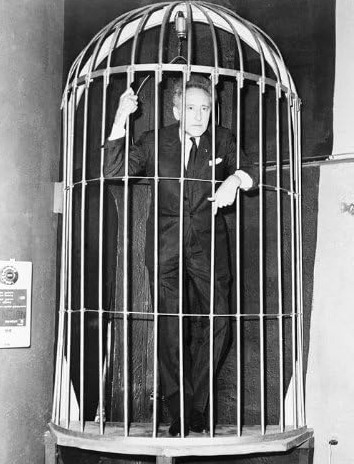
The unity of art and imagination is embodied by few figures in the history of cinema as seamlessly as it is by Jean Cocteau. A poet, playwright, novelist, painter, and filmmaker, Cocteau defied categorization. His name stands at the intersection of surrealism, classicism, and cinematic poetry — an artist whose visual world expressed the ineffable beauty and anguish of the human condition.
Although Cocteau’s creative life spanned multiple disciplines, it is his films that crystallize his artistic philosophy. They are not mere narratives but dreams captured in motion, interlacing myth, mirrors, and mortality. Through works like La Belle et la Bête (1946) and Orphée (1950), Cocteau gave the cinema its own mythic and poetic voice, transforming film from a recording device into a metaphysical mirror.
The Poet Before the Camera
Born in Maisons-Laffitte, France, in 1889, Jean Cocteau grew up in an upper-middle-class family that valued art and literature. His early years were shadowed by tragedy — his father’s suicide when Cocteau was only nine — a trauma that would echo throughout his life and work, manifesting in his fascination with death, resurrection, and transformation.
By the time he entered his twenties, Cocteau had already established himself as a prodigy in Parisian artistic circles. He was a published poet and a regular figure among the avant-garde elite of the early 20th century. His acquaintances included Pablo Picasso, Marcel Proust, Erik Satie, Guillaume Apollinaire, and later, Jean Marais, who became both his muse and collaborator.
Cocteau’s earliest creative energy was directed toward theatre and poetry, but cinema soon became his ultimate canvas. He was initially skeptical of film’s artistic potential — considering it mechanical — yet after the success of his 1926 play Orphée and his collaborations with avant-garde artists, he began to see film as a means to translate poetry into images.
“A film is a dream we dream with our eyes open,” Cocteau once wrote, encapsulating his vision of cinema as a lyrical experience, not a literal one.
Entering the World of Cinema: Le Sang d’un Poète (1930)
Cocteau’s first film, Le Sang d’un Poète (The Blood of a Poet), remains one of the foundational works of surrealist cinema. Created between 1929 and 1930, at the height of the surrealist movement, it explores the artist’s relationship with his own imagination and mortality.
The film’s structure is fragmented, resembling a dream or a series of poems rather than a coherent narrative. It opens with an artist drawing a face that comes to life, leading him into a mirror — a recurring motif in Cocteau’s oeuvre symbolizing the threshold between reality and dream. Inside this alternate world, statues whisper, children mock, and death appears both inevitable and poetic.
Though contemporary audiences were bewildered by its symbolism, Le Sang d’un Poète now stands as a manifesto of Cocteau’s cinematic philosophy:
- Reality is permeable.
- The artist is both creator and victim of his visions.
- Cinema is an alchemical process — transforming matter (light, time, bodies) into pure emotion.
Unlike Buñuel and Dalí’s Un Chien Andalou, Cocteau’s surrealism was not rooted in shock or provocation. His surrealism was romantic and metaphysical, striving for beauty and transcendence rather than destruction of meaning.
World War II and the Birth of a Masterpiece: La Belle et la Bête (1946)
By the time Cocteau returned to filmmaking after World War II, Europe had changed — and so had he. France was emerging from occupation, and audiences longed for enchantment and escape. Into this wounded world, Cocteau released La Belle et la Bête (Beauty and the Beast), a film that redefined cinematic fantasy.
Adapted from Jeanne-Marie Leprince de Beaumont’s fairy tale, Cocteau’s version is not merely a retelling but a profound meditation on love, humanity, and illusion. Every frame is meticulously composed, suffused with the texture of dream logic and painterly precision.
The film’s visual language — with its slow-motion movements, fog-drenched corridors, and candlelit walls held by living arms — turns the fairy tale into a mythic experience. Cocteau famously said that he wanted “to make the unreal believable,” and he achieved this through cinematic sincerity: practical effects done in-camera, poetic imagery over spectacle, and performances that blur the line between human vulnerability and mythic grandeur.
Jean Marais, who portrayed both the Beast and Avenant, brings an emotional depth that elevates the story from simple romance to existential allegory. The Beast’s transformation at the end — long debated by critics — reflects Cocteau’s idea that beauty and monstrosity coexist in every soul, and that love is the alchemy capable of uniting them.
La Belle et la Bête remains one of the most visually beautiful films ever made, not because of its budget or technology, but because of its purity of imagination. It transformed cinematic art into modern mythology, laying the groundwork for later directors such as Terry Gilliam, Guillermo del Toro, and Neil Jordan, all of whom have acknowledged Cocteau’s influence.
The Orphic Trilogy: Death, Art, and the Mirror of Eternity
Cocteau’s obsession with the myth of Orpheus — the poet who ventures into the underworld for love — became the defining thread of his film career. Across three films — Le Sang d’un Poète (1930), Orphée (1950), and Le Testament d’Orphée (1960) — he crafted what is now known as The Orphic Trilogy, a meditation on artistic immortality and the eternal dialogue between life and death.
1. Orphée (1950): Cinema as the Mirror of the Soul
In Orphée, Cocteau reimagines the ancient myth in modern Paris, where poets drive cars, listen to cryptic radio messages from the dead, and fall in love with Death herself. Jean Marais plays Orpheus, and María Casares embodies Death with haunting grace.
The film’s surreal visual tricks — characters walking through mirrors, reversed motion, gliding movements — are deceptively simple yet profoundly poetic. Cocteau achieved these effects with ingenious in-camera techniques, emphasizing that cinema’s power lies not in machinery but in imagination.
Beyond its technical mastery, Orphée is a philosophical journey. It reflects Cocteau’s belief that the artist must die and be reborn to achieve true creation — that art is both a form of death and a form of resurrection. The mirror, again, serves as the portal between these worlds: a surface of reflection and revelation.
“The mirrors should be thought of as doors,” Cocteau wrote, “through which death comes and goes. Look long enough in a mirror, and you will see death at work.”
2. Le Testament d’Orphée (1960): The Final Dream
Thirty years after Le Sang d’un Poète, Cocteau completed his cinematic journey with Le Testament d’Orphée, a self-reflective, semi-autobiographical film in which he plays himself — an aging poet traveling through time, seeking meaning in his life and art.
The film blurs every boundary between art and artist, fiction and memory. Cameos from Cocteau’s friends (including Picasso and Jean Marais) lend it an air of farewell, while its fragmented structure recalls the cyclical nature of dreams.
This final film stands as Cocteau’s cinematic will, a summation of his entire philosophy:
- The artist is condemned to create.
- Death is not an end but a transformation.
- The dream is reality’s deepest truth.
In his closing words, Cocteau declares: “I am a living lie, who tells the truth.” It is the perfect encapsulation of his art — a paradox where illusion reveals reality.
Themes and Symbolism: The Poetics of the Impossible
Cocteau’s films are woven with recurring symbols that define his poetic universe. Each symbol is not a mere motif but a visual metaphor reflecting his spiritual and philosophical preoccupations.
Mirrors: Portals of the Soul
Perhaps no image is more closely associated with Cocteau than the mirror. For him, the mirror was not an object of vanity but a threshold — the meeting point of life and death, the self and the subconscious.
In Orphée, when the protagonist steps through a mirror, Cocteau famously filmed it using a shallow tank of mercury to create a shimmering, liquid effect. The act of crossing the mirror symbolizes the artist’s journey into the unknown — a literal passage between worlds.
Hands: The Power of Creation
Hands, often shown in close-up or with exaggerated gestures, symbolize the artist’s ability to shape reality. In Le Sang d’un Poète, a mouth appears on a hand, merging the acts of speech and creation. For Cocteau, the hand is the instrument of divine creativity — capable of both beauty and destruction.
Death: The Ultimate Muse
Cocteau’s lifelong fascination with death was not morbid but metaphysical. Death, in his films, is seductive, elegant, and compassionate — a figure of transformation rather than terror. María Casares’s portrayal in Orphée remains one of cinema’s most sophisticated depictions of mortality: mysterious, romantic, and deeply human.
Time and Circularity
Cocteau’s narratives rarely follow linear logic. Time in his films loops, reverses, and overlaps, mirroring the cyclical nature of dreams and myth. This temporal fluidity reinforces his belief that art exists outside of time, and that the artist’s task is to translate eternity into images.
Cinematic Style: The Language of Dreams
Jean Cocteau’s style is instantly recognizable — elegant, surreal, and hauntingly lyrical. While his contemporaries like Jean Renoir pursued realism, Cocteau sought “realité intérieure” — inner reality.
Visual Aesthetics
His compositions draw inspiration from classical painting and baroque architecture. Lighting, shadow, and texture are used not to simulate reality but to evoke emotion. The stark contrasts and soft-focus photography lend his images a sculptural quality — as if carved from light itself.
Minimalism and Magic
Cocteau believed that cinema should rely on suggestion rather than spectacle. His effects were handmade, his sets theatrical, his transitions metaphysical. What others achieved through editing, Cocteau achieved through pure imagination — reversing film reels, using slow motion, or manipulating mirrors.
In this sense, his films feel timeless because they are rooted in artistry, not technology. They remind viewers that cinema, at its core, is not about realism but about the poetic transformation of the ordinary into the extraordinary.
Performance and Gesture
Actors in Cocteau’s films move with deliberate slowness and grace, echoing silent-era expressionism. Dialogue is sparse, often poetic, and delivered with ritualistic cadence. This stylization gives his films a dreamlike stillness, emphasizing mood over realism.
Jean Marais, Cocteau’s frequent collaborator, embodied this ethos perfectly — his performances oscillate between human tenderness and mythic grandeur. Their partnership, personal and artistic, created some of the most iconic images in French cinema.
Between Surrealism and Classicism
Although Cocteau is often grouped with the Surrealists, he was never fully part of their movement. André Breton, the self-proclaimed leader of Surrealism, criticized Cocteau for being too bourgeois and too aesthetic.
Yet Cocteau’s art transcended movements. He combined the mythic clarity of classicism with the psychological depth of surrealism, achieving a synthesis that was uniquely his own.
His films, much like his poetry, inhabit a liminal space — poised between order and chaos, dream and discipline. This duality makes his cinema deeply personal yet universally resonant.
Influence on Later Generations
Jean Cocteau’s influence extends far beyond his own era. Filmmakers, poets, and visual artists across the world have drawn inspiration from his visionary style.
The French New Wave
The filmmakers of the Nouvelle Vague — Jean-Luc Godard, François Truffaut, Alain Resnais — all revered Cocteau for his independence and artistic courage. His low-budget, highly personal approach to filmmaking foreshadowed the auteur theory that would dominate French cinema in the 1950s and 60s.
Global Echoes
His blend of fantasy and realism found echoes in the works of Ingmar Bergman, Federico Fellini, and Andrei Tarkovsky, each of whom explored spiritual and metaphysical dimensions of film in ways reminiscent of Cocteau.
In contemporary cinema, one can trace his legacy in directors such as Guillermo del Toro, whose Pan’s Labyrinth mirrors Cocteau’s lyrical blending of innocence and darkness, or Leos Carax, whose poetic surrealism directly channels Cocteau’s spirit.
Cross-Disciplinary Influence
Beyond film, Cocteau’s art inspired painters, fashion designers, and musicians. His collaborations with Pablo Picasso, Coco Chanel, and Erik Satie reveal a lifelong commitment to interdisciplinary creation — a concept that defines much of 20th-century art.
He also designed stage sets and murals, bridging cinema with theater and visual art. His holistic vision of creativity — that an artist must live as a poet in all mediums — continues to inspire today’s multimedia creators and visual storytellers.
Jean Cocteau and Jean Marais: Muse, Mirror, and Myth
No discussion of Cocteau’s cinematic world would be complete without acknowledging his relationship with Jean Marais, the actor who became both his muse and his mythic alter ego.
Their partnership began in the late 1930s and lasted until Cocteau’s death. Marais embodied the kind of heroic yet fragile masculinity that Cocteau admired — a physical manifestation of the poet’s inner world.
Together, they created characters that transcended realism: the Beast, Orpheus, the Prince — each a mirror of Cocteau’s dreams. Their collaboration reflected not only romantic affection but also a shared artistic pursuit of beauty, transformation, and immortality.
Marais once said of Cocteau, “He made me see myself as a work of art.” In truth, Cocteau did the same for cinema itself.
Critics and Reception: Between Admiration and Misunderstanding
Cocteau’s films were often met with mixed reactions upon release. Many critics found them too abstract, too literary, or too self-referential. Others dismissed him as a dilettante, dabbling in cinema without full commitment.
Yet over time, his reputation grew as scholars and filmmakers recognized his unique contribution to cinematic language. His ability to merge poetry with moving image, myth with modernity, positioned him as a true pioneer of cinematic expressionism.
Today, his films are studied not for their plots but for their visual philosophy — the belief that cinema should not imitate reality but reveal its hidden soul.
Philosophy of the Artist: The Dream as Truth
Cocteau’s entire career was guided by a belief that dreams are the true expression of the self. He saw the artist as a medium between the visible and the invisible, translating visions from one realm to another.
In his writings, he described the creative process as both painful and divine — a form of inner exile that isolates the artist from ordinary life. His films, therefore, often depict creators who are misunderstood, tormented, or pursued by death — projections of Cocteau himself.
But for Cocteau, this suffering was essential. Art, he believed, was not comfort but revelation. “The poet,” he said, “is a liar who always tells the truth.”
This paradox defines both his life and his work — a continual search for authenticity through illusion.
Legacy: The Eternal Return of the Poet
Jean Cocteau passed away in 1963, shortly after hearing of the death of his dear friend Edith Piaf. His life ended, fittingly, like one of his films — suspended between sorrow and beauty, myth and mortality.
Today, Cocteau’s cinema endures not because of nostalgia but because it still feels ahead of its time. His use of symbolism, minimalism, and surreal imagery prefigures not only modernist cinema but also the language of music videos, performance art, and digital media.
He proved that cinema could be poetry in motion, that imagination could transcend technology, and that the artist — like Orpheus — could look into the mirror of death and emerge immortal.
Conclusion: The Cinematic Alchemist
Jean Cocteau’s contribution to cinema cannot be measured by box office or genre. His films are not entertainment in the conventional sense; they are visual poems, spiritual allegories, and metaphysical diaries.
He expanded the vocabulary of cinema, turning the screen into a canvas for introspection and transcendence. His legacy lives not only in French film history but in every filmmaker who dares to dream with sincerity.
In the end, Cocteau’s art teaches us that cinema, at its highest form, is not about illusion but revelation — a light that passes through the mirror and returns transformed.
“Film,” Cocteau once said, “will only become an art when its materials are as inexpensive as pencil and paper. Then we shall find poets and philosophers making films.”
He foresaw a future where imagination would democratize creation — a prophecy fulfilled in today’s world of independent, digital, and experimental filmmaking.
Jean Cocteau remains, above all, the poet of the impossible — the man who turned mirrors into portals, love into alchemy, and cinema into the purest form of dream.