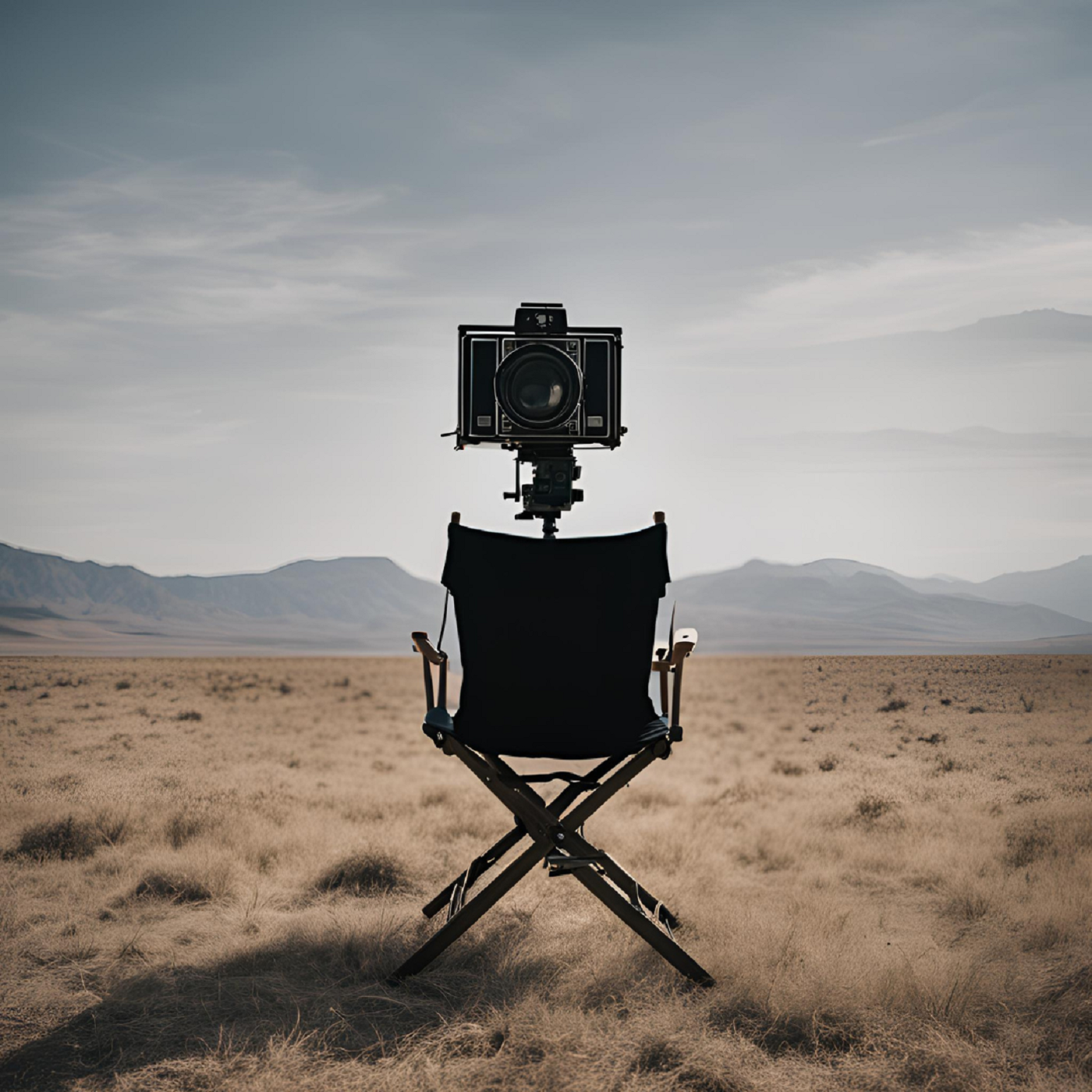

Jean-Jacques Annaud remains one of the most distinctive French directors of the past half-century, a filmmaker whose career defies simple categorization. Born in 1943 near Paris, he developed from a meticulous photographer and advertising director into a daring auteur who consistently tested the boundaries of cinematic storytelling. His films are eclectic in subject matter but united by one trait: each presents a formidable artistic and technical problem. Whether reconstructing prehistoric humanity, translating complex literature, or directing animals as protagonists, Annaud’s cinema is built on challenges that most directors might avoid.
This article traces Annaud’s career in detail, with a particular emphasis on The Name of the Rose, arguably his most accomplished fusion of intellectual density and popular appeal. It considers Annaud’s style, recurring themes, controversies, and his ultimate place in French and world cinema.
Early Career and Breakthrough
Before his feature film career, Annaud honed his craft in advertising, directing over 400 commercials. The experience gave him mastery over tight production schedules, visual clarity, and technical innovation. These qualities would later serve him in tackling large-scale, international projects.
His debut feature, Black and White in Color (1976), was set in colonial Africa and offered a satirical take on European colonial hypocrisy. The film, shot on a limited budget, immediately attracted international attention, winning the Academy Award for Best Foreign Language Film. With this success, Annaud established himself as a French director unafraid of politically loaded material and already comfortable with international exposure.
The Pursuit of Cinematic Problems
Annaud’s career can be understood as a series of attempts to solve unusual cinematic problems:
- How to depict a world before language? — Quest for Fire (1981) reconstructed prehistory with minimal dialogue, using invented proto-languages and relying on visual storytelling.
- How to tell a story through an animal’s perspective? — The Bear (1988) crafted an emotionally resonant film where a bear cub was the protagonist, filmed in a naturalistic style without resorting to Disney-like anthropomorphism.
- How to adapt literature without betraying its complexity? — The Name of the Rose (1986) condensed Umberto Eco’s dense medieval mystery into a cinematic narrative.
- How to film politically sensitive cultural history? — Seven Years in Tibet (1997) dramatized Heinrich Harrer’s life in Tibet, provoking geopolitical controversy while showcasing Annaud’s epic scope.
Each project demonstrates his appetite for risk, an insistence on going where cinema has rarely gone.
Style and Technique
Annaud’s style combines visual clarity, anthropological curiosity, and sensual attention to detail:
- Visual storytelling — His advertising background trained him to tell stories through images. This is evident in the minimal-dialogue films Quest for Fire and The Bear, where narrative meaning is conveyed through framing, gesture, and rhythm.
- Atmospheric soundscapes — Sound is as important as image. Crackling fires, echoing monasteries, and windswept steppes are orchestrated to shape mood and meaning.
- Authentic materiality — From the rough textures of medieval stone to the fur of animals or the vibrant silks of colonial Asia, Annaud emphasizes tactile realism.
- Balance of intimacy and spectacle — His films shift between grand landscapes and tightly composed interiors, reminding viewers of the relationship between human fragility and larger historical or natural forces.
The Name of the Rose: Annaud’s Crowning Achievement
Among Annaud’s works, The Name of the Rose stands out as his most critically and commercially acclaimed film. Released in 1986, it was adapted from Umberto Eco’s celebrated 1980 novel. The novel is notoriously dense, blending semiotics, theology, history, and detective fiction into a labyrinthine narrative. Many believed it would be unfilmable. Annaud proved them wrong.
Adapting Eco for the Screen
Eco’s book is a polyphonic text filled with philosophical dialogues, long digressions on medieval thought, and layers of historical context. Annaud knew that to reach a broad audience, he had to transform this complexity into a more accessible cinematic form while retaining the novel’s essence.
He focused on the murder mystery framework, allowing viewers to follow Brother William of Baskerville, played by Sean Connery, as he investigates a series of deaths in a Benedictine abbey. The whodunit structure gave the film suspense, while the intellectual debates about heresy, interpretation, and knowledge were embedded into the atmosphere and character interactions rather than delivered as dense monologues.
Visual Atmosphere
Annaud’s camera lingers on the monastery’s stone walls, the flickering torchlight, and the damp coldness of medieval interiors. This tactile realism anchors the viewer in a world both harsh and claustrophobic. Unlike Hollywood’s tendency to romanticize the Middle Ages, Annaud presents it as dirty, violent, and full of intellectual tension.
The library—labyrinthine, mysterious, and dangerous—becomes a symbolic space. It is both the heart of knowledge and a site of deadly secrecy. Annaud treats it not simply as a location but as a living character, echoing Eco’s theme of the dangers and power of interpretation.
Casting and Performance
Sean Connery delivers one of his finest performances as Brother William, a man of rationality and wit, skeptical but humane. His casting was crucial: Connery brought star appeal to the project but also gravitas and warmth, making the intellectual detective accessible.
A young Christian Slater, as Adso of Melk, provided a point of identification for the audience—an innocent observer through whom viewers enter this complex world.
F. Murray Abraham, as the inquisitor Bernardo Gui, embodied the terrifying intersection of religious dogma and institutional violence. His presence underlined the novel’s tension between free thought and authoritarian orthodoxy.
Themes and Impact
The Name of the Rose is more than a medieval mystery. It is about the power of knowledge, the politics of interpretation, and the dangers of censorship. Annaud succeeded in translating Eco’s thematic depth into a visual and narrative form without overwhelming mainstream audiences. The film became a global hit, winning César Awards and cementing Annaud’s reputation as a director who could merge intellectual content with cinematic spectacle.
Later Career and International Work
Following The Name of the Rose, Annaud continued to explore ambitious projects:
- The Lover (1992) translated Marguerite Duras’s novel into lush visual sensuality, though it divided critics.
- Seven Years in Tibet (1997), starring Brad Pitt, highlighted his willingness to engage in politically sensitive narratives, though it resulted in his long-term ban from China.
- Enemy at the Gates (2001) depicted the Battle of Stalingrad, blending intimate sniper duels with large-scale war spectacle.
- Wolf Totem (2015), a Chinese co-production, reaffirmed Annaud’s fascination with animal-centered stories and cultural encounters.
- Notre-Dame on Fire (2022) dramatized the 2019 cathedral fire, offering a recent example of his ability to turn civic tragedy into gripping cinematic spectacle.
Themes Across His Oeuvre
Despite the diversity of subjects, Annaud’s films share key themes:
- Knowledge and its dangers — From prehistoric fire to forbidden books, Annaud often explores how knowledge transforms societies and individuals.
- Cultural encounter — Colonial Africa, Tibet, medieval monasteries, and Mongolian steppes all highlight the meeting of different worldviews.
- Nature and the non-human — Animals and landscapes are not backgrounds but protagonists, shaping human destiny.
- The limits of language — Several films minimize or problematize dialogue, insisting that cinema can communicate without words.
Criticism and Controversy
Annaud’s career has not been free of criticism. Some accuse him of exoticizing cultures, reducing them to spectacle for Western audiences. Others argue that his intellectual adaptations smooth over complexity in favor of visuals. Yet defenders insist that Annaud’s films are uniquely ambitious, refusing to accept that some subjects are “unfilmable.” His controversies, particularly around Seven Years in Tibet, also show his willingness to risk political consequences in the name of cinema.
Legacy and Influence
Jean-Jacques Annaud occupies a singular place in French and world cinema. He is not a New Wave director, nor is he a purely commercial filmmaker. Instead, he represents a hybrid path: the French auteur who embraces global scale. His work proves that French cinema can produce blockbusters without losing intellectual depth.
His films are studied in film schools for their technical daring, narrative economy, and ability to handle complex adaptations. For younger directors, Annaud is a model of courage: a filmmaker who consistently selects the hardest possible project and insists that cinema rise to the challenge.
Conclusion
Jean-Jacques Annaud’s career is one of restless experimentation and bold ambition. From colonial satire to prehistoric drama, from animal epics to literary labyrinths, he has tested cinema’s limits again and again. The Name of the Rose remains his masterpiece—a film that proves cinema can condense philosophy, history, and suspense into a unified vision.
If French cinema is often defined by its intellectualism and Hollywood by its spectacle, Annaud’s work demonstrates that one director can, with enough skill, marry the two. His legacy is not just in the films themselves but in the lesson they teach: that cinema, when daring enough, can represent even the most intractable realities.