Introduction
Few filmmakers in the history of cinema have left a legacy as luminous and enduring as Jean Vigo, whose entire body of work consists of less than three hours of film. Yet within this brief output lies an extraordinary concentration of innovation, emotion, and artistic vision. Vigo’s films—À propos de Nice (1930), Taris, roi de l’eau (1931), Zéro de conduite (1933), and L’Atalante (1934)—represent not only milestones of poetic realism but also manifestos of cinematic freedom.
Through his lens, the world becomes a place of play, revolt, tenderness, and melancholy. Vigo’s cinema is that of the outsider: rebellious toward authority, yet profoundly humane; realistic in its details, yet dreamlike in atmosphere. His untimely death at the age of twenty-nine from tuberculosis turned him into a mythic figure—an artist who burned too brightly and too briefly.
His final film, L’Atalante, completed on his deathbed, is a masterpiece that fuses realism and poetry into one of the most moving love stories ever filmed. In it, Vigo and his cinematographer Boris Kaufman created a cinematic language that continues to inspire filmmakers from François Truffaut to Leos Carax.
This article examines Jean Vigo’s filmmaking philosophy, his stylistic innovations, and an in-depth exploration of L’Atalante—the film that encapsulates his vision of cinema as both rebellion and revelation.
Early Life: The Roots of Defiance
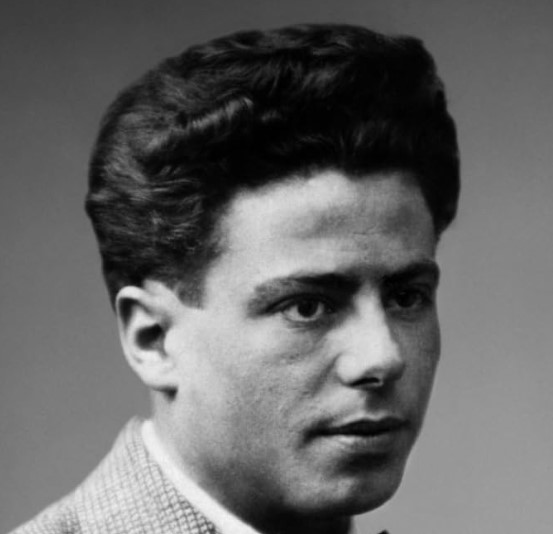
Jean Vigo was born in Paris in 1905, into a world already vibrating with political and artistic upheaval. His father, Eugène Bonaventure de Vigo, better known as Miguel Almereyda, was a radical anarchist journalist who fiercely opposed bourgeois hypocrisy and state oppression. Almereyda’s mysterious death in prison in 1917—officially a suicide, though many believe it was murder—left a lasting scar on Vigo’s psyche.
Growing up under a false identity to avoid political persecution, Vigo internalized a profound distrust of authority and a deep sympathy for the marginalized. This dual inheritance of rebellion and compassion became the foundation of his artistic sensibility.
He studied at various institutions, including the Lycée de Chartres and the Lycée Janson-de-Sailly in Paris, where his experiences with rigid school systems later inspired Zéro de conduite. His early exposure to photography, literature, and the avant-garde art scene of Paris led him to see cinema as a revolutionary art form—one capable of exposing truth, celebrating life, and challenging power.
The Birth of a Vision: The Early Films
À propos de Nice (1930)
Vigo’s first film, À propos de Nice, made in collaboration with cinematographer Boris Kaufman, was an audacious debut. Ostensibly a documentary about the French Riviera city, it is in fact a biting social satire. Using the structure of a city symphony—a form popularized by Walter Ruttmann’s Berlin: Symphony of a Great City—Vigo turned the camera into a political weapon.
Through Kaufman’s dynamic montage and daring compositions, the film juxtaposes the idle decadence of the wealthy tourists with the poverty of the working class. Women sunbathe, old men gamble, and mechanical amusements spin endlessly, while beggars and factory workers appear in stark contrast.
Vigo’s editing is rhythmic, confrontational, and full of irony. The film culminates in a surreal sequence of masked faces, skeletons, and inverted images—a carnival of hypocrisy collapsing under its own absurdity. In these moments, Vigo introduced a key element of his style: the collision of documentary realism with poetic surrealism, transforming everyday life into social critique.
Taris, roi de l’eau (1931)
His next film, Taris, roi de l’eau, is a short documentary about the champion swimmer Jean Taris. Though a commissioned project, Vigo transcended its mundane subject matter. The film is a lyrical study of movement, light, and water, combining slow motion and underwater photography to explore the beauty of the human body in motion.
More than a sports film, Taris reveals Vigo’s fascination with physical freedom—the joy of the body liberated from constraint. It also demonstrates his emerging belief that cinema’s role was not merely to record but to transform reality through rhythm, texture, and emotion.
This sensitivity to the poetic potential of the physical world would later find full expression in L’Atalante, where the flow of water becomes a metaphor for the flux of love and life.
Rebellion as Art: Zéro de conduite (1933)
If À propos de Nice was a political provocation, Zéro de conduite was an open act of defiance. Loosely based on Vigo’s own boarding school experiences, the film depicts a group of boys rebelling against a repressive educational institution.
With its anarchic energy, surreal humor, and raw tenderness, Zéro de conduite shocked audiences and censors alike. The film was banned in France until after World War II.
Visually, it displays the full maturity of Vigo’s style. He and Kaufman use handheld cameras, dynamic tracking shots, and poetic slow motion to turn the mundane into the marvelous. The pillow fight sequence—where feathers drift through the air like snow as the boys riot—is one of the most iconic scenes in cinema history.
Here, Vigo achieves what André Bazin would later call “poetic realism”: a blending of the real and the dreamlike, the concrete and the transcendent. The film’s mixture of innocence and rebellion, humor and melancholy, anticipates the spirit of the French New Wave by nearly three decades.
L’Atalante (1934): The Dream of Love and Reality
A Film Born from Illness and Passion
In 1933, barely recovered from tuberculosis, Vigo accepted the opportunity to make his first and only feature film. The project, financed by the Gaumont company, was intended to be a modest love story set on a barge traveling along the French canals.
Yet Vigo transformed this simple narrative into an intensely lyrical meditation on love, longing, and the fragility of human connection. Despite his failing health—he was often confined to his bed during the shoot—Vigo poured his remaining energy and imagination into the film.
Working once again with Boris Kaufman, he sought a visual language that combined realism with emotional transcendence. The result was L’Atalante, a film that feels both rooted in the textures of working-class life and suffused with dreamlike poetry.
Narrative and Themes
The story follows Jean (Jean Dasté), a young barge captain, and his new wife Juliette (Dita Parlo), who leave her small village after their wedding to live aboard his barge, L’Atalante. Their honeymoon voyage becomes a journey through love, misunderstanding, and reconciliation.
On the surface, it is a simple tale. But beneath its modest plot lies a profound exploration of human yearning. The river becomes a metaphor for life itself—restless, unpredictable, at once binding and liberating.
Vigo portrays love not as a fairy-tale ideal but as a process of discovery and compromise. The barge, confined and intimate, becomes a floating world where desire, jealousy, and tenderness intermingle. The tension between freedom and attachment, between the call of the unknown and the comfort of belonging, defines both the characters’ emotional landscape and the film’s rhythm.
The Style of L’Atalante: Between Realism and Poetry
1. The Texture of Reality
Vigo’s realism in L’Atalante is not the polished kind found in studio productions. The film was shot on location in winter, with the gray light of the French countryside lending it a naturalistic tone. Kaufman’s cinematography captures every detail—the dampness of the fog, the rough texture of the barge, the steam from the characters’ breath.
Yet this realism is always imbued with emotion. The physical world reflects the characters’ inner states. When Juliette feels isolated, the canal appears endless and cold; when the lovers reunite, the water glimmers with vitality.
Vigo’s direction gives physical objects—ropes, radios, cats, mirrors—a symbolic presence. Every item seems alive, participating in the emotional flow of the story.
2. The Poetry of the Everyday
What distinguishes Vigo’s realism from later Neorealism is his poetic sensibility. The mundane is never merely mundane. A cat purring on Juliette’s lap, laundry flapping in the wind, or a lantern swaying in the dark—all become lyrical expressions of emotion.
His camera often glides rather than observes, caressing faces and objects with tenderness. The slow, graceful movements evoke a sense of timelessness. Vigo uses dissolves, double exposures, and rhythmic editing to weave dreams and memories into reality.
One of the most famous examples is the underwater sequence in which Jean, consumed by longing, dives into the river and imagines seeing Juliette’s face. Vigo superimposes her image over the flowing water, creating a haunting vision of love and memory. The scene transcends narrative logic—it’s pure visual poetry, where emotion shapes reality.
3. The Rhythm of Life
Vigo structures L’Atalante not through conventional plot points but through emotional rhythm. The pacing mirrors the ebb and flow of love itself—moments of intimacy followed by separation, joy followed by melancholy.
The film moves between lyrical stillness and bursts of vitality, from the quiet foggy mornings on the river to the chaotic life of Paris. This fluid structure, guided by emotion rather than linear causality, was revolutionary for its time. It anticipates the subjective storytelling of later auteurs like Truffaut, Tarkovsky, and Wong Kar-wai.
Characters and Performances
Jean and Juliette
At the heart of L’Atalante lies the relationship between Jean and Juliette—a study in youthful passion and the painful process of understanding. Jean Dasté, with his quiet dignity, embodies the working-class man struggling to reconcile pride with tenderness. Dita Parlo, luminous and fragile, plays Juliette as both innocent dreamer and restless soul.
Their performances are restrained yet emotionally charged. Vigo directs them with sensitivity, allowing gestures and glances to convey more than dialogue ever could. The tactile intimacy between them—the way Jean brushes Juliette’s hair or she caresses his face—creates a sensual realism rare for its time.
Père Jules
The most memorable character, however, is Père Jules, played by the great Michel Simon. A scruffy, eccentric barge hand with tattoos and a room full of bizarre relics, Père Jules embodies the chaotic vitality of life. He is both comic relief and moral center—a figure of earthy wisdom and childlike wonder.
His cabin, cluttered with dolls, cats, and odd trinkets, serves as a visual metaphor for Vigo’s own artistic imagination: anarchic, tactile, filled with beauty and decay. Père Jules’ scenes overflow with spontaneity, often improvised by Simon, whose vitality electrifies the film.
Through him, Vigo expresses his belief in freedom and individuality. Père Jules lives by no one’s rules but his own, yet he possesses a deep humanity that bridges the gap between the lovers when they drift apart.
Cinematography: Boris Kaufman’s Visual Symphony
Jean Vigo’s collaboration with Boris Kaufman was one of the most fruitful in cinema history. Kaufman’s camerawork in L’Atalante combines documentary realism with lyrical grace. His images breathe.
Light and Texture
The lighting is mostly natural, often diffused through mist or smoke, creating a tactile softness that gives the film its dreamlike texture. Interiors are dimly lit, with lamps and lanterns casting pools of warmth amid the surrounding gray. This contrast between light and shadow mirrors the emotional contrasts of the story—love and loneliness, intimacy and distance.
Camera Movement
Kaufman’s camera is fluid, often tracking slowly through the narrow corridors of the barge or gliding alongside the water. These movements create a sense of continuity between characters and environment. The barge itself becomes a living organism, carrying the emotions of its inhabitants.
In scenes of separation, the camera drifts languidly, echoing the characters’ melancholy. In moments of passion, it becomes restless, swirling in motion. Every shot feels choreographed not to narrative logic but to emotional rhythm.
Symbolic Imagery
The underwater scene, the fog-drenched landscapes, the recurring images of cats and music—all reflect Kaufman’s poetic precision. His use of double exposure in the dream sequences was revolutionary for its time. The result is a visual symphony—simultaneously grounded and transcendent.
The Editing and Sound: A Lyrical Flow
The editing of L’Atalante, by Louis Chavance, follows Vigo’s rhythmic sensibility. Cuts are often motivated by emotional resonance rather than continuity. Dissolves link different spaces through association—Jean’s longing face dissolving into Juliette’s reflection, or the river merging with the city streets.
Sound, too, plays a poetic role. Maurice Jaubert’s score—melancholic, gentle, and fluid—blends seamlessly with ambient sounds: the lapping of water, the hum of machinery, the distant murmur of the city. The music never dictates emotion; it amplifies it subtly, creating an atmosphere of wistful serenity.
A Struggle Against Misunderstanding
Tragically, Vigo did not live to see his masterpiece appreciated. Upon completion, L’Atalante was mutilated by distributors who considered it too slow and obscure. The title was changed to Le Chaland qui passe (after a popular song added to the film), and several scenes were cut or rearranged.
Vigo died shortly after its release in 1934, unaware of the full magnitude of his creation. For decades, the film existed only in fragmented versions until the 1990 restoration that reconstructed it from surviving prints. The restored version revealed the film’s full poetic coherence and emotional depth, securing its place among the greatest works of world cinema.
Legacy and Influence
Poetic Realism and Beyond
L’Atalante stands as a cornerstone of French Poetic Realism, a movement that flourished in the 1930s with filmmakers like Marcel Carné and Jean Renoir. Yet Vigo’s version of realism was more intimate and spiritual. Where others depicted social fatalism, Vigo found transcendence in the ordinary.
His influence echoes through the works of François Truffaut, Jean-Luc Godard, Agnès Varda, and Leos Carax. Carax’s Les Amants du Pont-Neuf (1991), with its tale of lovers adrift on the Seine, is a direct homage to L’Atalante.
The Spirit of the New Wave
For the French New Wave directors, Vigo was a patron saint of creative freedom. Truffaut called him “the patron of the oppressed, the misunderstood, and the free.” His rebellion against cinematic convention, his fusion of realism and imagination, and his belief in personal vision over formula made him a model for the auteur theory.
Vigo’s cinematic DNA can be traced in the handheld vitality of Godard, the tenderness of Varda, and the romantic fatalism of Carax and Tarkovsky.
Jean Vigo’s Cinema: A Philosophy of Life
At its core, Vigo’s cinema expresses a philosophy: freedom as the essence of existence. Whether it’s the schoolboys rebelling in Zéro de conduite or the lovers drifting on L’Atalante, his characters resist conformity.
His worldview blends anarchic joy with deep compassion. He saw society’s structures—schools, cities, conventions—as prisons that crush spontaneity and love. Yet he never succumbed to cynicism. His rebellion was joyous, his critique playful.
Vigo believed cinema should not imitate life but reveal its hidden poetry. Through light, movement, and rhythm, he transformed the mundane into the marvelous. His films invite viewers to see the world anew—to rediscover wonder in the simplest gestures, the quietest moments, the fleeting glances of love.
Conclusion: The Eternal Flow of L’Atalante
Jean Vigo’s L’Atalante remains one of the most magical achievements in the history of cinema. It is both a love story and a poem, a portrait of ordinary people and a dream of transcendence.
In its final moments—when Jean and Juliette finally reunite, the fog lifting from the river—Vigo achieves something beyond realism or narrative resolution. He gives us an image of grace: two souls reconciled not by words, but by understanding.
Vigo’s brief life ended before he could witness the world he helped reshape. Yet his spirit lives on in every filmmaker who dares to see beauty in imperfection and poetry in the everyday. His cinema teaches that rebellion can be tender, that love can be defiant, and that even the grayest river can shimmer with the light of dreams.
In the flowing water of L’Atalante, Jean Vigo’s vision still moves—eternal, elusive, and profoundly human.