
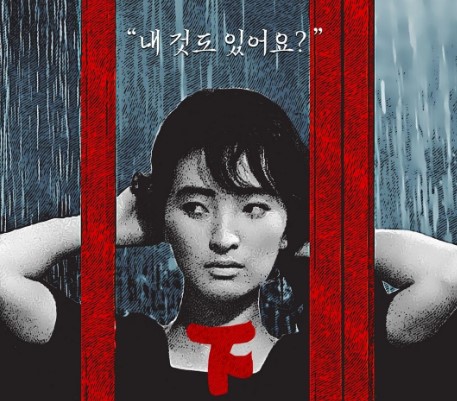
For global audiences today, South Korean cinema is synonymous with the sleek, genre-bending brilliance of Parasite or Oldboy. Yet, the roots of this modern renaissance lie in a turbulent, fiercely creative period known as the Golden Age of South Korean Cinema, spanning roughly from the mid-1950s to 1972.
This was an era born from the ashes of the Korean War (1950–1953). As the nation struggled to rebuild, filmmakers found themselves in a unique position: they were documenting a society in rapid, often painful transition. The result was a cinema that was raw, technically experimental, and surprisingly bold in its social critique.
The Catalyst: A Boom Born of Necessity
The numbers alone tell a story of explosion. In 1954, South Korea produced only 15 films. By 1959, that number had skyrocketed to 111. This boom was initially fueled by tax exemptions introduced by President Rhee Syngman to revitalize the industry.
However, the true industrial engine was the Motion Picture Law of 1962. While restrictive in many ways, it introduced a strict import quota system: production companies were required to produce domestic films to earn the right to import profitable foreign titles. While this eventually led to the production of low-quality “quota quickies,” it initially forced a massive surge in domestic output, giving auteurs the volume and resources they needed to experiment.
The Masters and Their Masterpieces
While hundreds of films were churned out, a handful of directors emerged as true auteurs, crafting works that rivaled the best of Italian Neorealism or American Noir.
1. Kim Ki-young: The Grotesque Realist
If there is a grandfather to the twisted, genre-mixing style of Bong Joon-ho, it is Kim Ki-young. His magnum opus, The Housemaid (1960), is a claustrophobic domestic thriller that dismantles the sanctity of the middle-class Korean home.
- The Film: A femme fatale housemaid destroys a family from within.
- The Subtext: It served as a terrifying allegory for the anxiety of the rising middle class, fearing that the lower classes (migrating to cities for work) would infiltrate and destroy their newfound stability.
2. Yu Hyun-mok: The Social Conscience
While Kim leaned into expressionism, Yu Hyun-mok was the master of realism. His film Obaltan (Aimless Bullet, 1961) is frequently cited by critics as the greatest South Korean film ever made.
- The Film: Banned briefly for its bleakness, it follows a downtrodden accountant with a toothache he cannot afford to fix, supporting a dysfunctional family in a post-war slum.
- The Subtext: The “aimless bullet” is the protagonist himself—discharged by God and society, flying with no target. It captured the collective despair of a nation that had lost its direction after the war.
3. Shin Sang-ok: The Classical Tycoon
Shin was the industry’s titan, running Shin Films, a studio empire. His film The Houseguest and My Mother (1961) revolutionized cinematic grammar in Korea.
- The Film: A restrained melodrama about a widow falling for a boarder, told through the innocent, unreliable narration of her young daughter.
- The Subtext: It critiqued the rigid Confucian social codes that forbade widows from remarrying, highlighting the tension between traditional values and modern desires.
Themes: A Society in Flux
The films of the Golden Age were rarely escapist. Even melodramas—the most popular genre of the time—were steeped in han (a uniquely Korean emotion of deep sorrow and resentment).
- Modernization vs. Tradition: Films often depicted the city (Seoul) as a place of corruption and moral decay, while the countryside represented a lost, virtuous past.
- The Broken Family: Fathers were often depicted as impotent or absent (a reflection of the war’s emasculating effect on the national psyche), while women were forced into tragic roles as either self-sacrificing mothers or dangerous, sexually liberated modern women (apure-girl).
The Decline: Censorship and Television
The Golden Age came to a suffocating end in the early 1970s. The authoritarian regime of Park Chung-hee tightened its grip, viewing cinema as a propaganda tool. The “Motion Picture Law” was revised in 1973 to consolidate the industry into a few government-controlled companies. Scripts were heavily censored for “sedition” or “obscenity,” and the gritty realism of Obaltan was replaced by state-mandated “national policy films.”
Simultaneously, the mass adoption of television kept audiences at home. By the mid-1970s, admissions had plummeted, and the industry entered a dark age that would last until the democratization movement of the late 1980s.
Why It Matters Today
To watch Golden Age cinema is to see the DNA of the current “Hallyu” (Korean Wave). The genre-mashing of Parasite, the vengeance of Oldboy, and the emotional intensity of K-dramas all trace their lineage back to this explosive era. These filmmakers built a cinematic language out of rubble, proving that art often burns brightest in the darkest of times.
Pingback: Yu Hyun-mok: The Poet of Korean Realism and Cinema’s Conscience - deepkino.com