
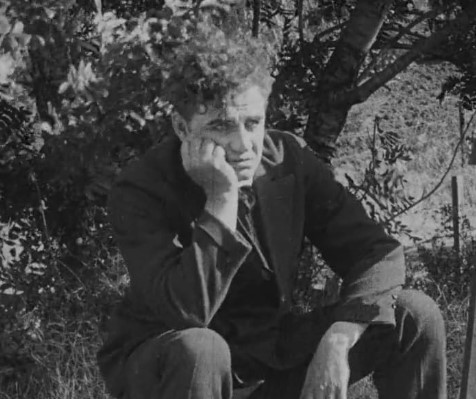
Introduction: A Prolific Architect of Classical Hollywood
Lloyd Bacon’s name rarely appears among the most celebrated of Hollywood’s Golden Age, yet the breadth of his influence is unmistakable. His filmography—over one hundred features between 1920 and the early 1950s—reveals a director whose craftsmanship shaped the tonal, narrative, and rhythmic foundations of classical studio filmmaking. Bacon was not the flamboyant stylist of a Welles, nor the auteurist icon of a Ford or Hawks, yet his consistency, precision, and unerring sense of audience appeal made him one of Warner Bros.’ most valuable assets. He navigated genres—musicals, gangster dramas, war films, comedies—without losing clarity or control, and he became a director actors trusted, producers relied upon, and studios considered indispensable.
Despite his enormous output and commercial success, Bacon’s reputation has remained strangely muted. In the broader mythos of Hollywood, his films shine brightly but his name remains dim. This article aims to restore that balance, by exploring his life, his approach to directing, his impact on the studio system, and the legacy that continues to echo subtly through the grammar of mainstream cinema.
Early Life and Silent Foundations: The Apprenticeship of a Technician
Lloyd Francis Bacon was born on December 4, 1889, in San Jose, California, into a theatrical family. His father, Frank Bacon, was a successful stage actor and playwright, and the environment of disciplined spectacle shaped his son’s understanding of performance and timing. Bacon’s earliest training occurred not in film schools—none existed at the time—but in the vaudeville circuits and touring theatrical productions where he learned to appreciate the nuances of audience reaction, comic rhythm, and narrative pacing. These instincts would become central to his later work.
Bacon entered the film industry just as Hollywood began transforming from an experimental novelty into a structured industrial powerhouse. He worked as an actor in silent comedies for Broncho Billy Anderson, Charlie Chaplin, and other pioneers. This experience gave him a performer’s sensitivity and a close view of early filmmaking techniques. He observed how shots were constructed, how jokes were timed, how scenes were shaped without dialogue, and how narrative clarity depended entirely on visual storytelling.
By the early 1920s, Bacon transitioned to directing. His silent-era features reveal a director who mastered efficiency: scenes flowed cleanly, actions read clearly, and actors performed with confidence. These early works provided the technical foundation he would refine during the studio era.
Joining Warner Bros.: The Craftsman of an Expanding Studio System
Bacon’s arrival at Warner Bros. in the late 1920s coincided with the studio’s rapid ascent. Warner was experimenting with synchronized sound, developing its production infrastructure, and searching for directors who could handle new genres, new stars, and ambitious shooting schedules. Bacon fit the mold perfectly: disciplined, reliable, creative within constraints, and deeply attuned to audience tastes.
Warner Bros. was not the department of “auteur directors” like MGM or the star-driven empire of Paramount. It was a gritty, fast-moving, streetwise studio focused on genres that emphasized realism, energy, and populist appeal. Bacon flourished under this ethos.
He quickly became one of Warner Bros.’ main directors of:
- Musicals
- Gangster films
- Patriotic dramas
- Sports films
- Comedies
- “Backstage” stories
Whenever the studio needed a major project delivered efficiently, economically, and with wide audience appeal, Bacon was one of their first calls.
The Musical Innovator: Collaborations with Busby Berkeley
Bacon’s most culturally enduring contributions came from his work on the Warner Bros. musicals of the early 1930s—specifically his collaborations with choreographer Busby Berkeley. While Berkeley became the recognized visionary behind the geometric, kaleidoscopic musical numbers, Bacon directed the surrounding narrative structure and often the numbers themselves before Berkeley added his surreal camera choreography.
42nd Street (1933)
Bacon’s direction on 42nd Street is one of the clearest demonstrations of his cinematic intuition. The movie redefined the backstage musical, establishing a template still used today. Bacon balanced three elements:
- Energetic, fast-paced backstage drama
- Witty dialogue and ensemble chemistry
- Seamless build-up to Berkeley’s groundbreaking numbers
The film was a massive hit, rescuing Warner Bros. financially and revitalizing the musical genre during the Great Depression. Bacon’s control of tone—alternating between humor, romantic tension, and desperation—gave the film its heartbeat. His efficiency allowed Berkeley to innovate, and together they crafted something that has become a cornerstone of film history.
Footlight Parade (1933)
Following 42nd Street, Bacon again teamed with James Cagney and Busby Berkeley on Footlight Parade, a film that remains one of the most dynamic musicals of its era. Bacon’s camera direction here is sharp and alive: tracking shots glide through chaotic rehearsal halls, dialogue sequences crackle with energy, and Cagney’s performance is guided with fine balance between manic showman and sympathetic protagonist.
The Bacon-Berkeley Dynamic
Though Berkeley’s musical numbers receive most of the scholarly analysis, Bacon’s role in shaping the prelude, emotional stakes, and narrative momentum cannot be overstated. Without his structure, Berkeley’s extravagance might have felt disconnected. Instead, Bacon provided the dramatic scaffolding that allowed the musical sequences to function as cathartic release.
Master of Warner Bros. Grit: Crime, Urban Stories, and Patriotic Cinema
Lloyd Bacon was equally adept at crafting hard-edged urban dramas. His work on gangster and crime films, often overshadowed by the towering figures of the genre like Raoul Walsh and Michael Curtiz, nonetheless remains an essential part of Warner Bros.’ identity.
Marked Woman (1937)
One of Bacon’s strongest crime dramas, Marked Woman stars Bette Davis and Humphrey Bogart in a story inspired by New York’s organized crime crackdown. Bacon’s direction highlights:
- Lean, disciplined storytelling
- Emotionally centered performances
- A moral seriousness rare in pre-war crime cinema
Davis considered this film one of her key early breakthroughs, and Bacon’s clear, actor-sensitive direction played a role.
San Quentin (1937)
Bacon’s penchant for realism also emerges in San Quentin, starring Pat O’Brien and Humphrey Bogart. He had an ability to frame tension without melodrama and to allow character dynamics to drive the plot. The pacing is economical, the narrative direct, and the atmosphere authentically harsh.
The Elite of Warner Bros. “Tough Pictures”
During the 1930s and early 40s, Bacon became one of the directors shaping the Warner identity:
- fast-paced
- streetwise
- unpretentious
- socially aware
Whether shooting crime stories, patriotic dramas, or backstage films, he brought an unglamorous realism that audiences trusted.
The War Era: Patriotism Without Propaganda
World War II transformed Hollywood’s priorities, and Bacon again became a reliable director for films that balanced entertainment with wartime messaging.
Action in the North Atlantic (1943)
One of Bacon’s best-known war films, Action in the North Atlantic, stars Humphrey Bogart and Raymond Massey in a story honoring the Merchant Marine. The film combines:
- tense naval battles
- technical accuracy
- patriotic respect for wartime labor
Bacon’s direction conveys danger without crossing into sensationalism. Every scene maintains narrative clarity, and the large ensemble cast performs cohesively under his guidance.
Bacon excelled at films that had to communicate national pride without slipping into empty jingoism. His war films retain their impact because he anchored them in human experience rather than ideological abstraction.
A Director of Actors: Trust, Professionalism, and Emotional Precision
Unlike some volatile or dominating directors of his time, Bacon was known for steady professionalism. Actors appreciated him because:
- He gave them space to perform.
- He communicated clearly.
- He managed sets efficiently.
- He understood performance rhythm (thanks to his acting background).
His collaborations with stars such as:
- James Cagney
- Bette Davis
- Humphrey Bogart
- Joan Blondell
- Pat O’Brien
- Ruby Keeler
- Eddie Cantor
demonstrate his ability to adjust his direction to different performing styles. He guided Davis through early dramatic roles, shaped Cagney’s dancing persona, and gave Bogart several of his formative pre-Casablanca performances.
Bacon never forced a personal style upon actors; rather, he adapted his direction to maximize their strengths—one of the clearest signs of a confident craftsman.
Genre Versatility: Comedy, Drama, Sports Films, and Beyond
Bacon may be one of the most versatile directors of classical Hollywood. A survey of his work reveals mastery across an almost unbelievable range of genres.
Sports Films
His boxing and baseball pictures, including The Kid from Kokomo (1939) and It Happens Every Spring (1949), display careful choreography of athletic movement. Bacon understood how to capture physical action dramatically without overcutting, long before modern sports film conventions evolved.
Comedies and Light Musicals
Bacon excelled at comedic timing, thanks to his silent-era experience. His films often feature:
- rapid-fire dialogue
- seamless ensemble interactions
- tight editing that enhances humor without exhausting it
His direction kept comedy grounded and character-centered, a quality that later directors such as Billy Wilder and Howard Hawks famously developed.
Melodrama and Romance
While not primarily remembered for romantic films, Bacon brought quiet emotional authenticity to several mid-scale dramas. His balanced pacing prevented melodrama from becoming overwrought and narrative arcs unfolded with natural progression.
Backstage Films
Bacon became a crucial figure in shaping the “backstage” subgenre: films about production, theater troupes, and entertainers struggling for success. Movies like 42nd Street established tropes still visible in films like All That Jazz or Center Stage, and even in modern series such as Smash.
Professional Reliability and Studio Reputation
One of the defining features of Bacon’s career was his relationship with the studio system. In an era when directors often clashed with producers or demanded creative autonomy, Bacon became known as a consummate studio professional. He delivered films:
- on schedule
- within budget
- with clear commercial appeal
Warner Bros., 20th Century Fox, and other studios consistently trusted him with major stars and important projects. His reliability made him indispensable.
While this trait contributed to his success, it may also explain why his name faded as auteur theory rose. Bacon’s work was defined by adaptability, not personal branding. He did not create a “Lloyd Bacon film” style; instead, he created successful Hollywood films. His artistic identity was diffuse precisely because he mastered so many styles.
Style and Technique: The Invisible Hand of Classical Hollywood
Bacon’s craft lies in the choices that rarely draw attention but elevate a film’s effectiveness. His style reflects classical Hollywood values:
- continuity editing
- smooth camera movement
- functional framing
- actor-focused blocking
But within this traditional framework, several distinctive touches emerge.
1. Rhythm as Storytelling
Whether in musical sequences or crime dramas, Bacon possessed an intuitive sense of rhythm. He understood:
- when a scene needed speed
- when dialogue required breathing room
- how to build momentum across acts
His pacing rarely feels rushed or stagnant; instead, it flows with purpose.
2. Clarity Above All
Bacon believed audiences should always understand what was happening. Even in chaotic musical rehearsals or ensemble crime scenes, character objectives and relationships remained crystal clear. This sense of narrative clarity is often lacking in modern cinema, making Bacon’s films feel remarkably accessible today.
3. Humanistic Warmth
Bacon’s characters rarely feel like archetypes. Even minor roles are given humanity through subtle directorial guidance. He was especially skilled at depicting working-class characters, reflecting Warner Bros.’ social realist tendencies.
4. Understated Visual Flourishes
While not flashy, Bacon occasionally employed striking camera setups, particularly in transitions or backstage montages. He used visual storytelling economically, reserving stylistic flourishes for moments that advanced emotional or narrative development.
Late Career and Final Works
By the late 1940s and early 1950s, the Hollywood studio system began shifting. New directors emerged, genres evolved, and audience tastes changed. Bacon continued to work steadily, directing comedies, dramas, and musicals for Fox, Warner, and independent producers.
Notable late works include:
- “It Happens Every Spring” (1949)
- “The Good Humor Man” (1950)
- “She’s Working Her Way Through College” (1952)
Though these films lack the historical weight of his 1930s output, they reveal his enduring talent for movement, timing, and character-driven entertainment.
Lloyd Bacon died in 1955, having directed over 120 films. His legacy is not tied to a single masterpiece, but to an entire mode of classical filmmaking shaped quietly through decades of consistent craftsmanship.
Legacy: Restoring a Missing Figure to Hollywood History
Why did Lloyd Bacon’s reputation fade? Several factors contribute:
1. The Rise of Auteur Theory
As film criticism shifted in the 1960s and 70s toward celebrating directors with distinctive personal signatures, filmmakers like Bacon—versatile, adaptive, and collaborative—were overlooked.
2. His Work Was Often Overshadowed by Collaborators
Busby Berkeley, James Cagney, Bette Davis, and Humphrey Bogart became iconic names. Bacon’s role in shaping their performances and films was substantial but less publicly visible.
3. He Thrived Inside the Studio System
Directors who worked efficiently under studio constraints were sometimes considered “less artistic,” despite their essential contributions to Hollywood’s golden era.
Yet when one examines the architecture of classical Hollywood cinema, Bacon’s fingerprints are everywhere:
- the energy of the backstage musical
- the pace of the Warner Bros. gangster film
- the clarity of classical continuity editing
- the balance between entertainment and emotional truth
Modern filmmakers who value rhythm, precision, and ensemble-driven storytelling—such as Rob Marshall, Damien Chazelle, or Steven Soderbergh—owe something, however indirectly, to Lloyd Bacon’s foundational work.
He was not an auteur in the contemporary sense, but he was a master craftsman—a director who understood story, performance, movement, audience psychology, and the art of making movies that worked.
Conclusion: A Director Deserving Renewed Appreciation
Lloyd Bacon’s career may not fit the romantic mold of Hollywood legend, but it embodies something equally important: the disciplined artistry that sustains an industry. His films remain lively, engaging, and remarkably modern in their pacing. He helped define genres, launched or strengthened major careers, and shaped some of the most important films of the 1930s and 40s.
To revisit Bacon today is to rediscover the quiet mastery of a director who knew how to make movies with intelligence, precision, and heart—who built the rhythms of Hollywood cinema brick by brick, frame by frame.
It is time his legacy is recognized as essential, not peripheral, to the story of American filmmaking.