
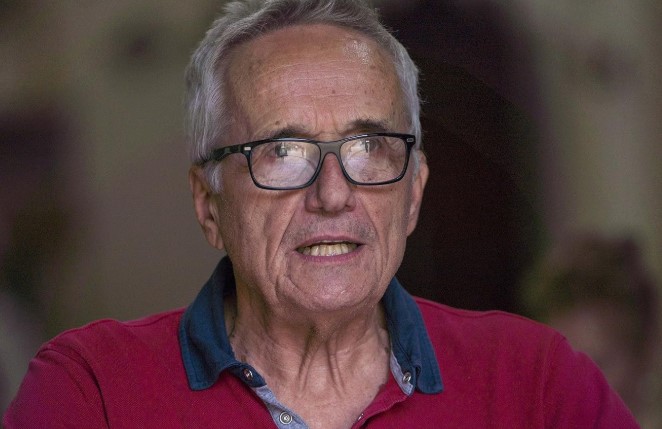
A Master’s Uncompromising Vision Across Six Decades
When Marco Bellocchio burst onto the international film scene in 1965 with Fists in the Pocket (I pugni in tasca), he announced himself as a filmmaker of uncommon ferocity and psychological acuity. Nearly six decades later, he remains one of European cinema’s most vital and uncompromising voices, a director whose work continues to probe the institutions, ideologies, and familial structures that shape and often distort Italian life.
Now in his eighties, Bellocchio has crafted a filmography that stands as one of the most consistently challenging and formally inventive bodies of work in contemporary cinema. His films are characterized by their unflinching examination of power—whether wielded by the Catholic Church, the state, the family, or the revolutionary movements that sought to overturn these institutions. Yet for all their political and social engagement, Bellocchio’s films are never reducible to mere thesis statements. They are works of genuine cinematic poetry, marked by a visual sophistication and emotional complexity that transcends ideology.
The Explosive Debut: Fists in the Pocket
Fists in the Pocket remains one of the most astonishing directorial debuts in film history. Made when Bellocchio was just twenty-six years old, the film tells the story of Alessandro (Lou Castel), an epileptic young man living with his blind mother and troubled siblings in a decaying bourgeois household. Consumed by rage at his family’s dissolution and his own perceived inadequacy, Alessandro decides to murder his mother and younger brother to free his elder brother Augusto from the burden of supporting them.
What makes the film so remarkable—and so disturbing—is Bellocchio’s refusal to frame Alessandro’s actions within comfortable psychological or moral categories. The film doesn’t explain Alessandro away as simply mad, nor does it present him as a revolutionary hero striking against bourgeois hypocrisy. Instead, Bellocchio creates a character of genuine ambiguity, whose violence emerges from a tangled knot of sexual frustration, class resentment, self-loathing, and a perverse kind of love.
The film’s visual style is equally unorthodox. Bellocchio employs jagged editing, extreme close-ups, and a mobile camera that creates a sense of claustrophobia and barely contained hysteria. The soundtrack features bursts of opera—particularly Verdi—that comment ironically on the melodrama unfolding on screen. This combination of psychological intensity and formal audacity marked Bellocchio as an immediate peer of the French New Wave directors, though his vision was darker and more disturbing than anything Truffaut or Godard were producing at the time.
The film was both celebrated and condemned. Some critics recognized a major new talent; others found the work nihilistic and irresponsible. The Italian censors initially banned it, though this decision was later overturned. Looking back, Fists in the Pocket stands as a watershed moment in Italian cinema, a film that helped usher in a new era of psychological realism and formal experimentation.
The Catholic Church in the Crosshairs
Throughout his career, Bellocchio has returned obsessively to the Catholic Church as a subject, examining it not merely as a religious institution but as a fundamental structure of Italian consciousness. His treatment of Catholicism is neither simplistically anti-clerical nor nostalgic; instead, he explores how the Church’s rituals, hierarchies, and teachings have shaped Italian identity at the deepest psychological levels.
In the Name of the Father (1972) offered an early, somewhat schematic critique of Catholic education, depicting a priest’s nervous breakdown in a boarding school. But Bellocchio’s engagement with religion deepened and became more complex with The Conviction (La condanna, 1991) and especially My Mother’s Smile (L’ora di religione, 2002).
My Mother’s Smile is perhaps Bellocchio’s most personal exploration of faith and its loss. Sergio Castellitto plays a successful painter who has rejected the Catholicism of his upbringing, much to his mother’s despair. When his mother dies and a movement begins to have her beatified as a saint, the protagonist finds himself haunted by visions and memories that force him to confront his relationship with his mother and with the faith he abandoned.
The film is structured as a series of increasingly surreal encounters, blending realism with fantasy in ways that recall Buñuel. But where Buñuel’s anti-clericalism was often playful and satirical, Bellocchio’s approach is more conflicted and emotionally raw. The film acknowledges the genuine spiritual yearning that faith can address, even as it exposes the mechanisms by which the Church exploits and manipulates that yearning.
This ambivalence reaches its apex in The Wedding Director (Il regista di matrimoni, 2006), a strange and beautiful film about a famous director of wedding videos who falls in love with a young woman about to take her vows as a nun. The film is by turns comic and tragic, treating the protagonist’s obsession with a mixture of sympathy and irony. Once again, Bellocchio refuses easy answers, creating a work that is genuinely questioning rather than polemical.
The Political Decade: Revolution and Its Discontents
Like many European intellectuals of his generation, Bellocchio was deeply influenced by the revolutionary fervor of the late 1960s and early 1970s. But his films about this period are notable for their skepticism about revolutionary ideology and their focus on the psychological damage wrought by political fanaticism.
China Is Near (1967) offered an early, acidly satirical take on the Italian left, depicting a group of opportunistic socialists and communists whose revolutionary rhetoric barely conceals their careerism and self-interest. The film won the Silver Lion at Venice and confirmed Bellocchio’s status as one of Italy’s most important young directors.
But it was with The Seagull (1977) and especially The Eyes, the Mouth (Gli occhi, la bocca, 1982) that Bellocchio began to explore the psychological toll of political commitment. The Eyes, the Mouth, which stars Lou Castel in a role that deliberately echoes his performance in Fists in the Pocket, tells the story of a man who returns home after his twin brother’s suicide. The brother was a political activist, and the film explores the protagonist’s attempts to understand what drove his sibling to despair.
The film is elliptical and difficult, refusing to provide clear explanations or resolutions. But it’s also deeply moving in its portrayal of grief and the impossible task of understanding another person’s inner life. The political dimension is present but refracted through the lens of family tragedy, suggesting that ideology can never fully account for human suffering.
This theme would reach its fullest expression in Good Morning, Night (Buongiorno, notte, 2003), Bellocchio’s masterpiece about the kidnapping and murder of Italian Prime Minister Aldo Moro by the Red Brigades in 1978. The film focuses on Chiara, a young woman who is part of the terrorist cell holding Moro captive in a Rome apartment.
What makes the film so powerful is its refusal to demonize the terrorists while never excusing their actions. Bellocchio shows how ideology can transform ordinary people into killers, but he also insists on their humanity. In a controversial departure from historical fact, the film imagines Chiara deciding to free Moro, only to be overruled by her male comrades. This invented ending isn’t an attempt to falsify history but rather a way of exploring the human cost of ideological rigidity.
The film’s visual style is austere and deliberate, with long takes and a muted color palette that emphasizes the claustrophobia of the apartment where Moro is held. Bellocchio intercuts these scenes with dream sequences and archival footage, creating a complex meditation on memory, guilt, and historical responsibility. It’s a film that grows richer with each viewing, revealing new layers of meaning and emotional resonance.
The Family as Battlefield
If there’s a single unifying theme in Bellocchio’s work, it’s the family as a site of conflict and psychological violence. From Fists in the Pocket onward, his films have explored how familial love and obligation can become instruments of torture, how the bonds that supposedly protect us can also imprison and destroy us.
Vincere (2009) tells the story of Ida Dalser, Benito Mussolini’s first wife, whose existence the dictator denied in order to pursue his political ambitions. Giovanna Mezzogiorno gives a searing performance as Ida, a woman who is gaslit, institutionalized, and ultimately destroyed for insisting on the reality of her marriage and her son.
The film is structured as a kind of horror story, tracking Ida’s descent into madness as the institutions of church and state conspire to erase her. What’s particularly striking is how Bellocchio links the personal and the political, showing how Mussolini’s betrayal of his wife is of a piece with his betrayal of Italy. The family becomes a microcosm of the nation, and the violence inflicted on Ida prefigures the violence of fascism.
Visually, Vincere is one of Bellocchio’s most ambitious films. He uses archival footage of Mussolini to create a kind of dialogue between past and present, documentary and fiction. The film’s climax, in which Ida watches newsreels of her husband as she wastes away in an asylum, is almost unbearably painful—a moment of pure cinema that needs no dialogue to convey its devastating emotional impact.
Blood of My Blood (Sangue del mio sangue, 2015) returns to similar territory, telling a story that spans centuries but remains focused on the family as a source of trauma and compulsion. The film is divided into two parts, one set in the seventeenth century and one in the present, both dealing with issues of religious persecution and sexual repression. As always, Bellocchio is interested in how the past continues to haunt the present, how old traumas echo down through generations.
Formal Experimentation and Visual Poetry
One aspect of Bellocchio’s work that doesn’t always receive sufficient attention is his formal sophistication. He is one of the few directors of his generation who has continued to experiment with cinematic language throughout his career, refusing to settle into a comfortable style.
His early films are marked by jump cuts, handheld camera work, and a general sense of visual restlessness that reflects their characters’ psychological turmoil. But as his career progressed, Bellocchio developed a more measured, contemplative style without losing any of his emotional intensity.
Films like The Butterfly’s Dream (Il sogno della farfalla, 1994) and Fai bei sogni (Sweet Dreams, 2016) show a director in complete command of his craft, using long takes, carefully composed frames, and subtle camera movements to create works of genuine visual beauty. The later films in particular have a classical elegance that might seem at odds with their disturbing subject matter, but this tension is precisely what gives them their power.
Bellocchio has also been willing to embrace surrealism and fantasy when the material demands it. The Witches’ Sabbath (Le streghe, sabba, 1988, part of an omnibus film) is a wild, hallucinatory vision of witches terrorizing a modern Italian town. My Mother’s Smile blends reality and fantasy so thoroughly that it becomes impossible to distinguish between them. Even in his more realistic films, Bellocchio is always ready to allow the irrational and the uncanny to intrude, reflecting his conviction that reality is never simply objective or transparent.
The Late Masterworks
If anything, Bellocchio’s recent work has shown him at the height of his powers. The Traitor (Il traditore, 2019), about Tommaso Buscetta, the first major Mafia informant, is an epic crime film that also functions as a meditation on loyalty, betrayal, and the nature of truth. Pierfrancesco Favino gives a magnificent performance as Buscetta, a man whose decision to break omertà and testify against his former associates comes at enormous personal cost.
The film’s centerpiece is the so-called “maxi-trial” in Palermo, in which Buscetta testified against hundreds of Mafia members from inside a cage specially constructed to protect him. Bellocchio stages these scenes with operatic grandeur, creating images of astonishing power—the caged informant facing down the caged defendants in a bizarre mirror image that suggests how both sides are imprisoned by the logic of violence.
What’s remarkable is how Bellocchio, at eighty, was able to make a film of such scale and ambition. The Traitor is a historical epic, a crime thriller, and a character study all at once, and it succeeds brilliantly on all three levels. The film was Italy’s submission for the Best International Feature Film Oscar and confirmed that Bellocchio remains one of world cinema’s essential voices.
Marx Can Wait (Marx può aspettare, 2021) represents something entirely different—a deeply personal documentary about the suicide of Bellocchio’s twin brother Camillo in 1968. The film is both an investigation into what drove his brother to take his own life and a meditation on the relationship between personal and political despair.
The documentary form allows Bellocchio to include family footage, interviews with surviving relatives, and his own reflections on a tragedy he has carried for more than fifty years. It’s an extraordinary act of courage for a filmmaker in his eighties to revisit such painful material, but the result is a work of profound emotional honesty. The film suggests that for all his exploration of political violence and institutional oppression, the deepest traumas may be the most intimate ones.
Most recently, Rapito (Kidnapped, 2023), about the true story of Edgardo Mortara, a Jewish child forcibly taken from his family and raised as a Catholic in nineteenth-century Italy, returned Bellocchio to one of his central themes: the violence that institutions inflict on families in the name of ideology. The film is a powerful condemnation of religious fanaticism while also exploring the genuine faith of those who perpetrated this injustice, once again refusing simple moral binaries.
Legacy and Influence
Assessing Bellocchio’s place in film history is complicated by the fact that he has never been easy to categorize. He emerged alongside the New Wave directors but was always darker and more disturbing. He engaged with political cinema in the 1970s but remained skeptical of ideology. He has made historical films, contemporary dramas, surrealist fantasies, and intimate character studies, always with the same uncompromising vision.
In Italy, he is recognized as one of the country’s greatest living filmmakers, though he has never achieved the international fame of his exact contemporaries like Bernardo Bertolucci. Perhaps this is because his films are genuinely challenging—they don’t offer easy pleasures or comfortable resolutions. They demand attention, patience, and a willingness to sit with ambiguity and contradiction.
But for those willing to engage with his work, the rewards are immense. Bellocchio’s films offer a sustained and profound meditation on what it means to be Italian, what it means to be European, and ultimately what it means to be human in a world structured by institutions that both sustain and oppress us. His exploration of the family, the church, and the state has revealed these institutions in all their complexity—neither simply evil nor simply benign, but always powerful and always dangerous.
What distinguishes Bellocchio from many politically engaged filmmakers is his insistence on psychological complexity. His characters are never simply victims or villains, heroes or fools. They are recognizably human in all their contradictions—capable of great cruelty and great tenderness, often in the same moment. This psychological realism extends to his treatment of institutions as well. The Catholic Church in Bellocchio’s films is not a cartoon villain but a complex organism that can inspire genuine faith while also perpetrating terrible cruelties.
The Psychoanalytic Dimension
It’s worth noting that Bellocchio has been deeply influenced by psychoanalysis—he underwent analysis himself in the 1970s and even co-directed a documentary about the experience. This engagement with psychoanalytic thinking is evident throughout his work, particularly in his interest in the unconscious, in dreams and fantasies, and in the ways that repressed desires and traumas manifest in destructive behavior.
The influence of psychoanalysis is perhaps most evident in his treatment of the family. For Bellocchio, the family is never simply a social unit but a psychological structure that shapes individual consciousness in profound ways. His films explore how familial roles—mother, father, son, daughter—become internalized as psychological positions that can be both enabling and crippling.
This psychoanalytic perspective also informs his treatment of religion. Bellocchio understands Catholicism not merely as a set of beliefs but as a psychological system that structures desire, guilt, and identity. His films show how religious teachings become internalized as a kind of psychic law that continues to govern behavior even after conscious belief has been abandoned.
Collaborations and Repertory Company
Like many great directors, Bellocchio has developed long-standing collaborations with certain actors and crew members. Lou Castel appeared in several of his early films, creating unforgettable characters marked by barely contained violence. Sergio Castellitto has become a favorite actor in recent decades, bringing a naturalistic intensity to roles in The Prince of Homburg, My Mother’s Smile, and other films.
More recently, Pierfrancesco Favino’s collaboration with Bellocchio on The Traitor resulted in one of the great Italian screen performances of the twenty-first century. These ongoing collaborations have allowed Bellocchio to develop a kind of repertory company, actors who understand his methods and can bring his complex characters to life.
His collaboration with cinematographer Daniele Ciprì on Vincere and Dormant Beauty (Bella addormentata, 2012) resulted in some of the most visually striking images in his filmography. The lush, almost painterly quality of these films shows a director still willing to experiment with visual style in his seventies.
The Television Work
In addition to his feature films, Bellocchio has made several significant works for television. The Nanny (La balia, 1999) is a period drama about wet-nursing and class in early twentieth-century Italy. More recently, he directed Exterior Night (Esterno notte, 2022), a six-hour television series about the Aldo Moro kidnapping that serves as both a companion piece to Good Morning, Night and a more expansive treatment of the same events.
The television format has allowed Bellocchio to explore his subjects with even greater depth and complexity than feature films permit. Exterior Night in particular is a remarkable achievement, combining historical recreation, character study, and political analysis into a work that feels like a definitive statement on one of the most traumatic events in Italian history.
Conclusion: An Unfinished Journey
As Bellocchio enters his mid-eighties, his career continues. Rapito premiered in 2023 to critical acclaim, proving that he has lost none of his filmmaking powers. What’s most remarkable about his late work is not that it maintains the quality of his earlier films—though it does—but that it continues to evolve and deepen.
The films of his last decade show a director who has not mellowed with age but rather has become more fearless in confronting difficult material. Whether exploring the Mafia in The Traitor, his brother’s suicide in Marx Can Wait, or historical religious persecution in Rapito, Bellocchio continues to make films that challenge, disturb, and illuminate.
For cinephiles who have followed his career across six decades, watching a new Bellocchio film is always an event. We know we will be challenged; we know we will be made uncomfortable; we know we will see things we might prefer not to see. But we also know we will experience cinema at its most powerful—cinema that uses all the resources of the medium to explore the deepest questions of human existence.
Bellocchio’s films are not always easy to love, but they are impossible to forget. They leave their mark on the viewer, images and moments that continue to resonate long after the final credits roll. In an era when so much cinema aims merely to entertain or to confirm what we already believe, Bellocchio’s work stands as a reminder of what cinema can be when it’s willing to take risks, to challenge conventional wisdom, to explore the darkness without flinching.
His legacy is secure as one of the great masters of European cinema, a filmmaker whose uncompromising vision and formal sophistication have produced a body of work that stands comparison with anyone working in the medium. But perhaps more importantly, he remains a vital contemporary voice, a filmmaker still discovering new ways to explore old obsessions, still finding fresh approaches to the questions that have animated his work from the beginning.
For those of us who love cinema—real cinema, cinema that dares to be difficult and demanding—Marco Bellocchio’s ongoing career is a gift. Each new film is a reminder that the medium still has the power to disturb, to illuminate, to transform our understanding of ourselves and the world we inhabit. Long may he continue.