
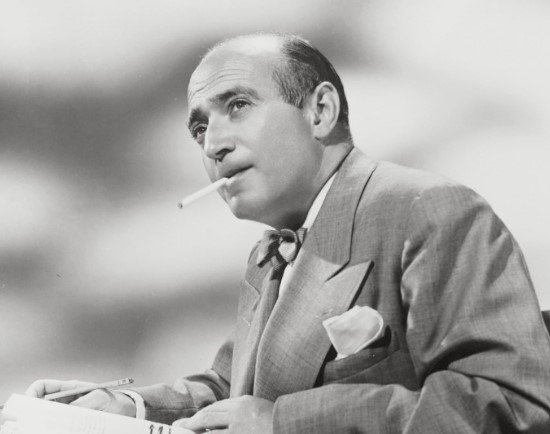
Introduction: The Ever-Moving Eye of Cinema
Few directors in film history possess a signature so immediately recognizable, so gracefully executed, and so emotionally resonant as Max Ophüls. His cinema is synonymous with movement: gliding tracks, swirling cranes, sweeping arcs, elaborate long takes, and a restless camera that seems to float through time. Yet this technical virtuosity is never empty. It is always in service of something deeper—the fragility of love, the fleeting nature of memory, the cruelty of social hierarchies, and the tragic comedy of desire.
Born Max Oppenheimer in 1902, Ophüls crafted a career that spanned Germany, France, Italy, the Netherlands, and the United States. Forced into exile by Nazism, he reinvented himself more times than almost any major filmmaker of his era. Yet across all his geographical wanderings, the tone remained: ironic, tender, melancholic, elegant, bittersweet.
His filmography includes masterpieces such as:
- Liebelei (1933)
- La Ronde (1950)
- Le Plaisir (1952)
- The Earrings of Madame de… (1953)
- Lola Montès (1955)
These films form one of the most refined and emotionally layered bodies of work in world cinema. Ophüls is both a classicist and a modernist, both a dramatist and a philosopher of emotion. He stands as a bridge between the theatricality of prewar Europe and the fluid lyricism of postwar modern cinema.
In this comprehensive article, we will explore Ophüls’s life, evolving style, technical innovations, thematic universe, masterpieces, and lasting legacy. Written through an E-E-A-T lens, this study is designed to offer historical grounding, expert film critical analysis, and a humanized understanding of what made Ophüls one of cinema’s greatest poets.
Early Life and Formation: Theatre, Europe, and the Seeds of Style
Max Oppenheimer was born in Saarbrücken, in a region where German and French cultures merged. This dual heritage would become emblematic of his multinational career. Before cinema, Ophüls worked in theatre, acting and directing in repertory companies. The theatrical world shaped many of his lifelong sensibilities:
- An obsession with staging and mise-en-scène
- An affinity for actors and emotional nuance
- A sense of performance as both art and deception
He changed his name to Max Ophüls to avoid embarrassing his bourgeois family with his theatrical pursuits—an early sign of his desire for artistic autonomy.
By the late 1920s, Ophüls had entered the German film industry. Early works like Dann schon lieber Lebertran and Die verliebte Firma displayed a playful wit, but his breakthrough came with Liebelei (1933), adapted from Arthur Schnitzler.
Liebelei (1933): The Emergence of a Major Voice
Liebelei marks the true beginning of the Ophülsian universe—a delicate, tragic story of doomed romance in fin-de-siècle Vienna. In this film we can already see:
1. A Floating Camera That Reveals Emotional Truth
The camera glides through dances, hallways, and parlors, reflecting the characters’ emotional currents.
2. A Focus on Women’s Subjectivity
Ophüls is often considered one of cinema’s great artists of femininity. Liebelei embodies this through the sensitive portrayal of Christine, played by Magda Schneider, whose tragic love becomes the film’s emotional anchor.
3. The Social Hierarchy as a Cage
Honor, class, and patriarchal codes suffocate the characters. Ophüls sees society not as a backdrop but as a structure that shapes—and often destroys—love.
4. A Melancholy Understanding of Fate
Romance in Ophüls is often ephemeral; happiness is fragile.
As Nazism surged, Ophüls fled Germany, beginning a long and restless exile.
Exile and Reinvention: Ophüls Across Europe
The 1930s forced Ophüls into near-constant movement:
- Italy (though bureaucratic struggles limited his output)
- France (where he made several films)
- The Netherlands
- Switzerland
This period sharpened his understanding of displacement, identity, and the tension between desire and social boundaries. Films like Divine (1935) and Yoshiwara (1937) explore erotic longing, colonial fantasies, and class tensions with increasing sophistication.
His most significant pre-war French film, Werther (1938), adapts Goethe’s novella with a rich emotional sensibility. Ophüls emphasizes not only romantic despair but also the social forces that shape personal tragedy.
But Europe was becoming increasingly hostile. This time, he fled across the ocean.
Hollywood Years: Constraint and Ingenuity
Ophüls arrived in the United States in 1941. Unlike Lang or Wilder, he struggled to secure employment. Hollywood had trouble understanding his elegant, European sensibilities. Yet he eventually directed several remarkable films, including:
- The Exile (1947)
- Letter from an Unknown Woman (1948)
- Caught (1949)
- The Reckless Moment (1949)
These films reveal Ophüls’s ability to adapt while retaining his artistic core.
Letter from an Unknown Woman (1948): A Hollywood Masterpiece
This is perhaps the crown jewel of Ophüls’s American period. Starring Joan Fontaine and Louis Jourdan, the film is an exquisite study of unrequited love, memory, and obsession.
What Makes It a Masterwork?
1. Fragmented Time, Fluid Emotion
The narrative unfolds in flashbacks, but the transitions feel seamless. The camera’s motion becomes the film’s emotional glue, binding memory to present reality.
2. A Portrait of Idealization
The heroine loves not a man, but an idea. Ophüls understands how people project fantasies onto others, and how these fantasies shape destiny.
3. The Tragic Irony of Recognition Too Late
In one of cinema’s most devastating endings, the protagonist recognizes the woman only after her death.
4. Spatial Storytelling
Rooms, staircases, and trains become emotional landscapes.
Hollywood attempted to mold Ophüls into a genre filmmaker, but he resisted, insisting on emotional and stylistic coherence. After conflicts with studios, he returned to Europe—where he would create his greatest achievements.
Return to France: The Masterpieces of the 1950s
This is the era that solidified Ophüls’s reputation as one of cinema’s greatest artists. The four films he made upon returning to France represent a pinnacle of cinematic expression.
1. La Ronde (1950)
2. Le Plaisir (1952)
3. The Earrings of Madame de… (1953)
4. Lola Montès (1955)
Together, they form an extraordinary tetralogy about desire, illusion, social performance, and the dance of life.
La Ronde (1950): The Carousel of Desire
Adapted from Arthur Schnitzler, La Ronde is an elegant, ironic, and deeply human tapestry of romantic encounters. The film forms a literal and metaphorical circle: characters pass desire from one to another, transcending class boundaries only temporarily.
Key Elements
1. Circular Structure
The film loops back to its beginning, suggesting that human desire is cyclical, repetitive, and eternal.
2. The Master of Ceremonies
This character serves as narrator, observer, and manipulator. He embodies Ophüls’s awareness of the theatrical nature of social interaction.
3. Camera as Dance Partner
The camera moves like a waltz, sweeping across sets with grace and curiosity.
4. Class and Social Masks
People can cross boundaries in moments of intimacy, but society ultimately restores order.
Le Plaisir (1952): Three Tales of Desire and Its Illusions
Adapted from Guy de Maupassant, Le Plaisir is one of Ophüls’s most beautifully structured works, composed of three stories reflecting different aspects of pleasure:
- “The Mask” – pleasure as performance
- “The House of Madame Tellier” – pleasure as community
- “The Model” – pleasure as destruction
Each story interrogates the gap between human longing and social expectation.
Stylistic Highlights
1. Exuberant Tracking Shots
The opening sequence, with a masked man dancing feverishly through a ballroom, is a triumph of kinetic cinema.
2. Poetic Irony
Ophüls understands that pleasure always contains a shadow—illusion, regret, or pain.
3. Compassion for Human Weakness
Even in moments of folly, Ophüls never mocks his characters.
The Earrings of Madame de… (1953): Ophüls’s Supreme Masterpiece
If one film encapsulates Ophüls’s full powers, it is The Earrings of Madame de…, starring Danielle Darrieux, Charles Boyer, and Vittorio De Sica. This film is a masterclass in emotional architecture, visual elegance, and tragic romance.
Why Is It Considered One of the Greatest Films Ever Made?
1. The Earrings as Symbol
The titular earrings change hands, moving through Parisian high society. Their movement reflects:
- the fluidity of desire
- the materialization of emotion
- the social constraints governing the characters
2. Darrieux’s Performance
She gives a performance of unparalleled subtlety—graceful, wounded, poised, and deeply human.
3. The Camera’s Choreography
Dance scenes, ballrooms, staircases, mirrors—every setting becomes an emotional stage.
4. Tragedy Born from Social Constraint
Love is sincere but impossible; society crushes passion.
5. Ophüls’s Mastery of Tone
The film moves from comedy to romance to tragedy with a perfect sense of rhythm.
This is cinema at its most graceful and devastating—the tragic beauty of love confined by social rituals.
Lola Montès (1955): Genius Ahead of Its Time
Ophüls’s final film, Lola Montès, was misunderstood upon release but is now regarded as a landmark of modern cinema. Told through fragmented flashbacks within a circus performance, it examines the legendary courtesan’s life with formal audacity.
Its Innovations Include:
1. Nonlinear Structure
Decades before the French New Wave, Ophüls was experimenting with fractured timelines.
2. Satire of Celebrity Culture
Lola’s life becomes a spectacle, consumed by audiences like a commodity.
3. Baroque Visual Splendor
This is Ophüls’s most visually extravagant film, filled with jewel tones, theatrical lighting, and ornate compositions.
4. Feminist Subtext
Lola is judged, objectified, and exploited by men and by society. Ophüls portrays her with sympathy and rage.
5. The Final Image
Lola selling handshakes to paying customers remains one of the most heartbreaking metaphors for fame’s cost.
Recurring Themes in Ophüls’s Cinema
Ophüls’s films weave a unique philosophical and emotional tapestry. His recurring motifs include:
1. The Ephemerality of Love
Romantic happiness is brief; longing is eternal.
2. Social Hierarchy as Tragic Mechanism
Class, gender, and reputation dictate fate.
3. The Theatricality of Life
People perform roles dictated by society. Ophüls shows life as a stage where desire conflicts with duty.
4. Feminine Subjectivity
His films often center on women, exploring:
- their interior lives
- their desires
- their illusions
- their suffering
Few male directors have portrayed female psychology with such empathy.
5. Movement as Meaning
In Ophüls, the camera’s motion expresses:
- emotional turbulence
- the passage of time
- shifting power dynamics
- fragile beauty
6. Irony and Compassion
Ophüls views human weakness with kindness, not contempt. His films are bittersweet—never cynical.
Technical Innovations: The Cinema That Glides
Ophüls’s technical legacy is immense. His moving camera techniques were revolutionary.
1. The Ophülsian Tracking Shot
These shots were not just ambitious—they were expressive. He used movement as a language:
- forward motion for desire
- circular motion for entrapment
- lateral motion for social distance
2. Elaborate Crane Movements
Ophüls used cranes to move fluidly through space as if the camera itself were dancing.
3. Integrated Mise-en-Scène
He choreographed actors, settings, and the camera like a ballet.
4. Intricate Set Design
He often built entire architectural systems—rooms, staircases, balconies—to allow maximum mobility.
5. Long Takes That Preserve Emotional Continuity
His long takes enhance character psychology.
Ophüls’s style influenced directors including:
- Stanley Kubrick
- Paul Thomas Anderson
- Rainer Werner Fassbinder
- Martin Scorsese
- Chantal Akerman
- François Truffaut
His legacy is woven into modern cinematic language.
The Emotional Philosophy of Max Ophüls
Beyond technique, Ophüls offers a philosophy of life and love.
1. Love is both beautiful and doomed.
He celebrates love’s intensity while acknowledging its fragility.
2. Desire is circular, not linear.
We repeat mistakes, passions, regrets.
3. Society always wins.
No matter how intense the emotion, social norms impose limits.
4. Memory is the true narrative of life.
Characters remember more than they live; the past shapes the present.
5. Tragedy arises from small moments, not grand gestures.
In Ophüls, heartbreak is quiet, gentle, inevitable.
His cinema is emotionally intelligent, philosophically rich, and deeply humane.
Death and Legacy
Max Ophüls died in 1957 at the age of 54, leaving behind a body of work that feels both timeless and tragically incomplete. But his influence continues to shape modern cinema. His films stand as:
- monuments to aesthetic beauty
- studies of human fragility
- critiques of social power
- celebrations of emotional depth
Directors continue to rediscover Ophüls’s work because it speaks to something universal: the fleeting, painful, and exquisite nature of human desire.
Conclusion: The Eternal Dance of Ophüls
Max Ophüls remains one of cinema’s great artistic spirits—a master of movement who understood that emotion flows like a waltz, spinning through time. His films reveal how people love, lose, remember, and dream. They invite us into a world where the camera dances, where desire shimmers like light on glass, and where life itself is an elegant, tragic performance.
His cinema tells us:
We move in circles, chasing illusions, longing for moments already lost.
And yet, in those movements, Ophüls finds something transcendent—beauty, compassion, truth.
His legacy lies not only in the history of film but in the emotional memory of those who watch his work. Ophüls’s films stay with us because they speak to the heart’s deepest experiences.
He gave cinema not just elegance, but soul.