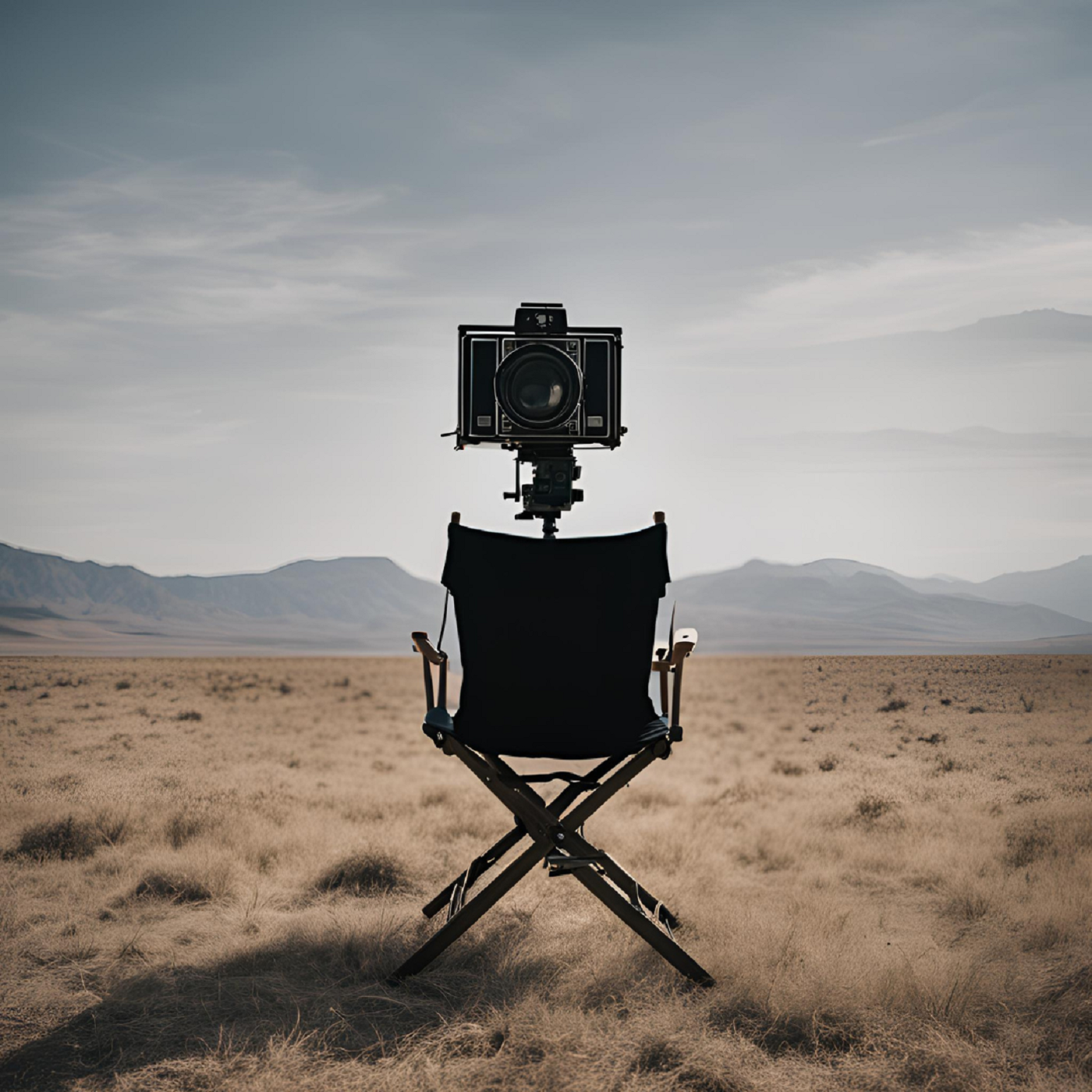

There are filmmakers who shape cinema by bending the medium toward their personal obsessions, and there are filmmakers who seem to absorb the entire gravity of an era into their work. Sergey Bondarchuk belongs to the second category—yet even that description feels insufficient. To speak about Bondarchuk is to speak about a director who treated cinema not merely as storytelling, but as a form of historical justice, cultural preservation, and moral inquiry. He stood at the intersection of artistic ambition and state-sponsored epic filmmaking, using both the privileges and constraints of his environment to construct some of the most towering works ever attempted on film.
Bondarchuk is, for many cinephiles, a paradox: a director whose name is monumental yet somehow under-discussed beyond the realm of Russian and Soviet cinema scholars. His magnum opus, Voyna i mir (War and Peace, 1965–67), is so enormous in scale, so historically singular in its production, and so sweeping in its aesthetic vision that even modern CGI-dominated cinema has not come close to matching its ambition. And Sudba cheloveka (Destiny of a Man, 1959)—his directorial debut—remains one of Soviet cinema’s most emotionally compact and spiritually resonant films, a work that uses simplicity to reveal the soul of a nation emerging from the trauma of war.
Bondarchuk’s cinema is the cinema of extremes: vast battlefields juxtaposed with trembling human faces; philosophical reflections carved amid explosions; and intimate spiritual crises staged beside the catastrophic machinery of history. He brought together Tolstoyan humanism, Eisensteinian ambition, Dovzhenko’s poeticism, and his own dramatic sensibility in ways that remain unparalleled.
This article examines Bondarchuk’s directing career—not his fame as an actor, but his vision as a filmmaker who touched the limits of what cinema could express. It will focus primarily on Sudba cheloveka and Voyna i mir, while situating them within the broader context of his filmography, his stylistic philosophy, and his legacy in global cinema.
I. The Formation of a Director: A Life Shaped by War, Art, and Soviet History
To understand the depth of Bondarchuk’s filmmaking, one must first recognize the formative experiences that shaped him—the war, the aftermath, and the artistic training that gave him the expressive tools to translate trauma into art.
Born in 1920 in what is now Ukraine, Bondarchuk came of age during a period of immense upheaval. Like many of his generation, he lived through the Second World War not merely as a witness but as a participant. This direct encounter with the brutality and moral ambiguity of conflict would imprint itself onto his cinematic voice. His films do not treat war as spectacle but as existential terrain—an environment that strips characters down to their essential humanity.
After the war, Bondarchuk studied at the Gerasimov Institute of Cinematography (VGIK), the beating heart of Soviet film culture. There he absorbed the traditions of Soviet montage, the theatrical heritage of Stanislavsky, and the poetic currents running through the work of filmmakers such as Dovzhenko. He emerged from VGIK not only as an actor of profound gravitas but as a creative force slowly gestating an auteur’s sensibility.
Acting roles in the 1950s earned him recognition, but his true ambition lay behind the camera. The Khrushchev Thaw—a period of relative political and artistic liberalization—opened new possibilities for filmmakers. It was during this climate that Bondarchuk made the crucial transition from actor to director.
II. Sudba cheloveka (1959): A Nation’s Trauma Condensed into a Single Human Life
Bondarchuk’s directing debut, Sudba cheloveka, is often overshadowed by his later epics; yet cinephiles and historians consistently mark it as one of his most important works. More than simply a warm-up before Voyna i mir, it is a film that announces his mature sensibility from the very first frame. Stark, intimate, and quietly devastating, Sudba cheloveka explores the human costs of war not through spectacle, but through emotional and psychological depth.
The Human Face as Epic Landscape
The film centers on Andrei Sokolov, played by Bondarchuk himself, a man whose wartime experiences have shattered everything but his capacity for compassion. Bondarchuk frames Sokolov’s face in tight, lingering close-ups that communicate volumes—grief, exhaustion, resilience, and the fragile ember of hope. These close-ups become the emotional battleground of the film. Where other Soviet war films might emphasize collectivist heroism or military strategy, Bondarchuk turns inward, focusing on the individual scars of conflict.
The decision to highlight a single human life instead of a grand historical sweep already reveals Bondarchuk’s instinctive understanding of cinema’s emotional power. Sudba cheloveka is not concerned with propaganda, triumphalism, or national mythology; instead, it shows the war as an unrelenting force stripping away everything a man can cling to—family, dignity, purpose—until only the skeletal essence of survival remains.
Minimalism with Psychological Precision
Stylistically, the film employs a minimalism that Bondarchuk would later abandon but never forget. His camera moves with patient deliberation. The compositions are balanced yet quietly expressive. The lighting is stark, emphasizing the moral chiaroscuro of Sokolov’s inner turmoil.
The final section, where Sokolov adopts a war orphan, is often cited as one of the most emotionally pure moments in Soviet cinema. Bondarchuk refuses to sentimentalize it; instead, he films the two characters from a distance, often in long shots, as if acknowledging that healing—even in its tenderness—remains incomplete, fragile, uncertain.
The Seeds of Voyna i mir
Though it could not be more different in scale, Sudba cheloveka contains the emotional DNA that would later shape Voyna i mir: the belief that the human soul is the true battlefield of history, the insistence that war reveals humanity more than it destroys it, and the understanding that cinema is uniquely suited to capturing both devastation and redemption.
III. The Making of Voyna i mir: A Cinematic Undertaking Beyond Precedent
If Sudba cheloveka revealed Bondarchuk’s mastery of intimate drama, Voyna i mir displayed his command of the monumental. There is no honest way to discuss Bondarchuk’s directing career without confronting the staggering ambition—and the staggering achievement—of this four-part adaptation of Leo Tolstoy’s novel.
The Soviet Union Bets on Cinema
Voyna i mir was not just a film. It was a state project, a cultural response to King Vidor’s American adaptation of War and Peace (1956). The Soviet leadership sought a definitive cinematic rendering of Tolstoy’s masterpiece—one that would assert Soviet artistic supremacy. Bondarchuk, though relatively young and unproven on an epic scale, was chosen to lead the project.
What followed was arguably the largest film production ever undertaken.
- Over 120,000 extras, including actual military regiments.
- Years of shooting, across forests, battlefields, palaces, and constructed sets.
- Unprecedented technical experimentation, including the use of hand-built cranes, custom lenses, and innovative camera rigs.
- A budget equivalent to hundreds of millions in modern currency, making it one of the most expensive films ever produced.
Bondarchuk was not merely directing a film; he was wielding an entire nation’s artistic resources as his palette.
Visual Philosophy: Painting with Light, Motion, and Cavalry
Cinematographer Anatoly Petritsky and Bondarchuk developed an aesthetic strategy that combined the painterly with the visceral. Many interior scenes resemble oil paintings in motion—deep staging, textured lighting, and tableau-like compositions evoke Tolstoy’s descriptive richness. Yet when the camera moves, it moves with unprecedented physicality.
For the battle sequences, Bondarchuk choreographed chaos with balletic precision. His camera:
- dives into explosions,
- rushes behind cavalry charges,
- spins amid bayonet fights,
- rises above the smoke on experimental cranes,
- and shifts from subjective to omniscient viewpoints with seamless boldness.
He was not simply filming battles; he was attempting to visually replicate the totality of experience that Tolstoy described—the confusion, terror, exhilaration, randomness, and philosophical reflection that accompany moments of historical rupture.
Character as Philosophical Anchor
The characters—Pierre, Natasha, Andrei—are not merely individuals. They are embodiments of Tolstoyan philosophy. Bondarchuk, who played Pierre himself, understood that adapting Tolstoy required more than reproducing plot; it required capturing a worldview.
- Pierre Bezukhov becomes the moral and spiritual axis of the film—a man searching for meaning amid historical chaos.
- Prince Andrei embodies the intellectual struggle between duty, pride, and existential humility.
- Natasha Rostova, played with radiant emotional intelligence by Ludmila Savelyeva, represents life itself—youth, passion, sorrow, and transformation.
Bondarchuk intercuts their journeys with the movements of armies and the turning of nations, revealing how personal destinies become woven into the fabric of history.
The Borodino Sequence: Cinema Approaches the Sublime
The Battle of Borodino in Voyna i mir is widely considered one of the greatest sequences ever put on film. It is not merely a battle; it is a metaphysical event. Bondarchuk films it from multiple perspectives:
- the soldier’s panic,
- the general’s strategic despair,
- the cosmic indifference of nature,
- the philosophical contemplation of Pierre,
- and the apocalyptic grandeur of history itself.
The choreography is staggering, but it never feels like empty spectacle. Every explosion is purposeful, every movement of cavalry reveals a deeper meaning, every shot of Pierre stumbling through smoke expresses his spiritual journey from naive idealism to existential clarity.
Modern war films, even those powered by CGI, remain dwarfed by Borodino’s scale and authenticity. Bondarchuk achieved it not with technology, but with vision.
The Human in the Epic
Even at its largest, Voyna i mir refuses to lose sight of the individual. Bondarchuk constantly cuts from wide shots to intimate close-ups. The film asserts that history is not made by faceless masses, but by millions of small, fragile, contradictory human lives.
This interplay between the monumental and the personal is the essence of Bondarchuk’s style.
IV. Beyond the Epics: Bondarchuk’s Directorial Evolution
While Voyna i mir and Sudba cheloveka anchor his legacy, Bondarchuk’s directing career continued to evolve across subsequent films.
Waterloo (1970)
An international co-production of unprecedented scale, Waterloo further cemented Bondarchuk’s reputation as the world’s foremost director of battle epics. With thousands of soldiers hired from the Soviet army and meticulous historical reconstruction, the film presents the Battle of Waterloo with operatic grandeur. While narrative focus is looser than in Voyna i mir, the film’s visual achievements are undeniable.
They Fought for Their Country (1975)
Returning to the intimacy of Sudba cheloveka, Bondarchuk focused on a smaller unit of soldiers during WWII. The film emphasizes exhaustion, hunger, fear, and comradeship. It is an anti-epic in many ways—a film where each step through dust and heat feels like a victory.
The Steppe (1977)
A lyrical, atmospheric adaptation of Chekhov, this film reveals the poet within Bondarchuk. Wide landscapes, slow rhythms, and subtle emotional beats show his ability to craft cinematic landscapes of introspection rather than spectacle.
Later Works
His later films—Red Bells, Quiet Flows the Don (1992 film version), and others—demonstrate his continued interest in historical narrative, though the collapse of Soviet infrastructure and changing cinematic tastes meant none matched the impact of his earlier masterpieces.
V. Bondarchuk’s Style: Between Tolstoy, Eisenstein, and Dovzhenko
Film scholars frequently debate how to categorize Bondarchuk’s aesthetic. His style contains echoes of multiple traditions yet forms a coherent personal vision.
1. Tolstoyan Humanism
He films large events through the eyes of human beings, not abstractions. The inner life of characters drives the outer sweep of history.
2. Eisensteinian Ambition
He shares Eisenstein’s fascination with masses, choreography, and symbolic imagery, but is less formalist and more emotionally grounded.
3. Dovzhenko’s Poeticism
Bondarchuk often frames landscapes and nature as expressive elements—spiritual, cyclical, and symbolic.
4. Psychological Realism
Bondarchuk’s actor training infuses his films with emotionally precise, deeply felt performances.
5. Massive Physicality
Battle scenes in Bondarchuk’s films are not simply narratives—they are physical experiences. The weight of bodies, the density of smoke, the terror of proximity all contribute to a visceral realism later directors struggled to emulate.
VI. Themes in Bondarchuk’s Cinema
Across his oeuvre, several recurring themes form the spiritual backbone of his films.
1. War as Moral Cataclysm
War is not heroic; it is transformative, exposing the truth of human nature.
2. History as a Living Force
Historical events are shown not as distant facts but as living processes that engulf characters.
3. The Quest for Meaning
Many of Bondarchuk’s protagonists—Pierre, Sokolov, Andrei—undertake existential searches in a world filled with suffering.
4. Survival as Spiritual Redemption
Surviving trauma is portrayed not as escape but as an opportunity for emotional rebirth.
5. The Small Within the Large
Bondarchuk constantly juxtaposes epic images with intimate close-ups, insisting that the individual remains central even amid chaos.
VII. The Legacy of Sergey Bondarchuk: A Director for the Ages
Bondarchuk’s legacy is monumental yet somehow underrecognized beyond Russia. Part of this is due to the sheer scale of his films—modern viewers accustomed to digital effects often struggle to comprehend the physical labor behind his images. Yet among serious cinephiles, historians, and filmmakers, his name remains synonymous with ambition, emotional depth, and historical fidelity.
Influence on Cinema
Bondarchuk’s impact can be found in:
- the battlefield realism of directors like Ridley Scott,
- the philosophical historicism of Andrei Tarkovsky,
- the sweeping battle aesthetics of Akira Kurosawa’s Ran,
- the epic constructions of Peter Jackson,
- and even the psychological immediacy of modern war films.
Yet none have matched the specific combination of Tolstoyan spirituality and physical cinematic grandeur that Bondarchuk achieved.
A Singular Achievement
Voyna i mir remains, half a century later, one of the most significant and overwhelming works in world cinema. It is comparable not to other films, but to cultural monuments—The Divine Comedy, The Iliad, The Mahabharata. It is the kind of art created rarely in history, requiring not only genius but historical circumstance.
And Sudba cheloveka, in its quiet way, is equally unforgettable. If Voyna i mir is Bondarchuk’s cathedral, Sudba cheloveka is his prayer.
VIII. Conclusion: Sergey Bondarchuk and the Cinematic Imagination
Sergey Bondarchuk exists in a unique cinematic space—too monumental to be forgotten, yet too complex to be easily categorized. His films live at the crossroads of spectacle and soul, historical scale and personal tragedy, national narrative and universal human experience.
He approached cinema as a vessel capable of containing entire worlds: the vastness of Russian history, the psychological battles of individuals, and the existential questions haunting humanity. His directing career, spanning intimate dramas and sweeping epics, demonstrates a commitment to capturing both the fragility and the endurance of the human spirit.
Bondarchuk’s oeuvre is not merely a body of films—it is a worldview rendered in images. It is a testament to art’s capacity to grapple with history’s most overwhelming events while never losing sight of the individual face in the crowd.
In the end, Bondarchuk gave cinema something rare: the ability to see human lives not as footnotes to history but as its beating heart. And for that, he remains not only a titan of Soviet cinema but one of the great directors of world cinema.