Introduction: More Than a Film Studio
In the constellation of the world’s great film studios — Hollywood’s MGM, Italy’s Cinecittà, Britain’s Pinewood — one name stands as the undisputed sovereign of Japanese cinema: Toho. Known in Japanese as 東宝株式会社 (Tōhō Kabushiki-gaisha), Toho is not merely a production company. It is an institution, a cultural custodian, and a commercial powerhouse that, over more than nine decades, has shaped the very soul of Japanese popular culture and left an indelible mark on the art of cinema worldwide.
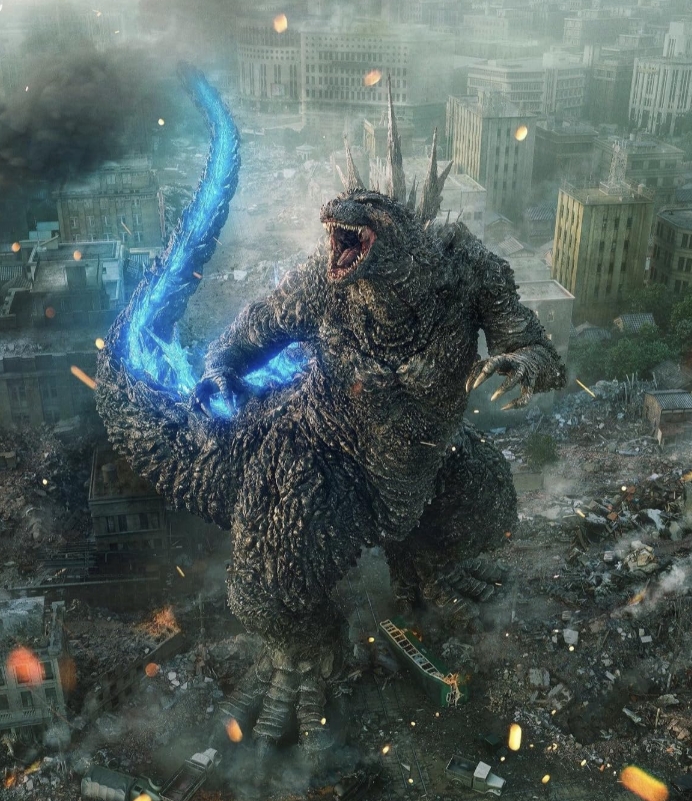
Toho is the studio that gave the world Godzilla, arguably the most recognizable monster in human history. It is the studio where Akira Kurosawa directed his masterworks — Seven Samurai, Ran — films so profoundly influential that they rewrote the grammar of international cinema and inspired generations of directors from George Lucas to Martin Scorsese. It is the studio that brought Studio Ghibli’s animated films to Japanese audiences, helping Hayao Miyazaki reach the global reverence he commands today. And it is a studio that, far from resting on its heritage, broke domestic box office records as recently as 2023 with Godzilla Minus One — which then became the first Japanese film to win the Academy Award for Best Visual Effects.
To truly understand Toho is to understand the history of Japan itself — its modernization ambitions of the 1930s, its post-war trauma and national reckoning, its economic miracle, its complex relationship with technology and nature, and its enduring desire to speak to the world on its own terms. This article examines every dimension of the studio: its founding, its creative peaks, its technical innovations, its commercial architecture, its global footprint, and its irreplaceable place in the ongoing story of world cinema.
Part I: Origins and Founding (1932–1945)
The Tokyo-Takarazuka Theatre Company
The story of Toho begins not with film reels but with theatre curtains. On August 12, 1932, Ichizō Kobayashi — the visionary founder of the Hankyu Railway and one of Japan’s most influential businessmen of the early twentieth century — established the Tokyo-Takarazuka Theatre Company (東京宝塚劇場株式会社). Kobayashi had already built the Takarazuka Revue, an all-female theatrical company in Osaka, into a beloved national institution. Now he set his sights on Tokyo. His ambition was straightforward and audacious: to dominate the entertainment life of the Japanese capital.
Kobayashi’s newly formed company acquired the Tokyo Takarazuka Theatre and the Imperial Garden Theater, establishing an immediate presence in Tokyo’s premier theatrical venues. His guiding philosophy — which would become Toho’s corporate ethos across the decades — was accessible and egalitarian: to provide inspiring, high-quality entertainment to the general public, regardless of social class or background. This democratic instinct, unusual in the hierarchical Japanese social context of the 1930s, would prove one of the foundational reasons for Toho’s extraordinary longevity and commercial success.
The PCL Merger and the Birth of Sound Cinema
Japan’s film industry in the early 1930s stood at a technological crossroads. The era of silent films was ending, and the age of synchronized sound — talkies — had arrived with revolutionary force. In 1932, the same year Kobayashi founded his theatre company, the Photo Chemical Laboratory (PCL) was established in the Setagaya ward of Tokyo. PCL’s founders understood that sound technology represented the inevitable future of motion pictures and invested heavily in the infrastructure needed for high-quality synchronized sound recording. Concurrently, entrepreneur Yoshio Osawa — who had toured the West and grasped the commercial potential of talkies — founded J.O. Studio as another technically sophisticated production operation.
These two companies would become the technical and creative backbone of what Toho would eventually become. Between 1935 and 1936, Kobayashi moved decisively to consolidate. He gained control of both PCL and J.O. Studio, then in 1936 formed the Toho Motion Picture Distribution Corporation to handle theatrical distribution. On August 26, 1937, the formal entity Toho Eiga Co., Ltd. was established through the consolidation of PCL Film Production, J.O. Studios, and the Toho distribution arm. On December 10, 1943, following a merger with the original Tokyo-Takarazuka Theatre Company, the combined entity was renamed Toho Co., Ltd. — the name that endures to this day.
The name itself encodes its history: “To” (東) is drawn from Tokyo, and “ho” is an alternate reading of “takara” (宝) from Takarazuka, meaning “treasure.” Toho: the treasure of Tokyo.
The War Years and the Accumulation of Expertise
During the Second World War, Toho found itself, like all Japanese cultural institutions, mobilized in service of the imperial state. The studio produced propaganda films intended to bolster civilian and military morale. Among the technical personnel who flourished in this environment was Eiji Tsuburaya, the special effects pioneer who would later co-create Godzilla. His work on the 1942 naval epic The War at Sea from Hawaii to Malay was so technically accomplished that, according to persistent historical accounts, footage from the film was briefly mistaken for genuine documentary footage of the attack on Pearl Harbor by American military film analysts.
The war years were, paradoxically, a period of enormous technical growth for Toho. Producing large-scale patriotic epics required the studio to develop sophisticated production capabilities — large studio facilities, complex optical effects, elaborate miniature work — that would serve it brilliantly once peace returned. The human talent accumulated during this period, from Tsuburaya to young directors like Ishirō Honda and Akira Kurosawa, would prove the foundation of the studio’s postwar renaissance.
Part II: The Postwar Renaissance (1946–1959)
Labor Strife and the Strike of 1948
Japan’s defeat in August 1945 brought transformation across every dimension of national life, and Toho was not exempt. The American Occupation government actively encouraged the formation of labor unions — institutions that had been suppressed under imperial rule — and Toho’s workers organized with extraordinary speed and conviction. What followed was one of the most dramatic episodes in the history of any film studio anywhere in the world.
A general strike swept through Toho’s operations beginning in 1946. A group of the studio’s leading stars, led by actor Denjirō Okōchi, split from the main union along with 445 employees, eventually forming Shintoho (New Toho) in 1947 as a splinter studio. The main union, however, physically occupied the studio itself in a dispute that escalated to extraordinary proportions. On August 19, 1948, following a Tokyo District Court ruling in management’s favor, the studio was retaken by force in a scene that belongs more to political history than entertainment history: two thousand police officers surrounded the complex, reinforced by U.S. Eighth Army soldiers, three military aircraft, armored cars, and tanks. The union leaders agreed to end their occupation only on condition that the union itself would not be disbanded.
The aftermath was painful. Toho produced only four films in 1948 and five in 1949. Yet the labor contract that emerged from this conflict contained an unusual provision with unexpectedly creative consequences: Toho would only produce films approved by a committee that included union representatives. Paradoxically, this arrangement gave filmmakers unprecedented creative latitude — management could not arbitrarily overrule creative decisions — and helped attract and empower precisely the bold directorial voices that would define Toho’s golden age.
The Kurosawa Years: Cinema as World Literature
Among the directors who flourished in this environment, none was more consequential than Akira Kurosawa. Though Kurosawa had directed his debut film Sanshiro Sugata for Toho in 1943, it was in the postwar decade that his genius fully announced itself to the world — and through Toho’s production and distribution, announced Japan’s to the world alongside it.
Kurosawa followed with a sustained string of masterworks, the overwhelming majority produced and distributed by Toho: Ikiru (1952), Seven Samurai (1954), Throne of Blood (1957), The Hidden Fortress (1958), Yojimbo (1961), Sanjuro (1962), and High and Low (1963). Seven Samurai — a three-and-a-half-hour epic about wandering warriors hired to protect a farming village from bandits — is today widely considered one of the greatest films ever made. It directly inspired The Magnificent Seven (1960) and fundamentally altered the grammar of the action film worldwide. The Hidden Fortress was a direct inspiration for Star Wars (1977), as George Lucas has consistently acknowledged. Kurosawa’s films did not merely reflect Japan — they illuminated universal human concerns through the specific lens of Japanese history and culture, proving that the language of cinema could transcend any national border.
Toshirō Mifune, the volcanic actor who became Kurosawa’s great collaborator, emerged through their Toho-produced partnership as one of the supreme male stars of world cinema. Their working relationship — sixteen films between 1948 and 1965 — is among the most creatively productive director-actor partnerships in the history of the medium.
The Birth of Godzilla: Nuclear Anxiety Made Flesh
If Kurosawa represented Toho’s highest artistic ambition, the studio’s other great achievement of the 1950s spoke to something rawer and more primal — and perhaps more deeply rooted in the particular anguish of postwar Japan: the creation of Godzilla.
The film’s origin is well documented. In early 1954, producer Tomoyuki Tanaka was flying back to Japan from Indonesia after a co-production deal fell apart when the Indonesian government denied visas to Toho’s crew. On the flight home, drawing inspiration from the American film The Beast from 20,000 Fathoms and the recent real-world incident in which the Japanese fishing vessel Daigo Fukuryū Maru (Lucky Dragon No. 5) was irradiated by American hydrogen bomb testing at Bikini Atoll, Tanaka conceived the idea for a giant monster created and awakened by nuclear testing. His pitch to executive producer Iwao Mori succeeded when special effects director Eiji Tsuburaya agreed to handle the visual challenges the idea presented.
Godzilla (Gojira in Japanese) was released on November 3, 1954, directed by Ishirō Honda with Tsuburaya directing the special effects unit. The creature — an ancient being mutated and awakened by nuclear testing — was an allegory so transparent it required no interpretation. Japan had experienced Hiroshima and Nagasaki less than a decade earlier. The country’s fishermen had just been contaminated by American weapons testing. Godzilla was not merely a monster movie: it was a nation’s collective trauma, externalized and made visible, a cinematic reckoning with the atomic age and with humanity’s terrifying capacity for destruction.
The film grossed over ¥180 million at the domestic box office, making it one of the highest-grossing Japanese films of 1954. For its American release in 1956, it was re-edited and retitled Godzilla, King of the Monsters!, with new footage featuring Canadian actor Raymond Burr inserted around the original Japanese material. It became one of the first postwar Japanese films to achieve significant commercial theatrical distribution in the United States, opening a pathway that subsequent decades of Japanese popular culture would follow.
Eiji Tsuburaya and the Invention of Tokusatsu
The technical achievement underlying Godzilla‘s success was Eiji Tsuburaya, who is today recognized as one of the most important and genuinely inventive figures in the history of cinema. Born in 1901 in Sukagawa, Fukushima Prefecture, Tsuburaya had been fascinated with cinema from childhood. He entered the industry as a cinematographer in 1919 and rose to become head of Special Visual Techniques at Toho in 1938.
For Godzilla, Tsuburaya faced a severe constraint: just six months from conception to release. The stop-motion animation techniques standard in American monster films of the era — perfected by Willis O’Brien for King Kong (1933) — were far too time-consuming. Tsuburaya instead pioneered what became known as suitmation: a human actor wearing a detailed rubber monster costume, interacting with painstakingly constructed miniature sets representing Japanese cities and infrastructure. Combined with specific lighting techniques and high-speed filming — which, when played back at normal speed, lent the monster’s movements a ponderous, massive quality — suitmation created a visual language that was both economically practical and distinctively, unmistakably Japanese.
This technique was codified as tokusatsu — literally “special filming” — and it defined an entire genre. Tsuburaya went on to direct the special effects for a succession of Toho science fiction productions: Rodan (1956), The Mysterians (1957), Mothra (1961), King Kong vs. Godzilla (1962), and many more. In 1963, while still leading Toho’s special effects department, he founded his own company, Tsuburaya Productions, which in 1966 produced the television superhero series Ultraman — one of Japan’s most beloved and commercially enduring franchises, still producing new content today.
Tsuburaya died in January 1970, but his legacy is immeasurable. The tokusatsu tradition he established at Toho continued to evolve through successors including Sadamasa Arikawa, Teruyoshi Nakano, Koichi Kawakita, and Shinji Higuchi — the last of whom co-directed Shin Godzilla in 2016. Tsuburaya’s influence reaches into Hollywood blockbuster filmmaking, theme park design, video game art direction, and the entire subculture of cosplay and practical effects appreciation worldwide.
Part III: Expansion and Genre Mastery (1960–1984)
Tohoscope and Technological Leadership
The 1950s also saw Toho assert itself as a technological innovator in the purely mechanical and optical sense. Early in that decade, the studio introduced Tohoscope — Japan’s first successful widescreen film process, developed in response to the American CinemaScope format. Widescreen cinema expanded the visual possibilities of filmmaking dramatically, and Toho’s early adoption ensured that its productions were technically competitive with the best Hollywood could offer. The studio also completed Stages 8 and 9 at its Seijo complex in Setagaya, Tokyo, in March 1955 — the largest soundstages in Japan, a distinction they retain to this day.
The Golden Age of Genre Filmmaking
Through the 1960s and into the 1970s, Toho produced an extraordinary range of films that collectively constitute the richest body of work in Japanese studio cinema. Beyond the continuing Godzilla franchise, the studio made historical epics, contemporary dramas, science fiction films, and war pictures of genuine ambition and craft. Director Hiroshi Inagaki’s Chushingura (1962), a grand retelling of the 47 Ronin story, featured virtually every major star under contract to the studio and became one of the highest-grossing Japanese films of the decade.
Director Kon Ichikawa brought a socially critical intelligence to the studio’s output, exploring Japanese society’s postwar contradictions with precision and compassion. Mikio Naruse made deeply observed dramas about the lives of ordinary Japanese women — work that has gained significant critical reappraisal in recent decades as among the finest dramatic filmmaking of the era. And Ishirō Honda, though best known internationally for his monster films, also directed sensitive, humanist science fiction that engaged with questions of global peace and human dignity in ways consistent with his own experience as a soldier in the Second World War.
The Evolution of the Godzilla Franchise
The Godzilla franchise itself underwent a fascinating evolutionary arc through the 1960s and beyond, reflecting changes in Japanese society as much as in audience taste. What began as a somber, grief-stricken allegorical horror film gradually shifted in tone as Japan’s postwar recovery gave way to the economic boom years. By the mid-1960s, Godzilla was engaging other monsters in spectacular crossover events — King Ghidorah, Mothra, Rodan, Mechagodzilla — and the character’s identity had shifted from an embodiment of nuclear dread to something closer to a defender of Japan, even a beloved figure to children.
This Showa era (1954–1975) established the essential architecture of the franchise: a world of giant monsters, human scientists and military figures attempting to comprehend and respond to them, and an underlying tension between the destructive and protective capacities of nature and technology. The Heisei era (1984–1995) returned Godzilla to its darker, more sophisticated thematic roots. The Millennium series (1999–2004) experimented with anthology-style continuity, treating each film as largely independent. Each era reflected the concerns and aesthetics of its cultural moment, making the franchise an unusually reliable barometer of Japanese cultural mood.
The Animation Partnerships Begin
The 1980s brought another dimension to Toho’s accumulating legacy: serious engagement with animated cinema. The studio distributed Space Firebird (1980), directed by the legendary manga artist Osamu Tezuka, and Urusei Yatsura 2: Beautiful Dreamer (1984), directed by the visionary Mamoru Oshii. Most significantly, Toho was the Japanese domestic distributor for AKIRA (1988), Katsuhiro Otomo’s landmark cyberpunk epic. AKIRA was the film that, more than any other single work, introduced the concept of Japanese animation as a serious artistic form capable of engaging adult themes — violence, political corruption, identity, the ethics of power — to international audiences. That this groundbreaking work reached Japanese theaters through Toho was no accident; the studio had positioned itself as the distributor of ambitious, unconventional Japanese animation by this point.
Part IV: Studio Ghibli, Kurosawa’s Late Career, and the Modern Franchise Era (1985–2015)
The Ghibli Partnership
Perhaps no single relationship has done more to define Toho’s modern reputation than its enduring partnership with Studio Ghibli. Founded in 1985 by directors Hayao Miyazaki and Isao Takahata alongside producer Toshio Suzuki, Studio Ghibli quickly established itself as one of the world’s preeminent animation studios. Toho became Ghibli’s primary domestic theatrical distributor in Japan — a role it has maintained through every major Ghibli release.
The commercial and artistic results of this partnership have been staggering. Princess Mononoke (1997), directed by Miyazaki and distributed by Toho, made over $108 million in its first seven weeks in Japan alone, setting new domestic box office records at the time and demonstrating that animation could compete at the highest levels of the Japanese theatrical market. Spirited Away (2001) — which went on to win the Academy Award for Best Animated Feature and long held the record as Japan’s highest-grossing film domestically — was also released through Toho. My Neighbor Totoro, Kiki’s Delivery Service, Nausicaä of the Valley of the Wind, Howl’s Moving Castle, Ponyo, The Wind Rises, The Tale of Princess Kaguya, and virtually the entirety of Ghibli’s theatrical catalog reached Japanese audiences through Toho’s distribution network.
This relationship is more than commercial. Toho and Ghibli represent a shared belief in the theatrical experience as the proper venue for ambitious, uncompromising Japanese cinema — a conviction that has become more countercultural as streaming has reshaped the global film industry.
Kurosawa’s Late Masterworks
Akira Kurosawa, whose relationship with Toho had been at times complicated by the enormous cost of his productions, returned to the studio’s fold for the final and in many ways most ambitious chapter of his career. Kagemusha (1980), a study of a petty thief pressed into service impersonating a dying feudal warlord, was co-produced by Toho with international financing and won the Palme d’Or at the Cannes Film Festival. Ran (1985), Kurosawa’s King Lear-inspired epic of feudal betrayal, is widely considered one of the greatest films ever produced — a cascade of color, chaos, and heartbreak staged on a monumental scale. These films, produced at the twilight of the director’s working life, demonstrated that Toho’s association with Japan’s greatest director was not merely historical but continued to generate work of the highest artistic order right up to the era of modern cinema.
Shin Godzilla: Satire and Sorrow
After a decade-long hiatus following Godzilla: Final Wars (2004), Toho returned the monster to domestic production with Shin Godzilla (2016), directed by Hideaki Anno — creator of the landmark anime series Neon Genesis Evangelion — and Shinji Higuchi. The result was revelatory. Shin Godzilla reimagined the monster as a vehicle for devastating satire of Japanese bureaucratic paralysis in the face of catastrophe, invoking with pointed specificity the national trauma of the 2011 Tōhoku earthquake and tsunami, and the Fukushima Daiichi nuclear disaster that followed. Where the original 1954 film expressed Japan’s horror at nuclear weapons, Shin Godzilla expressed Japan’s horror at its own institutional incapacity to protect its citizens when nature and technology conspire against them.
The film was a massive commercial and critical success, winning the Japan Academy Film Prize for Picture of the Year and generating significant international attention. It demonstrated that Toho’s most valuable intellectual property remained a living, evolving artistic vehicle — not merely a heritage franchise to be managed but a story with new and urgent things to say.
Part V: The Contemporary Era of Global Ambition (2016–Present)
Breaking Every Record
The contemporary period has been marked by record-shattering commercial achievement alongside continued artistic ambition. Demon Slayer: Kimetsu no Yaiba the Movie: Mugen Train, released in 2020 and distributed by Toho, became the highest-grossing film in Japanese cinema history at the time of its release, earning ¥40.43 billion — surpassing Spirited Away, which had held the record since 2001 and which had also been distributed by Toho. The fact that both the record-holder and the film that broke it were Toho productions speaks with unusual directness about the studio’s dominance of the Japanese theatrical market.
Your Name (2016), directed by Makoto Shinkai and distributed by Toho, broke the domestic box office record for in-house Toho productions, grossing ¥25.09 billion and making Shinkai an international name overnight. In the 2023–2024 fiscal year, Toho broke its own annual box office revenue record, achieving ¥91.3 billion — the highest single-year figure in the studio’s history.
Godzilla Minus One: A Global Triumph
Godzilla Minus One (2023), written and directed by Takashi Yamazaki, represents the most complete articulation of Toho’s contemporary capabilities and ambitions. Set in the immediate postwar period of 1945–1947, the film follows a failed kamikaze pilot — wracked by guilt and survivor’s shame — who must confront the emergence of Godzilla against a backdrop of national devastation and painful, uncertain recovery. The monster here is not a metaphor for nuclear anxiety alone but for the impossible weight of collective grief and the question of whether a destroyed nation can rebuild its will to live.
Godzilla Minus One generated more than $100 million at the global box office — the highest-grossing Japanese live-action film in American history and, at the time of its release, the third highest-grossing foreign-language film in U.S. box office history. Then it won the Academy Award for Best Visual Effects, becoming the first Japanese film ever to win in that category. The achievement was deeply symbolic: the monster whose visual existence Eiji Tsuburaya had invented seven decades earlier — using rubber suits and miniature cities in a cramped Tokyo studio — had, through the evolution of the tradition he founded, earned the highest recognition in the world for cinematic visual artistry.
Makoto Shinkai and the New Generation
As Hayao Miyazaki has signaled, through successive retirements and each subsequent return, that his filmmaking life approaches its end, a new directorial voice has emerged as a central pillar of Toho’s contemporary creative identity: Makoto Shinkai. Shinkai’s body of work — from the intimate science fiction of 5 Centimeters Per Second to the romantic time-bending fantasy of Your Name and the environmental crisis allegory of Weathering With You (2019) — has demonstrated that deeply, specifically Japanese stories, told with extraordinary visual beauty and emotional intelligence, can reach massive international audiences without any dilution or compromise. Toho’s distribution relationship with CoMix Wave Films, Shinkai’s production company, ensures that this commercially essential and critically significant filmmaker will continue to reach audiences through the Toho system.
The GKIDS Acquisition and North American Ambitions
In 2024, Toho completed the acquisition of GKIDS, Inc. — the New York and Los Angeles-based animation distributor that had become the preeminent pipeline for Japanese and international animation into North American theaters. Under founder Eric Beckerman and president David Jesteadt, GKIDS had distributed the works of Studio Ghibli, Studio Chizu (director Mamoru Hosoda), and CoMix Wave Films in North America, earning multiple Academy Award nominations in the Best Animated Feature category and building unparalleled relationships with the most significant creators in Japanese animation.
The acquisition was the most significant international strategic move in Toho’s history since the studio operated its own theaters in Los Angeles, San Francisco, and New York during the 1960s. GKIDS continued to operate under its existing leadership and brand identity — its credibility and relationships were the asset, and Toho was shrewd enough to recognize that — while gaining the financial backing and strategic resources of its legendary parent. The move established Toho as the dominant institutional force in the North American distribution of Japanese animated cinema, a position no other Japanese studio had ever approached.
The MonsterVerse and Licensing Sophistication
Toho has maintained a strategically sophisticated relationship with Hollywood’s adaptation of Godzilla. After the commercially successful but creatively disappointing 1998 TriStar production directed by Roland Emmerich — which Toho’s leadership regarded as a significant misreading of the character — the studio licensed Godzilla again to Legendary Pictures for the 2014 Gareth Edwards-directed reboot. This launched the MonsterVerse, a franchise that grew to encompass Kong: Skull Island (2017), Godzilla: King of the Monsters (2019), Godzilla vs. Kong (2021), and Godzilla x Kong: The New Empire (2024), with further entries in development.
Throughout the MonsterVerse’s commercial run, Toho simultaneously produced its own domestic Godzilla films — Shin Godzilla and Godzilla Minus One — that pursued distinctly Japanese artistic and thematic agendas with no obligation to align with the Hollywood franchise’s narrative continuity. The result is a bifurcated global Godzilla landscape: the MonsterVerse’s spectacular action-adventure franchise and Toho’s domestic prestige productions, each serving different audience needs while drawing on the same foundational monster. Toho has demonstrated that it can occupy both spaces simultaneously — extracting licensing revenue from Hollywood’s appetite for its intellectual property while protecting the creative integrity and cultural specificity of its own productions.
Part VI: Business Architecture and Commercial Power
Vertical Integration and Market Dominance
Toho’s commercial power derives from a vertically integrated business model encompassing production, distribution, and theatrical exhibition. As Japan’s largest film studio and distributor, Toho commands a domestic distribution market share of approximately 33.7% — a figure that gives it extraordinary leverage over the Japanese theatrical ecosystem. Through its subsidiary TOHO Cinemas, the group manages approximately 722 screens, representing roughly 30% of Japan’s total theatrical exhibition capacity.
This vertical integration mirrors the Hollywood studio system of the 1930s and 1940s before the U.S. Paramount antitrust decrees dismantled similar arrangements in America. It allows Toho to exercise significant influence over what Japanese audiences see, when they see it, and in how many venues — an influence that makes Toho an indispensable partner for any filmmaker, Japanese or international, seeking serious theatrical distribution in Japan. International studios and streaming services alike must reckon with Toho’s market position when planning Japanese theatrical releases.
The Nikkei 225 Distinction
It is worth dwelling on a fact that encapsulates Toho’s exceptional status: the company is the only film studio in the world that is a component of a major stock index comparable to the Dow Jones Industrial Average — Japan’s Nikkei 225. This places Toho alongside Toyota, Sony, SoftBank, Nintendo, and other foundational pillars of the Japanese economy. No Hollywood studio, despite the vastly larger scale of the American entertainment market, occupies a comparable symbolic position in American financial markets. The distinction reflects Toho’s deep integration into Japanese institutional and economic life — it is not merely an entertainment company but a structural component of the nation’s commercial infrastructure.
The Animation Empire
Beyond its iconic live-action franchises, Toho holds commanding positions across Japanese animated cinema. The studio is the distributor of the Doraemon film series — one of the highest-grossing animated film franchises in history and a reliable annual box office institution, generating consistent returns through new theatrical releases year after year. Toho also distributes the Detective Conan (Case Closed) film series, the Crayon Shin-chan film series, and the Pokémon theatrical films. Through relationships with Shin-Ei Animation, TMS Entertainment, CoMix Wave Films, and OLM, Inc. (producers of the Pokémon anime), Toho has positioned itself at the center of Japan’s vast animation economy.
The 2024 acquisition of GKIDS extended this animation dominance internationally, creating a production-to-distribution pipeline running from Japanese animation studios all the way to North American multiplex screens — a vertically integrated international animation operation that no competitor has yet matched.
The Physical Studio Complex
Separate from the parent company, Toho Studios Co., Ltd. operates the physical production complex in the Seijo neighborhood of Setagaya, Tokyo. The facility encompasses ten soundstages — including Stages 8 and 9, completed in 1955 and still the largest soundstages in Japan — along with state-of-the-art post-production suites, an optical fiber network installed during major renovations begun in 2004, and comprehensive support infrastructure for all phases of filmmaking.
This complex is not merely a working production facility. It is a site of genuine cinematic history. Seven Samurai was shot here. Godzilla was constructed and filmed here. The miniature cities that Tsuburaya’s teams built for the monster to destroy were crafted in these workshops. Today the same stages and backlots support ultra-modern digital production workflows, serving as physical evidence that Toho’s history and its present coexist in productive tension.
Part VII: Cultural Impact and Enduring Legacy
Toho and the Japanese National Identity
The films that Toho has produced and distributed are not merely entertainment — they are cultural artifacts that have shaped how Japan understands itself and how the world understands Japan. Godzilla embodies the Japanese experience of nuclear catastrophe, the anxiety of technology exceeding human wisdom, and the resilience of a society rebuilt from almost total devastation. Kurosawa’s samurai and contemporary films articulate a vision of honor, duty, moral complexity, and human fallibility that draws on the deepest roots of Japanese literary and philosophical tradition. Studio Ghibli’s films, distributed by Toho, present a vision of Japan — its landscapes, its relationship with nature and the spirit world, its generational tensions — that has become arguably Japan’s most powerful and beloved form of cultural diplomacy.
That all three of these cultural phenomena reach the world primarily through Toho — as producer, distributor, or both — is a measure of the studio’s centrality to Japan’s self-presentation. There is no comparable single institution in any other country’s cultural economy.
Influence on World Cinema
The global influence of Toho’s productions is genuinely difficult to overstate, because it operates across so many registers simultaneously. Seven Samurai has been cited as a direct influence by George Lucas, Steven Spielberg, Francis Ford Coppola, Martin Scorsese, John Sturges, Sam Peckinpah, and virtually every director who has made an ensemble action film in the seven decades since 1954. The Hidden Fortress directly inspired Star Wars.Yojimbo was remade by Sergio Leone as A Fistful of Dollars, launching the Spaghetti Western genre that transformed action filmmaking across the 1960s and 1970s.
The Godzilla franchise inspired the entire kaiju genre and the blockbuster monster-movie tradition — including Hollywood’s MonsterVerse — and Tsuburaya’s tokusatsu techniques influenced practical effects traditions across the world. The success of Studio Ghibli’s films in international markets played a foundational role in establishing the global anime market that now generates tens of billions of dollars annually and has made Japanese animation one of the most consumed entertainment forms on the planet.
The Academy Awards Record
Toho’s relationship with the Academy Awards is a useful summary of its international standing. Kurosawa received an Honorary Award in 1990. Spirited Away won Best Animated Feature in 2003. Kurosawa’s Ran received four Oscar nominations. And Godzilla Minus One won Best Visual Effects in 2024 — the culmination of a seventy-year tradition of practical and digital effects innovation rooted in Eiji Tsuburaya’s pioneering work.
No other non-English-language studio has a comparable record of Academy recognition across such a range of categories and across such a long span of time. Toho’s work has been recognized at the highest levels of international critical and industry esteem not once or twice but consistently, across multiple generations and multiple artistic forms.
Conclusion: The Enduring Empire
Toho Studios is now in its tenth decade of continuous operation. It has survived labor strikes and military occupation, the collapse of the studio system and the revolutionary disruption of television, the VHS revolution and the internet era, the near-collapse of the Japanese film industry in the 1970s and its extraordinary contemporary resurgence. It has outlasted every Hollywood studio’s golden age domination, every challenger to its domestic supremacy, and every prediction that heritage institutions could not thrive in a digitally disrupted entertainment landscape.
The studio’s endurance may ultimately trace back to its founder’s deceptively simple philosophy: to provide inspiring entertainment to the general public. Ichizō Kobayashi’s formulation was modest in its language, but its implications were vast. Inspiring entertainment, as Toho has demonstrated across nine decades, can mean Kurosawa’s moral rigour and Godzilla’s nuclear grief. It can mean Studio Ghibli’s environmentalist fairy tales and the romantic melancholy of Makoto Shinkai’s animated worlds. It can mean the annual Doraemon theatrical event that generations of Japanese families have attended together, and the record-shattering violence of Demon Slayer‘s animation. Toho has never mistaken popular appeal for artistic compromise, nor artistic ambition for commercial self-indulgence. It has held both in productive tension, and that tension has been the engine of its greatness.
Godzilla Minus One‘s Academy Award for Best Visual Effects in 2024 was perhaps the most perfectly symbolic moment in the studio’s history. The monster that Eiji Tsuburaya built from rubber and wire and miniature plaster cities in a crowded Tokyo soundstage in 1954 walked across an international stage and claimed its place among the world’s greatest visual achievements. It was Toho’s entire story compressed into a single image: the ancient and the contemporary, the Japanese and the universal, the handmade and the visionary, the local and the global — all converging in a legacy that has not dimmed and shows no credible signs of doing so.
To study Toho is to study the twentieth century as Japan experienced it, and to understand the twenty-first century as Japan is helping to shape it. There is, quite simply, no other studio in the world with a comparable record of achievement — or a more compelling claim on the future.