
Introduction
Few figures in the history of cinema embody both the artistry of filmmaking and the humanity of storytelling as vividly as Vittorio De Sica (1901–1974). As one of the principal architects of Italian Neorealismo (Neorealism), De Sica helped forge a cinematic language that spoke directly to the social and moral crises of postwar Italy. His films—poetic, socially conscious, and emotionally piercing—remain touchstones of world cinema.
De Sica was not only a gifted director but also an accomplished actor, screenwriter, and cultural figure whose career bridged popular entertainment and profound art. He won four Academy Awards for Best Foreign Language Film, more than any other director, cementing his legacy internationally. Yet his contribution extends far beyond awards: he revolutionized the relationship between cinema and reality, crafting films that were at once politically charged and universally humane.
This article explores De Sica’s career in depth, his stylistic signature, his role in shaping Neorealism, his most successful films, his recognition on the global stage, and his enduring impact on cinema.
Early Life and Career as an Actor
Born in Sora, Italy, on July 7, 1901, Vittorio De Sica grew up in a middle-class family. His father, a civil servant, instilled in him a sense of discipline, but it was the allure of performance that captured De Sica’s imagination early on. Moving to Rome during his youth, he was drawn to the world of theater and cinema.
By the 1920s, De Sica began working as an actor in Italian silent films and stage productions. His natural charm, good looks, and versatility quickly made him a leading man in Italian cinema of the 1930s. He starred in numerous “white telephone films”—light comedies and romances that dominated Italian screens before the war. These films, though not groundbreaking, gave De Sica industry credibility and financial stability, while also refining his understanding of cinematic performance and audience psychology.
His early fame as an actor would later help him finance his directing projects and secure distribution, but most importantly, it gave him empathy for performers—a trait visible in the tender, human portrayals he later coaxed from both professional and non-professional actors.
Transition to Directing
De Sica’s transition from actor to director was a natural progression. In 1940, he directed his first feature, Rose scarlatte (Red Roses), a romantic comedy adapted from a play he had performed in. Several other light-hearted films followed, but it was his collaboration with screenwriter Cesare Zavattini that propelled him toward a new kind of cinema.
Zavattini, a visionary theorist and writer, championed the idea that cinema should strip away melodrama and artificiality to reflect the raw, everyday realities of ordinary people. Together, Zavattini and De Sica formed one of the most fruitful partnerships in film history. Their collaboration marked the birth of Neorealism, a movement that sought to capture the social and economic struggles of Italians during and after World War II.
The Birth of Neorealism
Italian Neorealism emerged in the aftermath of World War II, when Italy was scarred by poverty, unemployment, and political upheaval. Mainstream cinema of the Mussolini era had focused on escapist comedies and propaganda, disconnected from the hardships of daily life. Neorealism sought to bridge that gap.
De Sica and Zavattini became its most eloquent exponents. Rejecting studio sets, they filmed in real locations, often using non-professional actors. They focused on working-class protagonists, moral dilemmas, and social injustice. The stories were simple, but the emotions and political resonance were profound.
De Sica’s Neorealist films became defining works of the movement, influencing directors across the globe from Satyajit Ray to Roberto Rossellini’s contemporaries, and later even the French New Wave and American independent cinema.
Key Films and Achievements
Sciuscià (Shoeshine, 1946)
De Sica’s first true Neorealist masterpiece, Sciuscià, tells the story of two poor boys in postwar Rome who dream of owning a horse but get caught up in petty crime and end up in juvenile prison. The film was shot with non-professional child actors and in real Roman locations.
It won a special Academy Award for “best foreign film” before the category formally existed. The recognition marked a turning point: Italian cinema had entered the global stage not through glossy entertainment but through stark social realism.
Ladri di biciclette (Bicycle Thieves, 1948)
Often hailed as one of the greatest films ever made, Bicycle Thieves is the epitome of Neorealism. It follows Antonio Ricci, a poor father who finally finds work putting up posters, only to have his bicycle—essential for his job—stolen. Accompanied by his young son Bruno, he searches the city in vain, leading to a heartbreaking moral dilemma.
The film embodies Neorealist principles: real locations in Rome, non-professional actors (Lamberto Maggiorani, a factory worker, and Enzo Staiola, a young boy from the streets), and a story rooted in economic hardship. Yet its universal themes of dignity, desperation, and father-son bonds transcend time and place.
Bicycle Thieves won the Academy Award for Best Foreign Language Film and remains a staple in film school curricula worldwide. Its influence on cinema—from Satyajit Ray’s Pather Panchali to the Dardenne brothers—is immeasurable.
Miracolo a Milano (Miracle in Milan, 1951)
While still rooted in social themes, Miracle in Milan takes a more allegorical and fantastical turn. It follows an orphan, Toto, who discovers a magical dove that grants wishes, helping the poor in Milan battle the greed of the wealthy.
Blending Neorealist imagery with magical realism, the film demonstrates De Sica’s versatility. Though less celebrated than Bicycle Thieves, it won the Grand Prize at the Cannes Film Festival and remains a fascinating experiment in merging realism with fable.
Umberto D. (1952)
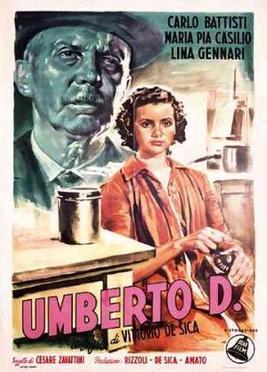
Considered by many cinephiles and critics as De Sica’s most personal film, Umberto D. tells the story of an elderly pensioner struggling to survive on his meager income in postwar Rome. Abandoned by society and nearly destitute, his only companion is his little dog, Flike.
The film is a devastating meditation on loneliness, dignity, and social neglect. Though not a commercial success at the time, it is today regarded as a Neorealist classic, praised by critics such as André Bazin and filmmakers like Martin Scorsese.
Ieri, oggi, domani (Yesterday, Today and Tomorrow, 1963)
By the 1960s, De Sica had moved beyond strict Neorealism into more commercially viable films. This anthology film, starring Sophia Loren and Marcello Mastroianni, presented three comedic stories about love and relationships in different Italian settings.
The film was a critical and commercial success, winning the Academy Award for Best Foreign Language Film in 1965. It showcased De Sica’s ability to balance artistry with popular appeal.
Il giardino dei Finzi Contini (The Garden of the Finzi-Continis, 1970)
One of De Sica’s last great achievements, this film adapts Giorgio Bassani’s novel about a wealthy Jewish family in Ferrara during the rise of Fascism and the Holocaust. It contrasts the idyllic garden life of the aristocracy with the encroaching horror of political persecution.
The film earned De Sica another Academy Award for Best Foreign Language Film, proving that even late in his career he remained a master storyteller attuned to Italy’s complex social and historical realities.
Style and Cinematic Signature
De Sica’s style combined a deep humanist vision with innovative cinematic techniques. Key features of his approach include:
- Non-professional actors: His use of ordinary people brought authenticity and rawness to performances.
- On-location shooting: Instead of studio sets, he filmed in streets, apartments, and real neighborhoods.
- Everyday stories: His plots often revolved around simple needs—a bicycle, a pension, a home—but these became profound allegories of human struggle.
- Moral dilemmas: Characters face choices that reveal social injustice and human fragility.
- Emotional intimacy: De Sica balanced social critique with intimate, personal storytelling, ensuring his films were never didactic but always empathetic.
- Blend of realism and lyricism: Even within strict Neorealism, De Sica infused moments of poetry—glances, silences, gestures—that elevated his films beyond mere reportage.
Oscars and International Recognition
De Sica won four Academy Awards for Best Foreign Language Film:
- Sciuscià (1947, honorary award)
- Bicycle Thieves (1949)
- Yesterday, Today and Tomorrow (1965)
- The Garden of the Finzi-Continis (1972)
This record underscores his global impact. Unlike many directors confined to national cinema, De Sica resonated universally, thanks to his fusion of Italian realities with universal human themes.
He also received numerous European awards, including recognition at Cannes, Venice, and Berlin, solidifying his role as an international ambassador of Italian culture.
Impact on Cinema
De Sica’s influence is immense:
- On Italian cinema: He was a pillar of Neorealism alongside Rossellini and Visconti. His work paved the way for later Italian masters such as Fellini, Pasolini, and Bertolucci.
- On world cinema: Filmmakers from Satyajit Ray in India to Ken Loach in Britain cite De Sica as inspiration for socially conscious storytelling. The French New Wave also admired his naturalistic methods.
- On contemporary cinema: Modern auteurs like the Dardenne brothers, Abbas Kiarostami, and Asghar Farhadi continue to draw from his Neorealist ethos—stories about ordinary people caught in extraordinary struggles.
Later Career and Personal Life
Despite his international success, De Sica often faced financial troubles. To fund his more artistic projects, he acted in popular comedies and mainstream films, some of which were far removed from Neorealism.
He maintained a high-profile personal life, including marriages and affairs, and was a beloved figure in Italian cultural circles. Yet he never lost sight of the humanistic core of his filmmaking. De Sica died on November 13, 1974, in Paris, leaving behind a legacy that continues to shape world cinema.
Conclusion: The Humanism of Vittorio De Sica
Vittorio De Sica’s cinema was never about spectacle or escapism—it was about life itself. Through his lens, the dignity of ordinary people, the struggles of the marginalized, and the beauty of everyday gestures were elevated to art.
His collaboration with Cesare Zavattini crystallized the ideals of Neorealism, but De Sica himself went beyond any movement. He was, above all, a storyteller of humanity, a filmmaker whose empathy bridged nations and generations.
From Bicycle Thieves to The Garden of the Finzi-Continis, his films remind us that cinema is not only entertainment but also a moral and social force. Today, nearly 80 years after his Neorealist masterpieces, Vittorio De Sica remains a towering figure, both as an artist and as a humanist voice in cinema.