To approach Roberto Rossellini’s War Trilogy is not merely to study three films made in the aftermath of World War II. It is to walk into the ruins of cinema itself and watch it rebuild its ethical foundations from the ground up. Rome, Open City (1945), Paisan (1946), and Germany, Year Zero (1948) are not simply historical artifacts or cornerstones of Italian Neorealism; they are acts of moral urgency. They are films born not out of theory, but necessity—cinema stripped to its bones because nothing else was left.
Rossellini did not invent Neorealism in isolation, nor did he ever codify it into a manifesto. What he did instead was more radical: he trusted reality more than cinema, and human behavior more than narrative structure. The War Trilogy stands as the clearest expression of that trust. These films are not about war in the traditional sense—strategy, heroism, spectacle—but about what war leaves behind: fractured ethics, destabilized identities, and the quiet terror of moral disintegration.
To understand the War Trilogy is to understand Neorealism not as a style, but as an attitude—one that would ripple through world cinema for decades.
Cinema After the Collapse
Italy in 1945 was a country in ruins—physically, politically, and spiritually. Fascism had collapsed, Mussolini was dead, cities were destroyed, and the ideological myths that had sustained the nation lay exposed as lies. The Italian film industry, which under Fascism had been tightly controlled and heavily stylized (most notably through the glossy “white telephone” films), was suddenly unmoored.
Studios were bombed. Equipment was scarce. Film stock was rationed. Actors were unavailable or irrelevant. But in this destruction, Rossellini found freedom.
The material limitations of postwar Italy did not merely shape Neorealism—they necessitated it. Shooting on location was no longer an aesthetic choice; it was the only option. Nonprofessional actors were not a rebellion against star systems; they were the only people available. Stories drawn from everyday survival replaced polished narratives because everyday survival was the dominant lived experience.
Rossellini understood something crucial: cinema could no longer pretend. To continue making artificial stories with artificial emotions would be a moral failure.
Rome, Open City (1945): The Shock of Truth
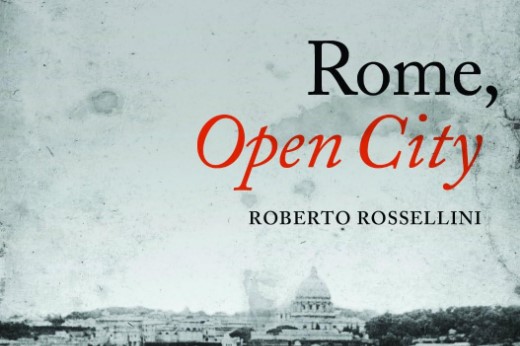
Few films in history arrive with the force of Rome, Open City. Shot while the war was still ongoing, often with scavenged film stock of varying quality, the film feels less like a constructed work than a document that somehow learned how to breathe.
Set during the Nazi occupation of Rome, the film follows members of the Italian resistance, focusing on figures like the partisan leader Manfredi, the priest Don Pietro, and the working-class woman Pina. But to describe the plot is to miss the point. The film does not build toward catharsis—it builds toward inevitability.
What makes Rome, Open City revolutionary is not simply its realism, but its moral positioning. Rossellini refuses melodrama even as he allows emotion to erupt organically. Pina’s death—sudden, brutal, and filmed in a wide shot as she runs after the truck carrying her lover—is not framed for sentimentality. There is no swelling music, no slow motion. She falls because people fell like that in the streets.
The Catholic priest Don Pietro is not a symbol of institutional religion, but of human decency stripped of ideology. Rossellini does not sanctify him; he humanizes him. His execution is staged with devastating restraint, emphasizing the cruelty of power rather than the nobility of martyrdom.
Stylistically, the film blends documentary immediacy with moments of classical construction. Rossellini had not yet abandoned narrative cinema entirely, but he was already loosening its grip. What matters is not plot resolution, but ethical exposure.
Rome, Open City shocked audiences because it felt indecently real. It was not polished enough to be entertainment, not structured enough to be escapism. It demanded engagement.
In doing so, it announced a new cinematic language—one that would no longer shield the viewer from history.
Paisan (1946): Fragmented Humanity
If Rome, Open City introduces Neorealism with a cry, Paisan deepens it with a whisper.
Structured as six episodic stories following the Allied advance through Italy—from Sicily to the Po Valley—the film abandons conventional narrative continuity. Characters appear once, often never to return. There are no protagonists in the traditional sense. The real subject is encounter itself: between Italians and Americans, between cultures, languages, classes, and moral frameworks.
Miscommunication dominates Paisan. Language barriers are not comic devices but tragic ones. Meaning is constantly lost, distorted, or misunderstood. An American soldier cannot understand a Sicilian girl’s desperation. A Roman prostitute pretends not to recognize the soldier who once loved her. Monks and chaplains confront incompatible faiths.
Rossellini films these encounters with astonishing humility. He does not explain. He does not interpret. He observes.
The episodic structure is crucial. War, Rossellini suggests, is not a single story but a series of collisions—moments where human beings briefly intersect under extraordinary pressure. Meaning does not accumulate neatly. It dissipates.
The final episode, set among partisans and American soldiers in the marshes of the Po Delta, is among the most haunting endings in cinema. Death arrives not as climax but as fact. Bodies float in water. The war continues. No lessons are offered.
Paisan marks Rossellini’s decisive break from narrative comfort. The film trusts the audience to confront ambiguity without guidance. In doing so, it brings Neorealism closer to its philosophical core: the refusal to impose meaning where none is certain.
Germany, Year Zero (1948): Moral Ruins
If the first two films document resistance and encounter, Germany, Year Zero confronts the most terrifying aftermath of all: moral vacuum.
Set in the ruins of Berlin, the film follows Edmund, a young boy struggling to survive in a defeated Germany. Unlike many postwar films, Rossellini refuses to frame Germans as villains or victims in simplistic terms. Instead, he asks a far more disturbing question: what happens to ethics when ideology collapses?
Edmund is not evil. He is educated—poisoned, really—by remnants of Nazi logic that equate weakness with worthlessness. When he commits an unthinkable act, it is not framed as melodrama but as consequence. Rossellini does not judge Edmund; he indicts the moral system that shaped him.
Visually, the film is stark even by Neorealist standards. The ruins of Berlin are not backdrops but active presences. Crumbling buildings mirror psychological collapse. Space itself feels unstable.
Unlike Rome, Open City, there is little collective resistance here. Unlike Paisan, there are no meaningful encounters. The war is over, but its logic persists. That is Rossellini’s most devastating insight: fascism does not end when the guns fall silent.
The final moments of Germany, Year Zero are almost unbearable in their restraint. Rossellini refuses catharsis. There is no redemption arc. Only silence.
This film represents the bleakest edge of Neorealism—where realism is not just aesthetic honesty, but moral despair.
Rossellini’s Style: Ethics Over Aesthetics
Rossellini’s cinematic style is often described as “simple,” but this is misleading. His apparent simplicity is the result of radical subtraction. He removes everything that might interfere with moral clarity.
Key characteristics define his approach:
- Location shooting not for texture, but truth
- Nonprofessional actors whose bodies carry lived history
- Loose narrative structures that resist closure
- Minimal manipulation of emotion
- An observational camera that refuses domination
Rossellini does not dramatize reality; he lets reality destabilize drama.
Unlike later Neorealists who would aestheticize poverty or suffering, Rossellini remains almost ascetic. He is uninterested in beauty for its own sake. What matters is ethical presence—being there, witnessing, not intervening.
This is why his films can feel unfinished, awkward, even crude to modern viewers accustomed to narrative efficiency. But this awkwardness is essential. It preserves uncertainty.
Rossellini once suggested that cinema should be a means of understanding, not entertainment. The War Trilogy embodies this belief with uncompromising seriousness.
Neorealismo as Moral Cinema
Neorealism is often reduced to a checklist: location shooting, non-actors, social themes. But Rossellini’s work reveals something deeper. Neorealism is not a style—it is a moral stance.
It rejects:
- Heroic simplification
- Narrative closure
- Emotional manipulation
- Ideological certainty
Instead, it embraces:
- Ambiguity
- Human fragility
- Ethical confusion
- Historical responsibility
Rossellini’s Neorealism is not revolutionary because it depicts poverty or war, but because it refuses to explain them away.
In this sense, the War Trilogy is not political cinema in the propagandistic sense. It is anti-propaganda. It undermines all totalizing narratives, including those of victory, resistance, or national identity.
Influence and Afterlife
The impact of Rossellini’s War Trilogy cannot be overstated.
French New Wave filmmakers saw in Rossellini a model of freedom. Godard famously described him as cinema’s moral conscience. Truffaut admired his disregard for convention. Rohmer absorbed his ethical rigor.
In Eastern Europe, filmmakers embraced his realism as a counterweight to socialist realism. In Iran, filmmakers like Abbas Kiarostami inherited his trust in everyday reality. In modern independent cinema, echoes of Rossellini appear wherever filmmakers prioritize observation over explanation.
Even outside Neorealism, Rossellini’s influence persists in documentary ethics, slow cinema, and minimalist narrative forms. His films taught cinema how to be patient, how to listen, how to doubt itself.
Toward the Core of Neorealism
To move toward the core of Neorealism is not to imitate Rossellini’s techniques, but to internalize his humility. The War Trilogy reminds us that cinema, at its most honest, does not offer solutions. It offers attention.
Rossellini’s greatness lies in his refusal to dominate reality with meaning. He allows life—broken, contradictory, unresolved—to stand.
In an age of hyper-polished images and algorithmic storytelling, returning to Rossellini feels almost subversive. His films ask us not what we think, but how we look. Not what we feel, but what we are willing to confront.
The rubble in his films is not merely historical. It is ethical. And walking through it remains one of cinema’s most profound experiences.