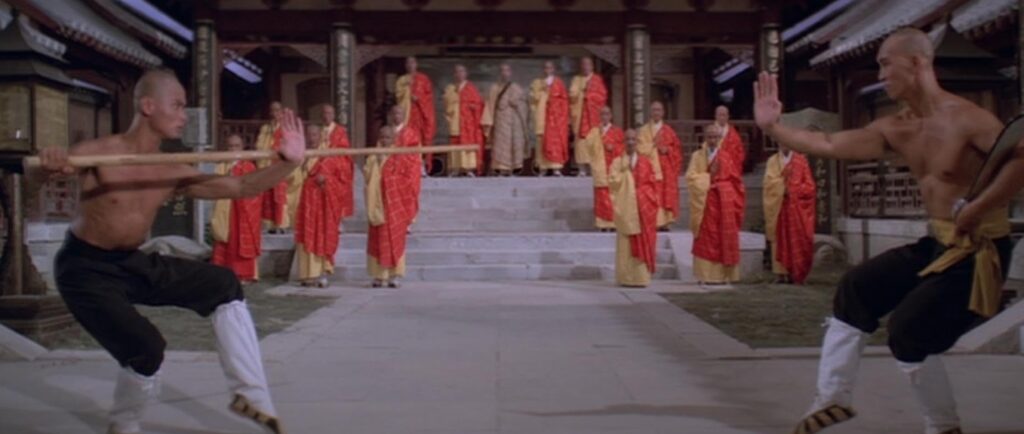
As a lifelong devotee of Hong Kong cinema, my journey into the martial arts genre began with a Shaolin film whose title has long since escaped me, but whose imagery of disciplined monks in an ancient temple planted the seed for a deeper appreciation. That journey would continue, like many, with the kinetic brilliance of Jackie Chan and the raw power of Bruce Lee. Yet, lurking in the shadows of these titans, a recurring emblem captivated my attention: the distinctive, often grainy, opening logo of the Shaw Brothers Studio. It was a portal, I soon discovered, to a universe far richer and more foundational than I had initially imagined – a universe where the very bedrock of kung fu and wuxia cinema was forged. This article is an exploration, a cinephile’s deep dive, into the legendary Shaw Brothers Studio, dissecting its historical impact, its iconic figures, the nuanced distinctions between its wuxia and kung fu offerings, the enduring legacy of its Shaolin films, and even the surprising, often overlooked, early connections to a young Jackie Chan.
The Dream Factory: How the Shaw Brothers Built a Cinematic Empire
The story of the Shaw Brothers Studio is not merely the tale of a film company; it is the saga of a cinematic empire that shaped an entire industry. Its origins trace back to 1925, when three of the four Shaw siblings – Runje, Runde, and Runme – founded Unique Film Productions in Shanghai. However, it was the youngest, the visionary Run Run Shaw, who would ultimately steer the company into its golden age. In 1957, at the age of fifty, Run Run Shaw established Shaw Brothers (Hong Kong) Limited, embarking on an ambitious project that would redefine filmmaking in Asia .
His most audacious undertaking was the creation of Movietown in Clearwater Bay. Spanning an impressive 46 acres, this sprawling complex was a self-contained cinematic city, boasting state-of-the-art sound stages, film processing facilities, editing bays, screening rooms, and offices. It was a true dream factory, operating 24 hours a day, seven days a week, with over five hundred full-time staff working in three shifts. At its peak, the studio was a relentless production machine, churning out an astonishing 40 films a year – a completed movie every ten days . This unprecedented output not only solidified the Shaw Brothers’ dominance but also set a new standard for efficiency and scale in the region’s film industry.
The studio’s meticulous approach extended to talent development. Run Run Shaw established the Shaw Actors Training School, complete with on-lot dormitories for its graduates. This integrated system allowed the studio to cultivate its own stable of stars, directors, and technicians, ensuring a consistent aesthetic and a steady supply of talent. The result was a distinctive
Shaw Brothers “look” – a visual signature characterized by vibrant colors, elaborate sets, and often, a theatricality that became synonymous with Hong Kong martial arts cinema. Of the more than seven hundred films produced during its golden era, approximately 350 were martial arts movies, encompassing both kung fu and wuxia genres, thereby cementing traditions and stereotypes that would influence the global film landscape for decades .
The Architects of Action: Directors and Their Visions
The sheer volume of Shaw Brothers productions necessitated a stable of prolific and visionary directors. Among them, a few names stand out, their individual styles and thematic preoccupations defining distinct eras and subgenres within the studio’s vast output.
Chang Cheh: The Godfather of Heroic Bloodshed
Chang Cheh, often hailed as the Godfather of Heroic Bloodshed, was a pivotal figure in shaping the Shaw Brothers martial arts aesthetic. His films were characterized by a raw, visceral energy, often featuring tragic heroes, intense male bonding, and a significant amount of on-screen violence and gore. Chang Cheh was less concerned with the intricate, realistic choreography that would later define kung fu cinema, and more interested in the operatic drama and the emotional weight of his narratives. His heroes, often rebels or outcasts, faced insurmountable odds, their struggles culminating in often bloody, sacrificial finales. This focus on masculine camaraderie and tragic heroism resonated deeply with audiences, establishing a template for countless martial arts films to follow.
Key to Chang Cheh’s legacy is his extensive contribution to the Shaolin cycle of films. His works like Heroes Two (1973), Men from the Monastery (1974), Shaolin Martial Arts (1974), Five Shaolin Masters (1974), Disciples of Shaolin (1975), and Shaolin Temple (1976) delved into the historical narratives and legendary figures associated with the Shaolin Temple, often portraying themes of revenge against the Qing Dynasty and the resilience of martial arts traditions . These films, while sharing thematic elements with other Shaolin narratives, often emphasized the brutal realities of combat and the sacrifices made in the pursuit of justice.
Lau Kar-leung: The Master of Authentic Kung Fu
In stark contrast to Chang Cheh’s more theatrical approach, Lau Kar-leung championed authenticity and the intricate artistry of traditional kung fu. A true martial artist himself, Lau Kar-leung came from a lineage of kung fu masters, his father being a student of Lam Sai-wing, a disciple of the legendary Wong Fei-hung. This deep-rooted understanding of martial arts permeated his filmmaking, making him a unique voice within the Shaw Brothers stable. His films were less about fantastical elements and more about the nuances of combat, the dedication to training, and the philosophical underpinnings of martial arts. He believed in showcasing the true beauty and efficacy of kung fu, often choreographing sequences that highlighted specific styles and techniques with unparalleled clarity and precision.
Lau Kar-leung’s magnum opus, and arguably one of the most influential martial arts films ever made, is The 36th Chamber of Shaolin (1978). This film, starring the iconic Gordon Liu, is not just a kung fu movie; it is a profound exploration of discipline, perseverance, and the transformative power of martial arts training. The narrative follows San Te (Gordon Liu), a young student who seeks refuge in the Shaolin Temple after his family and village are massacred by Manchu forces. His journey through the temple’s legendary 35 chambers of training forms the core of the film, each chamber designed to hone a specific physical or mental attribute. From balancing on logs to developing wrist strength through repetitive tasks, these sequences are meticulously detailed, showcasing the arduous path to martial mastery.
The film culminates with San Te, having achieved enlightenment and unparalleled skill, creating the 36th Chamber – a chamber not for self-perfection, but for teaching kung fu to the common people, thus democratizing martial arts and empowering the oppressed. The 36th Chamber of Shaolin is a masterclass in the training montage, a trope that has since been endlessly imitated but rarely surpassed. It is a testament to Lau Kar-leung’s belief that the “how” of kung fu was as important, if not more so, than the “what”.
King Hu: The Aesthete of Wuxia
While Chang Cheh and Lau Kar-leung dominated the kung fu genre, King Hu was the undisputed master of wuxia. His seminal work, Come Drink with Me (1966), is often credited with revolutionizing the genre. Hu’s films were characterized by their exquisite aesthetics, intricate narratives, and a graceful, almost balletic approach to action choreography. He utilized dynamic editing and camera movements to create a sense of fluidity and ethereal beauty, elevating the wuxia film from mere martial arts spectacle to a sophisticated art form. His heroines, often strong and independent, challenged traditional gender roles, adding another layer of depth to his narratives.
Chor Yuen: The Literary Adaptor
Chor Yuen carved his niche by adapting the popular wuxia novels of authors like Gu Long. His films, such as The Magic Blade (1976) and Intimate Confessions of a Chinese Courtesan (1972), were known for their labyrinthine plots, atmospheric settings, and often surreal visual style. Chor Yuen brought a sense of gothic romance and psychological complexity to the wuxia genre, distinguishing his work from the more straightforward action of his contemporaries.
The Faces of Fury and Chivalry: Iconic Stars of the Shaw Brothers
The directors provided the vision, but it was the charismatic stars who brought these martial arts epics to life. The Shaw Brothers Studio cultivated a stable of actors who became household names across Asia and, eventually, cult figures in the West.
Gordon Liu: The Shaolin Icon
As mentioned, Gordon Liu became synonymous with the Shaolin Temple, particularly through his portrayal of San Te in The 36th Chamber of Shaolin. His stoic demeanor, powerful physique, and undeniable martial arts prowess made him the quintessential Shaolin monk. He reprised similar roles in other films, solidifying his image as a symbol of martial discipline and integrity .
Ti Lung and David Chiang: The Dynamic Duo
Ti Lung and David Chiang formed one of the most iconic on-screen pairings of the 1970s, frequently starring in Chang Cheh’s films. Ti Lung often played the more mature, stoic hero, while David Chiang brought a youthful intensity and rebellious charm. Their chemistry was undeniable, and their collaborations, such as The Duel (1971) and Vengeance! (1970), became benchmarks for heroic bloodshed cinema .
Alexander Fu Sheng: The Energetic Youth
Alexander Fu Sheng was another prominent star, known for his youthful energy, acrobatic skills, and mischievous charm. He often played spirited, sometimes naive, characters who grew into formidable martial artists. His untimely death at a young age left a void in the studio’s roster, but his legacy of vibrant performances endures .
Cheng Pei-pei: The Queen of Swords
Before the male-dominated narratives took over, Cheng Pei-pei reigned as the “Queen of Swords” in early wuxia films. Her iconic role in King Hu’s Come Drink with Me established her as a formidable martial arts heroine, paving the way for future female leads in the genre .
Wuxia vs. Kung Fu: A Genre Divide
For the uninitiated, the terms “wuxia” and “kung fu” are often used interchangeably, yet within the rich tapestry of Hong Kong cinema, and particularly in the Shaw Brothers output, they represent distinct genres with their own conventions, aesthetics, and philosophical underpinnings. Understanding this distinction is crucial to appreciating the breadth and depth of the studio’s martial arts offerings.
Wuxia: The World of Chivalry and Fantasy
Wuxia (武俠), which literally translates to “martial heroes,” is a genre deeply rooted in Chinese literary traditions, particularly the chivalric romances that date back centuries. Wuxia films are characterized by their often historical or mythical settings, elaborate swordplay, and protagonists who adhere to a strict code of chivalry (俠, xia). These heroes and heroines, often wandering swordsmen or swordswomen, possess superhuman abilities, such as “lightness skill” (qinggong), allowing them to glide across rooftops, leap impossible distances, and engage in gravity-defying aerial combat. The focus is less on realistic combat and more on the fantastical, the romantic, and the philosophical aspects of martial arts .
haw Brothers’ wuxia films, especially those from the 1960s and early 1970s, were instrumental in popularizing this genre. King Hu’s Come Drink with Me (1966) is a prime example, showcasing elegant choreography, intricate plots, and a strong female protagonist. Chang Cheh also contributed significantly to the wuxia genre with films like One-Armed Swordsman (1967), which introduced a darker, more brooding hero and explored themes of revenge and redemption within a wuxia framework. These films often featured elaborate costumes, grand sets, and a sense of epic scale, transporting audiences to a world where honor, loyalty, and justice were upheld by extraordinary individuals wielding formidable blades.
Kung Fu: The Art of Hand-to-Hand Combat
In contrast, Kung Fu (功夫), meaning “skill” or “achievement through hard work,” refers more specifically to the martial arts themselves and, by extension, to films that emphasize realistic (or at least grounded) hand-to-hand combat. Kung fu films typically feature protagonists who achieve mastery through rigorous training, often showcasing specific martial arts styles like Hung Gar, Wing Chun, or Drunken Fist. The settings are generally more contemporary, often in the late Qing Dynasty or early Republican era, and the conflicts are usually more personal and less fantastical than those found in wuxia .
Lau Kar-leung was the undisputed master of the kung fu genre at Shaw Brothers. His films, exemplified by The 36th Chamber of Shaolin (1978), are celebrated for their authentic choreography, detailed training sequences, and a deep respect for the traditions and philosophy of kung fu. Unlike wuxia, where swords and wirework often define the action, kung fu films revel in the power and precision of unarmed combat. The emphasis is on the physical exertion, the technique, and the discipline required to become a martial arts master. Films like King Boxer (also known as Five Fingers of Death, 1972), directed by Chang Ho-cheng, are also quintessential kung fu “bashers,” focusing on brutal, impactful fights that captivated audiences with their raw energy .
Table 1: Wuxia vs. Kung Fu in Shaw Brothers Cinema
| Feature | Wuxia Films | Kung Fu Films |
| Setting | Historical/Mythical, often ancient China | Late Qing Dynasty/Early Republican Era, more grounded |
| Weaponry | Primarily swords, other traditional weapons | Primarily hand-to-hand combat, some staff/pole usage |
| Abilities | Superhuman feats (qinggong, internal energy) | Grounded martial arts mastery through training |
| Themes | Chivalry, honor, justice, romance, fantasy | Discipline, revenge, lineage, perseverance, realism |
| Choreography | Elegant, balletic, often wirework-assisted | Authentic, detailed, emphasis on specific styles |
| Key Directors | King Hu, Chor Yuen, early Chang Cheh | Lau Kar-leung, Chang Ho-cheng |
| Examples | Come Drink with Me, One-Armed Swordsman | The 36th Chamber of Shaolin, King Boxer |
This clear distinction allowed Shaw Brothers to cater to diverse tastes within the martial arts film market, offering both the soaring fantasy of wuxia and the grounded grit of kung fu. The studio’s ability to excel in both genres cemented its reputation as the preeminent force in Hong Kong cinema.
The Shaolin Mythos: A Cornerstone of Shaw Brothers Lore
The Shaolin Temple, a legendary Buddhist monastery renowned as the birthplace of Zen Buddhism and the cradle of kung fu, holds an almost mythical status in Chinese culture. For the Shaw Brothers Studio, the Shaolin mythos became a fertile ground for storytelling, giving rise to an entire cycle of films that explored themes of resistance, training, and the enduring spirit of martial arts. These films, often set against the backdrop of the Qing Dynasty’s oppression of Han Chinese, frequently depicted the burning of the Shaolin Temple and the subsequent quest for revenge by its surviving disciples .
The Burning of the Shaolin Temple and the Quest for Vengeance
The narrative of the Shaolin Temple’s destruction by the Manchu (Qing) forces is a recurring motif in Shaw Brothers films. This historical (though often highly fictionalized) event served as a powerful catalyst for countless stories of heroism and retribution. The films typically follow a protagonist, often a young student or a seasoned master, who witnesses the destruction or suffers personal loss at the hands of the Qing. Their journey then becomes one of intense training, gathering allies, and ultimately, seeking vengeance against the oppressors. This narrative framework allowed the studio to explore themes of national identity, cultural preservation, and the indomitable human spirit.
The 36 Chambers: The Ultimate Training Ground
No discussion of the Shaolin mythos in Shaw Brothers cinema is complete without revisiting The 36th Chamber of Shaolin. While the film’s depiction of 35 distinct training chambers is a creative embellishment, it brilliantly encapsulates the rigorous discipline and diverse skills associated with Shaolin kung fu. Each chamber in the film is a metaphor for a specific aspect of martial arts mastery, from developing physical strength and endurance to honing precision, balance, and mental fortitude. The film’s detailed portrayal of San Te’s progression through these challenges became an iconic representation of martial arts training, influencing countless films and even popular culture references globally.
Gordon Liu’s portrayal of San Te is central to the film’s enduring appeal. His transformation from a naive student to a revered master, culminating in his decision to establish the “36th Chamber” to teach kung fu to the common people, embodies the democratic spirit of martial arts. It suggests that kung fu is not merely a tool for violence but a means of empowerment and self-defense for all who are willing to dedicate themselves to its practice. This message resonated deeply with audiences, making San Te a folk hero and The 36th Chamber of Shaolin a timeless classic.
The Shadow of the Dragon: Jackie Chan and the Shaw Brothers Connection
While Jackie Chan is most famously associated with Golden Harvest, the Shaw Brothers’ primary rival, his early career has intriguing, albeit often indirect, connections to the legendary studio. Before he became the global superstar known for his innovative action-comedy style, Chan was a struggling actor and stuntman, navigating the competitive world of Hong Kong cinema. His journey from an anonymous stunt performer to a martial arts icon provides a fascinating counterpoint to the established Shaw Brothers formula.
Stuntman in the Shadows
Jackie Chan’s earliest cinematic appearances were often as an extra or stuntman, a common starting point for many aspiring martial artists in the industry. He famously appeared as a stuntman in Bruce Lee’s seminal films, Fist of Fury (1972) and Enter the Dragon (1973). While Fist of Fury was a Lo Wei production, and Enter the Dragon a US-Hong Kong co-production, these films were part of the broader martial arts boom that the Shaw Brothers had helped to ignite. Chan’s involvement, even in a background capacity, placed him within the orbit of the era’s most significant martial arts productions.
The Lo Wei Years: A Misguided Attempt
Following Bruce Lee’s untimely death in 1973, many filmmakers scrambled to find his successor. One such figure was director Lo Wei, who had previously worked with Bruce Lee on Fist of Fury. Lo Wei saw potential in the young Jackie Chan and signed him to a contract, intending to mold him into the “next Bruce Lee.” This period, often referred to as the “Lo Wei years,” saw Chan starring in a series of serious, often grim, kung fu films, including New Fist of Fury (1976).
New Fist of Fury was significant as Chan’s first major starring role, where he was billed under the stage name “Sing Lung” (成龍), meaning “Becoming a Dragon” – a clear attempt to capitalize on the void left by Bruce Lee, whose Chinese stage name was “Little Dragon.” However, these films largely failed to capture the magic of Lee’s performances. Lo Wei’s insistence on forcing Chan into a stoic, vengeful persona, devoid of the comedic elements that would later define his style, proved to be a creative straitjacket. Chan himself reportedly found these roles unfulfilling and struggled to emulate Lee’s intensity.
Breaking Free: The Birth of Action-Comedy
The turning point for Jackie Chan came when he was loaned out to Seasonal Films, where he collaborated with director Yuen Woo-ping. This partnership led to Snake in the Eagle’s Shadow (1978) and Drunken Master (1978), films that allowed Chan to inject his natural comedic talent and acrobatic prowess into the martial arts genre. These films were a radical departure from the serious tone of the Lo Wei productions and the traditional Shaw Brothers kung fu films. Chan’s innovative blend of slapstick comedy, intricate choreography, and dangerous stunts created a fresh, exhilarating style that audiences immediately embraced.
While Jackie Chan never became a Shaw Brothers star in the same vein as Gordon Liu or Ti Lung, his early experiences, particularly the creative frustrations under Lo Wei, were instrumental in shaping his unique cinematic identity. His eventual success with action-comedy effectively ushered in a new era of Hong Kong martial arts cinema, moving away from the more rigid formulas that had dominated the Shaw Brothers output.
The Waning Years and Enduring Legacy
By the early 1980s, the Shaw Brothers Studio, despite its immense contributions, began to face significant challenges. The rise of independent production companies, most notably Golden Harvest (which famously launched Bruce Lee and later Jackie Chan), introduced a new dynamism to the industry. These newer studios were often more agile, willing to experiment with different genres, and quicker to adopt location shooting, a stark contrast to Shaw Brothers’ preference for studio-bound productions .
The studio’s reluctance to adapt to changing tastes and production methods, coupled with increasing demands from actors for profit participation, gradually eroded its dominance. Run Run Shaw, ever the shrewd businessman, eventually made the strategic decision to shift the company’s focus from film production to television, pouring resources into Television Broadcasts Limited (TVB), which he co-founded. By the mid-1980s, the Shaw Brothers Studio largely ceased film production, marking the end of an extraordinary era.
However, the legacy of the Shaw Brothers Studio is far from diminished. Its vast library of films, meticulously preserved and digitally remastered by Celestial Pictures, continues to be discovered and celebrated by new generations of cinephiles. The studio’s influence can be seen in countless martial arts films, both in Hong Kong and internationally. Directors like Quentin Tarantino have openly paid homage to Shaw Brothers, incorporating their aesthetic and narrative tropes into his own work, most notably in Kill Bill.
The Shaw Brothers Studio was more than just a film company; it was a cultural institution that defined an entire genre. It nurtured legendary directors, created iconic stars, and produced a body of work that remains a testament to the power and artistry of Hong Kong cinema. For any cinephile seeking to understand the roots of martial arts filmmaking, the Shaw Brothers universe is an essential, endlessly rewarding journey. It is a world where dragons roared, swords flashed, and the spirit of kung fu found its most vibrant expression on the silver screen.
Pingback: The One-Armed Swordsman Trilogy: Wuxia Mythmaking, Shaw Brothers Industrial Cinema, and the Rise of Modern Hong Kong Action - deepkino.com
Pingback: Chang Cheh — The Blood, Brotherhood, and Masculinity Architect of Hong Kong Cinema - deepkino.com