
To truly understand modern Indian cinema—beyond the reductive, candy-colored exoticism often assigned to it by Western critics—is to understand the singular, foundational architecture of Mani Ratnam. Long before global streaming platforms homogenized regional storytelling, Ratnam was executing a quiet, formally dazzling revolution from Madras (now Chennai). He did not abandon the classical vernacular of popular Indian cinema—the high-octane emotionalism, the mandatory song-and-dance sequences, the larger-than-life close-ups—but instead weaponized it. He forced the masala form to collide head-on with the fractures of a deeply troubled, rapidly modernizing nation-state.
The absolute zenith of this stylistic and thematic collision is his loose thematic triptych known to cinephiles worldwide as the Terrorism Trilogy: Roja (1992), Bombay (1995), and Dil Se.. (1998).
Across these three masterpieces, Ratnam charts a profound psychological and political evolution. What begins as anxiously patriotic and neat in Roja becomes deeply anxious and communal in Bombay, before collapsing into an apocalyptic, obsessive, anti-nationalist fever dream in Dil Se.. By juxtaposing the micro-intimacy of domestic romance against the macro-violence of geopolitical terror, Ratnam did something entirely unprecedented: he used love not as an escape from reality, but as a lens to expose the bleeding contours of the Indian subcontinent.
1. Contextual Realism Meets Operatic Melodrama
Before diving into the individual films, it is essential to trace the historical and artistic milieu from which this trilogy emerged. The 1990s in India was a decade of seismic, nerve-shredding transformation. In 1991, economic liberalization swung open the country’s closed doors to global capitalism, spawning a new, hyper-aspirational middle class. Concurrently, the socio-political fabric was ripping apart: the assassination of former Prime Minister Rajiv Gandhi by a suicide bomber in 1991, the rise of virulent majoritarian identity politics, the armed insurgency in the Kashmir Valley, the 1992 demolition of the Babri Mosque, and the catastrophic communal riots that followed.
Mainstream Hindi cinema (Bollywood) largely responded to this trauma with aggressive denial, retreating into lavish, NRI-focused family dramas and sanitised, chiffon-sari romances shot in the Swiss Alps. Mani Ratnam, working primarily in Tamil cinema but aiming his lens at pan-Indian anxieties, did the exact opposite.
Ratnam’s genius lies in his ability to reconcile the aesthetics of European auteurism—specifically the expressive lighting of a classic noir or the spatial awareness of the French New Wave—with the unashamedly operatic grammar of Indian melodrama. He understood that in Indian cinema, a song is not an interruption; it is a profound interior monologue, a psychological manifestation of what cannot be spoken in prose. Working in tandem with a young, iconoclastic music composer named A.R. Rahman (who made his world debut with Roja), Ratnam transformed the cinematic song into a site of ideological struggle, a liminal space where the private citizen and the violent state collide.
2. Roja (1992) – The Pastoral Shattered and the Birth of Jingoistic Romance
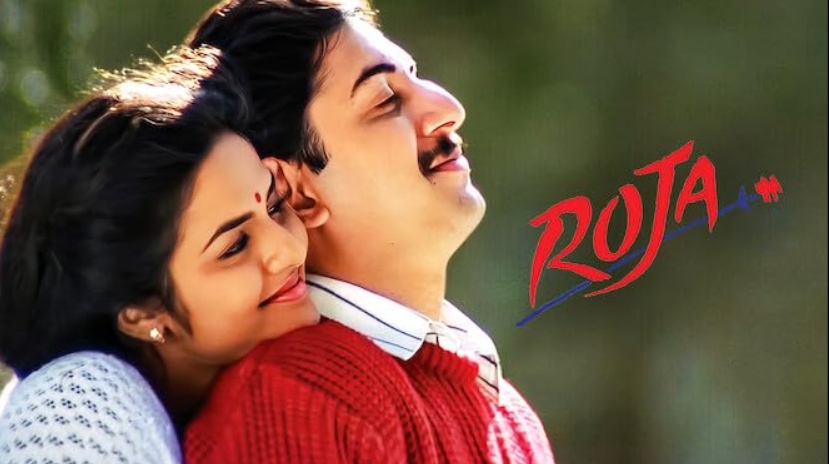
Roja begins not in the shadow of the gun, but in the sun-dappled, idyllic rural landscapes of Tamil Nadu. The narrative setup feels like a classic folklore: Rishi (Arvind Swamy), a sophisticated urban cryptologist working for the central government’s intelligence wing, visits a village and marries the fiercely innocent, rustic Roja (Madhoo). Their subsequent relocation to the snow-bound vistas of Kashmir represents a stark, calculated visual transition. Kashmir, historically framed in Indian cinema as an untamed, Edenic paradise for honeymooning lovers, is suddenly revealed to be a militarized, claustrophobic war zone.
When Rishi is abruptly kidnapped by Kashmiri separatists demanding the release of a jailed militant leader, the film transforms into a tense, desperate procedural. Roja, who speaks no Hindi or Urdu and is entirely illiterate in the complex grammar of border geopolitics, is cast into a bureaucratic purgatory. She confronts apathetic military officials and detached politicians, demanding the return of her husband.
The Ideological Architecture of Roja
From a contemporary perspective, Roja is the most politically conservative and state-aligned film of the trilogy. Ratnam sets up a very clear, binary moral universe. The Indian state, represented by the stoic, clean-shaven, and deeply decent Rishi, is the unassailable arbiter of morality. The separatists, led by Liaqat (Pankaj Kapur), are initially framed with a rustic, primitive savagery, lacking any historical or socio-political context for their demand for azaadi (freedom).
The film’s emotional centerpiece is an iconic, highly charged piece of cinematic theater: Rishi, bound and beaten in a dark, stone cell, witnesses a militant burning the Indian national flag. In an act of suicidal patriotism, he hurls his own body onto the flames to extinguish them, shouting “Jai Hind” (Victory to India). It is a moment of pure, manipulative, and breathtaking melodrama that crystallized the rising middle-class nationalism of the early 90s.
Yet, to dismiss Roja as mere state propaganda is to ignore Ratnam’s subtle undercurrents of alienation. Roja’s frustration with the central government reveals a deep fissure: the alienation of the Southern citizen within the North-centric, Hindi-speaking apparatus of the Indian state.
Visual Style: The Geometry of Light and Snow
Visually, Roja marks a watershed moment in Indian cinematography. Shot by the legendary Santosh Sivan, the film abandons the flat, over-lit conventions of 1980s Indian cinema. Sivan utilizes natural light, deep silhouettes, and rich chiaroscuro to evoke the psychological state of the characters.
The transition from the warm, golden, overexposed tones of the Tamil village to the cold, desaturated, blinding whites and slate grays of Kashmir mimics Roja’s emotional exile. In the song “Pudhu Vellai Mazhai” (New White Rain), the couple dances amidst ancient ruins and snowfields; the lens captures them as tiny, fragile figures engulfed by an indifferent, monolithic landscape that feels both romantic and deeply ominous.
3. Bombay (1995) – The Domestic Sanctuary Pillaged by Communal Frenzy
If Roja dealt with terror at the geographic and political periphery of the nation, Bombay brought that terror right into the cosmopolitan, beating heart of corporate India. Released in the immediate aftermath of the horrific 1992–1993 communal riots in Mumbai, the film was an act of immense artistic courage that generated death threats, censorial interventions, and actual bomb attacks on Ratnam’s residence.
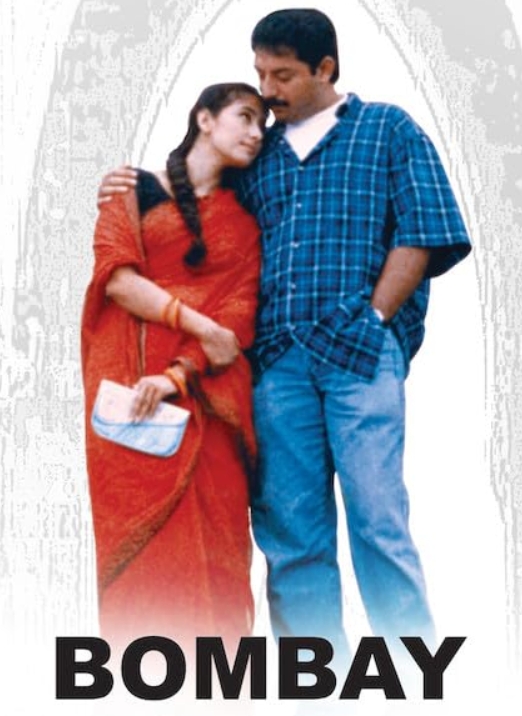
The narrative follows Shekhar (Arvind Swamy again), a Hindu journalist, and Shaila Banu (Manisha Koirala), a devout Muslim village girl. Confronted by the violent, unyielding bigotry of their respective fathers, the lovers flee their rural home for the secular promise of the metropolis: Bombay. They marry, build a life, and have twin sons whom they deliberately name Kabir Narayan and Kamal Basheer—a poetic, humanist attempt to merge their dual identities into a singular, harmonious future.
Then, history arrives with a box cutter. The demolition of the Babri Mosque triggers a tidal wave of blood through the city streets. The second half of Bombay completely abandons the gentle rhythm of the domestic romance, plunging the viewer into a visceral, handheld, terrifyingly immediate chronicle of civil war.
The Humanist Manifesto and the Naivety of the Center
In Bombay, Ratnam’s definition of “terror” undergoes a radical shift. It is no longer an external, foreign-backed entity infiltrating the borders; it is an internal, autoimmune disease. The terrorists here are ordinary neighbors transformed into slavering monsters by religious demagoguery. Ratnam meticulously balances the scales, showing both Hindu and Muslim extremist leaders as cynical, power-hungry puppeteers who manipulate the working-class masses into slaughtering one another.
The film’s climax is an agonizing, melodramatic plea for sanity. The twin boys are separated in the chaos, nearly burned alive by mobs from both factions, while their grandparents perish in their flaming home. Shekhar stands between armed mobs, screaming at them to look at what they have done to their own city.
While Western critics occasionally scoffed at the film’s neat, humanistic resolution—where citizens finally drop their weapons and join hands in tears—within the traumatized context of 1995 India, this operatic plea for secularism was a radical, necessary intervention. Shekhar’s definitive declaration—“I am neither a Hindu nor a Muslim, I am an Indian”—reconfigured the nationalism of Roja into a shield designed to protect internal diversity rather than homogenize it.
Style and Mise-en-Scène: The Architectural Frame
Cinematographer Rajiv Menon takes over the visual reins here, constructing a brilliant structural contrast between the two halves of the film. The first half is defined by the fluid, sensual liquidity of the backwaters—manifested in the iconic song “Uyire” (or “Tu Hi Re”), where the camera glides across ancient stone piers as the wind whips Shaila’s black burqa against a stormy sea.
The second half is a masterclass in urban claustrophobia. Ratnam uses tight, telephoto lenses to flatten the frame, trapping the characters within narrow, smoky alleyways, burning tenements, and concrete labyrinths. The camera movements become erratic, chaotic, and documentary-like, capturing the terrifying suddenness with which a peaceful neighborhood can dissolve into a slaughterhouse.
4. Dil Se.. (1998) – The Apocalyptic Romance of the Borderlands
We arrive at Dil Se.. (From the Heart), not only the undisputed masterpiece of this trilogy but arguably one of the greatest, most subversive works in the history of global transnational cinema. If Roja was the thesis and Bombay was the antithesis, Dil Se.. is the dark, irreconcilable synthesis that tears the very concept of the post-colonial nation-state to shreds.
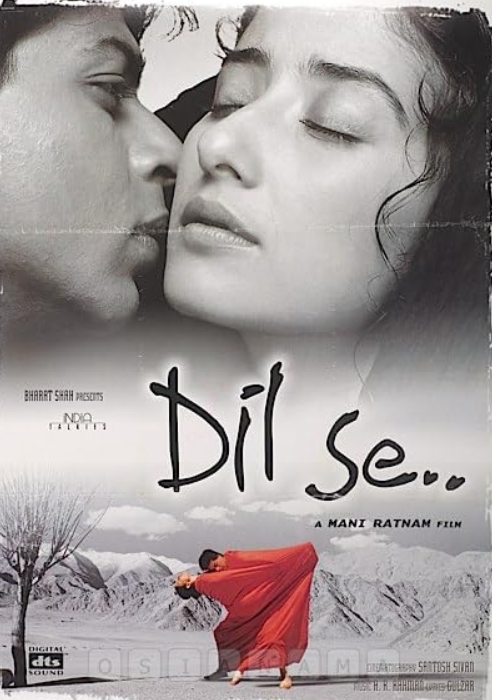
On the surface, the film borrows the structure of a classic psychological romance. Amar (Shah Rukh Khan, giving a performance of feral, unhinged intensity), is a self-assured executive for All India Radio. Dispatched to the volatile, long-ignored Northeastern frontier to record puff pieces celebrating 50 years of Indian Independence, he encounters a mysterious, silent woman named Meghna (Manisha Koirala, cast as an ethereal, haunted specter).
Amar becomes instantly, fiercely obsessed with her. He pursues her across the rugged, wind-swept, high-altitude deserts of Ladakh, utterly oblivious to the reality hidden behind her deadened eyes: Meghna is a brainwashed sleeper-agent belonging to a radical separatist cell, preparing herself to execute a suicide bombing at the upcoming Republic Day Parade in New Delhi.
The Subversive Allegory: Center vs. Periphery
Dil Se.. operates on a profound, deeply uncomfortable allegorical level. Amar is not merely a romantic hero; he is the literal embodiment of the majoritarian, privileged, Delhi-centric Indian state. He is cheerful, loud, entitled, and utterly convinced that his love is a benevolent force that can claim, domesticate, and cure the exoticized other. He represents a state that demands assimilation while remaining totally indifferent to the historical trauma of its borderlands.
Meghna, conversely, is the bruised, bleeding periphery. In a quietly devastating monologue that somehow bypassed the central Indian censor board, she explains her radicalization without utilizing political rhetoric. She speaks of memories—of soldiers raiding her village, of being pinned to the floor at the age of eight while her family was assaulted, of the systematic state violence that turned her body into a vehicle for political retribution.
When Amar forces his embrace upon her, demanding that she forget her past and marry him, it mirrors the state’s clumsy, aggressive program of “national integration”.
The film explicitly structures their relationship through the Seven Shades of Love derived from ancient Arabic literature: Hub (Attraction), Unsi (Infatuation), Ishq (Love), Akidat (Reverence), Ibaadat (Worship), Junoon (Obsession), and Maut (Death). Amar and Meghna bypass the domestic possibilities of marriage and slide rapidly down this slippery slope toward the final stage.
In the film’s shattering, apocalyptic climax, Amar intercepts Meghna seconds before she is to detonate her vest. He realizes he cannot stop her, and she realizes she cannot escape him. He wraps his arms tightly around her, pulling her close to his chest. She clicks the trigger, and they are instantly atomized in a blinding flash of fire. It is a terrifyingly romantic, deeply transgressive image: a union that can only be consummated through mutual assured destruction.
Aesthetic Transgression: The Rupture of the Song
The formal brilliance of Dil Se.. rests entirely upon how Ratnam and Santosh Sivan utilize Rahman’s legendary soundtrack to create a parallel narrative of the subconscious. The songs in Dil Se.. are explicitly designed as diegetic ruptures—hallucinatory, surreal sequences that exist entirely within the characters’ heads, contrasting sharply with the gritty, olive-drab, rain-slicked reality of the political thriller.
- “Chaiyya Chaiyya”: Staged atop a moving narrow-gauge train snaking through the misty hills of Ooty, this sequence is a kinetic, hyper-saturated celebration of pure, unadulterated primal attraction (Hub). The camera moves with a rhythmic, reckless velocity that mirrors the galloping heartbeat of early infatuation.
- “Satrangi Re”: The visual masterpiece of the film, tracking the stage of Junoon (Obsession). Shot amidst the cold, basaltic isolation of Ladakh, Meghna shifts through a succession of monochromatic costumes—from Stygian black to pristine white, then violent orange and deep blood red. Sivan uses wide-angle lenses to capture Amar crawling through freezing rivers and ancient, cavernous monasteries, hopelessly ensnared by a woman who behaves like a lethal, shape-shifting elemental force.
5. Comparative Matrix: The Evolution of the Trilogy
To fully appreciate the scope of Ratnam’s achievement, we can map the formal and thematic shifts across the three films:
| Attribute | Roja (1992) | Bombay (1995) | Dil Se.. (1998) |
| Geographic Focus | The Far North (Kashmir border) | The Urban Core (Metropolitan Bombay) | The Far Northeast & Capital (Assam / Delhi) |
| The Nature of Terror | External infiltration; clear regional separatist “Other” | Autoimmune disease; communal polarization within civil society | State-sponsored alienation triggering suicidal nihilism |
| The Role of the Central Protagonist | Innocent victim who becomes an unyielding avatar for state patriotism | Rational, secular humanist citizen attempting to heal internal fractures | Naive, entitled majoritarian center whose love operates as a violent chokehold |
| Visual Tone & Cinematography | Pastoral golden warmth collapsing into sterile, blinding alpine whites | Fluid, lyrical village composition transitioning to gritty, handheld urban chaos | High-contrast, desaturated military tones punctuated by surrealist, kaleidoscopic dreamscapes |
| The Resolution | The state triumphs; the family is reunited under the national banner | Melodramatic truce; humanism temporarily halts the communal bloodbath | Absolute annihilation; the lovers consume each other in an anti-nationalist explosion |
6. The Place of the Trilogy in Indian and World Cinema
Within the history of Indian cinema, Mani Ratnam’s Terrorism Trilogy occupies a position analogous to The Godfather Trilogy in American cinema or The Vengeance Trilogy of Park Chan-wook in South Korea. It is the definitive bridge that permanently dismantled the absolute wall between commercial “Mainstream Cinema” and solemn, high-art “Parallel Cinema”.
Redefining the Indian Mainstream
Before Ratnam, serious political engagement in Indian film was almost exclusively the domain of arthouse directors like Satyajit Ray, Mrinal Sen, or Shyam Benegal. These filmmakers worked with sparse budgets, minimalist aesthetics, and sparse distribution, deliberately eschewing commercial mainstream tropes.
Ratnam boldly asserted that the mainstream masala format was not inherently shallow. He proved that you could cast the biggest stars in the country, deploy massive budgets, feature chart-topping pop music, and still deliver a devastating, deeply layered critique of the nation’s foundational myths. He elevated the technical standards of the entire industry; every modern Indian master filmmaker working today—from Anurag Kashyap and Vishal Bhardwaj to Shoojit Sircar—operates in a visual landscape that was cleared and colonized by Mani Ratnam in the 1990s.
Global Resonance and the Transnational Auteur
On the global stage, the Terrorism Trilogy remains an incredibly sophisticated study in how non-Western cinemas navigate local traumas under the pressures of globalization. While Hollywood’s cinematic treatment of terrorism has historically been remarkably flat—relying on cartoonish, hyper-masculine, foreign caricatures who exist merely to be eliminated by Western military heroes—Ratnam’s trilogy approaches conflict with a radical, multi-dimensional empathy.
Even at his most conservative in Roja, Ratnam ensures that the militant leader Liaqat is granted moments of profound domestic tenderness and moral hesitation. In Dil Se.., he accomplishes something that post-9/11 Western cinema has almost never dared to attempt: he humanizes the suicide bomber without minimizing the horrific, terrifying nature of her actions, locating the root of her violence not in abstract evil, but in systemic, unacknowledged historical trauma.
It is precisely this formal complexity that caught the attention of international film festivals and scholars. Dil Se.. became the first Indian film to enter the top ten at the United Kingdom box office, gaining a passionate cult following among international cinephiles (including acclaimed directors like Quentin Tarantino and Baz Luhrmann, who have openly cited Ratnam’s song picturizations as a major influence on the hyper-kinetic editing of modern Western musicals).
7. A Permanent Masterwork of Fractured National Identity
Ultimately, Mani Ratnam’s Terrorism Trilogy stands as an essential, towering monument of global cinema because it refuses to offer easy comfort. It understands that the post-colonial nation-state is not a static, finished project, but an ongoing, deeply fragile argument—a complex, multi-ethnic tapestry constantly threatened by the twin perils of state overreach and communal polarization.
By anchoring these colossal political shifts within the volatile architecture of human desire, Ratnam ensured that these films would never age into dry, dated historical documents. Thirty years later, when we watch Rishi running through the freezing Kashmiri night, or Shekhar weeping over the charred remnants of his home, or Amar and Meghna disappearing into that final, blinding, devastating embrace, we are not just watching a love story. We are watching a master filmmaker use the magic of celluloid to perform open-heart surgery on a bleeding country. It is cinema at its most spectacular, its most urgent, and its most devastatingly profound.