
I. Introduction: When Cinema Feels Like a Wound That Never Heals
There are filmmakers one discovers early—Satyajit Ray, Guru Dutt, Bimal Roy—names etched into the bedrock of Indian cinema. They orbit your cinephile universe with the predictability of planets. Then, somewhere between late-night screenings, obscure clips, and essays that whisper of “genius,” you encounter Ritwik Kumar Ghatak. But you don’t just “find” Ghatak. He happens to you.
For someone like me—already familiar with Hindu and Bengali cinematic traditions—the experience is startling. Bengali cinema, rich with literary influence, emotional refinement, and philosophical weight, had prepared me for nuance. It had prepared me for beauty, melancholy, epic tragedy, and subtle comedy. What it had not prepared me for was the volcanic rupture that is Ghatak’s cinema.
To watch even a fragment of a Ghatak film is to feel someone shaking your shoulders, insisting you pay attention, not merely as a viewer but as a human being. There is no polite transition, no elegant easing-in, no softening of edges. Ghatak did not make films for passive consumption. He made them as if cinema itself were a weapon against forgetting—a scream of history, a cry from the wounds of Partition, a plea for humanity to confront what it had destroyed.
And yet, despite the intensity, despite the bold ruptures of form and sound and myth, Ghatak’s work also carries a strange tenderness—something like a lullaby sung over ruins.
This paradox is what makes Ghatak a buried treasure for cinephiles around the world. Even those well-versed in Indian or Bengali cinema often encounter him later, almost by accident, as if he were waiting in the shadows, patient and quiet, until the audience is ready.
I thought I knew Bengali cinema. Then I met Ghatak.
II. A Life Torn in Two: Partition as Birth and Apocalypse
To understand Ghatak, one must first understand that he was not merely a filmmaker but a survivor of a civilizational rupture.
He was born in 1925 in Dhaka (then part of undivided Bengal), and the Partition of India in 1947 shattered not just a land, but an identity.
He was not alone in this; millions of Bengalis were uprooted. But Ghatak’s sensitivity, his perceptive fury, and his political consciousness transformed his experience into art. Partition was not a historical event for him—it was a personal apocalypse. From his earliest writings to his final directorial works, he returned to this wound repeatedly, not to describe it, but to inhabit it.
His cinema is filled with:
- homes lost
- families torn apart
- women displaced and punished
- landscapes broken and barren
- cultural memory slipping away
The trauma of Partition was not a background detail; it was the psychological spine of his oeuvre.
If Ray captured the dignity of Bengal, Ghatak captured its pain.
If Bimal Roy portrayed the poor, Ghatak portrayed the dispossessed.
If Guru Dutt filmed the lonely artist, Ghatak filmed the wounded civilization.
He was not documenting history; he was bleeding it onto celluloid.
III. Ghatak’s Style: Myth, Music, Melodrama, and the Ruptured Image
1. The Cinematic Earthquake of Form
A viewer familiar with Hindi and Bengali cinema may find Ghatak’s visual language both familiar and alien.
Where mainstream Indian cinema used melodrama for escapism, Ghatak weaponized it.
Where other directors used music to soothe, he used music to pierce.
His style is distinguished by:
- brutal jump cuts
- sudden ruptures in rhythm
- mythic and folk-song interludes
- symbolic use of landscape
- raw sound design, sometimes intentionally harsh
- disorienting but powerful emotional peaks
He carved out a grammar that felt like a cinema of exile—fragmented, restless, searching.
2. Melodrama as Political Weapon
In Indian film history, melodrama often carries a negative connotation, associated with exaggeration.
Ghatak reclaimed melodrama as an emotionally truthful mode.
For him:
- melodrama = the emotion of the masses
- melodrama = the voice of the displaced
- melodrama = protest
His characters cry, scream, collapse, and rise again—not because Ghatak lacked subtlety, but because his world lacked stability.
When the land itself is fractured, restraint becomes a lie.
3. Mythology as Emotional Memory
Unlike Ray, whose realism flows from the literary and humanist tradition, Ghatak’s realism is mythic at its core.
He drew upon:
- Hindu mythology
- Bengali folk tales
- Baul music
- Vaishnava devotional songs
- epic structures like the Mahabharata
His films feel like modern parables, where everyday people carry the symbolic weight of gods and tragic heroes.
In Meghe Dhaka Tara, the protagonist Nita is not merely a refugee woman—she becomes a modern-day Durga figure, sacrificial yet resilient.
In Subarnarekha, Sita echoes the mythic Sita from the Ramayana, abandoned and exiled.
This mythic quality gives Ghatak’s films an enormous emotional charge. His stories become not just personal or political, but civilizational.
IV. Important Films: The Core of Ghatak’s Cinematic Galaxy
1. Meghe Dhaka Tara (1960)
The Jewel in the Crown of Partition Cinema
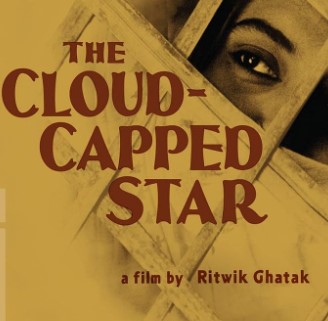
If I were to choose one film that captures Ghatak’s unique voice, it would be Meghe Dhaka Tara (The Cloud-Capped Star).
It is one of the greatest films ever made about sacrifice—not the heroic kind celebrated in legends, but the quiet, suffocating kind expected from women in society.
Nita, the protagonist, works tirelessly to support her refugee family.
Slowly, painfully, the people she loves consume her.
Ghatak’s use of sound is radical:
A whip cracks whenever Nita suffers.
A train screams like a wounded animal.
Her final cry—“Dada, ami banchte chai!” (“Brother, I want to live!”)—is one of the most devastating lines in world cinema.
This is not merely storytelling. It is exorcism.
2. Komal Gandhar (1961)
A Film About Theatre, Politics, and Lost Homes
Perhaps Ghatak’s most autobiographical film, Komal Gandhar explores the world of the Indian People’s Theatre Association (IPTA), where he himself worked as a playwright and actor.
The film is lighter in tone but still haunted by the shadow of Partition.
Through theatre rehearsals, ideological conflicts, and slow-blooming romance, the characters attempt to rebuild identity in a world that has forgotten them.
It is one of Ghatak’s most hopeful films, where art becomes a way to heal history.
3. Subarnarekha (1965)
A Tragedy of Shattering Power
If Meghe Dhaka Tara is Ghatak’s most emotionally overwhelming film, Subarnarekha might be his most tragic.
It follows a displaced brother and sister trying to rebuild life near the river Subarnarekha.
Their innocence, hope, and trust are gradually destroyed by:
- poverty
- societal cruelty
- caste violence
- and the shredding effects of displacement
There is a scene near the end—so shocking, so emotionally overwhelming—that it stands as one of the most unforgettable sequences in Indian cinema.
4. Ajantrik (1958)
India’s First Great Film About Modernity
Ajantrik is Ghatak’s eccentric masterpiece—a film where a taxi driver loves his worn-out car like a living being.
It is funny, absurd, philosophical, and tender.
Ghatak uses the automobile as a metaphor for:
- industrialization,
- alienation,
- companionship,
- and the loss of human connection in a changing world.
Years before Satyajit Ray made Aranyer Din Ratri, Ghatak had already explored modern alienation in rural India.
5. Titas Ekti Nadir Naam (1973)
An Epic of a Vanishing Culture
Based on Adwaita Mallabarman’s novel, this film is an ethnographic wonder.
It chronicles the river Titash and the community of fishermen whose lives revolve around it.
Ghatak, worn down by alcoholism and illness, still created one last masterpiece, blending documentary realism with mythic storytelling.
The river becomes:
- birthplace
- graveyard
- lifeline
- memory
This is Ghatak at his most expansive and poetic.
V. Writing Skills: A Dramatist Before a Director
Before filmmaking, Ghatak was a playwright, critic, and teacher, and his dramatic instincts shape his cinema deeply.
1. Scriptwriting as Political Expression
Ghatak wrote with the urgency of someone who believed art should intervene in society.
His screenplays are full of:
- sharp ideological debates
- poetic monologues
- philosophical reflections
- biting satire
- folk-song interludes
He had the rare ability to combine political argument with emotional authenticity.
2. Characters With Mythic Weight
His characters are ordinary people but written as symbolic figures—refugees who carry the emotional burden of an entire civilization.
Women especially, in his films, are written with great complexity:
- they nurture
- they sacrifice
- they resist
- they collapse
- they resurrect
Ghatak’s women are the emotional heart of his stories.
3. Language That Bleeds Poetry
Even in lighter conversations, his writing carries a poetic rhythm.
He uses Bengali not just as dialogue but as soul.
His characters speak as if they are aware that they inhabit a world falling apart—and they cling to language as memory and identity.
VI. Influence: The Artist Who Was Not Heard in His Time
During his lifetime, Ghatak’s films often failed at the box office, and critics accused him of being too theatrical, too loud, too political.
Yet today, his influence can be traced through:
1. Indian Filmmakers
- Kumar Shahani
- Mani Kaul
- Adoor Gopalakrishnan
- Girish Kasaravalli
These filmmakers admired Ghatak’s fusion of myth and modernity.
2. International Filmmakers and Scholars
Although less globally recognized than Ray, Ghatak is revered in cinephile circles, especially in:
- France
- Japan
- Iran
- the former USSR
3. Influence on Parallel Cinema
Ghatak helped shape India’s art-house movement, particularly through his teaching at the Film and Television Institute of India (FTII).
His students remember him as:
- fiercely honest
- wildly passionate
- unruly
- inspiring
Many say that he taught them not just filmmaking but why filmmaking matters.
VII. Legacy: A Genius Rediscovered, Again and Again
Ghatak’s legacy is vast but fragile—much like the memories he tried to preserve.
1. The Poet of Partition
No filmmaker has captured the emotional devastation of Partition with such unflinching humanity.
Ghatak turned the refugee’s story into epic tragedy.
2. A Filmmaker Ahead of His Time
His use of sound, editing, symbolic imagery, and mythic structure predated movements like the New German Cinema and Iranian New Wave.
3. A Teacher and Revolutionary
His impact on FTII is legendary.
Students recall him shouting, drinking, crying, lecturing, and mentoring—sometimes all in the same day.
He didn’t just teach film; he taught artistic courage.
4. A Global Cinephile’s Treasure
For someone exploring cinema across countries—always searching for hidden gems—Ghatak is the buried diamond of South Asia.
He is the kind of filmmaker you stumble upon once your cinematic appetite deepens enough to crave something raw and untamed.
VIII. Conclusion: Why Ghatak Matters Now More Than Ever
In the age of polished digital filmmaking, Ghatak’s cinema feels like a slap of reality.
His films remind us that cinema is not always gentle.
Cinema can be:
- an argument
- a protest
- a scream
- a prayer
- a lamentation
- a memory trying not to fade
His world was broken, yet his films are held together by the stubborn resilience of hope.
Even when everything is lost, even when Partition divides the earth, Ghatak’s characters search for meaning, connection, and home.
As a cinephile moving between countries, languages, and cinematic traditions, I feel drawn to Ghatak not because he is obscure, but because he is honest.
He reminds us that every country carries hidden filmmakers whose voices are so powerful they feel like rediscovering an entire artform.
To watch Ritwik Ghatak is not just to learn about Bengal.
It is to learn about rupture, memory, myth, music, and the unbearable weight of being human.
And in that sense, Ghatak is not merely one of the greatest Bengali filmmakers.
He is one of the greatest filmmakers the world has ever known—an eternal voice calling out through history’s wounds.