
There are film companies, and then there are film companies that become part of cinema’s vocabulary. UFA belongs to the second category. Say “UFA” to a cinephile and a whole gallery of images appears: the impossible geometry of Metropolis, the fevered corridors of Dr. Mabuse, the pale nightmare of Nosferatu, Emil Jannings sweating under the gaze of Marlene Dietrich in The Blue Angel, and the uncanny, theatrical spaces of German silent cinema. But behind the famous initials is not one simple story of artistic triumph. UFA was born in wartime propaganda, became the most powerful German film enterprise of the Weimar Republic, helped make Berlin and Babelsberg central to world cinema, was damaged by financial ambition, was taken over by political forces, and was finally absorbed into the machinery of National Socialism.
Today’s UFA GmbH is not literally the same company that made every silent-film classic. That distinction matters. The original Universum-Film Aktiengesellschaft, usually shortened to UFA, was founded in Berlin on 18 December 1917. Its corporate life as the great national film concern ended with Germany’s defeat in 1945. The modern UFA is a later corporate and brand continuation, now the German production arm of Fremantle, the global production business of RTL Group, which belongs to Bertelsmann. UFA itself describes the present company as the parent of its German production activities, with units including UFA Fiction, UFA Serial Drama, UFA Show & Factual, UFA Documentary and UFA Mitte.
So the honest way to write about UFA is to hold two ideas together. UFA was one of the engines of cinema’s artistic modernity. It was also a company entangled with state power, exclusion, censorship and propaganda. Its films can be exhilarating while its institutional history remains morally troubling. In fact, the tension is part of what makes UFA so important: it shows how cinema can be at once an art form, an industrial system, a national image-maker and a political weapon.
A company born from war
UFA was created during the First World War, when the German state and military leadership had become acutely aware that moving images were not merely entertainment. Film could shape public feeling, project national identity and compete in an international marketplace increasingly dominated by American companies. The Deutsche Kinemathek describes the original mission plainly: Universum Film AG was founded in December 1917 to make German war propaganda more effective.
That origin complicates the popular idea that UFA simply emerged as a daring artistic studio. The company was built with state support and with the backing of major financial interests. Its registered stock capital was 25 million marks, and it quickly used its financial resources to buy or consolidate existing film businesses. Filmportal’s institutional history describes UFA as Germany’s national film company both in self-image and in market power, with close connections to the state, Deutsche Bank and conservative financing groups.
The context was international as well as military. German films faced serious restrictions abroad during and after the war. At the same time, American cinema had developed an efficient industrial model that combined production, distribution and exhibition. UFA’s response was not simply to make individual films. It aimed to create a complete system: studios to produce films, a distribution network to circulate them and cinemas in which to show them. That vertical structure would become one of the company’s greatest strengths.
From national project to international sensation
In the first years after the war, UFA needed to do more than serve the state. It needed audiences. The company invested in lavish historical films and star vehicles, genres that could travel internationally even when language and politics created barriers. Ernst Lubitsch became one of the central figures in this early phase. His The Eyes of the Mummy Ma and Carmen, both from 1918, helped establish UFA’s interest in spectacle, stars and recognizable cultural properties.
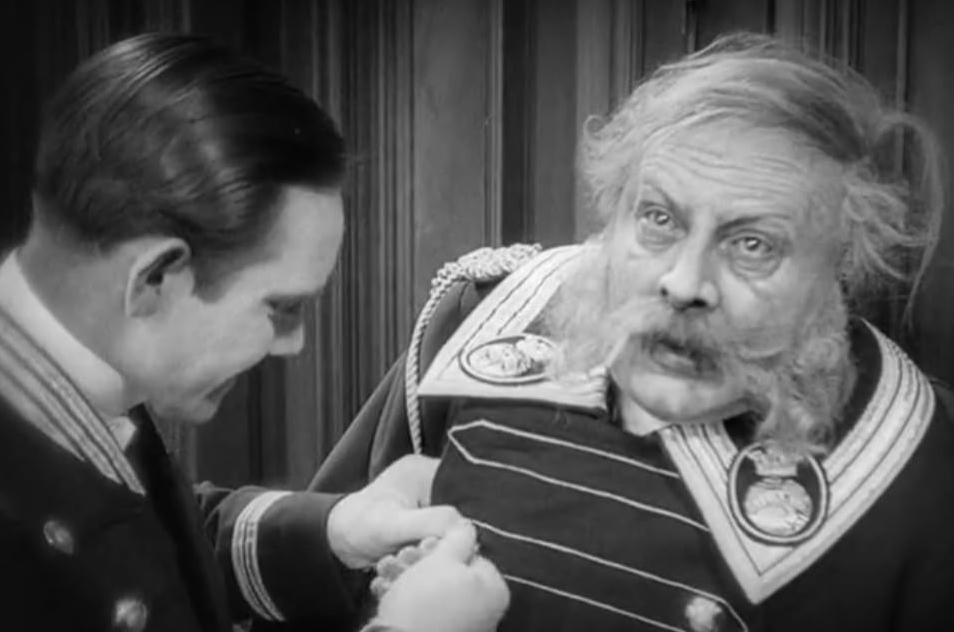
Lubitsch’s Madame Dubarry, released in 1919 and also known internationally as Passion, was a breakthrough. Starring Pola Negri, Emil Jannings and Harry Liedtke, it received enthusiastic attention in Europe and the United States. Its success mattered beyond ticket sales. It helped rehabilitate German cinema in countries where German films had been unwelcome after the war. When UFA premiered the film at Berlin’s Film Palast am Zoo, the event announced that German cinema could compete through production scale, visual polish and international ambition.
This is where UFA’s story becomes inseparable from the story of the Weimar Republic. The years from roughly 1919 to 1933 are often remembered as German cinema’s golden age, but the phrase can hide the hard material conditions behind the art. Inflation, political violence, censorship battles, uneven exhibition markets and international competition shaped what could be made. UFA was not a bohemian workshop floating above history. It was a large employer and a powerful commercial institution, and its films were expected to earn money.
The company’s takeover of Decla-Bioscop in 1921, completed in the period around 1922–23, brought the Neubabelsberg studios into the UFA orbit and strengthened its production capacity. Neubabelsberg, later known as Babelsberg, became one of the great studio sites in European film. UFA also had major facilities in Berlin-Tempelhof, expanded in 1926 with what was then Europe’s largest studio hall.
These places were not just buildings. They were an industrial environment in which set designers, cinematographers, electricians, carpenters, costume departments, laboratory technicians, editors, actors, writers and directors could work in concentrated proximity. Silent cinema is often discussed as if it were the product of solitary genius, but UFA’s most exciting films came from teams. The company offered the scale that allowed those teams to experiment.
The UFA style: camera, architecture and movement
UFA did not have one single visual style. Its catalogue included costume melodramas, comedies, historical spectacles, crime films, fantasy, social drama, newsreels and later sound musicals. Yet the company became associated with a particularly intense approach to screen space. Sets were not merely backgrounds. They could become psychological landscapes, social diagrams or machines that seemed to threaten the people inside them.
The partnership around F. W. Murnau’s The Last Laugh (Der letzte Mann, 1924) is one of the clearest examples of this creative system. Producer Erich Pommer brought together Murnau, writer Carl Mayer, cinematographer Karl Freund and production designers Robert Herlth and Walter Röhrig. Their goal was not simply to illustrate a story but to make the camera itself expressive. The film’s famous “unchained camera” turns movement into narrative. The camera glides, follows, falls and observes in ways that make the humiliation of Emil Jannings’s hotel doorman feel physical. Filmportal calls it a landmark in developing a consistently filmic method, while the British Film Institute describes Murnau’s first film for UFA as both a formal experiment and a bitter comment on popular entertainment.
The phrase “unchained camera” is easy to repeat as a piece of film-history trivia. It is more interesting to see what it does. In The Last Laugh, the camera does not sit politely at a distance while actors deliver information. It moves through architecture and social space. The doorman’s uniform gives him status at the entrance of the hotel; when he loses it, the same spaces become humiliating. The camera turns the building into a map of class.
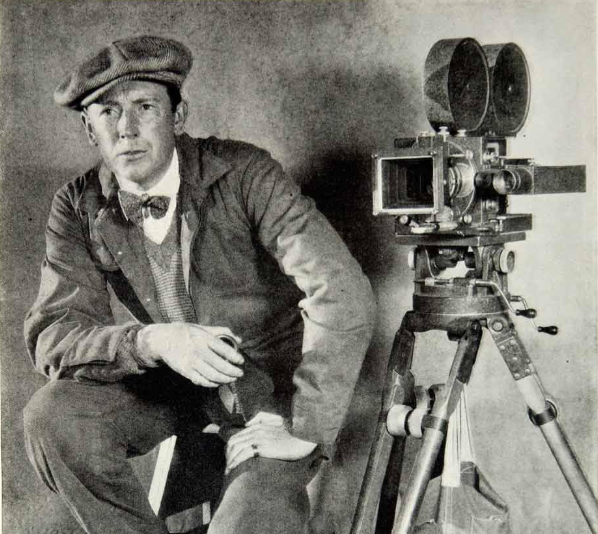
The same appetite for formal invention can be found in E. A. Dupont’s Varieté (1925), photographed by Karl Freund, and in Fritz Lang’s UFA films. UFA’s production culture made room for elaborate camera positions, expressive lighting, unusual editing and monumental design. These were not decorations added after the story. They were ways of thinking through the story.
This is why the great UFA films still feel alive rather than merely “important.” They do not resemble museum pieces. They are restless. Dr. Mabuse, the Gambler turns modern life into a network of surveillance, financial manipulation, criminal performance and mass suggestion. Lang’s figures appear trapped in systems they only partly understand. The Nibelungs transforms medieval legend into a severe architecture of loyalty, revenge and death. Faust uses the studio to build a universe of shadows, smoke, ritual and temptation.
And then there is Metropolis.
Metropolis: masterpiece, gamble and warning
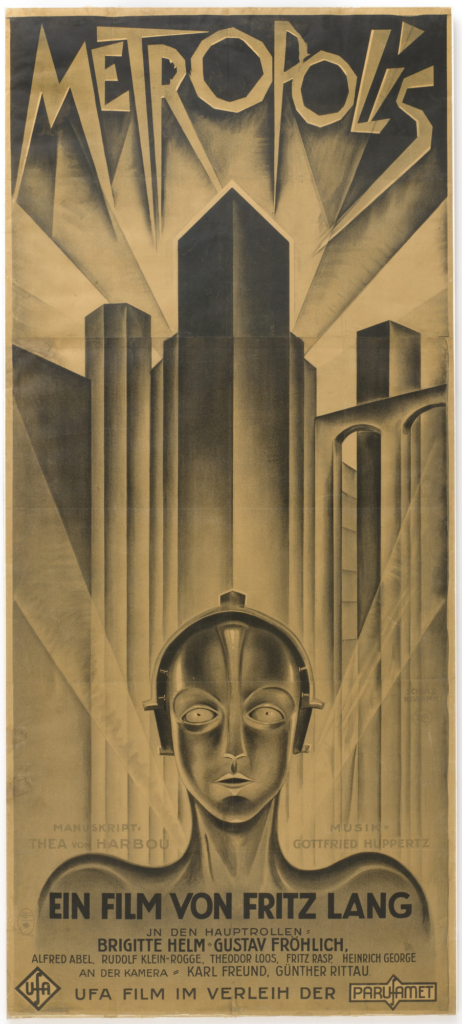
Fritz Lang’s Metropolis premiered in Berlin in January 1927. UFA’s own history lists it among the major projects realized by Lang and Murnau during the company’s creative high period. 1 The film remains the image most people carry when they think of UFA: the vertical city, the machine-room workers, the robot Maria, the subterranean crowds and the fantasy of a future organized around technological power.
Yet Metropolis was also a financial disaster in the short term. Its huge sets, special effects, crowd scenes and long production pushed costs to extraordinary levels. Filmportal identifies the financial failure of Metropolis as a decisive part of the UFA crisis of 1926–27. The company was losing tens of millions, and the crisis helped bring about Erich Pommer’s departure.
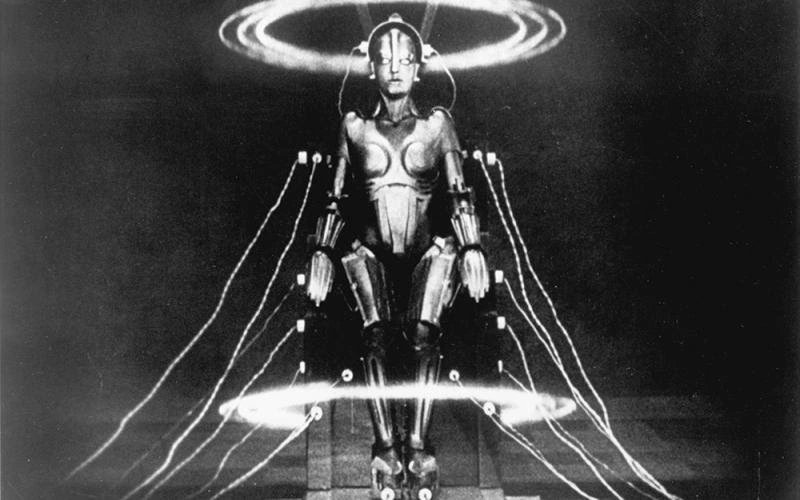
That contradiction is essential. Metropolis looks like the triumph of a company that could do anything, but the film also reveals the danger of a studio empire spending prestige money faster than audiences could repay it. The art and the business model were pulling in opposite directions.
The film’s political meaning is equally unstable. Metropolis imagines a society divided between industrial rulers above ground and workers below. Its critique of dehumanizing labor and technological hierarchy is unmistakable. But its proposed reconciliation between “the head” and “the hands” through the heart has been debated ever since. Is it a plea for solidarity, a conservative fantasy of social harmony, or an unresolved mixture of both? The film does not settle the question. Its power lies partly in that instability.
The production also shows why talking about UFA only through directors is insufficient. Lang’s vision depended on producer Erich Pommer, designers, effects technicians, performers and the organizational capacity of the Babelsberg studios. The UFA machine produced the conditions for cinematic imagination, but it also demanded financial discipline that Metropolis exceeded.
UFA’s debt and the collapse of its finances led to the Parufamet agreement with Paramount and Metro-Goldwyn-Mayer. The plan was meant to stabilize distribution by circulating films from the American companies and UFA in Germany. Instead, it deepened UFA’s difficulties. In 1927, Alfred Hugenberg’s Scherl publishing group took control. Hugenberg was a conservative nationalist and later a supporter of Hitler. He appointed Ludwig Klitzsch as UFA president, and the company was reorganized as a more politically conservative and commercially cautious enterprise.
This was not yet the Nazi UFA, but it is a reminder that the company’s political trajectory did not begin in 1933. UFA’s relationship with nationalism, authority and the state had always been part of its identity. The difference after 1933 was the speed and completeness with which the Nazi regime turned that relationship into direct control.
Sound arrives, and the stars change
The transition to sound created another technical and commercial upheaval. UFA’s first fully sound-produced feature, Melody of the Heart, premiered in December 1929. Soon afterward, The Blue Angel became one of the defining films of the early sound period.
The film is often remembered as a Josef von Sternberg–Marlene Dietrich vehicle, but its UFA context matters. Emil Jannings, already internationally famous and the first winner of the Academy Award for Best Actor, was expected to be the principal star. Dietrich, comparatively little known at the time, transformed the film’s center of gravity. Her Lola-Lola is not simply a seductive cabaret performer. She is a modern star persona: cool, amused, erotic, commercially aware and impossible for the respectable professor played by Jannings to control.
Dietrich left Germany for Hollywood after the film’s premiere and became an international icon. That departure prefigures the exodus that would soon drain German cinema of some of its finest talent. UFA could create stars, but it could not keep them when politics made Germany intolerable or when Hollywood offered greater freedom and reach.
At the same time, UFA developed popular sound genres that looked toward the future of mass entertainment. Musical comedies such as The Three from the Filling Station used songs as part of the dramatic flow rather than stopping the plot for isolated musical numbers. Filmportal notes that this approach anticipated an important element of later Hollywood musicals.
The creative team around Erich Pommer included directors, writers and composers who would later leave Germany or be forced into exile. Billy Wilder, Robert Siodmak, Kurt Siodmak and composer Friedrich Hollaender were part of a generation whose careers became transnational because Nazi policy made a stable German film culture impossible. To watch UFA’s early sound films today is therefore to watch a cinema at the edge of rupture: full of wit, rhythm and invention, but already vulnerable to the politics gathering around it.
1933: the company is transformed
Adolf Hitler became Reich Chancellor on 30 January 1933. Joseph Goebbels became the central political authority over German film through the Ministry of Propaganda and Public Enlightenment. The UFA history page records the consequences with chilling economy: Billy Wilder, Fritz Lang, Erich Pommer and others emigrated; state controls expanded over the entire production system; and the company’s Jewish employees were driven out.
Filmportal states that UFA dismissed its Jewish employees in spring 1933 and that Pommer was forced out. Directors and performers who had enriched German cinema were pushed into exile, persecuted or murdered. Otto Wallburg and Kurt Gerron were among those who did not survive Nazi persecution. Reinhold Schünzel and Detlef Sierck, who had made important films under increasingly constrained conditions, eventually fled.
This is the point where a responsible account must resist two easy myths. The first myth is that every UFA film made after 1933 was crude propaganda. The second is that technically accomplished or entertaining films were therefore politically innocent. Neither is true.
The Nazi regime understood that audiences did not want to sit through ideological lectures every night. Entertainment was not separate from propaganda; it was one of the forms propaganda could take. Comedies, revue films, costume spectacles and romances could normalize a national community defined by exclusion, obedience and militarism. At the same time, some directors and production teams found limited space for craft and even emotional complexity within a controlled system. That space does not erase the system around them.
UFA productions such as Hitler Youth Quex were openly propagandistic. Goebbels praised the film as a service to National Socialist ideology. Other productions, including the patriotic submarine film Dawn (Morgenrot), helped create an emotional culture of sacrifice and national renewal. Later, UFA made films that were explicitly militaristic, anti-Semitic or centered on Nazi ideas of loyalty and racial identity. Karl Ritter became one of the company’s most persistent makers of Nazi war films.
The company’s institutional subordination intensified in 1937, when the Nazi government secretly bought control of major film companies. In 1942, UFA, Terra, Tobis, Bavaria and Wien-Film were merged into the Ufa-Film GmbH, usually called Ufi. UFA retained a degree of nominal identity, but the film industry had effectively been brought under state direction.
The most disturbing feature of this period is the coexistence of political control and polished entertainment. UFA continued to produce comedies, melodramas, operettas and star vehicles. Marika Rökk and Hans Albers could appear in lavish popular films while the state pursued war, persecution and mass murder. The existence of charm on screen is not evidence of innocence off screen. It is evidence of how power uses entertainment.
Münchhausen and the politics of spectacle
UFA’s 25th-anniversary spectacular, Münchhausen (1943), is a particularly revealing example. It was made in Agfacolor and designed to display the technical possibilities of German cinema. Hans Albers played the Baron of Lies, and the film offered fantasy, spectacle and elaborate effects at a moment when Germany was waging a catastrophic war.
The film’s production history also shows the regime’s contradictions. Erich Kästner, whose books had been banned, was recruited to write the screenplay under the pseudonym Berthold Bürger. His name was not included in the credits. The film could be playful and technically impressive while being produced by a system that censored authors and mobilized cinema for national prestige.
For a cinephile, the correct response is not to stop looking at form. It is to look harder. How does spectacle work in a dictatorship? What does lavish color do when the world outside the studio is collapsing? How does a fantasy of freedom circulate inside a culture where real freedom is being destroyed? These questions do not make every film secretly profound, but they prevent us from treating visual pleasure as political proof of virtue.
The war years also produced explicitly propagandistic films. UFA worked until the final phase of the conflict. Veit Harlan’s Kolberg, one of the most expensive UFA productions, premiered on 30 January 1945, when Germany was already facing military defeat. Its purpose was to build morale by presenting heroic resistance. The fact that cinemas and studios continued operating almost until the end is a grim reminder that the entertainment industry was part of the war effort, not a world outside it.
Not every film from the period was ideologically direct. Helmut Käutner’s Under the Bridges, filmed around the rivers near Potsdam, is a melancholy love story that was released only after the war. Its survival within the late-war production environment demonstrates the limits of any simple category. But the film’s quiet humanism does not cancel the larger structure. The same industry that made a delicate romance also helped produce the imagery of a criminal regime.
1945 and the break in the story
Germany’s defeat in 1945 ended UFA as the old national studio empire. The Allied powers seized the assets of the Nazi film system. The Babelsberg studios were occupied by Soviet forces, and in 1946 the Soviet military administration licensed the creation of Deutsche Film-AG, or DEFA. The name itself was a deliberate echo of UFA. 3
DEFA’s first feature, Wolfgang Staudte’s The Murderers Are Among Us (Die Mörder sind unter uns, 1946), starred Hildegard Knef and confronted the moral wreckage left by the war. In the Soviet occupation zone, the physical and institutional remains of UFA fed into a new state film industry. In the western occupation zones, the remaining Reich film assets stayed under fiduciary management until Bavaria and UFA were privatized in 1956.
This is why “UFA” should not be described as though it simply continued from 1917 into the television era. There was a legal and political rupture. The UFA brand survived, but the original corporate structure did not survive intact. The postwar company had to negotiate a defeated nation’s burden, the division of Germany and a new media market in which television would become as important as theatrical cinema.
A new UFA was launched in West Germany in the 1950s, but it struggled in the postwar film crisis. In 1964, Bertelsmann acquired Universum-Film AG, its music publishers and production companies, as well as the UFA cinema businesses. Bertelsmann’s own corporate history presents this acquisition as the moment when the publishing and media group entered the movie and television industry, creating synergies among records, books, cinema and television.
The acquisition also helped shape the modern meaning of UFA. The name became less a single studio than a media asset that could move across forms: films, television production, theatres, music, rights and later digital content. In 1966, the historical film stocks and rights were transferred to the newly established Friedrich Wilhelm Murnau Foundation, created to preserve and manage a major portion of Germany’s film heritage.
That preservation decision matters enormously. Without it, many films associated with UFA would be harder to access, restore or legally circulate. The history of cinema is not only the history of production. It is also the history of who saved the negatives, who catalogued them, who paid for restoration and who made new audiences possible.
Preservation: why UFA can still surprise us
Early cinema survives unevenly. Prints were destroyed, lost, duplicated badly, shortened for reissue or scattered across national borders. Even famous films may exist in incomplete forms. The Federal Archives notes that its film collection includes material from the early days of cinema dating back to 1895, films from 1930–45, newsreels, GDR productions and a wide range of related catalogues, programmes, photographs, posters, scripts and censorship documents.
The preservation of UFA films has involved several institutions and generations of archivists. The Friedrich Wilhelm Murnau Foundation has played a central role as rights holder and archive for a significant part of German film heritage. Bertelsmann describes a long series of restoration projects supported in collaboration with the foundation, including Robert Wiene’s The Cabinet of Dr. Caligari, Fritz Lang’s Destiny, Paul Czinner’s The Fiddler of Florence, Lubitsch’s Carmen and Kohlhiesel’s Daughters.
These projects change the experience of silent cinema. A restoration is not a time machine that returns a film to an untouched original. It is an informed reconstruction based on surviving material, historical research, tinting or toning evidence, intertitles, musical traditions and comparisons among prints. The result can recover rhythms and visual contrasts that were flattened in old copies.
The rediscovery and restoration of missing or damaged material has also transformed the reputation of individual films. Metropolis became a spectacular example when additional footage found in Buenos Aires in 2008 helped produce the major 2010 restoration. The restored version did not make the film perfect; the damaged passages remain visibly scarred. But the restoration made the film’s structure clearer and allowed audiences to experience more fully the scale of Lang’s design.
For a viewer interested in early cinema, the lesson is simple: do not judge silent films by random online copies. A battered, incomplete version can make a masterpiece seem slow or incoherent. Seek restorations with identified archives, proper frame rates, historically informed music and clear credits. UFA’s legacy is partly a legacy of access, and access depends on preservation work that is easy to overlook when the lights go down.
The modern UFA: from studio empire to content group
The modern UFA is a television- and media-production organization rather than a replica of the 1920s studio system. UFA says it produces more than 3,500 hours of programming broadcast annually and operates as the parent company of German production activities for Fremantle. Its units cover fiction, serial drama, shows and factual programming, documentaries and regional development.
That range reflects how production has changed. The classic studio gathered a large workforce around a slate of theatrical films. The contemporary production group develops projects for broadcasters, streaming platforms and other partners. It can make a high-end historical miniseries, a daily serial, a documentary, a quiz show or a feature film without pretending that one form represents the whole business.
The current UFA catalogue includes long-running series such as Gute Zeiten, schlechte Zeiten, Unter uns and Alles was zählt, crime and procedural brands such as SOKO Leipzig, entertainment formats, factual programmes and ambitious dramas including Deutschland 83, Charité and Ku’damm. UFA also lists feature films such as The Boy Needs Some Fresh Air and I’ve Never Been to New York.
The continuity with the historical company is therefore not a claim that today’s shows look like Metropolis. It is a continuity of industrial ambition and audience reach. UFA still develops recognizable formats, manages talent and production infrastructure, works across domestic and international markets, and treats content as something that must travel between platforms. The scale is different, the technology is different and the political setting is different, but the company remains concerned with the same basic question: how do you make moving images that reach large audiences?
UFA’s official history describes a major reorganization in 2013 under a “One UFA” strategy, bringing program labels into a simpler structure. It also records the founding of UFA Cinema in 2008, UFA Lab in 2009 for digital and transmedia work, UFA Documentary in 2021 and UFA Mitte in 2024. 1 These developments show a company trying to keep the name useful in a fragmented media world.
There is also a cultural strategy at work. The UFA Film Nights in Berlin have become an important public bridge between the brand’s current identity and its silent-film history. Screenings with live music place films such as Carmen, Kohlhiesel’s Daughters and other early works back into a collective viewing environment. The event is not just corporate nostalgia. At its best, it reminds audiences that silent cinema was designed for bodies in rooms: musicians, projectionists, crowds, architecture and a shared night out.
What UFA means to film history
UFA’s importance cannot be reduced to a list of masterpieces. Its deeper contribution lies in the way it joined industrial organization to formal experimentation. It gave filmmakers the resources to build worlds at a scale that individual producers could rarely match. It helped make cinematography, production design and camera movement central to the modern film language. It also helped establish the international circulation of German cinema at a moment when Hollywood was becoming the dominant global model.
But UFA also reveals the danger of celebrating “the studio” without asking who controls it. The same vertical organization that funded ambitious art could be redirected toward nationalism and propaganda. The same concentration of talent that created a golden age could become a mechanism for expelling Jewish workers, silencing dissent and rewarding ideological conformity. The company’s history is not a clean arc from artistic freedom to political oppression. It is a history of overlapping powers: finance, state policy, popular taste, technology, celebrity and international competition.
That is why Metropolis and Hitler Youth Quex must be held in the same historical frame. So must The Last Laugh and Kolberg. One does not cancel the other. Together they show what a major film institution can produce when it has money, infrastructure and access to talent—and how quickly that capacity can be bent toward destructive ends.
The most honest cinephile response is neither worship nor dismissal. Watch UFA’s films closely. Admire the lighting, the sets, the editing, the faces, the strange rhythms and the physical intelligence of the performers. Notice whose labor made the spectacle possible. Ask what each film assumes about class, gender, nationality, authority and the crowd. Then place the film back into its production history.
UFA survives because images survive. Some survive as canonical masterpieces. Some survive as damaged fragments. Some survive as evidence of a political culture that tried to turn entertainment into obedience. Others survive through television, streaming, restoration festivals and a brand that has adapted to new screens. The initials remain familiar, but their meaning has changed several times.
For early-cinema lovers, that is the final fascination. UFA is not merely a company that made old movies. It is a living case study in how cinema becomes an institution. It shows how a nation tries to represent itself, how artists work inside systems larger than themselves, how audiences shape industrial decisions, how propaganda borrows the pleasures of popular culture, and how preservation can rescue both beauty and uncomfortable truth.
The UFA name still promises spectacle, but its real legacy is more demanding. It asks us to look at the screen and behind it at the same time.