19 distinctive comic faces cinema taught us to recognize
There are comic faces that seem to arrive before the character does.
Buster Keaton looks at a collapsing world with the composure of a man waiting for a bus. Louis de Funès can turn a pair of bright eyes into a public emergency. Fernandel’s grin seems to enter the room a second before his voice. Ismail Yassin’s mouth and eyebrows can make a reaction visible before the joke has finished. Cantinflas can be identified from a hat, a handkerchief, a pair of rope-held trousers and the suggestion of a face beneath them.
Cinema has given us many such faces: faces that the audience recognizes at once, faces that carry a comic expectation, faces that can make a close-up feel like a punchline waiting to happen.
But the interesting question is not, “Why did these actors look funny?” That question is too simple, and often too cruel. It turns a living performer into a collection of features. It confuses the actor with the roles he played. It also assumes that a face has a fixed meaning before the camera, the costume, the story and the audience give it one.
The better question is this: How did cinema teach us to read these faces?
A distinctive comic face is not a diagnosis, a personality map or a sufficient explanation of a career. It is a screen image. It is built out of a close-up, a silhouette, a hat, a moustache, a smile, a posture, a voice, a recurring role, a national television schedule and the memory of previous laughs. The face may be the first thing we notice, but the cinema around it tells us what to expect.
This is why Totò is not simply a forehead and a jaw, Fernandel is not simply a grin, Marty Feldman is not simply a pair of eyes, and Sherman Hemsley is not George Jefferson. It is why Kemal Sunal is not Inek Shaban, why Mario Moreno Reyes is not exactly Cantinflas, why Fernand Contandin is not Don Camillo, and why the public image of Johnny Walker should not be confused with the apparently intoxicated characters he played.
What follows is not a ranking of the “funniest-looking” actors in world cinema. It is a tour of memorable faces: long faces, open faces, deadpan faces, moustached faces, compact faces, weathered faces and faces that seem to change shape when the camera comes close. The descriptions are about screen memory, not private personality. The pleasure is visual, but the respect has to remain human.
The face as graphic punctuation
Totò: The severe face that keeps changing its mind
Totò’s face could announce a comic situation before he had spoken a word. Born Antonio Griffo Focas Flavio Angelo Ducas Comneno Porfirogenito Gagliardi De Curtis di Bisanzio in Naples, Totò became one of the great Italian stage and screen comedians, but what stays in the memory is an unusually legible outline: the compact body, the high receding forehead, the angular or lantern-like jaw, the controlled mouth and the expression that could appear almost severe before suddenly opening into absurdity.
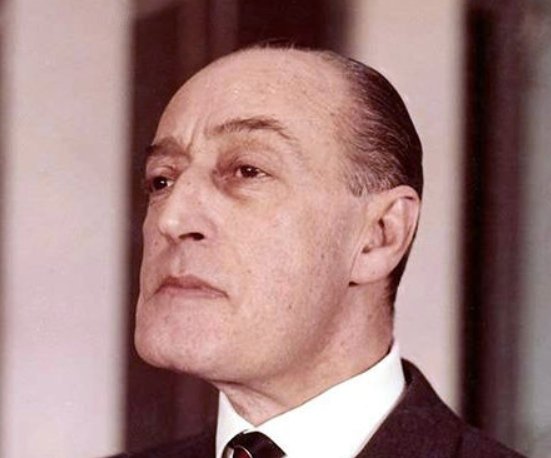
That contrast is part of the fascination. Totò did not need to arrive looking permanently delighted. His face could look dignified, suspicious, tired or faintly offended. Then the mask would loosen. The mouth would move, the eyes would sharpen, the body would seem to become elastic, and the serious-looking man would reveal an entire theatre of popular Italian comedy.
In Guardie e ladri (Cops and Robbers, 1951), his comic image is inseparable from the tension between the ordinary social world and the strange energy he brings into it. In L’oro di Napoli (The Gold of Naples, 1954), the face can hold both comic exaggeration and human feeling. Even when the roles change, the audience knows the outline. The face becomes a promise that something socially improper, verbally unexpected or physically impossible is about to happen.
Totò is often remembered through a recurring screen persona, but the persona should not be mistaken for the man. His face was not a fixed joke. It was a flexible sign, rooted in Neapolitan performance and capable of moving between farce, satire, pathos and even the modernist strangeness of Pasolini’s Uccellacci e uccellini (The Hawks and the Sparrows, 1966). Britannica and Treccani both place him within a substantial Italian theatre and film tradition rather than treating him as an accidental comic curiosity.
The most respectful way to write about Totò is to say that his face was instantly readable. That gives the image its force without pretending that physiognomy explains genius.
Fernandel: The grin with a whole country behind it
Fernandel’s face is one of the great pieces of architecture in French popular cinema. Long, mobile and wide-grinning, it can seem to stretch toward the audience. The teeth, the cheeks, the hands, the voice and the lilting Marseille identity all belong to the same unforgettable screen image.
A period description once called him “horse-faced,” a phrase that belongs to an older and less careful language. There is no need to repeat it as an insult. “Long-faced, broad-grinning, highly mobile and immediately expressive” says more and does less damage.
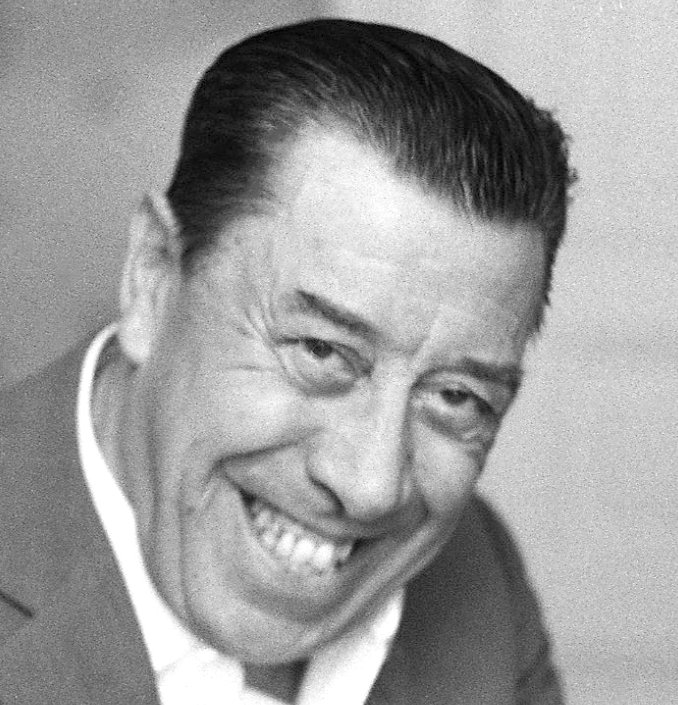
Fernandel was born Fernand Contandin in Marseille, and his Mediterranean identity became part of the public warmth around him. Yet his most famous character, Don Camillo, was an Italian village priest. That distinction matters. Fernandel was a French actor from Marseille; Don Camillo was a fictional Italian figure. The face could travel into another national setting without losing its recognizability.
In The Little World of Don Camillo (Le Petit Monde de Don Camillo, 1952), the grin can carry affection, irritation, stubbornness and sudden outrage. The character is physically present before he has begun arguing with the mayor or speaking to God. In The Sheep Has Five Legs and The Cow and I, the same face enters other comic arrangements. It does not belong to one priest, one accent or one joke.
Fernandel’s image is a good example of how the face and the surrounding performance become inseparable in memory. Audiences do not remember a mouth in isolation. They remember the mouth with the voice, the voice with the hands, the hands with the grin and the grin with the comic situation. The face is a doorway into an entire cinema.
Louis de Funès: The face in permanent emergency
Louis de Funès is the opposite of stillness. His face seems to be in motion even when his body is standing still. The bald crown, prominent nose, compact silhouette, bright eyes, cheeks and mouth form an instantly recognizable outline, but the real spectacle begins when the face starts reacting.
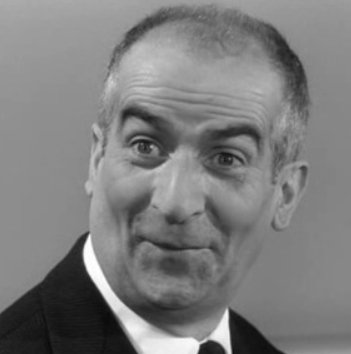
“the man with 40 faces a minute”
The eyes flash. The mouth tightens. The cheeks jump. Authority becomes panic. Confidence becomes outrage. Outrage becomes physical collapse. A de Funès face is often a face losing control while desperately trying to maintain control.
In Le Gendarme de Saint-Tropez, Le Corniaud, La Grande Vadrouille and Les Aventures de Rabbi Jacob, he could make officiousness look like a physical disease without ever requiring the audience to believe that his face had a fixed comic meaning. The comedy comes from the speed of transition. A calm face has become furious. A furious face has become frightened. A frightened face has become absurdly proud again.
The phrase “funny face” feels especially inadequate here. De Funès’s face is not funny as a still photograph. It is funny as an event. It needs the close-up, the line, the interruption, the other actor’s reaction and the pressure of the scene. French profiles have rightly emphasized the astonishing rate at which he could move through expressions, but the safest formulation is that cinema made his animated face into a national visual shorthand .
If Fernandel’s grin seems to open a world, de Funès’s eyes seem to set one on fire.
Stillness that detonates
Buster Keaton: The face that refuses to explain the disaster
Buster Keaton’s deadpan face is one of the clearest examples of a face acquiring comic meaning through contrast. His mouth remains solemn. His gaze remains steady. His body may be climbing, falling, drowning, running, hiding, balancing or standing in front of a collapsing building, but the face refuses to provide the usual emotional commentary.
This is why the “Great Stone Face” remains such a powerful public description, as long as it is understood as a screen persona rather than a personality diagnosis. Keaton’s face does not tell the audience how to feel. It holds still while the film becomes impossible around him.
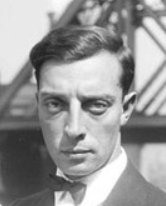
Think of Steamboat Bill, Jr., when a wall is lifted by the force of a storm and falls directly toward him. Keaton survives because he is standing where an open window happens to be. The face does not perform relief in advance. It simply remains there, surrounded by catastrophe. In The General, Sherlock Jr. and The Cameraman, the same controlled expression becomes a fixed point inside machinery, romance, danger and dream logic.
His compact figure, familiar porkpie hat and slightly comic walk complete the image, but the face gives the image its moral temperature: dignity without triumph, confusion without self-pity, courage without heroic posing. A machine may be enormous, but Keaton’s face will not grant it more emotional importance than it deserves.
Keaton is indispensable to any discussion of comic faces because he proves that the face does not have to be exaggerated to be memorable. Sometimes the face becomes comic by withholding the reaction the audience expects. The joke is not “look at his face.” The joke is “look at that face held against the whole collapsing world” .
Yuri Nikulin: Melancholy inside the laugh
Yuri Nikulin brought a different kind of restraint. His face could appear phlegmatic, doleful or almost ordinary, and that very ordinariness gave his comic situations a special warmth. His long-limbed silhouette, small jacket, trousers, porkpie hat and minimal circus makeup created a figure who looked less like a painted clown than an ordinary man accidentally caught inside a clown’s universe.
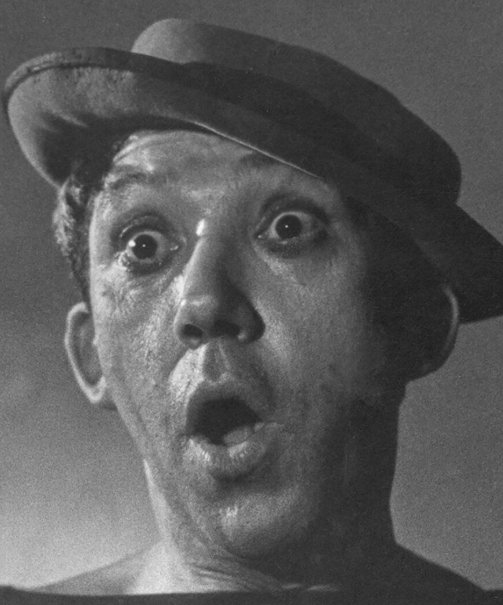
Yuri Nikulin
That distinction matters. The reddened nose and lined eyes were part of his circus and screen image, but they were not a grotesque mask. Nikulin’s face could move from blankness to bewilderment with a tiny adjustment. The audience saw the thought arriving slowly. A small change was enough because the face had first established a baseline of calm.
In Operation Y and Shurik’s Other Adventures, Kidnapping, Caucasian Style, The Diamond Arm and The Twelve Chairs, Nikulin’s screen image became part of Soviet popular memory. His characters often seemed mild, confused or outmatched, but the face carried a quiet resilience. The laugh did not erase melancholy. It made the melancholy companionable.
His public image also reminds us that comedy is never only a matter of facial anatomy. The circus, the costume, the rhythm of the scene, the famous lines and the repeated television circulation all contribute to what viewers remember. The Independent and the New York Times both treated Nikulin as a major comic cultural figure, not simply a performer with an unusual expression.
Sherman Hemsley: A small frame with enormous authority
Sherman Hemsley gives us a different version of visual contrast. The compact silhouette, erect posture, sharply tailored three-piece suits and perpetually affronted face of George Jefferson make the character look larger than the room he is standing in.
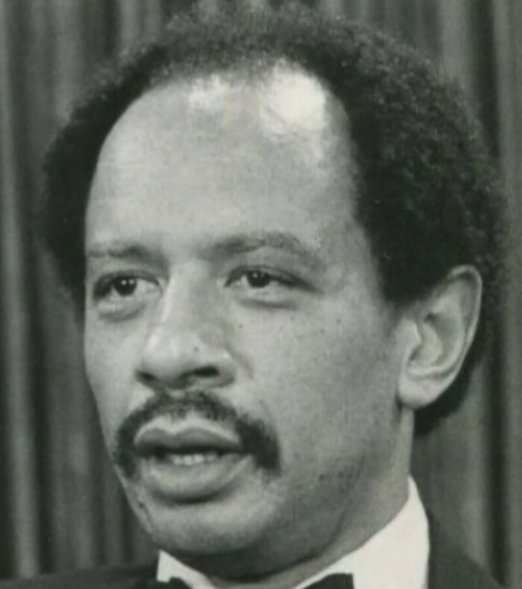
The body is not large, but the authority is. The posture says that the argument has already been won. The expression suggests that someone has just insulted him, even if nobody has spoken yet. The suit turns the whole figure into a visual exclamation mark.
This belongs to George Jefferson, not to Sherman Hemsley in private life. Hemsley played the role in All in the Family and then in The Jeffersons, where the face and posture became inseparable from the character’s social ambition, irritation and refusal to be diminished. The famous “Movin’ on Up” image is not just a theme song; it is a complete television memory of clothing, apartment, walk, voice and expression.
Hemsley’s later work in Amen and Dinosaurs helps correct the idea that one famous face belongs to one famous character. The Smithsonian’s record of the suit worn by Hemsley as George Jefferson is a useful reminder that costume can become part of a performer’s visual history .
The face is memorable because the character arrives already enlarged. Hemsley does not need to dominate the room physically. George Jefferson’s face has already claimed it.
Pavle Vuisić: The weathered face in the crowded frame
Pavle Vuisić carried a broad, weathered, lived-in screen presence. A strong brow, prominent nose, deep-set eyes, receding hairline and usually level expression gave him the look of a man who had already seen too much of the world to be surprised by a film’s nonsense.
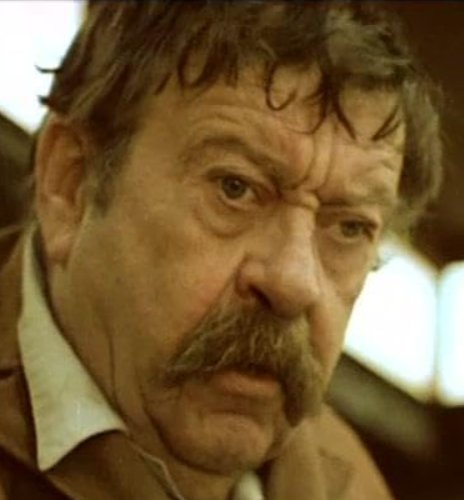
of the Yugoslav cinema: Pavle Vuisić
In Kamiondžije, his character Paja Čutura became a beloved comic presence. But Paja is a role, not a biography. Vuisić’s face extended beyond that television persona into films such as Ko to tamo peva? and The Marathon Family, where his grounded physical presence could anchor an ensemble crowded with louder, stranger or more theatrical figures.
His face rarely begs for attention. It gains force by sitting solidly inside the frame. Around it, other characters panic, scheme, boast or behave foolishly. Vuisić can look as if he is watching the entire comic machine from a safe distance, even when he is trapped inside it.
This is a valuable Yugoslav contribution to the subject because it shows that distinctive comic faces do not all need to be elastic or brightly expressive. Some are memorable because they look already complete: faces with history, weight and a particular relationship to absurdity. The laugh comes partly from what the face refuses to exaggerate.
The elastic close-up
Ismail Yassin: The mouth that became a film logo
Ismail Yassin’s face belongs to the great tradition of the elastic Egyptian comic close-up. His mobile expressions and prominently emphasized mouth could make a reaction visible almost before the scene had supplied a reason for it.
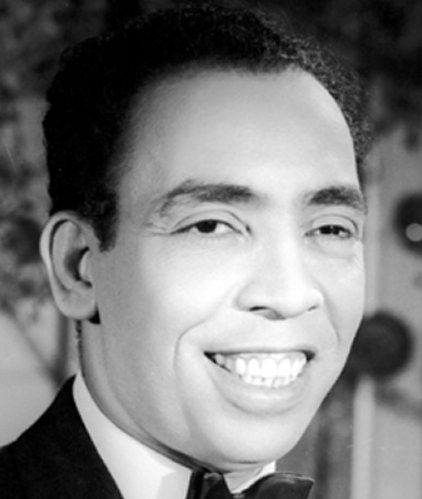
His filmography even turned his public persona into a kind of brand. Ismail Yassin’s Ghost, Ismail Yassin in the Army and Ismail Yassin films of various kinds made the actor’s name part of the title. The audience was not merely waiting for a character. It was waiting for the arrival of an established comic image.
That image could be broad, but it was not empty. The mouth opened in alarm, disbelief, hunger, confusion or exaggerated innocence. The eyes followed. The body seemed to catch up afterward. In a close-up, the face could carry a complete miniature drama.
The important distinction is between Yassin and the fictionalized “Ismail Yassin” persona. His audience knew the persona, repeated scenes from it and carried it through Egyptian and Arab television circulation, but the persona was still a constructed screen figure. Egyptian government and cultural sources, along with Al-Ahram retrospectives, preserve his position as a major Egyptian comedy icon whose image remains active in public memory .
Yassin is a perfect example of how a face becomes more than a face. It becomes a title, a memory, a voice, a group of familiar situations and a reaction the audience can recognize before it fully arrives.
Mehmood: The face that could be reoriented
Mehmood’s face was remarkably readable in close-up: rounded and compact, with alert eyes, strong brows, a broad nose and a mobile mouth. But his image was not one fixed caricature. It could be reoriented through song, costume, voice, accent, dance and changing character.
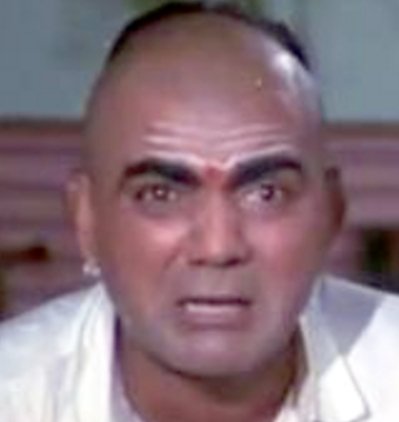
In Pyar Kiye Jaa, Padosan, Bombay to Goa and Kunwara Baap, the face survives different screen arrangements. The eyes widen. The head turns quickly. The mouth finds a new shape. A reaction travels across the face like a small electrical current.
Hindi cinema gave Mehmood room to be seen in musical, comic and ensemble contexts. The face could remain recognizable while the surrounding film changed rhythm. He was not simply the same comic face repeated. He was a familiar close-up capable of entering several different kinds of popular cinema.
This is where a cinephile article can be more precise than a biographical catalogue. Instead of saying that Mehmood had a “funny appearance,” describe how the viewer remembers him: the sudden change of mouth, the alert eyes, the compact body quickly redirecting itself, the face responding to a song or a co-star. That is a visual experience, not an anatomical verdict.
Kemal Sunal: The face everyone learned together
Kemal Sunal’s face became part of Turkish cultural memory through repetition. It was elastic, instantly recognizable and capable of registering innocence, confusion, alarm and resourcefulness without losing its basic warmth.
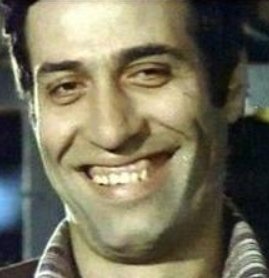
The most famous example is Inek Shaban in Hababam Sinifi. The name Shaban became so familiar that it can be tempting to use the character as a synonym for Sunal. That would be a mistake. Shaban is a role. Sunal was the actor, a more reserved private man whose public screen image was shaped by roles, films and years of television circulation.
In Tosun Pasha, The Foster Brothers, The King of the Street Cleaners and King of the Doormen, the face travels through different situations but remains immediately readable. Turkish audiences learned how to recognize the first spark of confusion, the innocent look that may hide a practical solution, and the expression of a man who has discovered that an institution is even more foolish than he is.
This is where the subject becomes social. A face becomes comic not only because it is distinctive, but because generations of viewers learn its vocabulary together.
His face belongs to the people who remember it, but it also belongs to the films that taught them how to see it.
The silhouette wears the face
Cantinflas: The face inside the outfit
Cantinflas is one of the strongest examples of a comic image that cannot be separated from silhouette. Mario Moreno Reyes’s famous pelado image included a battered felt hat, neckerchief, ragged coat and trousers held up by a rope. Before the character spoke, the audience could already read social position, poverty, improvisation and an underdog’s alertness.
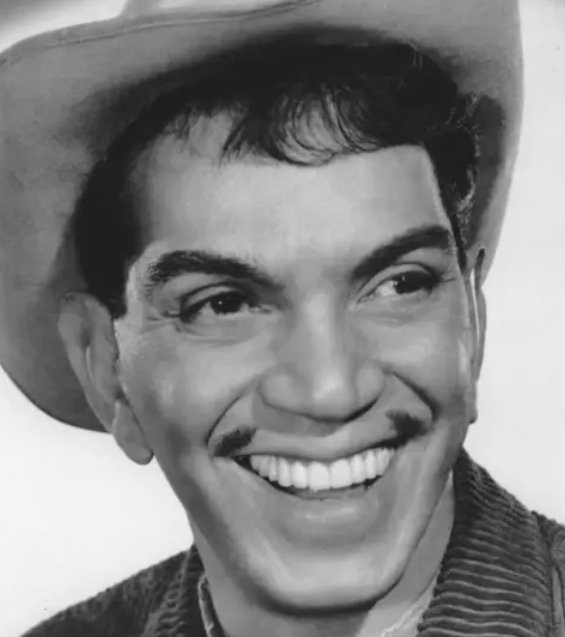
Cantinflas
It is safer not to invent a detailed anatomical portrait of Cantinflas. The documented visual identity is the assembled figure. The face sits inside the hat, clothes and posture. It belongs to the “wistful clown,” the apparently powerless man who can talk himself around authority and survive through verbal agility.
In Ahí está el detalle!, Ni sangre, ni arena, Around the World in Eighty Days and Pepe, the difference between Mario Moreno, Cantinflas and Passepartout is important. Moreno was the performer. Cantinflas was the celebrated persona. Passepartout was a particular role in an international production.
The Penn Museum’s discussion of Cantinflas is useful because it places his comic figure within Mexican and Latin American culture rather than treating the costume as an exotic decoration . The face is memorable because the whole silhouette has become a social sign. It says: here is a man with very little authority who may nevertheless escape the room by talking faster than the people in charge.
Johnny Walker: The silhouette of a kind-hearted rogue
Johnny Walker’s screen image is built from a compact, lively presence: animated expressions, a hat, slightly drawn-in shoulders, a stylized walk, a particular Hindi delivery and the recurring suggestion of a whisky bottle.
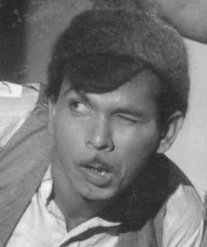
“Johnny Walker”
The apparently tipsy image was performed. Sources note that Walker himself neither drank nor smoked, which makes the distinction between actor and persona especially important. The bottle belongs to the character, just as the walk and the comic tone belong to a crafted screen identity.
His appearances in Mr. & Mrs. ’55, C.I.D., Pyaasa and Madhumati show how much warmth can be carried by a supporting face. As Abdul Sattar in Pyaasa, the comic presence is not merely an interruption. He becomes a loyal friend whose visual liveliness makes the surrounding melancholy more bearable.
Walker’s face does not need to be anatomically unusual to be distinctive. It is the combination of face, hat, shoulder line, stride, voice and audience expectation. The Guardian’s obituary and later Hindi-film writing preserve him as a humane comic figure, not simply a performer of intoxication .
His silhouette is a costume of behavior, and the audience recognizes it before the joke has been fully dressed.
Dirch Passer: The big comic presence of Danish cinema
Dirch Passer’s physical image had a strong immediate effect: a large, mobile body, an expressive open mouth, a high voice and a movement style that could shift from awkward stillness to vigorous flailing.
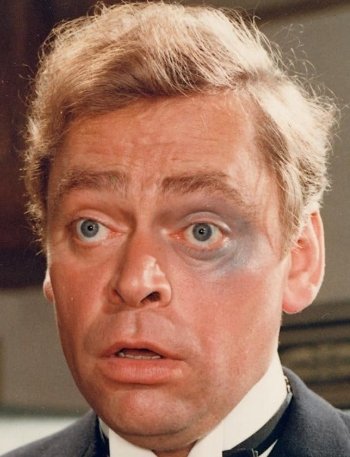
The body should not be treated as the joke. That would reduce a rich Danish comic tradition to mockery. The interesting visual observation is that Passer could make the entire frame conscious of his presence. He could appear simultaneously clumsy and agile, substantial and unexpectedly quick.
In Charles tante, Poeten og Lillemor, Baronessen fra benzintanken and Ved Kongelunden, his face and silhouette operate as a kind of public signal. Danish viewers knew the comic charge of his entrance. The mouth, the high delivery and the large physical outline suggested that ordinary behavior was about to be stretched.
The Danish Film Institute’s materials are useful here because they preserve Passer within Danish popular cinema and revue rather than reducing him to a body type . His public image was made of size, voice, face, costume, movement and cultural familiarity. None of those elements should be isolated and called the whole explanation.
Grande Otelo: Compact body, enormous screen presence
Grande Otelo was a Black Brazilian performer whose compact silhouette could fill a frame. Born Sebastião Bernardes de Souza Prata, he became one of the major figures of Brazilian popular cinema, especially through the chanchada tradition and his partnership with Oscarito.
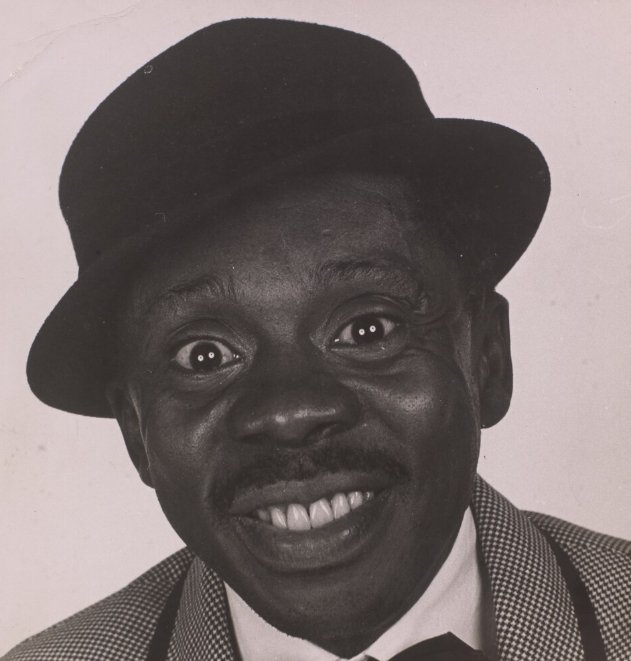
The visual contrast is powerful: a short or diminutive figure with a face, voice and physical response large enough to dominate the scene. In the Oscarito–Grande Otelo partnership, the audience could recognize the pair as a comic machine before either had spoken. Their bodies, faces and rhythms created an immediate visual relationship.
Moleque Tião, Carnaval Atlântida and Matar ou correr belong to the popular cinema that made him famous, while Macunaíma demonstrates that his presence cannot be contained by comedy alone. The actor is not the Macunaíma character, and he is not the Shakespearean Othello simply because of the name.
Grande Otelo’s racial identity and the history of Brazilian chanchada need to be treated precisely. The article should not repeat racialized comic conventions as if they were neutral entertainment. The useful point is that his compact Black figure became a powerful, instantly legible screen presence in a cinema that often placed bodies, class and performance in direct conversation.
Itaú Cultural and Brazilian archival sources emphasize voice, improvisation and bodily expression alongside appearance . The face matters, but the face is attached to a performer whose presence is much larger than any physical description.
Familiar faces that outgrow the type
Marty Feldman: Close-up recognition and the danger of reducing a person to it
Marty Feldman’s eyes and nose dominate the memory of his close-ups. Curly hair, a compact wiry silhouette, a prominent nose and especially prominent eyes made him instantly identifiable. In Young Frankenstein, one look at Igor is enough to announce a different comic universe.
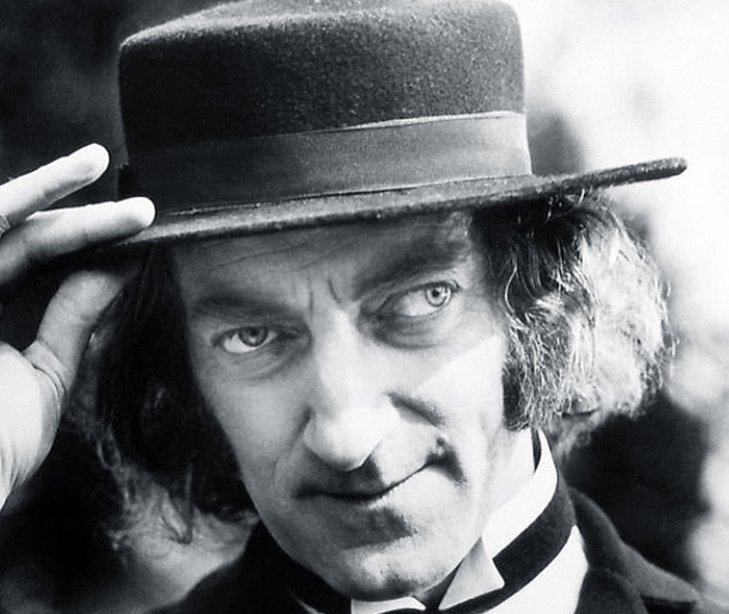
Marty Feldman
But Igor is a role, not Feldman himself. Feldman was a writer, sketch performer, actor and director as well as a screen presence. His career included At Last the 1948 Show, It’s Marty, Young Frankenstein and Silent Movie. If the article discusses his eyes, it should do so neutrally and never turn them into a diagnosis or a punchline detached from his work.
Feldman is a useful test for the entire idea of the “funny face.” Audiences may remember a visual feature first, but the feature becomes meaningful through framing, lighting, role, line, costume and repetition. The face can become part of public memory without becoming the whole person.
The British Film Institute, National Portrait Gallery and major obituary writing all preserve Feldman as a substantial comic creator, not merely as the man with the remarkable eyes . His face was unforgettable. That is true. It is not the same as saying that his face explains him.
Vladimír Menšík: The ordinary face made extraordinary by memory
Vladimír Menšík had a broad, open, expressive face: strong cheeks and jaw, a prominent nose, animated brows and a mouth capable of moving quickly from deadpan to an expansive grin.
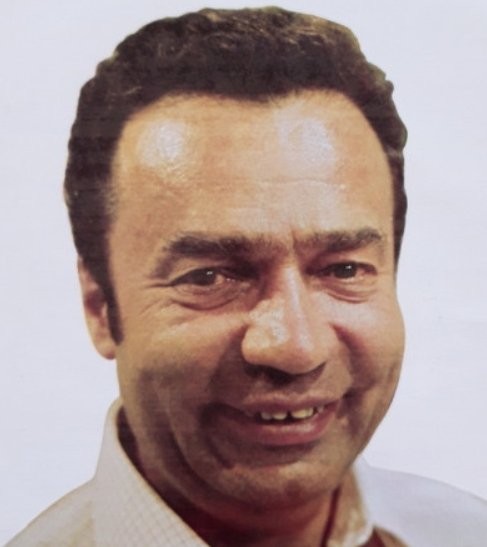
Czech audiences remember him as a face of extraordinary familiarity. He could seem like an ordinary man from the next street, the neighbor who has a story, the uncle who has already begun laughing before reaching the end of it. That familiarity was part of the magic. His face did not look like an abstract comic mask. It looked lived in.
In Happy End, A Cage for Two and Those Wonderful Men with Crank, the face is attached to different characters and different social situations. All My Good Countrymen provides an important dramatic counterpoint. Menšík should never be reduced to a cheerful comic image when his career included more complicated work.
Czech Radio has described him as one of the most distinctive faces of Czechoslovak popular culture, while Czech film archives preserve the range of his screen appearances. The public form is Vladimír Menšík, although Vladislav appears in biographical references as a birth name. For the article, the central observation is simple: his face felt ordinary enough to be trusted and distinctive enough to be remembered.
Yevgeny Leonov: The welcoming face with a double
Yevgeny Leonov had a rounded face, a compact and full-bodied silhouette and an open smile that could make him seem immediately approachable. Yet that welcoming image never stayed simple. His characters could be frightened, absurd, criminal, tender, sly or unexpectedly philosophical.
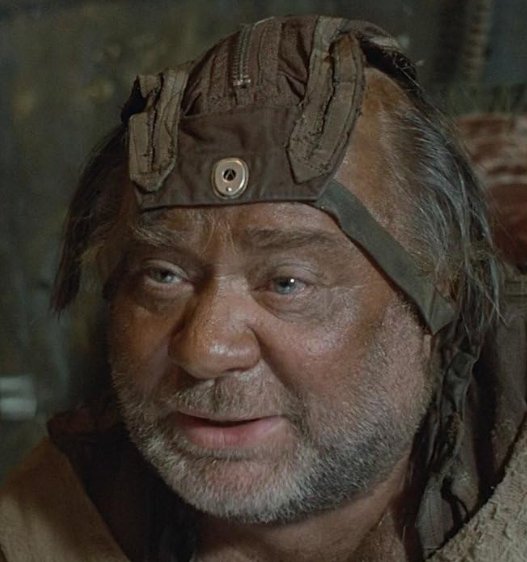
In The Striped Trip, the compact figure of Shuleikin tries to preserve dignity while pretending to be a tiger trainer. His face makes the uncertainty visible. In Gentlemen of Fortune, visual resemblance becomes part of the plot itself: Leonov plays both the kindergarten director Troshkin and the criminal Docent. The audience is asked to believe that two different men can share the same face while belonging to entirely different moral worlds.
That is a beautiful cinematic use of recognizability. The familiar face does not limit the story; it creates the story. The audience knows Leonov, sees the resemblance and waits for the film to play with the gap between appearance and identity.
Mimino and Kin-dza-dza! show that his screen memory extends beyond one comic type. His Russian voice performance as Winnie-the-Pooh added another layer: the face became a sound-image, a cultural presence that could live without a visible body. Russian cultural sources and the New York Times obituary preserve Leonov as an actor whose warmth and comic image coexisted with considerable range.
Georgi Partsalev: Kind eyes, a moustache and the warmth of recognition
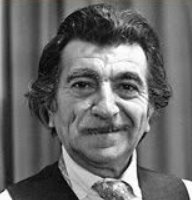
Georgi Partsalev is remembered in Bulgaria through small, repeatable visual details: kind eyes, a thin moustache, an ironic smile and a warm gaze. These details are not spectacular in isolation. Their power comes from repetition. The audience sees the face again and feels that it already knows how the face belongs in the world.
Golden Age of the Bulgarian Cinema
Georgi Partsalev
Partsalev often carried a serious vocal presence into comic situations. That seriousness made the smile more valuable. He did not need to look permanently foolish. A moustache, a glance or the slightest change around the mouth could be enough to identify the comic charge.
In Lyubimets 13, Kit, S detza na more and Siromashko lyato, the face becomes part of a Bulgarian popular memory that includes theatre, cinema and television. It is important not to write him as a generic clown. His face is memorable because it looks human, warm and slightly ironic.
Bulgarian National Radio and Bulgarian cultural archives preserve the affection with which audiences continue to remember him. That affection is part of the evidence. A face can become distinctive not because it is exaggerated, but because viewers attach a particular emotional atmosphere to it.
Frunzik Mkrtchyan: A face that refused to be only comic
Frunzik Mkrtchyan, born Mher Mkrtchyan, had a broad rounded face, high forehead, strong brows, mobile eyes and a prominent nose that gave his screen image immediate individuality.
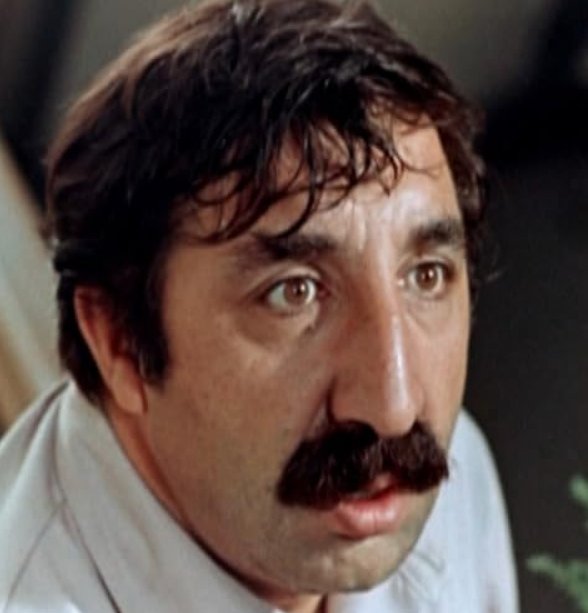
His face is inseparable from several unforgettable roles, especially Jabrayilov in Kidnapping, Caucasian Style and Ruben “Rubik” Khachikyan in Mimino. Those characters are warm, comic and socially recognizable, but they do not exhaust Mkrtchyan. His serious dramatic work matters because it prevents the face from becoming a prison.
Accounts of his early life record that his appearance was noticed at theatre school and that classmates nicknamed him “Nose.” That detail may be included only with care, because Mkrtchyan himself resisted the idea that the goal of acting was to be handsome. He wanted to become an actor. The story is valuable precisely because it shows the difference between how people label a face and what a performer makes of it.
The face is broad, individual and unforgettable. It is also capable of grief, dignity and silence. Armenian cultural sources and TASS have emphasized that his comic reputation could overshadow his dramatic range . A strong article should not repeat that imbalance.
The final face is the audience’s face
Look at this group as a whole and the differences are enormous.
Totò’s compact angular face belongs to Neapolitan popular theatre. Fernandel’s grin carries Marseille and French popular cinema. Bourvil’s open face can shelter innocence and moral ambiguity. De Funès turns expression into velocity. Keaton holds still against catastrophe. Nikulin lets melancholy sit inside the laugh. Hemsley makes a compact figure look socially enormous. Vuisić anchors the crowded Yugoslav frame.
Ismail Yassin and Mehmood make the close-up elastic. Johnny Lever turns the face into a repertoire of changes. Kemal Sunal becomes a shared Turkish memory through repetition. Cantinflas is inseparable from the pelado silhouette. Johnny Walker wears a comic walk and hat like a costume of behavior. Dirch Passer fills the frame with a large Danish presence. Grande Otelo turns compactness into scale.
Feldman reminds us how dangerous it is to reduce a person to the features audiences remember first. Menšík demonstrates the warmth of the familiar face. Leonov uses resemblance as plot machinery. Partsalev makes a moustache, eyes and smile feel like cultural memory. Mkrtchyan proves that a face can carry comedy without being trapped inside it.
The camera does not discover a comic meaning already fixed inside the face. It participates in making that meaning. A close-up isolates a reaction. A costume gives the face a social world. A recurring role teaches the audience what to expect. A television broadcast repeats the image until it becomes part of family memory. A dubbing tradition gives the face a new voice. A co-star changes its meaning. A serious role reveals that the comic image was never the entire person.
That is why the face comes before the punchline but never replaces it.
The face is a beginning: the first shape in the doorway, the outline beneath the hat, the eyes waiting for trouble, the mouth preparing a protest, the smile that tells us a story is about to bend. But the audience does not laugh at a face as if it were an object. We laugh with a screen image that has become familiar, with a persona that has been repeated, with a performer whose presence has entered our visual memory.
A memorable comic face is not necessarily an unusual face. It is a face that cinema has taught us to see.