If you come to Maya Deren through contemporary cinema, you may first recognize the sensation before you recognize the history. A woman walks toward a house and seems to arrive there more than once. A black-clad figure carries a flower, but the flower feels less like a prop than a message from somewhere just outside the frame. A key changes hands. A body crosses from a beach to a dining table without asking permission from geography. Faces multiply. Time folds in on itself. The ordinary room becomes a trap, a stage, and a mind.
That feeling can bring David Lynch to mind. Not because Deren was secretly making an early version of Lost Highway or Mulholland Drive, and not because every dreamlike film belongs to the same family. The connection is more useful at the level of experience: both filmmakers understand that a story can be carried by repetition, objects, gestures, rhythm, and dread before it is carried by explanation. Both know that a hallway can be psychologically charged without anyone explaining why. The difference is just as important. Lynch works inside the machinery of popular narrative, bending noir, melodrama, horror, and Hollywood memory until they become unstable. Deren worked with almost nothing: a small camera, a few locations, bodies in motion, and the conviction that film could make a new kind of reality.
Maya Deren was born Eleanora Derenkowsky in Kyiv on April 29, 1917. Her Jewish family fled anti-Semitic violence and came to the United States in 1922. They settled in New York and later Syracuse, where her father worked as a psychiatrist; the family shortened its surname to Deren after becoming American citizens. These facts matter, but they do not provide a neat psychological key to the films. It would be too easy to say that a child of exile simply turned displacement into surrealism. Deren was not a case study waiting for an interpretation. She was a writer, organizer, dancer, photographer, performer, theorist, and determined public presence. Her films came from the collision of those interests, not from one biographical wound.
What makes her work feel so alive now is that she did not treat cinema as a smaller form of literature. She did not begin with a plot and then decorate it with unusual images. She thought in movement, rhythm, recurrence, duration, and transformation. The image was not there to illustrate an idea that had already been settled elsewhere. The image was where the idea happened.
Before the camera: writing, politics, and dance
Deren studied journalism and political science at Syracuse University and New York University, then completed a master’s degree in English literature at Smith College in 1939. She was also involved in socialist activism and had an early marriage to Gregory Bardacke, a fellow student and political organizer; that marriage ended before her film career took shape. The political and literary parts of this early life are easy to leave out when the legend of Meshes of the Afternoon takes over. They should not be left out. Deren’s later arguments about independent cinema were not the thoughts of someone who had wandered into art by accident. She understood institutions, publicity, money, audiences, and the ways a culture decides which work deserves to exist.
Her decisive apprenticeship was with Katherine Dunham, the African American choreographer, dancer, and anthropologist. Deren joined Dunham’s company as a secretary and traveled on tour. The experience brought her close to choreography as a way of thinking, not merely as a sequence of steps. A choreographer organizes bodies in space and time. A filmmaker can do the same thing with cuts, camera movement, framing, and the changing relationship between one body and another.
Deren’s later phrase “choreocinema” gives us a useful way into her films, although it should not be treated as a rigid label. She was interested in what the camera could do to movement. A dancer does not simply move in front of a camera; the camera can make the dancer appear to pass through different spaces, to outlast gravity, to repeat a gesture with a different emotional meaning, or to become a line, a shadow, or a pulse of light. The edit is not an interruption of the dance. It is part of the dance.
This is why Deren’s films often feel bodily even when they are dealing with abstract questions. You do not only understand them. You feel their changes in balance. A cut can make a step seem inevitable or impossible. A repeated action can become ritual. A turn of the head can take on the weight of a revelation.
In Los Angeles, Deren met Alexander Hammid, the Czech-born filmmaker and cinematographer who had worked in documentary and newsreel cinema in Europe and the United States. Before emigrating, he had used the surname Hackenschmied. Deren and Hammid married in 1942. The relationship was both personal and artistic, and it placed Deren in close contact with someone who understood the practical grammar of film: exposure, lenses, camera placement, movement, and editing.
That practical knowledge matters because Deren’s films can look effortless in the way a great piece of choreography looks effortless. Their strangeness is carefully built. The dream is not an escape from form. It is form under pressure.
Meshes of the Afternoon: the film that keeps opening
Made in 1943, Meshes of the Afternoon is only about fourteen minutes long. It was shot in black and white and without dialogue or original sound; Teiji Ito’s now-familiar soundtrack was added later, in 1959. Deren conceived the film, directed it, performed in it, and made it with Hammid, whose cinematography gives the images their controlled unease.
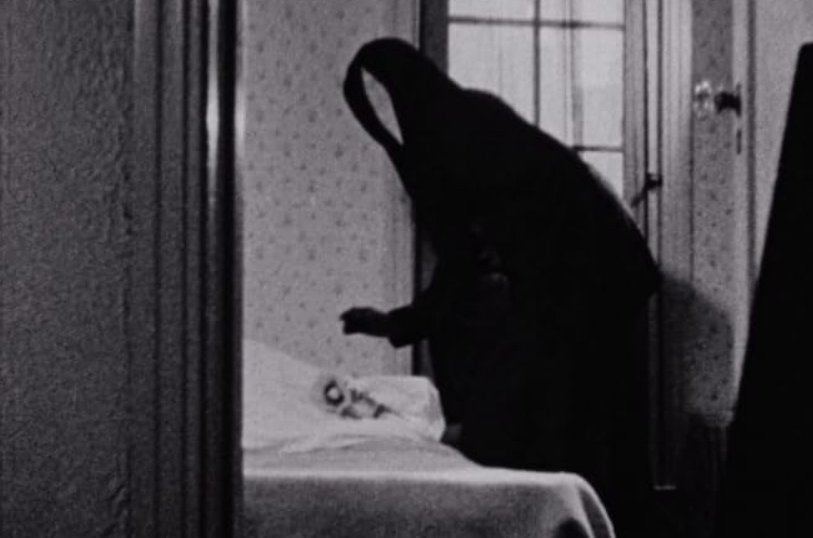
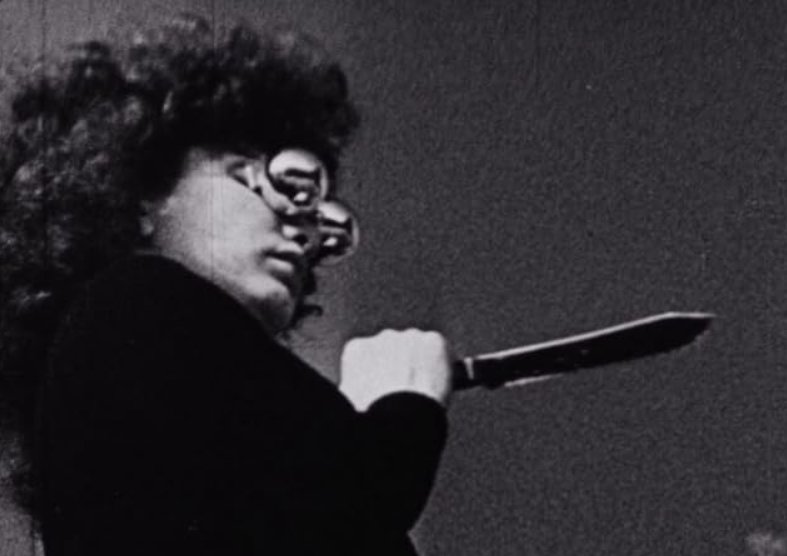
The film begins with a hand placing a flower on a sidewalk. From there, Deren’s protagonist approaches a house and enters a cycle of actions that never quite settles into ordinary cause and effect. She climbs the stairs, looks through a window, falls asleep, and encounters a figure whose face is hidden by a mirror-like surface. She sees herself again and again. A knife and a key return as if they have memories of their own. The house becomes familiar and wrong at the same time.
A plot summary makes the film sound like a puzzle. The experience is closer to being caught inside a thought that keeps changing its evidence. Deren once described her aim as putting on film the feeling a person has about an incident rather than recording the incident accurately. That distinction is the key to the movie. Meshes is not asking us to solve what “really happened.” It is asking what reality feels like when fear, desire, memory, and anticipation alter the event as it occurs.
The film’s famous repetitions are not merely surrealist tricks. Each return shifts the emotional temperature. The protagonist walks the same route, but the route is no longer the same because she is no longer the same. A gesture gains menace through repetition. A domestic object becomes charged because the film has taught us to wait for it. The editing does not tell us that time is broken; it makes broken time physically present.
This is where a comparison with Lynch can be illuminating. Lynch often lets an object remain ordinary while giving it a terrible afterlife: a blue box, a phone, a lamp, a hallway, a face caught in a glance. Deren does something similar with the key, knife, flower, and mirror. But her economy is more severe. She has no sound design in the original version, no score pushing us toward a particular feeling, and no dialogue to stabilize the world. Her images have to generate their own pressure.
The film also understands the power of the performer’s face and body. Deren does not stand outside the film as an author directing an anonymous figure. She puts herself at its center. Her presence is not confessional in the modern social-media sense. It is structural. Her body becomes the film’s testing ground. She can be the woman who walks, the woman who sleeps, the woman who watches, and the woman who kills. The multiplied self is not just a symbol of inner conflict. It is a demonstration of cinema’s ability to separate identity from a single continuous body.
At the dining table, several versions of Deren seem to participate in a strange game with the key. One palm is painted. The sleeping woman is killed. Yet the scene refuses the clean finality of conventional horror. The “murder” feels like a transformation in the rules of the film. The self that wakes is not necessarily the self that entered. The film has turned identity into an editing problem.
There has been debate about how to describe the division of labor between Deren and Hammid. Some accounts emphasize Deren’s conception and direction; others stress Hammid’s cinematography and technical contribution. The most honest answer is not to erase either person. Meshes of the Afternoon is a collaboration, but it is also the work through which Deren established her artistic identity. The film’s authorship cannot be reduced to a husband quietly doing the real work, nor should Hammid’s visual craft be treated as incidental simply because Deren became its public face.
This tension is part of the film’s history. Deren’s achievement was not only making an extraordinary short. It was making a short that could circulate as an independent artistic object and then building a public life around it. The film helped chart the course of American experimental cinema and influenced filmmakers including Kenneth Anger and Stan Brakhage.
The body becomes a camera
Deren’s next films move away from the enclosed nightmare of Meshes, but they do not abandon its central questions. In At Land (1944), she appears as a woman washed onto a shore. She climbs over a piece of driftwood and seems to emerge into a dinner party, where her movement through the social scene is met with indifference. The film cuts between beach and table without treating either space as the stable one.
The effect is not simply “surreal.” The word can become lazy when it is used for any image that does not obey everyday logic. Deren’s cuts have a precise purpose. They show that social space is constructed, and that the body can cross its boundaries without being granted permission. The woman at the party is both present and invisible. The guests continue their rituals while she crawls across the table. The film finds something unsettling in politeness: the possibility that a whole social world can look directly at a person and not see her.
In A Study in Choreography for Camera (1945), dancer Talley Beatty moves through a living room, a forest, and a museum-like space. The camera follows him, but it also edits the spaces into a single field. A step begun indoors can finish outdoors. The dancer seems to carry movement across a cut. The camera does not document choreography from a respectful distance; it participates in it.
This short is one of Deren’s clearest demonstrations that cinema can create a new kind of space. The body is not trapped inside the room where it was filmed. Through editing, it acquires a different geography. A gesture can be continuous even when the background changes. The film makes the cut feel less like a break than a joint.
Ritual in Transfigured Time (1946) turns toward social ritual. Rita Christiani enters a room, where Deren is unwinding wool. Greetings, exchanges, and movements at a party begin to repeat and stretch. The ordinary behavior of meeting other people becomes choreography. There is pleasure in the fluidity, but also anxiety. Social life is full of invisible instructions: when to approach, when to smile, when to withdraw, how long to hold a look. Deren makes those rules visible by slowing, repeating, and reshaping them.
The film is especially interesting beside Meshes. In Meshes, repetition traps the individual inside a private psychic loop. In Ritual, repetition reveals the group as a machine of behavior. One is a nightmare of the self; the other is a nightmare of social performance. Yet Deren does not treat ritual as merely oppressive. Ritual can also give movement a form, allowing private feeling to become collective expression.
In Meditation on Violence (1948), the subject is the martial artist and dancer Chao-Li Chi. Deren films his movement and reverses some of it in the editing. The result is not a simple record of violence or a lesson in martial arts. Forward and backward movement begin to resemble each other. Attack and retreat, tension and release, preparation and aftermath fold together.
Stan Brakhage later suggested that Deren was, in a sense, the camera in this film: she moves and breathes in relation to the dancer. That observation captures something important about her method. She is not only arranging a subject in front of the lens. She is making the act of filming part of the subject’s motion. The camera has a body too.
The unfinished Witches’ Cradle, made with Marcel Duchamp in 1943, points toward another direction in Deren’s work: the possibility of collaboration with visual artists and of making a film that behaves more like a spell, object, or performance than a narrative. The fragmentary nature of the project is appropriate to Deren’s career. Her completed films are only part of her artistic life. She was constantly developing projects, arguments, screenings, and relationships that exceeded the small number of films she finished.
A philosophy of film that still feels practical
Deren wrote about cinema because she did not want experimental film to be treated as a private hobby or a decorative side room of the arts. Her essays and lectures offered a different model of what a filmmaker could be. She argued for cinema as an art with its own materials and structures, not as a cheap way to illustrate literary ideas.
Her 1946 pamphlet An Anagram of Ideas on Art, Form and Film is often approached as theory, but it is more useful when read as a working filmmaker’s attempt to explain why form matters. Deren was interested in how an artwork could organize an entire way of thinking. She did not see form as a container that holds content. Form changes what the content can mean.
That idea is visible in every one of her major films. The plot of At Land could be described in a sentence, but the film’s meaning comes from the edit that connects shore, tree, table, and crowd. The subject of A Study in Choreography for Camera is a dancer, but the film is really about the relationship between motion and cinematic space. Meditation on Violence does not explain violence; it changes our sense of what forward movement is.
Deren’s theory also had an ethical side. She distrusted the idea that a filmmaker should simply dominate reality. Film could transform reality, but transformation required attention. The camera should not treat the world as raw material for a predetermined message. This is one reason her later Haitian work is so important and so complicated: it shows both the reach of her curiosity and the limits that come with approaching another culture through an outsider’s artistic and spiritual framework.
She also believed in the independent circulation of films. Deren self-distributed her work, rented venues, screened films in Greenwich Village, traveled to present them, and often spoke alongside the screenings. She established the Creative Film Foundation to support experimental filmmakers. In practical terms, she was doing a job that later institutions would divide among curators, distributors, programmers, educators, and grant organizations.
This part of her legacy is sometimes overshadowed by the images. It should not be. Deren helped make an audience for experimental cinema. She understood that an avant-garde does not survive on daring images alone. It needs rooms, projectors, conversations, money, documentation, and people willing to tell others that a difficult film is worth their time.
She was also a formidable promoter of herself. That can sound like a criticism when applied to a woman artist, as though visibility were a form of vanity. In Deren’s case, self-promotion was infrastructure. If the conventional film industry would not distribute her work, she had to become its distributor. If critics did not know how to describe it, she had to write and speak about it. Her public persona was not separate from her artistic practice. It was another part of the same struggle over who gets to define cinema.
Haiti, ritual, and the problem of the outsider’s gaze
In the mid-1940s, Deren received a Guggenheim Fellowship for creative work in motion pictures, the first such fellowship awarded to a filmmaker according to MoMA’s account. The support enabled her research in Haiti, where she became deeply involved in the study of Vodou ritual, dance, music, and ceremony. Between 1947 and 1954, she made several visits and shot more than 18,000 feet of film on a Bolex camera.
The Haitian material was never completed as the film Deren originally imagined. After her death, it was assembled into Divine Horsemen: The Living Gods of Haiti by her third husband, the composer Teiji Ito, and later with Cherel Ito. The surviving work is therefore not a straightforward “Maya Deren film” in the same sense as Meshes of the Afternoon. It is a posthumous construction shaped by her footage, writing, research, and the editorial decisions of others.
Deren’s relationship with Haiti was not just another project in a list of projects. It changed her understanding of art. She saw ritual as a form that joined dance, music, community, belief, and transformation. Her earlier films had already treated movement as a source of knowledge. In Haiti, she encountered movement embedded in a living religious and social world.
There is a genuine achievement in her attention to the intelligence of ritual. She did not reduce dance to picturesque folklore. She recognized that ceremony has structure, that bodies carry knowledge, and that an image of possession or transformation cannot be understood by isolating it from music, community, and belief.
But admiration should not become innocence. Deren was an American and European-descended artist entering a Haitian religious culture as a filmmaker, writer, and spiritual participant. Her work can be read as a serious attempt to engage with a world larger than her own categories, but it also carries the problems of its time: the authority of the outsider, the desire to translate another culture into an artistic system, and the danger of treating ritual as a source of personal revelation.
That tension makes Divine Horsemen more interesting, not less. It asks us to hold two thoughts at once. Deren’s Haitian work expanded the possibilities of ethnographic and experimental cinema. It also requires viewers to ask who is looking, who is being represented, and what gets altered when a sacred practice is turned into a book or film for international audiences.
The best way to approach the material is neither to canonize Deren as a pure visionary nor to dismiss the project with a single accusation. Her films are strongest when they make us notice the structure of seeing. The Haitian work extends that question to the filmmaker herself. What does it mean to film a ritual that is not yours? What does the camera reveal, and what does it convert into an image for someone else’s interpretation?
Love, collaboration, marriage, and the danger of the “muse” story
Deren’s relationships are often told as if they were footnotes to her films, or as if each husband supplied the missing piece of her genius. That story is too simple and unfair to her and to the men involved.
Her first husband, Gregory Bardacke, belonged to her early political and student life. Her second husband, Alexander Hammid, was the crucial collaborator of her breakthrough period. They married in 1942, and their shared work produced Meshes of the Afternoon, a film whose visual design cannot be separated from Hammid’s experience as a cinematographer. They later divorced, around the period when Deren’s public and artistic life was expanding beyond their partnership.
It is possible to acknowledge the intimacy of the collaboration without turning Deren into Hammid’s pupil or Hammid into an invisible technician. Deren brought the literary, choreographic, performative, and conceptual force that made the project what it was. Hammid brought a sophisticated visual practice and technical intelligence. The film is valuable partly because it sits at the meeting point of those strengths.
The relationship with Teiji Ito belongs to a later and more troubling part of the story. Deren met Ito when he was a teenager and she was in her thirties. They lived together for years and eventually married. Ito became a composer and worked with her films, including by adding music to earlier material. He later helped assemble the Haitian footage after her death.
The age difference and the circumstances of their relationship deserve to be named plainly. Romanticizing it as a bohemian partnership would erase the imbalance built into their ages and life experience. At the same time, reducing Ito to a biographical controversy would ignore his creative role and his work as a composer. The honest account is uncomfortable because the history itself is uncomfortable.
There is another reason to resist the “muse” story. Deren was often the visible body in her films, but that did not make her a passive object. She used performance as a way to construct authorship. She made herself part of the apparatus, then rearranged the apparatus around herself. The woman on screen is not simply being looked at. She is controlling the conditions under which looking happens.
The Very Eye of Night and the edge of abstraction
Deren’s last completed film, The Very Eye of Night, was begun in 1952 and premiered in Haiti in 1955, with a New York screening delayed by a financial conflict. It was finally shown there later, in 1959. The film was made with choreographer Antony Tudor and young ballet dancers from the Metropolitan Opera. Against a dark or nearly invisible ground, the dancers appear as weightless figures, closer to constellations or diagrams than to bodies occupying a normal stage.
The film is a beautiful endpoint because it pushes Deren’s interest in movement toward abstraction. In earlier works, a body crossed from one recognizable place to another. Here, the dancers seem to float beyond ordinary gravity. The human figure becomes a moving sign. The film asks what remains of dance when environment, narrative, and physical weight are stripped away.
It can feel remote compared with Meshes or At Land. That remoteness is part of its challenge. Deren had spent years exploring the psychological charge of rooms, objects, faces, and social rituals. The Very Eye of Night turns outward toward a cosmic or astronomical image-world. It is less interested in the mind as a private chamber than in the possibility that the body can become part of a larger pattern.
This is one place where contemporary viewers may feel a kinship with experimental music videos, fashion films, or digital animation. But Deren’s abstraction is not the product of software or visual excess. It comes from controlling the relationship between a dancer’s movement, the camera, and the negative space around them. The effect is still physical even when the setting feels unreal.
Deren’s place in avant-garde cinema
Calling Maya Deren the “mother” of American underground cinema is understandable, and archives have used that phrase. But no single filmmaker gave birth to an entire movement. American experimental cinema had multiple roots, including European avant-garde film, documentary practice, painting, poetry, dance, theater, and the work of other women and men making noncommercial films. Deren did not invent experimental cinema, nor did she introduce it to the United States by herself.
Her importance lies elsewhere. She became one of its clearest early models. She showed that a filmmaker could make a personal, formally rigorous film outside the studio system; perform in it; write the ideas behind it; arrange its screenings; and build a public argument for why it mattered. MoMA describes Meshes of the Afternoon as a work that helped establish the independent avant-garde movement in the United States, later associated with the New American Cinema.
Deren’s influence on Brakhage is obvious in the seriousness with which the camera can become a subjective body. Kenneth Anger shares her interest in ritual, performance, erotic charge, and symbolic objects, although his sensibility is more openly occult and mythic. Shirley Clarke’s attention to movement and interior experience belongs to a different historical and social world, but Deren helped make it possible to imagine personal filmmaking as a serious American practice.
Her influence is also less direct and more widespread. Whenever a film treats a repeated gesture as a change in consciousness, cuts between spaces without explaining the transition, turns a domestic object into a psychic symbol, or makes the performer part of the film’s authorship, it enters a conversation Deren helped define.
For viewers who know mostly contemporary cinema, it may be tempting to treat her as a precursor to Lynch, Jan Švankmajer, Peter Greenaway, Apichatpong Weerasethakul, or music-video surrealism. The comparison is useful only if we do not flatten the differences. Deren’s films are not prototypes waiting to become feature films. They are complete works with their own scale and ambition.
Lynch’s cinema often creates a vast system of narrative echoes, genre references, and emotional doubles. Deren works more like a poet of recurrence. Her films do not usually ask us to follow a mythology across a long running time. They intensify a small number of images until those images seem to contain an entire inner life. Lynch gives us the nightmare of an American cultural landscape; Deren gives us the moment when private perception reorganizes the room.
That is also why her films remain so easy to revisit. They do not run out once the “meaning” is found. In fact, the search for a final meaning can distract from the formal experience. Watch the angle of a body entering a doorway. Notice how a cut changes the scale of a gesture. Hear the later soundtrack to Meshes, then imagine the silence of the original version. Watch how At Land makes a dinner party feel more unreal than a shoreline. Deren’s cinema is not a code to crack. It is a system of pressures to feel.
Legacy: the artist as filmmaker, theorist, and institution
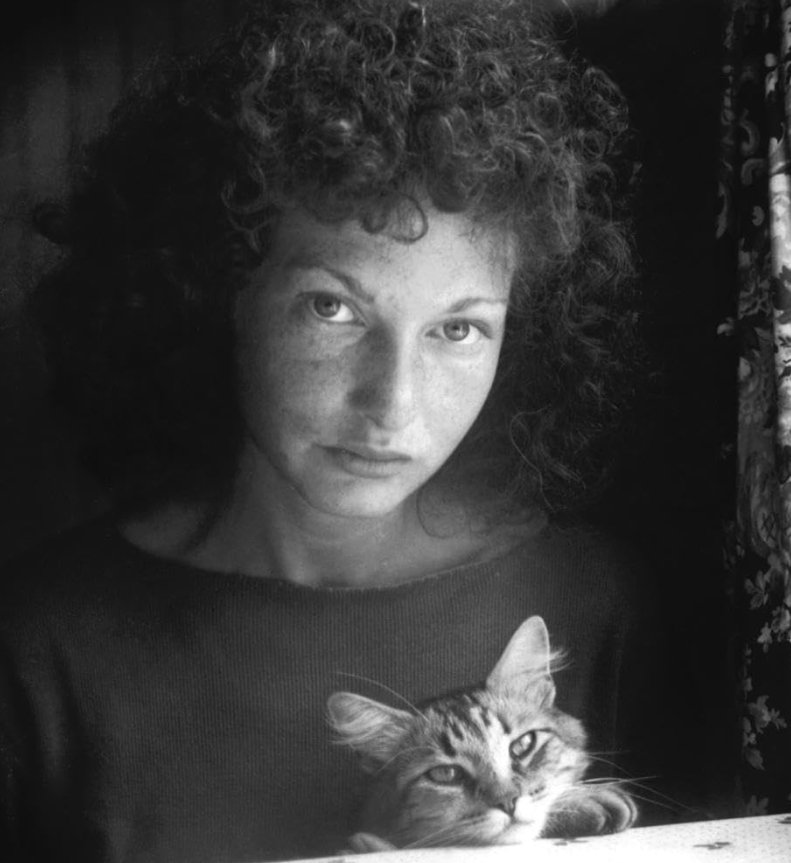
Deren died in New York on October 13, 1961, at the age of forty-four, from a cerebral hemorrhage. Accounts of her death have sometimes been surrounded by speculation about drugs, malnutrition, and her involvement with Vodou. The Boston University archive notes that later stories and speculation became part of the legend. The responsible approach is to separate documented medical facts from the romantic mythology that so often grows around artists who die young.
Her short life encouraged a misleading image: Maya Deren as a mysterious priestess who appeared, made a handful of uncanny films, and vanished. The fuller picture is more impressive. She worked constantly. She wrote. She lectured. She organized screenings. She pursued grants. She argued with institutions. She built distribution networks. She made films with collaborators and left projects that others would complete. She was not only a visionary image-maker. She was a working cultural producer.
That is why her legacy belongs both to film history and to film practice. The Creative Film Foundation anticipated later forms of support for independent and experimental artists. Her self-distribution anticipates the idea that a filmmaker can create a public around work before an institution validates it. Her lectures and essays anticipate the contemporary artist who must also be an educator and advocate.
The archival afterlife of Deren’s work has also mattered. Boston University holds journals, correspondence, manuscripts, photographs, audiovisual materials, Haitian recordings, research files, and interviews connected with Deren and her collaborators. The collection shows how much more there is to her than the canonical six or seven films.
Retrospectives, restorations, books, and documentaries have brought her back to new audiences. The fact that her films continue to be screened, taught, excerpted, imitated, and argued over is not evidence that they have become safely historical. It is evidence that they still produce questions.
Her legacy is especially important for women filmmakers because she did not wait for a permission structure that did not exist. She did not simply enter an established profession and succeed within its rules. She helped invent a professional identity for the independent woman filmmaker: artist, performer, theorist, promoter, distributor, lecturer, and organizer. That identity remains difficult, but Deren made it imaginable.
Why Maya Deren still matters
Maya Deren matters because she expanded the idea of what a film could be without making cinema feel weightless. Her films are experimental, but they are not random. They are poetic, but not vague. They are personal, but not merely diaristic. They are intellectually ambitious, but their intelligence lives in the body: in the step, the turn, the hesitation, the cut.
She understood that cinema could move between the visible and the invisible without pretending that the invisible was a separate magical realm. A dream is made from rooms, objects, faces, and bodies. A ritual is made from movement, sound, repetition, and collective attention. A social encounter is made from gestures that seem casual but carry rules. Film can reveal the pressure inside these ordinary forms.
Her vision was innovative not because she rejected every tradition, but because she brought traditions together in an unusual way. Literature gave her a sense of structure and image. Dance gave her a theory of movement. Documentary and cinematography gave her respect for the camera’s physical possibilities. Psychology gave her an interest in inner life. Anthropology gave her a path toward ritual, though also a set of ethical problems she could not fully escape. Independent exhibition gave her a model of cinema as a public exchange rather than a finished commodity.
If contemporary cinema has taught audiences to accept fractured time, dream identities, symbolic objects, and unexplained transformations, Deren’s films still offer something those later works cannot: the shock of seeing the grammar being invented. She is not interesting merely because she was early. She is interesting because the films remain exact.
A Deren film does not tell you that the world is unreal. It shows how reality becomes unstable through attention. A key is still a key, but now it is also a decision. A flower is still a flower, but now it has crossed from the street into the mind. A dancer is still a body, but the camera lets that body escape the room. A woman is still one person, until cinema reveals how many selves can occupy the same image.
That is the lasting force of Maya Deren. She made avant-garde cinema feel not like an escape from the world, but like a closer look at the world’s hidden choreography.