
Where the Snow Hides Nothing!
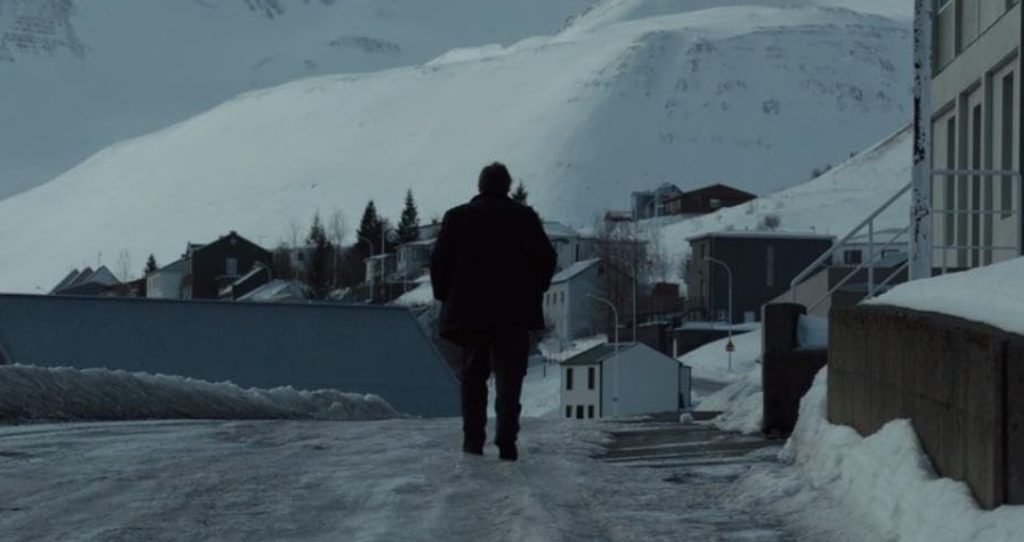
There is a particular kind of silence in Nordic crime cinema. It is not empty silence. It is the silence of a frozen road at dusk, of a kitchen after everyone has stopped arguing, of a detective sitting alone in a parked car while the first flakes begin to settle on the windscreen. In Nordic noir, the landscape rarely feels like a backdrop. It watches. It remembers. Sometimes it seems to know the truth before the investigators do.
That atmosphere is part of the reason I keep returning to Scandinavian crime films and series. Nordic noir is often described through a familiar catalogue of adjectives—dark, bleak, atmospheric, psychologically complex—and all of them are accurate. Yet they do not quite explain the genre’s spell. Nordic noir is not simply crime fiction made in Denmark, Sweden, Norway, Finland, or Iceland. It is a way of looking at crime: patiently, suspiciously, and with an uncomfortable awareness that violence does not appear from nowhere. It grows out of families, institutions, economic pressures, buried histories, and the private compromises people make in order to keep their lives intact.
The result is a form of storytelling that can be as gripping as any thriller while remaining unusually interested in ordinary life. A murder investigation may lead through a government ministry, a technology company, a wealthy suburb, an isolated fishing village, or a neglected housing estate. But the real mystery is often larger than the identity of the killer. The question becomes: what kind of society could allow this to happen, and who benefits from everyone looking away?
This article explores the character of Nordic noir, its visual and emotional language, its differences from more conventional Hollywood crime films, and the films and series that have made the genre so enduring. It also looks at newer works that show how Scandinavian crime storytelling continues to evolve.
What Exactly Is Nordic Noir?
“Nordic noir” and “Scandinavian noir” are often used interchangeably, although “Nordic” is the broader and more useful term. It can include productions from Denmark, Sweden, Norway, Finland, and Iceland, as well as stories shaped by the region’s traditions of crime fiction, social realism, and institutional critique.
The genre grew from literature before it became a global screen phenomenon. Writers such as Henning Mankell, Stieg Larsson, Jo Nesbø, Karin Fossum, Maj Sjöwall, Per Wahlöö, and Jussi Adler-Olsen created detectives who were not superhuman crime-fighting machines. They were tired, stubborn, wounded, lonely, divorced, grieving, addicted, or simply uncertain. Their cases were not puzzles detached from the real world. They were entangled with politics, class, migration, gender, money, and the uncomfortable gap between a country’s ideal self-image and the lives of its most vulnerable citizens.
That literary foundation remains visible on screen. Nordic noir tends to distrust easy answers. It prefers an investigation that feels like a slow excavation: one layer of evidence, then another, followed by the discovery that the ground beneath the case is less solid than anyone imagined.
Nordic noir is crime storytelling with the patience to let the weather, the institutions, and the characters’ private wounds become part of the evidence.
The Emotional Weather of Nordic Noir
Cold landscapes and warm human misery
The classic Nordic noir image is easy to recognize: a detective in a dark coat, a grey sky, a distant shoreline, bare trees, fluorescent office lights, and a town that looks as though it has not seen the sun in months. But the style is more than attractive gloom. The coldness of the setting creates emotional pressure.
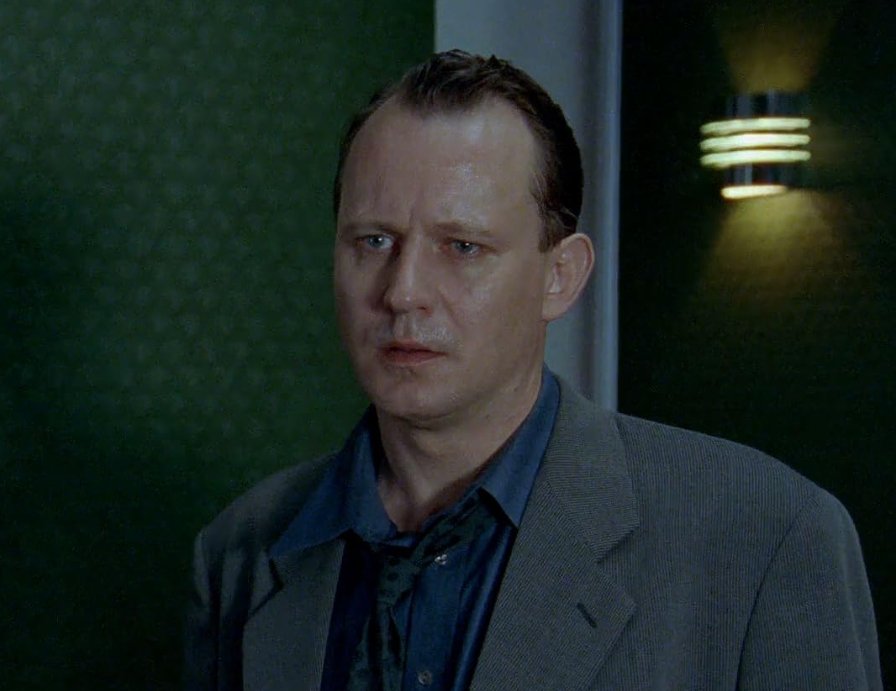
In Insomnia (1997), Erik Skjoldbjærg turns northern Norway’s endless summer daylight into a form of psychological torture. The detective cannot sleep, and the sun refuses to disappear. Instead of using darkness to hide the crime, the film creates dread through too much light. Everything is visible, yet moral clarity becomes impossible. Christopher Nolan’s 2002 remake retained the central premise, but the Norwegian original has a more austere, disorienting quality: the landscape seems to dissolve the detective’s grip on himself.
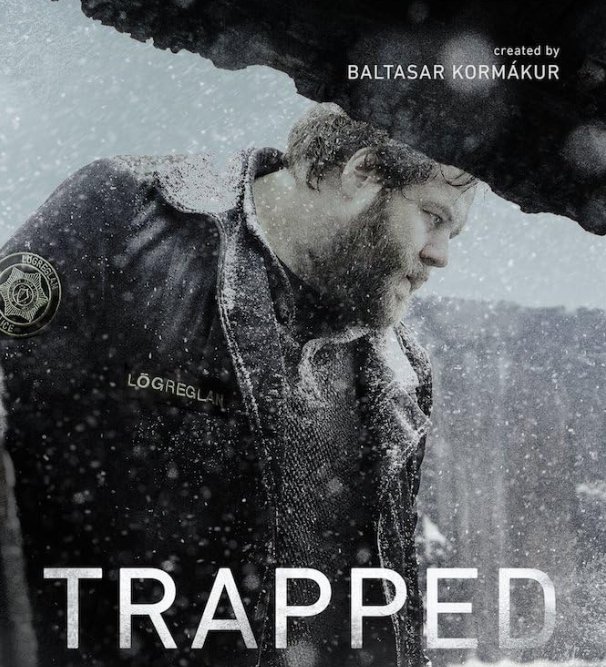
The opposite effect appears in Icelandic and Finnish noir, where darkness, wind, snow, and volcanic terrain can make communities feel almost cut off from the rest of the world. In Trapped (Ófærð), a town is isolated by a blizzard just as a murder investigation begins. The snow is not decorative. It closes roads, traps suspects, delays help and turns every local relationship into a source of suspicion. In this kind of story, geography is not merely difficult; it is dramatic.
At the same time, Nordic noir is not always set in remote wilderness. The Bridge moves between Copenhagen and Malmö, while The Killing places its mysteries inside a recognizable urban Denmark of schools, political offices, apartments, campaign rooms, and family homes. The cities may be modern and well-organized, but beneath their surfaces lie secrets that no efficient public system can fully contain.
Silence as suspense
Many Nordic noir directors understand that suspense does not require constant movement. A pause can be more frightening than a chase. A suspect who takes too long to answer a question may be more unsettling than one who runs. A detective who quietly notices a child’s drawing, a missing coat, or a light left on in an empty house may be closer to the truth than an action hero kicking down a door.
This patience gives the genre its slow-burning identity. Viewers are asked to sit with uncertainty rather than being rushed from one revelation to the next. The payoff is not always a spectacular twist. Sometimes it is the gradual realization that the characters have been asking the wrong question all along.
The Detectives: Brilliant, Damaged, and Usually Exhausted
Nordic noir detectives are rarely polished professionals with perfectly balanced lives. Sarah Lund in The Killing is brilliant and determined, but her work consumes her. Her famous woollen sweater became an unlikely symbol of the genre, yet what makes Lund memorable is not her wardrobe. It is the way professional obsession collides with family responsibility and emotional isolation.
Saga Norén in The Bridge is another unforgettable figure. Her directness, social difficulty, and singular investigative focus make her one of television’s most distinctive detectives. The show does not reduce her to a diagnosis or a quirky gimmick. It gives her intelligence, vulnerability, blind spots, and consequences. Her partnership with Danish detective Martin Rohde works because it is not a simple “odd couple” formula. Their differences expose the assumptions each brings to police work, intimacy, masculinity, and trust.
Sofia Karppi in the Finnish series Deadwind carries a different kind of burden. She returns to homicide work after the death of her husband and is paired with a younger colleague. Her grief does not become a melodramatic subplot neatly separated from the investigation. It shapes the way she sees evidence, danger, and the people around her. The cases have their own mysteries, but Karppi’s emotional life remains part of the atmosphere.
Norwegian crime stories often give us detectives whose greatest enemy is their own conscience. Wisting, based on Jørn Lier Horst’s novels, presents a more restrained investigator than the flamboyant television detective. William Wisting’s strength is persistence, observation, and a moral seriousness that can become a burden. The fifth and final season, released in 2025, continued the series’ interest in methodical investigation rather than easy spectacle.
And then there is Harry Hole, Jo Nesbø’s famous anti-hero. The 2026 series Detective Hole, adapted from The Devil’s Star, brings the character’s alcoholism, self-destructive impulses, and distrust of authority into a contemporary screen setting. It belongs to a newer, more internationally visible phase of Nordic noir, but the central tradition remains familiar: the detective is not standing outside the darkness. He is already carrying some of it.
Moral Ambiguity: Nobody Gets to Stay Clean
In a conventional crime film, the investigation often restores order. The detective identifies the villain, the villain is punished, and the audience can leave with the comforting sense that justice has prevailed. Nordic noir is much less confident about restoration.
The killer may be caught, but a family remains broken. A corrupt institution may be exposed, but the people who enabled it may continue in new positions. A detective may solve the case through ethically questionable means. The law may produce a verdict without producing justice. Even victims are sometimes presented as complicated people whose lives cannot be reduced to innocence and suffering.
This moral ambiguity is particularly powerful in films such as The Guilty (Den skyldige, 2018), Gustav Möller’s intensely contained Danish thriller. Nearly the entire film unfolds through the telephone conversations of an emergency dispatcher. There are no sweeping landscapes and no elaborate crime scenes. Instead, the film uses voice, silence, assumption, and limited information to show how quickly a professional can construct a story about other people. Its tension comes from the frightening distance between what is heard and what is true.
Thomas Vinterberg’s The Hunt (Jagten, 2012) is not a detective story in the traditional sense, but it shares Nordic noir’s fascination with collective suspicion and institutional failure. A small community convinces itself that it knows the truth, and the consequences are devastating. The film asks a question that appears again and again throughout Nordic crime cinema: what happens when the desire for certainty becomes stronger than the obligation to verify?
Social Critique Without Turning Characters into Slogans
Nordic noir has a strong tradition of social criticism, but its best examples do not feel like lectures. Political ideas emerge through people’s daily lives. A housing project becomes dangerous because of neglect. A company’s environmental promises hide exploitation. A missing migrant disappears into administrative gaps. A wealthy family’s private violence remains invisible because the surrounding community has decided not to see it.
The original Wallander stories, especially in their Swedish settings, use murder investigations to examine the changing social landscape of Sweden. Mankell’s world is not nostalgic. It is concerned with racism, economic anxiety, the erosion of trust, and the unsettling transformation of a society once imagined as exceptionally secure.
Bordertown, from Finland, places its emotionally unusual detective Kari Sorjonen in the border town of Lappeenranta. The series combines intricate cases with questions about family, trauma, criminal networks, and the fragile boundary between public respectability and private cruelty. The later film Bordertown: Mural Murders extends that world through a disturbing case involving online polling, vigilante fantasies, and the public’s appetite for punishment.
The Swedish limited series The Breakthrough (2025) draws its force from a real unsolved double murder. After more than fifteen years, developments in genealogical DNA research reopen the investigation. What makes the story compelling is not simply the technology. It is the emotional weight of time: the families who have lived with uncertainty, the investigators who have carried the case, and the strange modern possibility that a family tree can reveal a crime that conventional police work could not solve.
Women at the Centre of Nordic Noir
One of the genre’s great strengths is the number of female characters who are allowed to be professionally capable without being made emotionally invulnerable. They can be ambitious, angry, maternal, selfish, funny, frightened, or difficult. They are not required to remain sympathetic every minute in order to be compelling.
Sarah Lund and Saga Norén are the most internationally recognized examples, but the tradition is much broader. The Chestnut Man gives us detective Naia Thulin, a single mother who wants a more stable job yet finds herself drawn into a brutal serial-killer investigation. Her domestic life is not an inspirational accessory. It is a source of pressure, fatigue, and difficult choices.
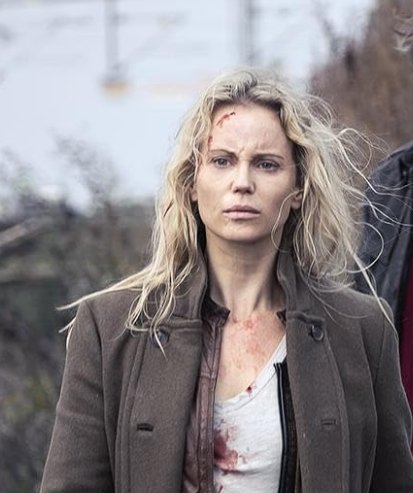
in Bron/Broen (The Bridge)
The 2025 Swedish series The Åre Murders follows Hanna, a police officer who arrives in the ski resort town of Åre while on leave and personally unsettled. When a girl disappears, Hanna becomes involved in the search and eventually works with local detective Daniel. The setting initially suggests a glamorous winter destination, but the series gradually reveals the class tensions, hidden violence, and local loyalties beneath the picturesque surface.
In The Glass Dome (2025), criminologist Lejla returns to her Swedish hometown after her mother’s death. She is an expert on child abduction because she was abducted herself as a child. When her childhood friend is found dead and the friend’s daughter disappears, the case becomes inseparable from Lejla’s own damaged history. This is a classic Nordic noir premise in the best sense: the investigation is both outward-facing and painfully intimate.
The Danish thriller series The Asset (2025) brings another contemporary variation. A young police cadet goes undercover inside the world of luxury jewellery and organised drug crime, befriending the partner of a powerful dealer. The story is built around an old noir dilemma—how long can someone enter a corrupt world without allowing it to change them?—but gives that dilemma a fresh female perspective and a sharper interest in loyalty, motherhood, and the moral cost of undercover work.
Nordic Noir Beyond Murder Mysteries
Although murder investigations remain central to the genre, Nordic noir has gradually expanded its boundaries. Some works introduce supernatural elements without abandoning the genre’s emotional realism.
The Danish series Equinox begins with the disappearance of almost an entire graduating class and follows a radio host whose childhood visions return years later. Icelandic Katla moves even further into the uncanny, using the aftermath of a volcanic eruption to explore grief, identity, and the desire to recover people who are gone. Neither series is a conventional police procedural, yet both share the Nordic noir habit of treating landscapes as psychological spaces and mysteries as expressions of social or personal trauma.
The Icelandic series Entrapped, a continuation of Trapped, combines an isolated community, a murder, a biker gang, and a secretive religious group. Its world is stranger and more heightened than the first wave of Scandinavian crime dramas, but its emotional engine is recognizable: small communities are not automatically safe communities. They are places where everyone knows something, where family history carries enormous force, and where silence can be a form of self-protection.
Even recent Swedish projects such as Paradis City, adapted from Jens Lapidus’s crime writing, show how Nordic crime storytelling is moving toward more openly dystopian and socially divided settings. The genre’s old anxieties—inequality, segregation, organised crime, political failure—have not disappeared. They have simply become more visible and more urgent.
Nordic Noir Versus Hollywood Crime Cinema
It would be too simple to say that Nordic noir is slow and Hollywood crime films are fast. Hollywood has produced plenty of patient, morally complex crime films, while Scandinavian cinema has made energetic thrillers such as Headhunters (2011). The more meaningful difference lies in what each tradition tends to emphasize.
| Feature | Nordic noir | Conventional Hollywood crime thriller |
| Pacing | Gradual investigation, accumulation of detail, psychological tension | Faster escalation, set pieces, confrontations, and visible action |
| Protagonists | Flawed, compromised, socially awkward, or emotionally damaged | Often more clearly heroic, charismatic, or goal-driven |
| Setting | Rural isolation, border zones, subdued cities, winter landscapes, ordinary institutions | Major cities, heightened urban spaces, criminal underworlds, or spectacular locations |
| Morality | Ambiguous; institutions and investigators may be compromised | More likely to separate heroes and villains clearly |
| Social themes | Integrated into the investigation and characters’ lives | Often present, but sometimes secondary to individual heroism |
| Visual style | Muted colours, natural light, silence, long observation | Higher contrast, dramatic lighting, rapid cutting, kinetic movement |
| Resolution | May offer knowledge without comfort | More likely to provide closure or restored order |
Headhunters is a useful exception because it combines Nordic unease with the momentum of a chase film. Roger Brown is a successful corporate recruiter who steals art to maintain his lifestyle. His double life collapses when he targets the wrong man, and the film becomes a wonderfully nasty survival story. It is stylish, funny, violent, and sharply aware of class performance. Roger is not a traditional hero, but watching him scramble to survive is irresistible.
The international success of Scandinavian crime also influenced productions outside the region. Prisoners, Gone Girl, Broadchurch, Mindhunter, and the first season of True Detective all share, in different ways, Nordic noir’s taste for atmospheric settings, damaged investigators, institutional suspicion, and crimes that expose a community’s hidden structures. Influence should not be confused with imitation, but the family resemblance is clear.
Essential Films and Series for a Nordic Noir Journey
A newcomer could begin with the foundational television landmarks: The Killing, The Bridge, Trapped, Wallander, Deadwind, Bordertown, and The Chestnut Man. Together they offer a broad map of the genre, from political Copenhagen to snowy Iceland, from Swedish domestic unease to Finnish borderland melancholy.
For films, Insomnia is essential for its use of light and landscape; The Girl with the Dragon Tattoo (2009) for its gothic investigation and unforgettable Lisbeth Salander; The Guilty for its compressed, voice-driven tension; Headhunters for its ferocious black humour; and The Hunt for its devastating portrait of social suspicion.
I would also add A Hijacking (Kapringen, 2012), Tobias Lindholm’s Danish drama about a ship seized by Somali pirates. It is not a conventional detective film, but its restrained style, institutional tension, and refusal to turn crisis into spectacle place it close to the Nordic noir sensibility. Lindholm’s later film The Good Nurse is an American-set true-crime drama, yet it retains the same fascination with ordinary procedures, professional trust, and the terrible things hidden inside apparently functional systems.
For recent viewers, The Åre Murders, The Glass Dome, The Breakthrough, The Asset, and the 2026 Detective Hole offer a sense of where the genre is now heading. These newer productions retain the cold air, complicated detectives, and uneasy communities of classic Nordic noir, while widening the focus to include digital evidence, online vigilantism, trauma, organised crime, and the emotional consequences of long-unsolved cases.
Why Nordic Noir Still Feels So Contemporary
The genre’s popularity is sometimes explained through mood. People enjoy the snow, the woollen sweaters, the grey skies, and the moody music. There is some truth in that. Nordic noir is extraordinarily good at creating a visual atmosphere in which a cup of coffee, a flickering streetlamp, or a distant ferry can feel ominous.
But atmosphere alone does not explain its staying power. Nordic noir remains compelling because it understands that modern societies can be both highly organised and deeply vulnerable. A country may have efficient public services, advanced technology, and an image of social equality, yet still contain violence, prejudice, loneliness, exploitation, and institutional blind spots. The crime story becomes a way of testing the promises a society makes about itself.
The best examples also respect the audience. They do not explain every emotion or underline every theme. They allow a character’s silence to remain partly unreadable. They let an investigation take time. They understand that a person can be both victim and participant, that a detective can be admirable and selfish, and that solving a crime does not necessarily heal the world that produced it.
Conclusion: The Darkness Is Never Just Outside
Nordic noir has transformed the crime genre because it treats darkness as more than a visual effect. Darkness lives in the landscape, certainly, but also in families, workplaces, political institutions, digital networks, and private memory. The murderer may be hidden in the snow, but the larger source of unease is often much closer to home.
That is what makes the genre so absorbing for a cinephile. Nordic noir gives us mysteries, but it also gives us textures: the sound of boots on frozen ground, the glow of a police station at midnight, the claustrophobia of a ferry, the blankness of a winter sea. It gives us detectives who do not stride confidently toward the truth so much as stumble, argue, obsess, and sometimes damage themselves while searching for it.
From Insomnia and The Killing to The Bridge, Trapped, The Guilty, Deadwind, The Chestnut Man, The Åre Murders, The Glass Dome, The Breakthrough, and Detective Hole, Nordic noir continues to change without losing its essential character. Its stories remain cold in temperature but warm in their attention to human weakness. They are bleak without being empty, political without becoming purely didactic, and suspenseful without needing to shout.
Perhaps that is the genre’s deepest appeal: Nordic noir knows that evil is rarely a stranger standing at the edge of the frame. More often, it is a secret everyone has learned to live with. And when the snow finally begins to melt, the truth is still there underneath.