If you’ve ever walked out of a theater thinking, “That ending was inevitable, but I never saw it coming,” you’ve experienced the quiet alchemy of cinema. Great films don’t become masterpieces by accident. Behind every unforgettable twist, emotional payoff, and lingering final frame lies a collection of narrative tools refined over centuries—borrowed from ancient Greek theater, stolen from literature, and perfected in the editing room.
Together, they form an invisible visual language. Most moviegoers feel its impact without knowing the mechanics behind it. But once you learn to spot these narrative devices, watching a movie transforms from passive viewing into an active appreciation of craftsmanship.
Here is a breakdown of twelve storytelling techniques that define the cinematic medium.
1. Chekhov’s Gun: The Art of Purposeful Design
Few principles are quoted more often—or misunderstood more frequently—than Chekhov’s Gun. Coined by Russian playwright Anton Chekhov, the rule dictates that if a rifle hangs on the wall in the first act, it must be fired by the third. If it isn’t, it has no business being in the story.
At its core, Chekhov’s Gun isn’t strictly about firearms; it’s about narrative discipline. Every detail deliberate enough to hold the camera’s focus must justify its presence. When a director subtly highlights an object—a vintage key, a worn photograph, a peculiar line of dialogue—the audience subconsciously registers a promise. The thrill comes when that promise is fulfilled in the climax.
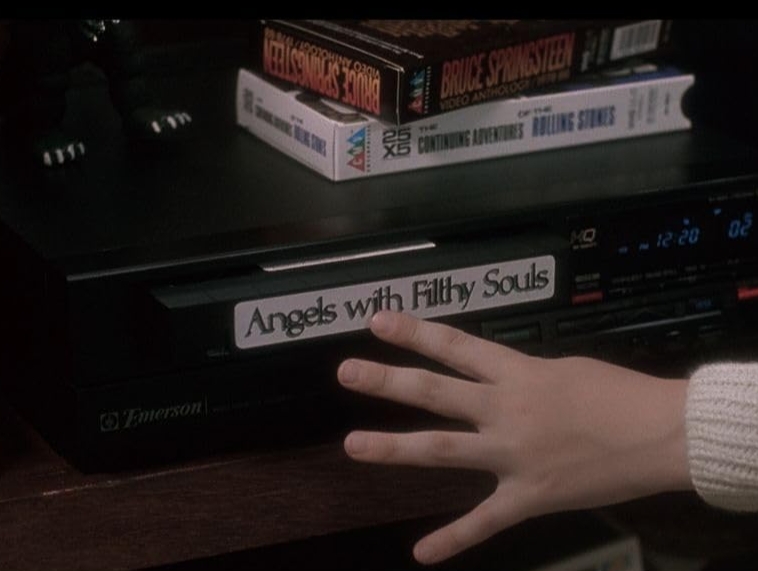
Take Chris Columbus’s Home Alone. Throughout the film, Kevin experiments with ordinary household items: paint cans, Christmas ornaments, micro machines, and glue. None of it is filler; every single item is an engineered setup quietly laying the groundwork for his elaborate booby-trap defense later on.
The technique also scales brilliantly in television. Vince Gilligan’s Breaking Bad famously introduced Walter White’s ricin poison early in the series. By disappearing and resurfacing across multiple seasons, the ricin shifted from a simple plot device into a lingering source of dread, leaving viewers constantly asking when the inevitable trigger would finally be pulled.
Crucially, a “gun” doesn’t need to be physical. It can be a childhood fear, a musical motif, or a lingering promise. Christopher Nolan and Pixar routinely plant abstract emotional promises in their opening acts that return as powerful thematic payoffs during their films’ final minutes.
2. Deus Ex Machina: The Trap of the Unearned Escape
Translating literally to “god from the machine,” Deus Ex Machina traces back to ancient Greek theater, where actors playing deities were lowered onto the stage via mechanical cranes to resolve seemingly unwinnable conflicts. In modern cinema, it describes any plot resolution that arrives out of nowhere via sudden, external intervention.
Imagine a climax where the hero is cornered, the villain has triumphed, and every exit is sealed—only for an unmentioned army to appear on the horizon or a protagonist to suddenly unlock a previously unestablished power. Technically, the conflict ends. Emotionally, the audience feels cheated.
Stories rely on an implicit contract: watch these characters struggle, and you will see them earn their outcome. A sudden Deus Ex Machina breaks that pact by swapping character agency for narrative convenience.
However, it isn’t always a flaw. When used self-awarely or symbolically, it can accentuate themes of fate or human helplessness. Euripides used it in Medea to emphasize divine whim, while the controversial series finale of Battlestar Galactica leaned deliberately into cosmic destiny over mechanical logic. The distinction comes down to world-building: if a film establishes cosmic or surreal rules early on, a sudden miraculous resolution works; if a grounded thriller relies on a last-second miracle, the illusion shatters.

3. Ellipsis: The Power of What’s Left Unseen
Cinema’s ultimate advantage over real life is editing. Movies don’t need to show every mundane step of a journey—they thrive on omission.
An ellipsis occurs when a filmmaker intentionally cuts from Point A to Point C, forcing the audience’s imagination to fill in Point B. By jumping over gaps in time or action, the director transforms the viewer from a passive spectator into an active participant.
The most famous ellipsis in cinema history opens Stanley Kubrick’s 2001: A Space Odyssey. An early hominid discovers that a bone can be used as a weapon and hurls it triumphantly into the sky. Kubrick cuts mid-flight from the bone to an orbital satellite floating in deep space. In a single frame transition, Kubrick leaps across millions of years of human evolution, skipping the entirety of recorded history to connect mankind’s first primitive tool with its ultimate technological achievement.
Ellipsis powers every genre. It keeps action films lean, trims tedious travel scenes out of road movies, and lets character development breathe. In narrative video games like Assassin’s Creed II, huge swaths of time pass between major story beats, preserving momentum while keeping the focus squarely on the moments that forge the protagonist.
4. Flashback: Reshaping the Present Through the Past
A flashback does far more than dump backstory onto the audience—when executed with precision, it fundamentally alters our understanding of the current timeline.
Inexperienced screenwriters use flashbacks to explain facts; master filmmakers use them to evoke shift-in-perspective emotion. In The Godfather Part II, Francis Ford Coppola constantly cuts between Michael Corleone’s modern moral collapse and young Vito Corleone’s rise in early 20th-century New York. The historical scenes aren’t decorative—they act as a tragedy-laced contrast to Michael’s choices in the present.
Television redefined the mechanic with ABC’s Lost, structuring entire episodes around specific characters’ past lives before the plane crash. The flashbacks didn’t stall the plot; they generated profound empathy, turning flawed strangers into tragic heroes. Similarly, James Cameron’s Titanic uses an elderly Rose as a framing device, grounding the spectacle of the disaster inside a subjective, bittersweet memory.
5. Flashforward: Weaponizing Curiosity
If flashbacks answer questions, flashforwards provoke them. By offering a brief, unexplained glimpse into the future, a film immediately injects mystery into every ordinary event that follows.
When a story opens on a character being sentenced in a courtroom before cutting to “Three Months Earlier,” the audience stops asking what will happen and starts obsessing over how it happens. Ordinary conversations become loaded with subtext, and every new character introduced becomes a potential suspect or victim.
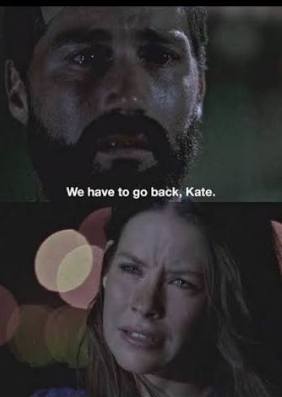
Lost famously turned its own storytelling formula upside down at the end of Season 3 by executing a flashforward disguised as a standard flashback. Revealing that characters eventually off the island shifted the show’s core premise, proving that a well-placed jump forward can completely revitalize a narrative. Meanwhile, sci-fi masterpieces like Denis Villeneuve’s Arrival use flashforwards to blur the distinction between memory, free will, and destiny.
6. Foreshadowing: Planted Hints and Second Viewings
Foreshadowing is the art of hiding secrets in plain sight. It drops quiet hints early in the narrative that only reveal their true significance once the credits roll, making a film vastly more rewarding on a second watch.
David Fincher’s Fight Club is a masterclass in this design. On a first viewing, the story moves forward like an edgy, chaotic satire. On a second viewing, every single line of dialogue, subtle background action, and single-frame edit openly broadcasts the film’s climax.
Foreshadowing isn’t restricted to dialogue. In Star Wars: Episode II – Attack of the Clones, as Anakin Skywalker yields to his anger after the Tusken Raider massacre, John Williams’ score briefly weaves in subtle fragments of the Imperial March. The subconscious musical cue warns the audience of his eventual turn to the dark side long before he puts on the armor.
7. In Medias Res: Chaos First, Context Later
Standard structure introduces the characters, establishes the world, and gradually builds toward the inciting incident. In Medias Res—Latin for “into the middle of things”— hurls the audience headfirst into a high-stakes crisis without a map.
Jon Favreau utilizes this brilliantly in Iron Man. The film skips a slow origin introduction and opens with Tony Stark riding through a war zone, trading quips with soldiers, right before an explosive ambush leaves him critically wounded and captured. Only after the chaos subsides does the movie rewind thirty-six hours to explain his playboy lifestyle. By grabbing the viewer’s attention instantly, the exposition that follows feels earned rather than slow.
However, the absolute pinnacle of this technique in modern television belongs to Vince Gilligan’s pilot episode of Breaking Bad. Widely praised as one of the greatest openings in broadcast history, the series drops the audience directly into a breathless nightmare: a bullet-ridden RV speeds through the desert, driven by a panicked man wearing nothing but underpants and a gas mask. He crashes into a ditch, pulls out a handgun, and records a desperate farewell video to his family as police sirens echo in the distance. It is a masterclass in narrative hooks. The sheer absurdity and terror of the image force the viewer to demand an immediate answer to a single question: How did a mild-mannered man end up here? Only after securing this total psychological grip on the audience does the show smash cut to three weeks earlier, leisurely introducing Walter White as a bored, defeated high school chemistry teacher.

This technique dates back to antiquity—Homer’s The Odyssey begins near the end of Odysseus’s epic journey, filling in his decades of monster-slaying through retrospective tales. Centuries later, kicking off a story at the midpoint remains one of cinema’s most reliable hooks.
8. The MacGuffin: The Engine That Drives the Plot
Popularized by Alfred Hitchcock, a MacGuffin is the object, secret, or goal that sets the entire plot into motion, despite being largely irrelevant to the film’s emotional core. It is the spark that lights the fire.
Characters will cross continents, fight villains, and risk their lives for a missing briefcase, a glowing artifact, or top-secret documents. Yet, the viewer rarely cares about the object itself; we care about how chasing it forces the characters to evolve.
The Marvel Cinematic Universe built an entire saga around MacGuffins—the Tesseract, the Orb, the Infinity Stones. In The Avengers, the Tesseract provides the motivation for Earth’s mightiest heroes to assemble, but the real narrative is about six volatile egos learning to trust one another. Quentin Tarantino took the concept to its logical extreme in Pulp Fiction with Marcellus Wallace’s glowing briefcase: we never learn what’s inside, because what’s inside doesn’t matter—the briefcase simply serves as the catalyst to put extraordinary characters in the same room.
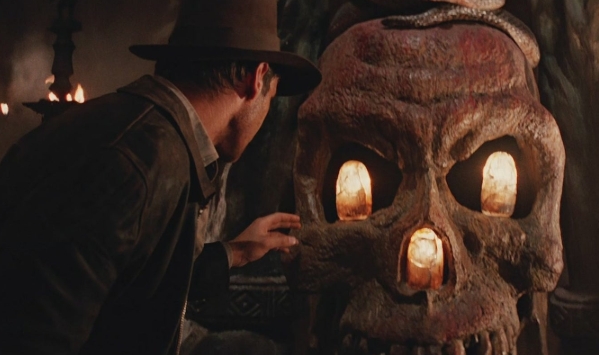
When it comes to my experience with the MacGuffin, nothing compares to the Indiana Jones series—a saga that practically turned the historical artifact into an art form. As one of the very first films I ever saw in a cinema, it left me completely amazed, and it’s where I first subconsciously learned how high-stakes storytelling works.
Whether it is the glowing, sacred Sankara Stones in Temple of Doom, the Ark of the Covenant in Raiders of the Lost Ark, or the Holy Grail in The Last Crusade, George Lucas and Steven Spielberg chose legendary relics to serve as the ultimate finish lines. Watching these adventures unfold on the big screen, I realized the technical or supernatural mechanics of these objects are secondary; their primary job is to thrust a cynical, whip-cracking archaeologist into trap-laden temples and desperate battles. In The Last Crusade, the Holy Grail is the perfect MacGuffin because its pursuit is actually a thin veil for the movie’s true emotional core: an estranged son trying to reconcile with his obsessed father. The Grail gets them in the same room, but that deep human connection is what truly matters.
9. Nonlinear Narrative: Deconstructing Time
Life moves chronologically, but human consciousness doesn’t. We associate memories through emotions, sensory triggers, and unresolved regrets. A nonlinear narrative reflects this internal architecture by shuffling the order of events to create a heightened emotional or thematic impact.
Unlike a simple flashback sequence, a nonlinear film restructures the entire framework of the movie. Christopher Nolan’s Memento operates on a brilliant dual-timeline structure: a color sequence moving backward in time interleaved with a black-and-white sequence moving forward. By forcing the audience to experience events out of sequence, Nolan replicates the protagonist’s short-term memory loss.
Michel Gondry’s Eternal Sunshine of the Spotless Mind uses non-linear editing to mirror the chaos of heartbreak. As Joel’s memories of Clementine are systematically erased, we bounce through early fights, quiet romantic moments, and childhood fears in a fragmented blur. The unconventional timeline proves that rearranging events can make a romance feel far more deeply human than a straight timeline ever could.
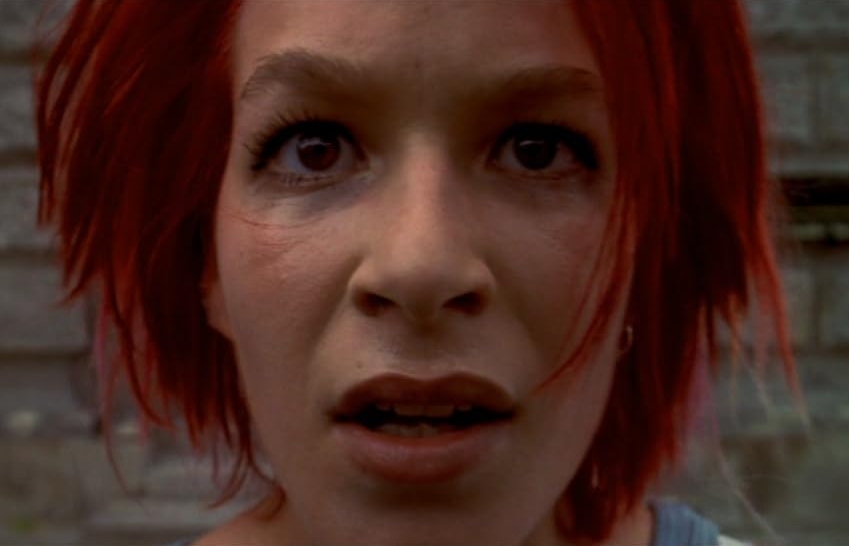
Tom Tykwer takes this temporal experimentation a step further in Run Lola Run, which fractures chronology into a relentless, video-game-like “what-if” structure. By hitting reset on a high-stakes 20-minute crisis three separate times, the film explores how microscopic variations in timing completely rewrite reality. It transforms the narrative timeline itself into a thrilling kinetic puzzle, proving that a single second can alter the course of human destiny.
10. Red Herring: The Masterclass in Misdirection
Named after the pungent fish once used to train hunting dogs (and misdirect scent trails), a Red Herring is a deliberate narrative distraction designed to preserve a twist.
A good Red Herring never cheats the audience—it presents real evidence but quietly encourages the wrong conclusion. In Harry Potter and the Sorcerer’s Stone, every suspicious glance, ominous line, and shadowy action points to Professor Snape as the culprit. The audience focuses so intently on him that the true villain hiding in plain sight comes as a complete surprise.
Dan Brown’s The Da Vinci Code builds its entire mystery around this technique, casting Bishop Aringarosa (whose name cleverly translates to “red herring” in Italian) as the apparent mastermind, only to reveal he is a pawn in someone else’s game. When a director pulls off a great Red Herring, the audience isn’t annoyed at being fooled—they are thrilled by the elegance of the trick.
Cinema elevates this deception to a beautiful art form, though discussing the finest cinematic examples feels like navigating a narrative minefield. Out of profound respect for your future movie nights, I will absolutely not ruin the staggering, jaw-dropping misdirections hidden inside masterpieces like Psycho, The Usual Suspects, The Sixth Sense, or Shutter Island. To explain exactly how these directors mercilessly trick us would require unleashing some of the most devastating spoilers in film history, and I love you all too much to do that to you. Let’s just say that if you’ve seen them, you are likely still recovering from the emotional whiplash of realizing you were looking at the wrong scent trail the entire time!
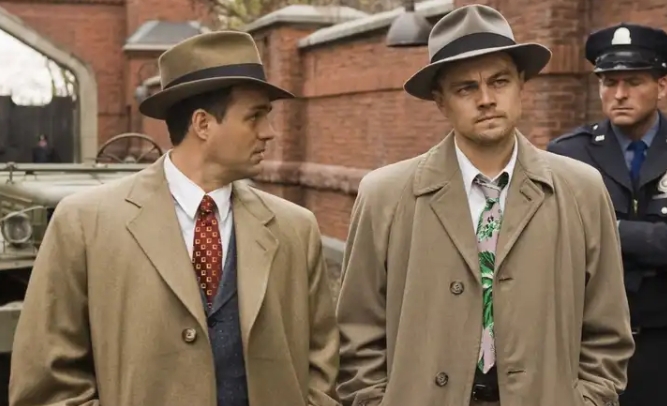
When a director pulls off a great Red Herring, the audience isn’t annoyed at being fooled—they are thrilled by the elegance of the trick.
11. Stream of Consciousness: Capturing Pure Thought
One of the hardest achievements in cinema is translating the raw, unfiltered flow of human thought onto a screen. Unlike literature, which can directly print internal monologues, film must use visuals, rhythmic editing, abstract sound design, and surreal logic to capture the inner workings of the mind.
Few filmmakers have embraced this approach more confidently than David Lynch. Films like Mulholland Drive and Lost Highway often feel less like stories unfolding than thoughts drifting through someone’s subconscious. Scenes dissolve into one another. Characters change identities. Dreams become reality without warning. Trying to “solve” these films often misses the point. They’re designed to be experienced emotionally before they’re understood intellectually. Your source also mentions David Lynch as one of the directors who experimented with bringing this literary technique into cinema.
Yet, long before Lynch’s surrealism, Soviet master Andrei Tarkovsky was entirely redefining this technique by creating what he called “sculpting in time.” His 1975 masterpiece, Mirror, stands as the absolute pinnacle of visual stream-of-consciousness on film. Tarkovsky completely discards traditional chronological plotting to mirror a dying poet’s drifting, chaotic mind. The film flows seamlessly and erratically between intimate childhood memories, historical wartime newsreels, and bitter adult arguments. By utilizing hypnotically long takes, blending color with stark black-and-white, and casting the same actress to play both the narrator’s mother and wife, Tarkovsky captures the exact, fluid texture of human memory and psychological projection.
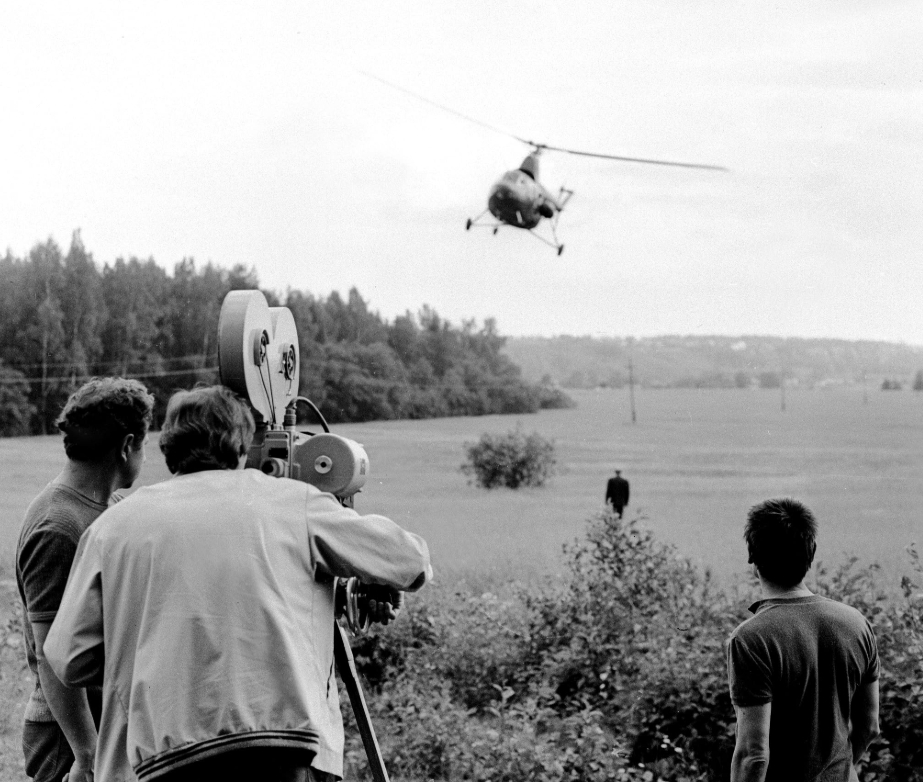
Andrei Tarkovsky and Anatoliy Solonitsyn
12. The Unreliable Narrator: Questioning Reality
We naturally want to trust the person telling us a story, assuming the camera shows an objective truth. An unreliable narrator shatters that trust by filtering the story through a lens compromised by dishonesty, mental instability, bias, or self-delusion.
David Fincher’s Fight Club relies heavily on this device. The film never technically lies to us; it simply shows the world exactly as the Narrator perceives it. Because his perception is deeply fractured, our understanding of reality is fractured alongside him.
In Alan Moore’s graphic novel Batman: The Killing Joke, the Joker famously muses on his own shifting backstory: “If I’m going to have a past, I prefer it to be multiple choice!” By refusing to give the villain a definitive origin, his unreliability becomes the defining element of his terror. When a story embraces an unreliable guide, the audience stops being passive listeners and turns into active investigators.
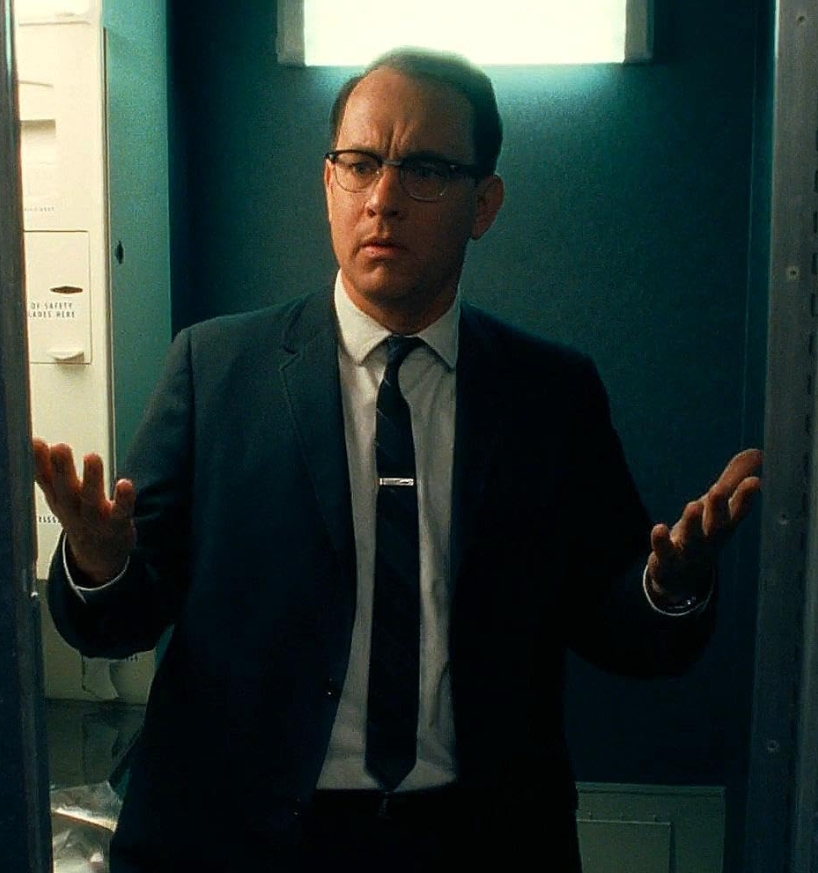
Cinema has masterfully crafted this technique across a spectrum of genres, utilizing everything from memory loss and moral vanity to romantic denial and legal manipulation. Directors have turned unreliability into a high art form, shifting the ground beneath our feet in psychological puzzles like Memento and The Prestige, or leaving us to decipher the truth through the conflicting perspectives of Rashomon. Whether we are being charmed by the deceptive confidence of Catch Me If You Can, navigating the hilariously biased romantic recollections of High Fidelity, or descending into the terrifyingly sick, materialistic fantasies of American Psycho, these films prove that the guide of a story can be its greatest mystery.
The Art Behind the Illusion
Learning to recognize these narrative tools doesn’t break the illusion of cinema—it elevates it.
Much like understanding music theory helps you appreciate the brilliance of a complex symphony, recognizing how directors manipulate time, space, expectation, and memory allows you to see the incredible artistry on display. Whether it’s Hitchcock engineering tension, Bong Joon-ho quietly planting clues, or Nolan fracturing time, you are witnessing storytellers speak a universal, timeless language.
For the dedicated cinephile, this structural fluency transforms the act of watching a film from passive consumption into an active, collaborative dialogue with the filmmaker. When you spot a visual motif acting as a quiet countdown, or realize a camera angle is deliberately gaslighting you, you are no longer just looking at a screen—you are looking into the director’s mind. You begin to appreciate the calculated risk of an editing choice, the literary weight of a silent character arc, and the sheer audacity it takes to loop, cut, or melt time itself.
Cinema is ultimately a magic trick performed in a dark room. But while the casual viewer is content with merely being astonished by the final vanish, the cinephile finds their deepest joy in admiring the precision, the misdirection, and the pure genius of the mechanics behind the curtain. It is the realization that every frame is a choice, every cut is a heartbeat, and every story is an invitation to see reality anew.