If you have ever spent enough time wandering through the dusty, flickering corridors of early cinema, you eventually hit a wall. You watch the narrative foundations laid by D.W. Griffith, you marvel at the liquid, dreamlike camera movements of F.W. Murnau, and you feel the intellectual, rhythmic collision of Sergei Eisenstein’s Soviet montage. You think you’ve mapped the territory. But then, if you dig deep enough into the French silent era, you stumble upon a filmmaker who didn’t just map the territory—he set it on fire and rebuilt it from the ashes.
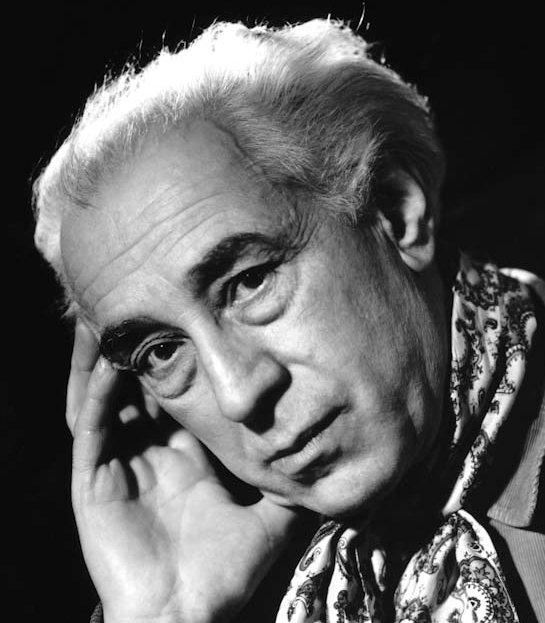
His name was Abel Gance.
To call Gance merely a “French director” is to do him a massive disservice. He was a cinematic poet, a mad scientist of the camera, and arguably the most visionary filmmaker of the silent era. When I first sat down to watch his work, I expected to see historical curiosities. What I found was a kinetic, visceral, and overwhelmingly emotional style of filmmaking that feels startlingly modern. Gance didn’t just want to tell a story; he wanted to capture the very rhythm of human consciousness and the relentless, crushing momentum of the machine age.
In this deep dive, we are going to explore the life, the art, and the enduring legacy of Abel Gance. We’ll look at how he pushed the boundaries of the medium, dissect his towering masterpieces La Roue and Napoléon, examine his turbulent post-silent years, and trace his massive, often uncredited influence on the filmmakers who came after him. Grab a seat in the front row. The lights are dimming, and the projector is whirring to life.
The Awakening of a Cinematic Vision
To understand Gance’s obsession with light, movement, and the fragility of life, you have to understand where he came from. Born Abel Eugène Alexandre Péréthon in 1889, his early life was marked by poverty and a deep, almost spiritual hunger for art. He started in theater and poetry, but the moment he saw the flickering images of early cinema, he realized that this new medium was the ultimate canvas. It was a language of pure light.
But it was the First World War that truly forged Gance’s cinematic soul. While many of his contemporaries were fighting in the trenches, Gance was drafted into the military’s photographic and film service. He spent the war documenting the grim, mechanical reality of the conflict. He saw the mud, the blood, and the terrifying efficiency of modern warfare. This experience fundamentally altered his psyche. It stripped away any romantic notions he might have had about heroism and replaced them with a profound, haunting empathy for the common soldier.
This trauma and empathy would directly birth his first major breakthrough, J’accuse! (1919). While the film is a narrative drama, it famously features actual footage of soldiers going over the top, blurring the line between fiction and documentary. When the dead soldiers miraculously return to their villages in the film’s climax, it wasn’t just a clever special effect; it was a visceral, ghostly scream against the waste of war. It established Gance not just as a visual innovator, but as a filmmaker with a profound moral compass.
Unchaining the Camera: Gance’s Style and Innovations
If you want to understand Gance’s place in the pantheon of early pioneers, you have to look at the French Impressionist cinema movement of the 1920s. Filmmakers like Gance, Jean Epstein, and Marcel L’Herbier were reacting against the “filmed theater” style that still plagued a lot of early cinema. They believed that cinema needed its own unique grammar. It shouldn’t just record a play; it should manipulate time, space, and psychology.
Gance’s philosophy was famously summarized by his own declaration: “The time of the image has come.” For Gance, the image wasn’t just a picture; it was a living, breathing entity. He believed that the camera should be unchained. While D.W. Griffith was perfecting the narrative use of the close-up and the cross-cut, and the Soviets were using editing for intellectual collision, Gance was using the camera to simulate the internal, psychological state of his characters.
His technical toolkit was staggering, especially for the 1920s. He was a master of rapid, rhythmic montage. But unlike Eisenstein, whose montage was often intellectual and dialectical, Gance’s editing was deeply emotional and musical. He cut to the rhythm of a heartbeat, to the ticking of a clock, or to the chugging of a train engine.
He also pioneered the extensive use of superimpositions, not just as cheap ghost effects, but as a way to layer multiple realities on top of each other. He used extreme close-ups to isolate emotions, handheld cameras to create a sense of chaotic, documentary-style urgency decades before the Dogme 95 movement, and complex mirror shots to explore themes of duality and fractured psyches. He treated the camera like a painter’s brush, smearing light and shadow across the screen to create a purely visual symphony.
The Masterpiece of the Machine Age: La Roue (1923)
If J’accuse! proved Gance was a master, La Roue (The Wheel) proved he was a titan. When you talk about the evolution of film editing, La Roue is the missing link. It is a film so ambitious, so visually overwhelming, and so emotionally devastating that it practically broke the French film industry at the time.
The plot, on paper, sounds like a standard melodrama: Sisif, a noble but tragic train driver, falls in love with his adopted daughter, Norma. To protect her from his own desires, he marries her off to his friend, Elie. Tragedy, betrayal, and a catastrophic train accident follow. But to describe La Roue by its plot is like describing a Beethoven symphony by its sheet music. It misses the point entirely.
The true star of La Roue is the train itself. In the 1920s, the railway was the ultimate symbol of the machine age—beautiful, terrifying, and relentlessly indifferent to human life. Gance captures the train with a fetishistic, almost religious awe. The massive, hissing iron beasts, the sparks flying from the wheels, the blurring of the tracks—Gance films them with a kinetic energy that makes you feel the heat of the engine and the vibration of the rails.
But where La Roue truly achieves immortality is in its editing. Gance developed a technique he called “accelerated montage.” As the narrative tension rises, and as the psychological state of Sisif descends into obsession and madness, the editing rhythm accelerates. We see rapid, flashing cuts of the train wheels turning. At first, the cuts are measured, but as the film progresses, the rhythm becomes frantic, almost subliminal. The wheels of the train become the wheels of fate, turning faster and faster, crushing everything in their path.
The climax of the film features a massive, terrifying train derailment and an avalanche. The way Gance cross-cuts between the mechanical failure of the train, the natural disaster of the avalanche, and the emotional collapse of the characters is a masterclass in visual storytelling. He creates a sensory overload that leaves the audience breathless.
The production of La Roue was a nightmare. Gance shot an absurd amount of footage—some estimates say over 200,000 meters of film. He spent nearly a year just in the editing room, physically cutting and splicing the celluloid until his fingers bled. The studio, Pathé, was horrified by the final cut. They thought it was too long, too weird, and too slow in parts. They forced him to cut it down, and for decades, the world only saw butchered, truncated versions of the film. It wasn’t until modern restorations that we could finally experience La Roue as Gance intended: a sprawling, four-hour epic of visual poetry. It remains one of the greatest achievements in the history of cinema, a film that proved the camera could express the invisible, internal rhythms of the human soul.
The Crown Jewel: Napoléon (1927)
If La Roue was Gance’s psychological masterpiece, Napoléon was his epic magnum opus. It is the Citizen Kane of the silent era, a film of such staggering scale, technical innovation, and sheer audacity that it makes modern blockbusters look like child’s play.
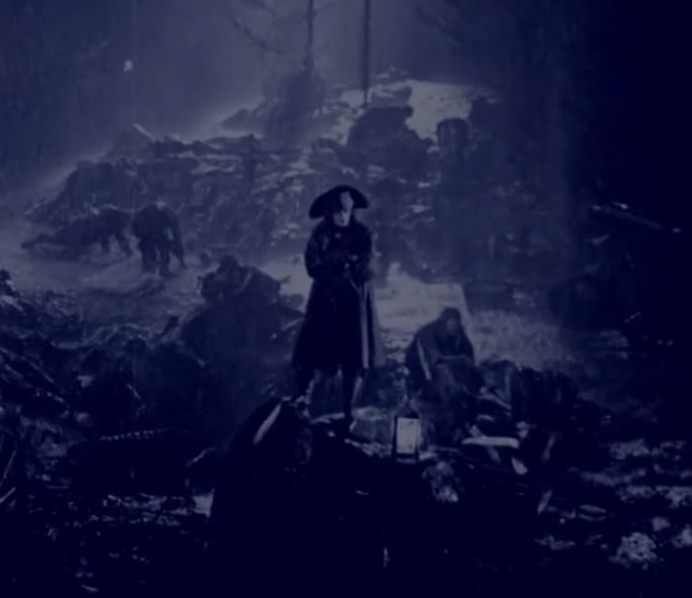
Gance’s original vision was monumental. He wanted to make a ten-part epic covering the entire life of Napoleon Bonaparte. Financial and logistical realities meant he only managed to complete the first part, covering Napoleon’s childhood and his early military campaigns up to the march on Italy. But even as a single film, it is a towering achievement, running anywhere from four to six hours depending on the restoration and the musical accompaniment.
From the opening frames, Napoléon announces itself as a different breed of historical epic. Gance wasn’t interested in a stuffy, museum-piece biography. He wanted to capture the myth, the energy, and the sheer force of nature that was Napoleon. He achieved this through a relentless, inventive visual style that treats history not as a static record, but as a living, breathing event.
Take, for example, the famous snowball fight scene at the military school. This is one of the most brilliantly conceived sequences in all of silent cinema. Gance uses a flurry of rapid cuts, subjective camera angles, and mirrors to put the audience directly into the mind of the young Napoleon. We don’t just watch the boy strategize; we experience the tactical geometry of the snowball fight through his eyes. The editing is so sharp, so rhythmic, and so dynamic that it feels like the origin story of a cinematic superhero. It’s a masterful use of visual storytelling to establish character without a single intertitle.
Then there is the storm at sea sequence. Napoleon is on a boat, and a massive storm hits. Gance wanted to capture the physical reality of the storm, so he literally tied his cameras to the boat, letting them thrash around in the waves. He then combined this chaotic, handheld footage with triple-exposure superimpositions of the storm, the face of Robespierre, and the stoic profile of Napoleon. The result is a hallucinatory, expressionist masterpiece. It’s not just a storm; it’s a visual representation of the political and historical tempest that Napoleon is navigating. It is pure, unadulterated cinema.
But the crowning technical achievement of Napoléon—and perhaps of the entire silent era—is the finale: Polyvision.
Gance realized that the traditional rectangular frame of the screen was too small to contain the epic scale of Napoleon’s march into Italy. He wanted to break the frame. So, he developed a process using three cameras mounted side-by-side to shoot a massive, wide image, which was then projected using three synchronized projectors onto a massive, triptych screen.
When the film reaches its climax, the single screen suddenly expands into three. The aspect ratio widens dramatically, and we see the French army marching in a sweeping, panoramic glory. In the center screen, we see the army; on the left and right screens, we see massive, fluttering French tricolor flags and the soaring eagle of the empire. The emotional impact is staggering. The audience is completely engulfed by the image. It is a moment of pure, transcendent cinematic euphoria.
Polyvision was the grandfather of Cinerama, IMAX, and modern widescreen formats. Gance invented it thirty years before anyone else even thought of expanding the screen. Yet, the financial cost of Napoléon ruined him. The studio panicked at the cost of the triptych projectors, and the film was a financial failure upon its initial release. For decades, Napoléon was lost, chopped up, and forgotten, a tragic victim of its own ambition.
The Arrival of Sound and the Post-Silent Years
The transition from silent to sound cinema in the late 1920s and early 1930s was a disaster for many visual pioneers, and Gance was no exception. Sound grounded the camera. It forced filmmakers to rely on dialogue, which inherently slowed down the visual rhythm that Gance had spent a decade perfecting. The pure, dreamlike language of light and shadow was suddenly interrupted by the clunky, literal reality of spoken words.
Gance tried to adapt. He made J’accuse! again in 1938. While the 1919 version was a reaction to the aftermath of WWI, the 1938 version was a desperate, haunting warning about the impending doom of World War II. The famous scene where the dead soldiers rise from their graves and march back to their villages is even more chilling in the sound version. The clanking of their ghostly boots and the eerie silence of the living create a suffocating atmosphere of dread. It is a brilliant, terrifying film, but it also highlights how Gance’s style had to compromise to accommodate the new technology.
The 1930s and 40s were a period of immense struggle for Gance. He faced constant financial ruin. He was forced to take on lesser projects, remake his own films, and work under the constraints of producers who didn’t understand his vision. During the German occupation of France, his situation became even more precarious. He made films like Vénus aveugle (1941) and Le Grand Mur (1943), which, while showing flashes of his old visual brilliance, were largely compromised by the conditions of the war and the occupation.
He was a giant reduced to scavenging. The man who had invented Polyvision and accelerated montage was now struggling to get funding for modest, dialogue-heavy dramas. It is a heartbreaking trajectory, one that mirrors the tragic arcs of many silent-era geniuses who couldn’t or wouldn’t bend to the new industrial realities of Hollywood and European studio systems.
However, the story of Abel Gance does not end in the dark. In the 1970s, a renaissance occurred.
Film historian and restorer Kevin Brownlow became obsessed with Napoléon. He spent years tracking down the original camera negatives, which had been sitting in dusty vaults, mislabeled and forgotten. Brownlow painstakingly restored the film to its original glory, including the Polyvision triptych. In 1980, the restored Napoléon premiered at the London Empire cinema, accompanied by a live orchestra playing Carl Davis’s magnificent score.
Abel Gance, then in his nineties, was in attendance. When the screens expanded for the Polyvision finale, the audience erupted into a standing ovation. Gance wept. It was a moment of profound vindication. The world finally saw his masterpiece as he had intended, and he lived long enough to see his genius recognized not just as a historical footnote, but as a towering achievement of world cinema. He passed away in 1981, but his legacy was secure.
The Enduring Legacy: Gance’s Shadow Over Modern Cinema
When we talk about the legacy of Abel Gance, it’s easy to just say he influenced the French New Wave. And he certainly did. Jean-Luc Godard and François Truffaut revered him. If you look at Godard’s Weekend or Alphaville, with their aggressive jump cuts, use of text on screen, split screens, and sheer visual anarchy, you are seeing the direct descendants of Gance’s visual experiments. The New Wave filmmakers viewed Gance as the ultimate rebel, the man who proved that cinema could break all the rules.
But Gance’s influence extends far beyond the art-house cinemas of Paris. His fingerprints are all over modern mainstream cinema, often in ways that modern audiences and even filmmakers don’t realize.
Think about the modern action movie. The rapid, kinetic editing style that defines the Jason Bourne series, the John Wick franchise, or the chaotic battle sequences in Peter Jackson’s Lord of the Rings—all of this owes a massive debt to Gance’s “accelerated montage.” Gance was the first to realize that cutting at a rapid, rhythmic pace could induce a state of physiological arousal in the audience. He didn’t just cut to show different angles; he cut to make the audience’s heart beat faster. Every time a modern editor cuts rapidly to the beat of a musical track during an action sequence, they are walking down the path Gance paved with La Roue.
Furthermore, his obsession with scale and immersive formats directly influenced the modern blockbuster. When Christopher Nolan decided to shoot The Dark Knight and Dunkirk on massive IMAX film stock, he was chasing the exact same dream Gance had with Polyvision: the desire to break the rectangular frame and engulf the audience in the image. When we watch modern films in Dolby Cinema or IMAX, we are experiencing the spiritual successors to Gance’s triptych. He understood, before almost anyone else, that cinema is not just a storytelling medium; it is an environmental, immersive experience.
Even in the realm of television and digital media, Gance’s ghost lingers. The use of split-screens to show multiple perspectives simultaneously—a staple of modern TV shows like 24 or the “screenlife” genre of horror movies like Unfriended—is a direct descendant of Polyvision. Gance realized that the screen didn’t have to be a single window into a world; it could be a multi-layered canvas of simultaneous realities.
And then there are the modern visualists, the directors who prioritize sensory experience and visual poetry over strict narrative logic. Directors like Gaspar Noé (Climax, Enter the Void) or Darren Aronofsky (Requiem for a Dream) rely heavily on the kind of subjective, psychologically driven visual techniques that Gance pioneered. When Noé uses strobe lights, disorienting camera movements, and rapid editing to induce a state of panic or euphoria in the audience, he is utilizing the exact same tools Gance used in the storm sequence of Napoléon.
Gance’s legacy is not just in the specific techniques he invented, but in the permission he gave to future filmmakers. He proved that the camera is not a passive observer. It is an active participant. It can lie, it can dream, it can accelerate time, and it can fracture reality. He elevated the camera from a mere recording device to an instrument of pure, unadulterated expression.
The Pure Joy of the Cinema
As I reflect on the career of Abel Gance, what strikes me most is not just his technical brilliance, but his profound, almost childlike love for the medium of film. In an era when cinema was still fighting to be taken seriously as an art form, Gance didn’t just defend it; he elevated it to the realm of the divine.
He was a man who was willing to bankrupt himself, ruin his health, and endure decades of obscurity just to get the image in his head onto the screen. He was a perfectionist, a madman, and a visionary. He looked at the flickering, black-and-white strips of celluloid and saw a canvas as vast and expressive as the human mind itself.
If you have never watched La Roue or Napoléon, I urge you to do so. Don’t approach them as dusty historical artifacts. Approach them with an open mind and a willingness to be overwhelmed. Seek out the restored versions. Find a good musical score to accompany them. Dim the lights, put away your phone, and let the projector wash over you.
You will see the trains of La Roue chugging with a mechanical fury that will make your pulse race. You will feel the freezing spray of the ocean in the storm sequence of Napoléon. You will experience the sheer, unbridled joy of the Polyvision finale, as the screen explodes into a triptych of glory.
Abel Gance was the ultimate cinematic poet of the machine age. He bridged the gap between the narrative epicness of Griffith, the rhythmic brilliance of Eisenstein, and the visual flair of Murnau, yet he remained entirely, unmistakably his own. He gave us the language of modern cinema, and in doing so, he gave us a way to see the world not just as it is, but as it feels.
The time of the image has indeed come, and it was Abel Gance who first turned on the light. Long may his reels keep spinning.