From the silent sets of Pathé Frères to the birth of giallo — how one family ended up holding the entire history of Italian genre cinema in their hands…
There is a story I keep coming back to whenever I think about the history of Italian cinema, and it goes like this: in 1960, a forty-six-year-old man who had spent so many years lighting other people’s films, designing other people’s effects, and quietly rescuing other people’s productions finally got to direct his own picture. The film was a gothic nightmare about a witch sealed inside a spiked mask, shot in black and white on a shoestring, starring an unknown British actress named Barbara Steele. It was called Black Sunday (La maschera del demonio). It launched Italian horror as a commercial force, terrified audiences around the world, and changed genre filmmaking forever.
The man was Mario Bava. And if you trace his family tree, you land on something genuinely remarkable: his father, Eugenio Bava, had been behind the camera on some of the most important silent epics of the early twentieth century — including Cabiria (1914), the film that stood between the birth of Italian cinema and the moment D.W. Griffith saw it and made Intolerance. His son, Lamberto Bava, grew up on sets as his father’s assistant and would go on to direct Demons, one of the most joyfully excessive horror films of the 1980s, and Fantaghirò, a fairy-tale television phenomenon that an entire generation of Italians considers mandatory Christmas viewing.
Three generations. Three distinct eras of Italian cinema — the silent epics, the postwar genre boom, and the television age — and one family name threading through all of it like a splice joining three reels of the same print. The Bavas are not merely a footnote in film history. They are, quite literally, witnesses to the birth of Italian cinema, the invention of the giallo, and the worldwide influence of Italian horror. If you want to understand how Italian genre filmmaking got from the hand-cranked cameras of 1906 to the MTV-soundtracked demon outbreaks of 1985, there is arguably no better single route than through the Bava family.
This is that route. I’ll try to take it the way a proper film lover would: with some enthusiasm, some skepticism about the myths, and a genuine desire to understand what these three men actually contributed — not just the legend, but the craft.
Part One: Eugenio Bava — The Man Who Lit the Silent Epic
A sculptor walks into Pathé
Eugenio Bava was born in Italy in 1886, and by trade he was a sculptor — a craftsman who understood form, light, and how to make inanimate materials look alive. That detail matters more than it might seem, because the film industry of the early 1900s didn’t have a career path called “special effects supervisor.” What it had was a handful of artisans who figured out, through trial and error, how to make fire look fake-but-real on celluloid, how to make a mountain erupt on a miniature set, how to dissolve one image into another. Sculptors, set designers, and magicians. That was the whole department.
Sometime in the early 1910s — the exact year floats between sources, but the industry consensus, cemented by Tim Lucas in his exhaustive biography Mario Bava: All the Colors of the Dark, puts it right at the dawn of the decade — Eugenio walked into the Italian branch of Pathé Frères as a set designer . If that sounds like a modest opening, understand the context: in the years before World War I, Pathé Frères was the biggest film company on the planet. Its rooster logo was to early cinema what the MGM lion would later become. Working at Pathé meant working inside the industrial heart of world cinema, in an era when Italy was quietly positioning itself to be the Hollywood of its day.
And here’s the thing about Italian cinema in that window: it was producing the most spectacular films on earth. The Italians had discovered that audiences would pay to see spectacle — colosseums, chariot races, armies of extras, eruptions, catastrophes — and they leaned into it hard. Films like The Fall of Troy (1911) and Enrico Guazzoni’s Quo Vadis? (1913) were international sensations, and the industry was building toward something even bigger.
Eugenio learned his craft in that environment, and he learned it the way everyone did then: in-camera, with glass, fire, double exposure, miniatures, and ingenuity. Lucas calls him, quite plainly, “the father of special effects photography in Italy”.
Quo Vadis? and the apprenticeship in spectacle
By 1913, Eugenio had moved from sets into photography. His most significant credit from this period is as cinematographer on Guazzoni’s Quo Vadis? (1913) — the nine-reel epic about Nero’s Rome that became one of the first genuine international blockbusters, the film that reportedly made a young Charlie Chaplin offer his services to an Italian producer (the famous anecdote of Chaplin standing outside a studio gate and being turned away) . Shooting Quo Vadis? meant building and lighting enormous historical recreations: the Circus Maximus, the burning of Rome, the Christian martyrdoms. For a craftsman, it was the equivalent of a masterclass in large-scale image-making. And here’s a small, almost charming bit of synchronicity: Mario — the second generation of Bavas, and the man who would one day become the most important figure in Italian horror — was born in Sanremo on July 31, 1914, the very day the guns of August opened on the world . A century of cinema, and a century of history, both beginning in the same summer.
Cabiria (1914): the film that started everything
If you know Italian silent cinema, you know Cabiria. Directed by Giovanni Pastrone (under the pseudonym “Piero Fosco”), it is the epic of epics — a three-hour-plus spectacle set during the Second Punic War, following a Sicilian slave girl through the eruption of Mount Etna, Hannibal’s crossing of the Alps, the Temple of Moloch in Carthage, and the fall of Syracuse. Pastrone spent months researching period architecture, built sets so enormous they dwarfed the actors, filmed exteriors across Tunisia, Sicily, and the Alps, and ran a budget of one million lire, which in 1914 sounded like science fiction. At the Turin premiere, Ildebrando Pizzetti’s score was performed by an orchestra of eighty with a choir of seventy.
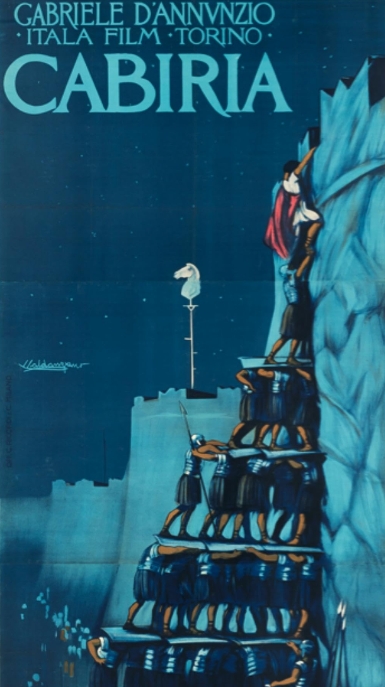
And then, in what may be the film’s single most consequential legacy, D.W. Griffith saw it. The tracking shots — the so-called “Cabiria movements” — convinced Griffith that the camera could move through a space rather than simply observing it from a fixed point. He borrowed the technique wholesale for Intolerance (1916), and from there it entered the bloodstream of all of cinema. Film historians still argue over the exact attribution of those shots, but the consensus credits Pastrone’s team — and at the center of the effects work were two names: the Spanish trick-film genius Segundo de Chomón and Eugenio Bava.
Here’s what the credits tell us, and it’s worth taking a moment over. TCM’s breakdown of the film lists six credited cinematographers — Augusto Battagliotti, Eugenio Bava, Natale Chiusano, Segundo de Chomón, Carlo Franzeri, and Giovanni Tomatis — and exactly two credited special effects artists: Segundo de Chomón and Eugenio Bava . That second line is Eugenio’s line. The famous Mt. Etna eruption sequence, which still genuinely impresses, is jointly ascribed to Bava and de Chomón, with Chomón usually getting the bigger share of credit — but Lucas’s research makes clear that Eugenio was not a footnote here; he was a collaborator who likely learned techniques by observing the Spaniard and then augmented them with his own sculptor’s instincts for material and scale .
And there’s more to Cabiria than the volcano. The film introduced Maciste — the muscle-bound dock worker played by Bartolomeo Pagano — who became the audience’s favorite character overnight and spawned something like twenty-seven silent films of his own between 1915 and 1926 . Think about that: the template for the sword-and-sandal strongman hero — the peplum archetype that Steve Reeves would revive forty years later and that Mario Bava would photograph and then direct himself — was born in a film his father helped build. It’s impossible to say whether Maciste’s shadow reached Mario directly, but consider what a child in a film family grows up with: the stories, the posters, the artifacts. Mario grew up surrounded by the visual language of the very genre he would one day help define. That, at minimum, is a family inheritance.
The interwar years: from tricks to Istituto Luce
After the war, Italian cinema entered a long decline — the industry had overexpanded, Hollywood’s product was dominating, and Mussolini’s cultural apparatus began reorganizing everything. Eugenio kept working. He shot films like Le ultime avventure di Galaor (1921) and Eleonora Duse’s Cenere (1916) — the great stage actress’s only film, itself historically significant. Then, in the Fascist era, he took a position that, in hindsight, reads like a bridge between the two Bavas: he became head of the optical effects department at Istituto Luce, the state-run film factory that produced newsreels, propaganda, and features for the regime.
Istituto Luce was, among other things, where young Mario grew up. Father and son worked together there — Eugenio passing on everything he knew about optics, compositing, and the chemistry of illusion, while Mario absorbed it like a sponge and began his own apprenticeship. When I think about where Mario Bava’s style came from, I don’t just think “son of a cameraman.” I think of a boy watching his father make glass matte paintings and double exposures look like reality, then growing up inside the workshop where those illusions were manufactured daily. There is no film school on earth that could replicate that.
Eugenio Bava died on October 23, 1966, in Rome, at eighty years old — eighty years that had spanned literally the entire arc of cinema, from Pathé’s hand-cranked cameras to the color-saturated horror boom his son was then leading . Mario was, by every account, devastated by the loss. Lucas notes that Bava was overworked, distressed by personal problems, and deeply shaken by the death of his father and mentor in October 1966 — and that he avoided the horror genre for the next two years in its wake . The death of the first Bava took the second Bava off the genre market entirely. That’s how much the father mattered to the son.
Part Two: Mario Bava — Thirty Years in the Trenches Before the Curtain Rose
The painter who chose celluloid
Mario Bava’s first ambition was to be a painter. He trained with brushes and canvases, and even after he entered the family business he never stopped thinking like a painter — which, as we’ll see, explains almost everything about the way his films look. Unable to sell paintings at a living rate, he followed Eugenio into the industry, first as an assistant to other cinematographers like Massimo Terzano, then alongside his father at Istituto Luce.
By 1939 he was shooting his own material — two short films for a young director named Roberto Rossellini, Il tacchino prepotente and La vispa Teresa, both in 1940. That detail deserves a pause, because we tend to remember Rossellini as the father of neorealism and Bava as the father of Italian horror, as though they inhabited different planets. They didn’t. They shared a set. Bava spent the next two decades as a cinematographer on nearly thirty features, building a reputation as one of Italy’s finest camera operators — a man so good at making cheap productions look expensive that producers started calling him in specifically to save dying films.
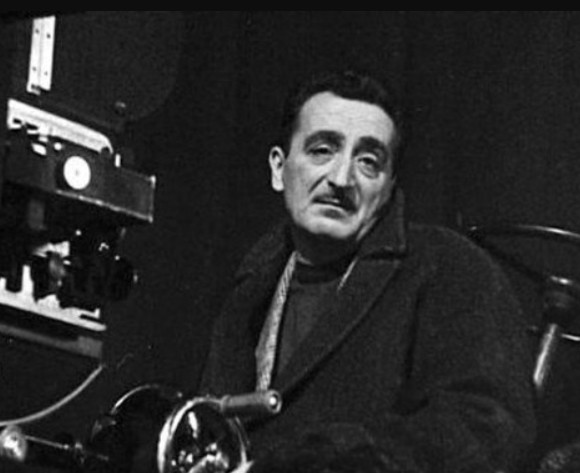
His camerawork defined the screen personas of the era’s biggest Italian stars. He built the lighting that made Gina Lollobrigida a goddess and Steve Reeves a myth. He shot Kirk Douglas’s Ulysses (1955) and, crucially, Pietro Francisci’s Hercules (1958) with Reeves — the film that ignited the entire sword-and-sandal craze. If you want to talk about Mario Bava’s role in the peplum boom, start there: Hercules was a worldwide smash, American distributor Joseph E. Levine famously bought the US rights on a whim and made a fortune, and Bava’s photography — the saturated flesh tones, the sculptural lighting on Reeves’s physique, the scale conjured from Cinecittà backlots — was a massive part of why it looked ten times more expensive than it was. He went on to shoot Hercules Unchained (1959), The Giant of Marathon (1959, where he shot the underwater battle sequence), and The White Warrior (1959) — all Reeves vehicles, all peplum touchstones.
He was also, through the late 1950s, the industry’s secret weapon for finishing other directors’ movies. When Riccardo Freda walked off I Vampiri (1957) — the film that stands as the first Italian horror film of the sound era — Bava completed roughly half the twelve-day schedule in two days, including the special effects Freda’s budget couldn’t cover . Freda then allegedly “tricked” Bava into photographing Caltiki – The Immortal Monster (1959), walked off that after two days as well, and Bava finished it too . Producer Lionello Santi, impressed, offered Bava a reward: he could choose any property he wanted for his own directorial debut.
So here we are, in 1960. A man with thirty years of craft behind him, a devotion to Russian literature (he chose Gogol’s “Vij” as the basis for his first film, which is not what you’d expect from the godfather of Italian slasher cinema, but it’s exactly what you’d expect from an artist), and a blank check from a producer. Bava was forty-six years old, and his career as a director was about to begin.
Black Sunday (1960): the mask, the witch, the queen of horror
The prologue of Black Sunday is the kind of thing that lodges in your nervous system and never leaves. Seventeenth-century Moldavia. A woman accused of witchcraft. A branding iron heated in the flames. And then the mask — a spiked bronze death-mask that an executioner nails to her face with hammer blows. Bava shoots it from both sides of the transaction: from the victim’s point of view watching the spikes descend, and from the mask’s point of view looking back at her. Cruel, perversely beautiful, and shot in black and white so high-contrast it looks etched. Tim Lucas calls Black Sunday “the last great B&W Gothic horror film,” and that feels right — it’s the endpoint of a lineage that runs back through Universal’s 1930s monsters and forward through every gothic revival that followed .
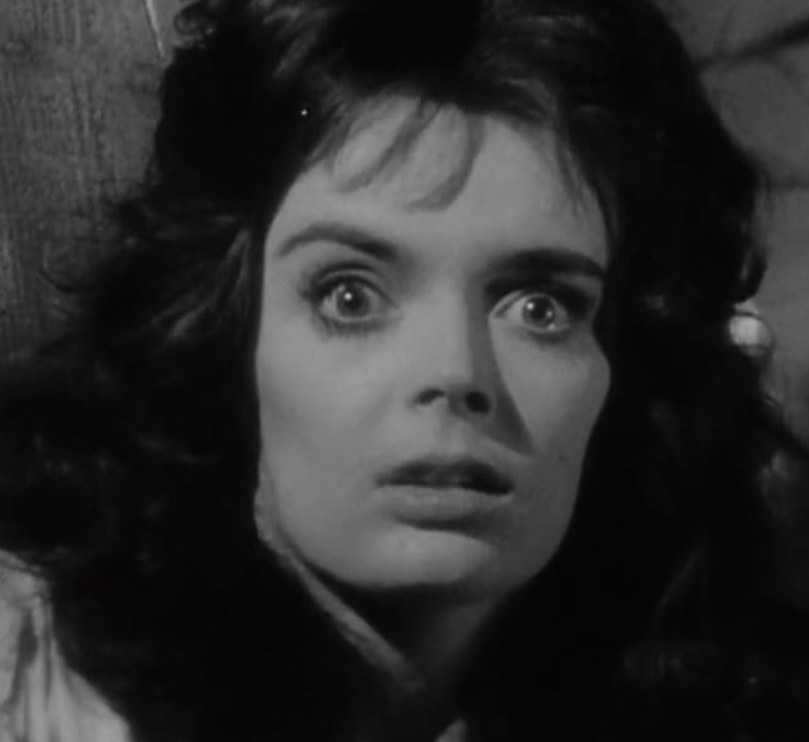
The film made Barbara Steele a star overnight, enthroning her as what Lucas calls “the screen’s first Queen of Horror” . And notice the title: La maschera del demonio was a deliberate, ironic play on the Italian title of Hammer’s The Curse of Frankenstein (La maschera di Frankenstein) — a joke in the title, a wink at the audience, the beginning of an ironic sensibility that would color all of Bava’s work .
The British Film Institute put it best when it placed Bava in the pantheon of modern horror’s founders:
“Bava took a vital role in the crafting of the modern horror film. If there was to be a Mount Rushmore-style monument dedicated to four directors whose work pioneered a new form of big screen chills and thrills, those giant faces etched in granite on the mountainside would be: Mario Bava, Alfred Hitchcock, Georges Franju and Michael Powell.”
And it’s worth saying that Black Sunday didn’t just impress critics — it reverberated. John Carpenter and George Romero, among others, have cited it as a milestone that shaped what they went on to do . This is the foundation everything after was built on.
The sword-and-sandal director: Hercules in the Haunted World (1961)
Between genres, Bava made something quietly extraordinary: a horror-tinged peplum. Ercole al centro della terra (1961), released in English as Hercules in the Haunted World, brought Mario back to the genre his camerawork had helped create — only this time he was behind the camera as director, with the burly Australian bodybuilder Reg Park (yes, the man who trained Arnold Schwarzenegger) as Hercules. The plot sends Hercules into Hell itself to retrieve a magic stone from Proserpina to cure his beloved’s madness.
What makes the film special is how Bava used the genre’s leftover infrastructure. He shot it with props recycled from earlier Cinecittà productions — the detritus of the peplum boom — and turned the descent into the underworld into a phantasmagoric Technicolor journey . The Hades sequences are pure Mario Bava: swirling fog, colored gels, impossible perspectives, monsters that look like they crawled out of a storybook. It was also, notably, his first collaboration with Christopher Lee . Critics and fans still argue over whether Hercules in the Haunted World is a great peplum or a great horror film. The correct answer, I’d say, is that the question itself proves Bava’s point: he never accepted genre boundaries as real. The film is a landmark of both categories simultaneously, and its influence runs through everything from Hammer’s fantasy epics to the comic-book fantasy films of the 1980s.
The Girl Who Knew Too Much (1963) and the invention of Giallo
Now we get to the genre the Bava name is most permanently fused to. First, some quick context on the word itself: Giallo means “yellow” in Italian, and the name comes from Il Giallo Mondadori, the famous series of pulp mystery novels published with yellow covers by the Mondadori house starting in 1929. Murder, suspense, psychosexual dread — cheap paperbacks with lurid yellow covers. Bava, a fan of these novels, decided to translate them to the screen.
The result, La ragazza che sapeva troppo (1962/63), released in English as The Girl Who Knew Too Much (or Evil Eye), is now widely recognized as the first true Giallo film. The plot is almost a checklist of the genre’s future: an American tourist in Rome (Nora Davis, played by Leticia Román) witnesses a murder on the Spanish Steps; the police don’t believe her; a serial killer known as the “Alphabet Killer” stalks the city; red herrings pile up; the truth turns out to be both personal and surprising. Bava shot it in black and white, as a kind of Hitchcock homage — the title alone winks at The Man Who Knew Too Much — but the DNA it planted is unmistakable. Vulnerable-yet-determined female protagonist. Killer’s identity hidden until the final act. Twists layered on misdirection. This template would run through Dario Argento‘s entire early career — and yes, through Scream (1996), which weaponized the same red-herring mechanics Bava was using thirty years earlier.
Bava himself was characteristically modest about it, treating the film as a lark, but the genre took off anyway. And two years later, he came back to do something that would matter even more.
Blood and Black Lace (1964): Giallo finds its look
If The Girl Who Knew Too Much invented giallo’s narrative, Sei donne per l’assassino (1964) — Blood and Black Lace — invented giallo’s image. This is the film most fans point to as the genre’s true ur-text, and the reasons are concrete.
First, it gave us the killer’s costume: a faceless man in a black hat, black coat, black trousers, and — most iconically — black leather gloves . Every giallo killer that followed, from Argento’s gloved murderers onward, owes that silhouette to this film. Second, the weapon: a spiked iron glove used to bludgeon the film’s victims, an artifact so distinctive that later gialli like Death Walks at Midnight borrowed it outright . Third, the fashion-house setting, where murder and couture are literally the same business. Fourth, the twist structure: two killers working in cahoots, a device Scream would famously parody fourteen years later — Bava did it first, in 1964 .
But the most important innovation was the one nobody expected: Bava shot a murder thriller in vivid, saturated Technicolor. In the early 1960s, color was for comedies and musicals; serious thrillers were black and white. Bava blew that convention apart, and in doing so he was able to color-code the entire film — each victim and each murder gets its own palette, red for Isabella, blue for Nicole, gold for Peggy, green for Greta, white for Tao-Li, black for the finale, with flashes of red recurring through the narrative like a blood trail . Scholars have noted the possible echo of Poe’s “The Masque of the Red Death,” and frankly, the idea of a killer moving through a series of color-coded rooms is close enough to that story that it may be deliberate. Argento’s entire chromatic vocabulary — the primary-colored lighting of Suspiria, the proscenium-curtain reveals of Deep Red and Opera — traces directly back to this film’s red-velvet curtains and neon-lit set pieces . Mannequins, harps, and fashion photography as mise-en-scène: all seeded here .
Critics of the time sometimes couldn’t see what Bava was doing — Andrew Mangravite’s observation that Blood and Black Lace is a thriller “‘about’ shadowy rooms, and the terrors of nightfall” sounds almost apologetic . What it really was is a film that understood, decades ahead of the curve, that horror and style are the same thing. Blood and Black Lace didn’t just define giallo; it prefigured the slasher. As one modern reappraisal put it, “if any film from the 1960s other than Psycho deserves to be called a proto-slasher, it is Blood and Black Lace” .
The fertile middle years: Black Sabbath, Whip and the Body, Planet of the Vampires
Between 1963 and 1966, Bava was arguably the most imaginative horror filmmaker working anywhere, producing a cluster of films that still define their subgenres.
Black Sabbath (1963), an anthology of three stories, gave Boris Karloff — then seventy-six — one of the finest performances of his late career in “The Wurdulak,” a genuinely original take on the vampire myth in which the monster is driven less by hunger than by a desperate, twisted need to reunite his family in death. The film’s title, by the way, inspired an obscure heavy metal band from Birmingham to change their name to Black Sabbath — their guitarist Tony Iommi has acknowledged the film’s influence on the band’s name, making Bava a godfather to heavy metal as well as horror.
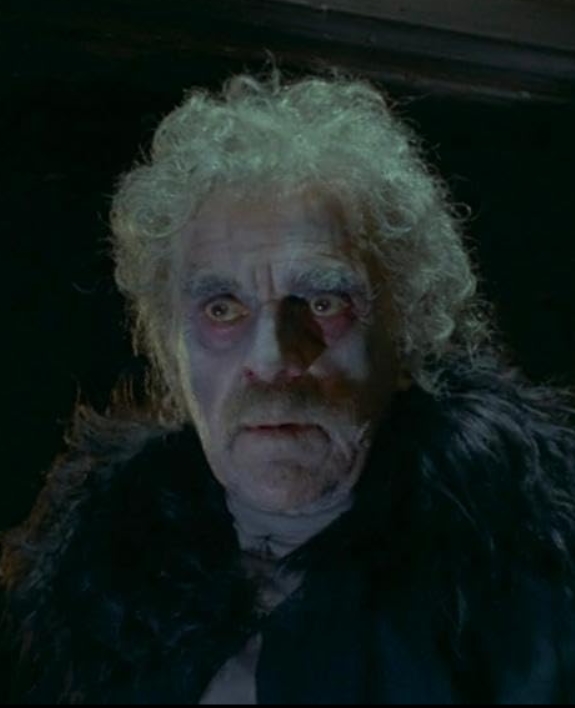
The Whip and the Body (1963) is the overlooked masterpiece of this run — a color gothic romance between a possibly-dead sadist and the woman obsessed with him, starring Daliah Lavi in a performance that makes the film’s S&M undertones impossible to miss. It was so controversial that its producer was tried for obscenity, and the film’s English-language release was retitled — incredibly — What!. Lucas positions it as a kind of amour fou in the tradition of Buñuel and Hitchcock’s Vertigo, and I think that’s exactly right: it’s the film where Bava’s lifelong fascination with eroticized terror reaches its purest form.
And then there’s Terrore nello spazio (1965), Planet of the Vampires — the film where Bava took his camera into deep space and found horror waiting there. A crew lands on a nightmare planet, their ships wrecked, their memories unreliable, their dead colleagues reanimated by something wearing their faces. The derelict ships, the desiccated dead, the parasitic entity that needs living bodies as hosts: strip away the 1960s production details and you have, almost scene by scene, the skeleton of Ridley Scott’s Alien (1979). The influence is so strong that it goes beyond homage; Planet of the Vampires is, in a real sense, Alien’s grandfather.
Kill, Baby, Kill! (1966): The ghost story that made Scorsese clap
There is a moment I find genuinely moving when I think about Bava’s career. Kill, Baby, Kill! — Operazione paura — was made after Black Sunday, Hercules in the Haunted World, and the golden run of 1963–65 had burned through his contracts and his energy. It was a small project, funded by a tiny company called F.U.L. Films, with no international stars, budgeted at well under $50,000 by Lucas’s estimate, shot in the real medieval village of Calcata standing in for a Carpathian town. Midway through, the money ran out — and Bava and his cast simply kept working, donating their services, finishing the film for love of it.
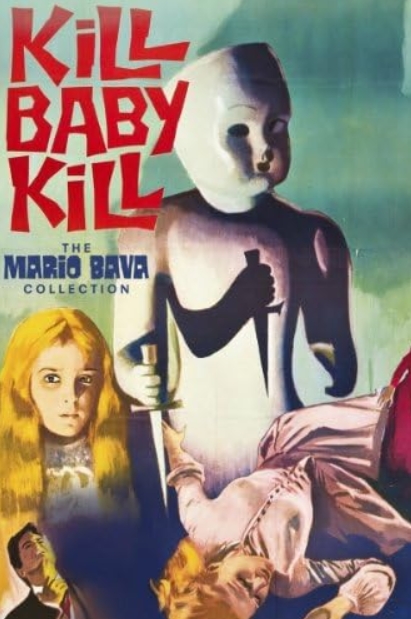
And the film is a wonder. A physician arrives in a haunted village to perform an autopsy and finds a silver coin embedded in the dead woman’s heart. The village is cursed by Melissa Graps, the ghost of a seven-year-old girl who died in 1887, trampled during a drunken festival — and her weapon is a bouncing ball, a doll, and an invitation through the window. Bava, shooting on location in ancient stone streets with leftover sets (Melissa’s crypt was recycled from a dungeon built for Bloody Pit of Horror), created his most hypnotic work: a hallway of repeating doorways, doppelgängers, a child’s ball rolling down the middle of the frame with the patience of doom .
At the Italian premiere, Luchino Visconti — Visconti! — rose and gave it a standing ovation. Lucas traces its influence forward through Fellini’s Toby Dammit (1967), Scorsese’s The Last Temptation of Christ (1988), and Lynch’s Twin Peaks: Fire Walk with Me (1991). Scorsese himself has called it Bava’s masterpiece. And Time Out’s poll of the greatest horror films ever made ranked it number 73. For a film made for under $50,000 by a crew that finished it unpaid, that is the definition of punching infinitely above your weight.
It was also the last film Bava made before the double blow that defined the second half of his career: the death of his father Eugenio in October 1966, and the commercial failure of Dr. Goldfoot and the Girl Bombs (1966), which broke his contract with American International Pictures . After that, the master of illusion found himself increasingly disillusioned — and the seventies were hard on him.
The seventies: Diabolik, A Bay of Blood, Lisa and the Devil
The seventies opened with the biggest assignment of Bava’s career — Dino De Laurentiis, flush from Phenomena-era success and international co-productions, handed him Danger: Diabolik (1968), an adaptation of the Giussani sisters’ beloved comic-book thief. Budgeted at three million dollars, Bava completed it for four hundred thousand — and finished early . The result is a pop-art fever dream, shot with the visual logic of Roy Lichtenstein and Andy Warhol, all primary colors and kinetic geometry . But Bava hated the production pressures that came with the big budgets — he’d spent his life thriving on freedom, not scrutiny — and declined the sequel offer . The seventies became a decade of underappreciated gems and bitter frustrations.
A Bay of Blood (1971), aka Twitch of the Death Nerve, is the crucial one. Thirteen characters, thirteen outrageously inventive murders, a plot about an inheritance dispute that exists mostly as an excuse for the body count . Bava, who co-wrote and photographed the film himself, put the killer’s point of view on screen with a persistence no one had attempted before — the camera becomes the murderer, stalking through windows and doorways, and the audience is made complicit in every killing . The double impalement of lovers in a canoe was recreated nearly shot-for-shot in Friday the 13th Part 2, and while Sean S. Cunningham claimed never to have seen the film, he had distributed it in the US in the seventies — the lineage is undeniable either way . Reviled on release (it was retitled Last House on the Left, Part 2 in America, a marketing decision that tells you everything about how little its brilliance was understood), A Bay of Blood is now recognized as the blueprint for the entire slasher boom .
Lisa and the Devil (1973) is the tragedy of the decade. Bava’s most personal film — drawn from his memories of growing up among his father’s sculptures, with dialogue borrowed from Dostoevsky’s The Devils and a foundation in an unrealized project about real-life necrophile Viktor Ardisson — was deemed unsalable at Cannes in 1973. To recoup costs, producer Alfredo Leone had Bava literally paint moustaches on the master footage and reshoot material, recutting it into The House of Exorcism (1975), an Exorcist clone . Bava’s daring, original work, repackaged as a second-rate imitation: it’s the story of his later career in one sentence. And Rabid Dogs (1974) — his grittiest, most daring film, the only one he ever made outside fantasy — was impounded when its producer went bankrupt, not seeing a premiere until 1996, sixteen years after Bava’s death, completed by Lea Lander, who had once played the fifth victim in Blood and Black Lace .
The final chapter of Mario Bava’s life was quiet and, in its own way, heroic. He storyboarded his last film, Shock (1977), but deliberately stepped back and let his son Lamberto — his assistant director since 1965 — take the chair, feigning illness so Lamberto could gain experience . His last job in cinema was uncredited special effects work on Dario Argento’s Inferno (1980): glass mattes, maquettes, optical effects including the film’s lunar eclipse — and, as Argento has since admitted, Bava actually directed certain scenes himself when Argento was struck down with hepatitis . Even at the end, the Bava family was holding up Italian horror.
Mario Bava died of a heart attack on April 27, 1980 — Liberation Day, a day of remembrance in Italy — at sixty-five, days after a checkup had pronounced him perfectly healthy. He was about to begin shooting a science-fiction film called Star Riders . A man who had spent his entire life building illusions left behind a body of work that had permanently changed what the medium could do.
The Bava style: What actually makes it Bava
Before we get to Lamberto, it’s worth trying to name the thing we’re looking at when we watch a Bava film, because “style” is one of those words people throw around without meaning it.
Bava’s approach was, first and foremost, cinematographic. He came up as a cameraman and never stopped thinking like one — even on films where he wasn’t officially the DP, he set his own lights, pushed his own little red wagon dolly, and cut his own glass mattes . French DP Henri Alekan once defined the cinematographer’s job as obtaining “psychological reactions out of mere technical means” , and that might be the best one-line description of Bava there is. The mask in Black Sunday isn’t just a prop; it’s a camera position, a point of view, a moral event. The red-velvet doorway in Blood and Black Lace isn’t decor; it’s the theater itself, opening on the murder.
Second, he was a problem-solver who treated budget constraints as creative fuel. His own words say it better than any critic could:
“Movies are a magician’s forge, they allow you to build a story with your hands… at least, that’s what it means to me. What attracts me in movies is to be presented with a problem and be able to solve it. Nothing else; just to create an illusion, and effect, with almost nothing.”
With almost nothing. That’s the Bava credo, learned from his father’s era, when effects were glass and wire and patience. Hercules in the Haunted World was improvised from leftover Cinecittà props. Kill, Baby, Kill! used a recycled dungeon set. Twelve extras became an army through matte paintings and camera tricks in Erik the Conqueror (1961), which Bava shot as a Viking epic so well no one could believe it was Italian .
Third, and perhaps most fundamentally: Bava never believed in the hierarchy of genres. He worked in spaghetti westerns, peplum, spy spoofs, mondo pastiches, sex comedies, and children’s television-era fantasy — and he brought the same pictorial obsession to all of it . The filone system of Italian genre production treated scripts as interchangeable furniture, and Bava treated them that way too, rewriting as much as sixty percent of his films during production, which was possible only because Italian films were post-synced . For lesser filmmakers that freedom produced mess. For Bava it produced paintings that moved.
Part Three: Lamberto Bava — The Son Who Carried the Lantern
Growing up on the set
Lamberto Bava was born in Rome on April 3, 1944 — right in the middle of the war, right in the middle of his father’s busiest decade. What that meant, practically, is that Lamberto never experienced cinema as something you went to; he experienced it as something you made. He began working as an assistant director on his father’s films in the mid-1960s, starting with Planet of the Vampires in 1965. For the next decade and a half, he was Mario’s right hand: Danger: Diabolik, A Bay of Blood, and Shock, where Mario deliberately handed him the director’s chair in all but name. Lamberto also spent time in the orbit of other Italian genre legends — he worked as an assistant on Ruggero Deodato’s Last Cannibal World (1977) and Cannibal Holocaust (1979), which puts him, improbably, at the ground zero of the cannibal film craze as well.
There’s a scene that sums up the family better than any biography could. In 1978, father and son shared directorial credit on a television adaptation of Prosper Mérimée’s ghost story La Vénus d’Ille, shot in 16mm for RAI. Mario directing alongside his son, on a small TV production, adapting nineteenth-century fantastic literature — the first Bava and the third, working side by side on exactly the kind of material the family had been making for seventy years. The film was delayed and premiered after Mario’s death. Even the disappointments were shared.
Macabre (1980): “Now I can die in peace”
Lamberto’s first solo feature came about through a chance meeting with director Pupi Avati, and the result was Macabre (Macabro, 1980) — a film about a woman (Bernice Stegers) who keeps her dead lover’s severed head in her refrigerator and treats it with a devotion that the film never quite decides is tender or monstrous . It is strange, shocking, sleazy, and genuinely unsettling: the work of someone who grew up absorbing his father’s sense that horror lives in domestic spaces, in refrigerators and bedrooms, not just castles and crypts.
The story of its screening is one of the best in Italian genre history. Mario saw the film and told his son: “Now I can die in peace”. He died within the year. The baton had been passed, and the words were as close to a blessing as the old maestro ever gave anyone.
The Argento years: A Blade in the Dark and Demons
Through the early eighties, Lamberto worked in Dario Argento’s orbit — as assistant director on Tenebrae (1982) — and then made his own giallo, A Blade in the Dark (La casa con la scala nel buio, 1983). Originally structured as a television film shot in four 25-minute segments on almost no money, it’s a taut, atmospheric mystery about a film composer at a secluded villa who becomes entangled in a series of murders — and it remains, for many giallo fans, one of the most unfairly overlooked entries in the genre. It has the classic Bava-Lamberto DNA: a single luxurious location turned claustrophobic, an identity that shifts like sand, and a visual restraint that makes the violence hit harder.
But the film that made Lamberto’s name — the one that sits in the Italian horror canon next to his father’s work — is Demons (Dèmoni, 1985), produced and co-written by Argento. The premise is deceptively simple: a mysterious masked man hands out free tickets on the Berlin U-Bahn, a group of strangers gathers at the Metropol cinema for a preview, and the horror on the screen bleeds into the auditorium — scratches become transformation, teeth push through gums, and the exits turn out to be bricked up.
What makes Demons endure, forty years on, is how perfectly it captures 1985: punks and leather-clad delinquents, a pimp and his girls, cocaine snorted through a Coke can, George riding a display motorcycle through the demon horde slicing them down with a katana while Accept’s “Fast as a Shark” blasts from the soundtrack. Claudio Simonetti’s synth score, a soundtrack stocked with Mötley Crüe, Billy Idol, and Accept — it’s MTV-era horror at full throttle. And beneath the excess, the film is a razor-sharp allegory about spectatorship itself: the audience within the film becomes the audience on screen, the horror literally tears through the movie screen, and in the end, there is no outside — the apocalypse has spread beyond the cinema, because the contagion was watching all along. It anticipated the meta-horror of New Nightmare and Scream by a decade, and it did it with less irony and more teeth. The film grossed over 1.2 billion lire in Italy, ranking 39th for the year and outperforming American horror imports including A Nightmare on Elm Street.
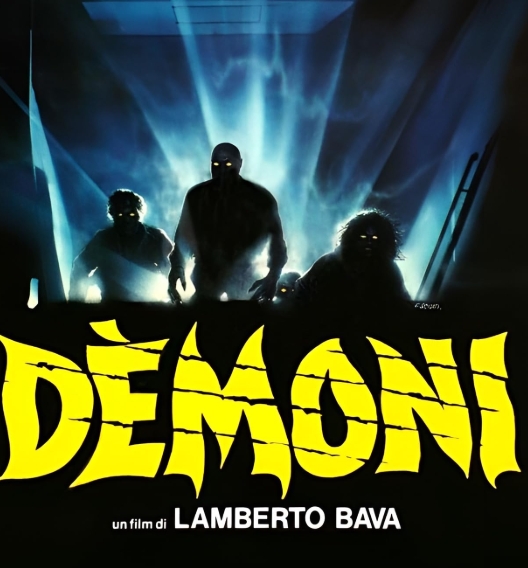
Sergio Stivaletti’s effects — glow-eyed demons made with reflective paper, bile pumped through hidden tubing — gave the film its signature carnival grotesquerie, and a young Michele Soavi directed the film-within-a-film sequences while appearing on screen as the silver-masked ticket taker, a dual role that foreshadowed his own career with Stage Fright and The Church. Demons 2 followed in 1986, moving the contagion from a cinema to a television signal in an apartment block — the sequel’s logic confirming the original’s thesis that horror is a medium that cannot be contained. A third Demons was conceived but transformed, in the way of Italian genre production, into Michele Soavi’s The Church (1989).
The television fairy-tale king: Fantaghirò
If Mario Bava gave Italian horror its visual soul, Lamberto gave Italian television of the nineties its most beloved fantasy universe. The Fantaghirò series — five television films between 1991 and 1996, based on Italo Calvino’s retelling of “Fanta-Ghiro the Beautiful” from Italian Folktales — was shot in the castles of the Czech Republic and Slovakia and became a genuine cultural event. Alessandra Martines’s warrior princess — a swordswoman who cuts her own hair into a boy’s crop and fights in armor — launched her career; Kim Rossi Stuart and Brigitte Nielsen rounded out a cast that defined nineties Italian fantasy television. The series was so enduring that it became an annual Christmas tradition in Germany, and it ran long enough to develop its own mythology of witches, curses, and parallel worlds.
It’s worth pausing on what Fantaghirò represents in the family story. This was never going to be a horror franchise. It was fairy tales — Calvino’s folktales, princesses, wizards, talking animals — made with the same craft ethic the family had always applied: real locations, practical effects, imaginative staging on television budgets. When I watch Fantaghirò ride through a Czech castle, I don’t see a departure from the Bava legacy; I see its extension. The family business was never “horror.” The family business was making images that feel more alive than they have any right to. Horror, fairy tale, peplum, giallo — those are just rooms in the same house.
The full arc: 1980s to 2000s and beyond
Between the milestones, Lamberto’s filmography reads like a map of Italian genre cinema in the late twentieth century: the Mad Max-inspired Blastfighter (1984); the delightfully trashy shark romp Monster Shark (1984); the Sergio Stivaletti-puppet-haunted Delirium (1987); the organ-thriller Body Puzzle (1992); the long-unreleased Rabid Dogs restoration work; the Argento-produced television anthology series Brivido giallo (1987–1989), in which Lamberto directed entries including Graveyard Disturbance, Until Death, The Ogre, and Dinner with a Vampire; and a live-action television remake of his father’s own Black Sunday, La maschera del demonio, which premiered at Rome’s Fantafestival in 1990 . He even remade his father’s masterpiece for television — a gesture that is either supreme confidence or supreme reverence. With Lamberto, it’s probably both.
His later career leaned into television — Desideria, Sorellina e il Principe del Sogno, Caraibi, L’Impero — and the 1997 feature Ghost Son, an underrated gothic family ghost story that feels like the most “Bava” thing he made in decades . And the dynasty, as of this writing, continues into a fourth generation: Lamberto’s sons Andrea and Antonio Bava have both entered filmmaking, with Andrea directing genre features — meaning the family that began with Eugenio’s hand-cranked Pathé camera in 1906 is still making movies today .
The Through-Line: What the Bava Family Actually Represents
Let me try to pull the threads together, because three biographies side by side only become a story when you see what’s common to all of them.
| Generation | Era of Italian Cinema | Primary Craft | Defining Contribution |
| Eugenio Bava (1886–1966) | Silent epics → Fascist-era cinema | Cinematography, in-camera special effects | Effects photography on Cabiria (1914); head of optical effects at Istituto Luce; the craft tradition passed down |
| Mario Bava (1914–1980) | Postwar neorealism → filone boom | Cinematography, direction, effects, writing | Black Sunday and Italian gothic; inventing giallo (Girl Who Knew Too Much, Blood and Black Lace); the peplum’s greatest DP; slasher/sci-fi blueprints (A Bay of Blood, Planet of the Vampires) |
| Lamberto Bava (b. 1944) | TV era → 1990s Italian television | Direction, assistant direction | Demons; the Fantaghirò fairy-tale universe; the Argento collaborations; carrying the genre tradition into television |
Look at the left column and you see the history of Italian cinema itself: the Pathé years, the filone golden age, the television era. The Bavas didn’t just live through these periods — they staffed them.
And the common thread in their craft is the artisan’s relationship to the image. Eugenio learned illusion from sculpture and glass; Mario learned it from watching his father and then spent sixty years practicing it with a camera, a dolly, a brush, and a soldering iron; Lamberto learned it on sets where his father was literally handing him the camera. None of the three ever separated the how from the what. For all of them, the question was never “is this a horror film or a fairy tale?” — it was “does this image move?” That question, asked across three generations, is what makes the Bava story more than film trivia. It’s a case study in how cinematic knowledge actually transmits: not through schools or manifestos, but through workshops, dinner tables, and decades of shared sets.
There’s also something quietly radical in the family’s relationship to “prestige.” Italian cinema has always had its high-art canon — Fellini, Antonioni, Rossellini (with whom Mario shot his first films, remember) — and the genre filmmakers were long treated as the industry’s lesser sons. The Bavas spent three generations being the lesser sons, and the verdict of history has been decisive: the BFI places Mario on a Mount Rushmore of horror pioneers; Scorsese calls Kill, Baby, Kill! a masterpiece; Argento built a career on a foundation Bava poured; Carpenter, Romero, Soavi, Fulci, and a hundred others owe him the vocabulary of their work. The artisan won.
One last thing, and it’s the detail I keep coming back to. When Mario Bava died, he left unfinished matte paintings and optical effects inside Argento’s Inferno — his last act in cinema, literally painting light into another filmmaker’s nightmare. His son was finishing his own television series. His grandson would remake his masterpieces. And somewhere in a Czech castle, a warrior princess was about to ride into a fairy tale shot by the family that once made a witch’s spiked mask look like it was forged in the seventh circle of hell.
That’s the Bava family. Three generations of men who treated cinema as a magician’s forge — and left us, every one of them, a little more dazzled than we deserve to be.