
There is a moment in Closely Watched Trains when the film seems to forget that it is supposed to be telling a story about the German occupation of Czechoslovakia. Miloš Hrma is a young railway worker, surrounded by war, uniforms, timetables, military cargo and the machinery of history. Yet his attention keeps drifting toward sex, embarrassment, vanity and the desperate wish to become an adult. The great historical catastrophe is present, but it is not always in the foreground. Sometimes it is reduced to a whistle in the distance, a passing train, a photograph, a joke told at the wrong moment.
That is the secret of the Czechoslovak New Wave. It did not always attack power by making speeches about power. It watched people trying to get through the day. It noticed the gap between official language and private behaviour, between the heroic story a nation tells about itself and the awkward body sitting in a kitchen, a railway office, a village hall or a cramped apartment. It understood that absurdity could be more truthful than solemnity, and that a badly timed laugh might expose a political reality more sharply than a manifesto.
My previous article introduced the movement as a burst of cinematic rebellion and reflection. This companion piece goes further. Its central question is not simply what the Czechoslovak New Wave was, but why it was so singular, and why its aftershocks travelled so far beyond Czechoslovakia. The movement matters because it joined artistic freedom to an unusually alert sense of ordinary life. It could be playful without becoming harmless, political without becoming schematic, and formally radical without losing contact with faces, voices, bodies and local spaces.
The result was one of the most concentrated creative eruptions in postwar cinema. In the 1960s, a group of filmmakers working inside a state-supported film industry made films that looked and sounded unlike the official cinema that had preceded them. Their work moved from village comedy to feminist surrealism, from documentary-like observation to Gothic horror, from medieval epic to intimate chamber drama. The movement was associated with the cultural liberalization of the 1960s and reached its political breaking point after the Warsaw Pact invasion of August 1968, which crushed the Prague Spring and ushered in a period of cultural repression. Yet its artistic life did not end neatly on that date. Some films were banned or shelved. Some directors went abroad. Others remained and negotiated with a tightened system. Films shot before or around the invasion continued to appear, sometimes years later, carrying the memory of a freedom that had briefly become visible.
To call these filmmakers “Czech” is often convenient, but historically incomplete. The country was Czechoslovakia, and the movement included Slovak as well as Czech artists. The phrase Czechoslovak New Wave is therefore the more precise term, even though “Czech New Wave” remains common in English-language film culture. Dartmouth’s film-studies guide describes it as the most significant movement of postwar Central and Eastern European cinema and notes that roughly sixty films made in the middle years of the 1960s bore the movement’s marks of absurdism, black humour, non-professional acting and formal experimentation.
The label “New Wave” can also mislead. It suggests a manifesto, a club and a single shared program. The Czechoslovak filmmakers did not all make the same kind of film. Věra Chytilová’s Daisies is a delirious attack on order itself. Jiří Menzel’s Closely Watched Trains is tender, comic and quietly tragic. Miloš Forman’s Loves of a Blonde studies loneliness with the patience of a documentary. František Vláčil’s Marketa Lazarová turns medieval history into a sensory assault. Juraj Herz’s The Cremator descends into the mind of a man who turns murder into a spiritual hygiene ritual. Their kinship lies less in a common look than in a common refusal: they refused the demand that cinema should make life appear simpler, cleaner and more ideologically reassuring than it was.
The movement’s real subject: The collision between public stories and private lives
The official cinema of Stalinist Czechoslovakia had favoured narratives of ideological clarity. Socialist Realism presented the world as a place in which history moved toward a positive collective future and characters could be judged by their political consciousness. Such cinema required recognisable heroes, legible conflicts and a reassuring moral direction. The filmmakers of the New Wave did something almost scandalous by comparison: they allowed people to be petty, confused, sexually anxious, bored, selfish, generous, ridiculous and occasionally brave without turning them into symbols of a correct social attitude.
This was not an escape from politics. It was politics relocated into behaviour.
A young man who cannot speak to a girl, a factory worker who worries about a dance, a fireman who cannot control an amateur beauty contest, a railway employee who obsesses over a stamp on a woman’s body, or two young women who decide to behave badly because the world is already bad: these figures reveal how systems enter the texture of everyday life. They show ideology not only as a law or a speech, but as embarrassment, routine, self-censorship, ritual, hierarchy and the fear of looking foolish in front of other people.
The previous article rightly emphasized the movement’s irony, absurdity and attention to the everyday. The deeper point is that these qualities worked together. Everyday realism gave the films credibility. Absurd humour made official reality unstable. Formal experimentation prevented the viewer from consuming the story as a simple political lesson. Instead of telling us what to think, the films made us feel the friction between the world’s rules and the unruly people forced to live inside them.
That friction explains why the films remain so alive. Propaganda ages when its certainty becomes historically remote. Awkwardness does not age so easily. Neither does desire, jealousy, the wish to be admired, the fear of public humiliation, or the small rebellion contained in refusing to behave correctly. The Czechoslovak New Wave found modernity in those unstable spaces.
FAMU: A school, a workshop and a pressure chamber
One of the movement’s practical foundations was the Film and TV School of the Academy of Performing Arts in Prague, known as FAMU. The school was founded in the postwar period and became, by the early 1960s, an incubator for filmmakers who would become central to the Czechoslovak New Wave. FAMU describes itself as the fifth-oldest film school in Europe and identifies its early-1960s community as a major contribution to world cinematography, one associated with Czechoslovakia’s two Academy Awards for Best Foreign Language Film.
A film school alone does not create a movement. What mattered was the encounter between training, generational impatience and a loosening political climate. FAMU gave young filmmakers access to equipment, technical knowledge, film history, professional contacts and a space in which the assumptions of older cinema could be challenged. The students were aware of Italian Neorealism, the French New Wave, modernist literature, documentary cinema and the avant-garde. But influence did not mean imitation. They absorbed methods from abroad and transformed them through Czech and Slovak cultural experience.
The result was not a local copy of Godard or Fellini. Forman’s people may stumble through a provincial dance hall rather than a Parisian boulevard. Chytilová’s Maries may invoke surrealism, but their appetite, boredom and anger belong to the material world of Czechoslovak modernity. Menzel’s humour grows from Bohumil Hrabal’s literary universe, from the comic dignity of ordinary people and from the knowledge that history often reaches a person indirectly. Vláčil’s medieval landscape connects to Czech literary modernism and the interwar avant-garde, not merely to the historical epic traditions of Hollywood.
The school also helped create a network. Directors, cinematographers, editors, designers, composers and writers crossed paths. Ester Krumbachová is a particularly important example of how the movement cannot be understood only through director-centred history. She worked as a costume designer, screenwriter and visual collaborator on several major films. Criterion has described her as a “shadowy eminence” behind some of the movement’s most vital works, including Daisies, Diamonds of the Night, Valerie and Her Week of Wonders and The Ear. Her contribution reminds us that the New Wave was not simply a parade of male auteurs. It was also a collaborative visual culture in which design, costume, writing and production decisions could radically shape a film’s politics.
The everyday becomes cinematic material
The easiest way to recognize the New Wave is not by looking for a specific camera movement. Look instead at what the camera considers worthy of attention.
A provincial dance hall becomes a complete social universe in Loves of a Blonde. A railway station becomes a stage for erotic confusion and wartime danger in Closely Watched Trains. A firemen’s ball becomes a miniature political society in The Firemen’s Ball. A family gathering becomes an examination of memory, artistic failure and male vanity in Intimate Lighting. A banquet becomes the site of a destructive feminist carnival in Daisies.
These settings are modest, but the films do not treat them as small. The filmmakers understood that a room can contain a class system, a village can contain a state, and an apparently trivial social ritual can reveal the entire emotional architecture of a society.
This is one reason the New Wave was so influential. It offered filmmakers a way to make cinema from situations that conventional narrative might dismiss as too ordinary. Its stories often have weak or unstable plots. People wait, wander, flirt, fail, gossip, drink, remember, fantasize and try again. The drama emerges from attention rather than spectacle.
The style is often mistaken for naturalism, but the films are more carefully constructed than their casual surfaces suggest. Forman’s apparently loose conversations depend on editing that preserves hesitation and social discomfort. Menzel’s comedy depends on the precise timing of glances, pauses and bodily reactions. Passer’s Intimate Lighting builds its emotional force from repetitions and interruptions. Chytilová breaks continuity openly, but her chaos is composed with exacting visual intelligence. The movement teaches us that realism is not the same as passivity. To watch closely is already to make an artistic and political choice.
Miloš Forman: Embarrassment as social analysis
Miloš Forman became the movement’s most internationally famous figure after leaving Czechoslovakia and making major American films such as One Flew Over the Cuckoo’s Nest and Amadeus. But his Czech films contain the essential grammar of his later work: groups of people trapped inside institutions, outsiders who do not fit the official script, performers who want recognition, and authority figures who reveal their own absurdity while trying to control others.
Black Peter: The politics of not knowing what to do
Forman’s first feature, Black Peter (1963), follows a young man trying to enter adulthood. The title refers to a job in which Peter is supposed to watch for shoplifters, but his new role produces more uncertainty than authority. He is not a rebel in the grand sense. He is hesitant, observant and socially clumsy. He does not know how to speak to his father, how to approach a girl or how to perform the confidence expected of him.
That hesitation is the film’s political intelligence. Peter lives in a society that values collective discipline and productive adulthood, but he experiences the world as a series of unspoken instructions. His father is not a theatrical tyrant. He is a recognizable parent who lectures, misunderstands and demands competence. The conflict is not between a pure individual and an obviously evil state. It is between a young person’s interior uncertainty and the social pressure to appear certain.
Forman’s camera gives this awkwardness room. Conversations feel overheard rather than written for effect. People talk past one another. The humour does not depend on a punchline so much as on the unbearable duration of a social moment. A person keeps standing there after the conversation has already gone wrong.
That comedy travelled well because embarrassment is international. Forman’s achievement was to make provincial awkwardness a serious cinematic subject without polishing it into charm. Peter is not an appealing hero in the conventional sense. He is a person before he is a symbol, and that is exactly why the film’s social world becomes visible around him.
Loves of a Blonde: Loneliness inside the crowd
If Black Peter studies a young man’s confusion, Loves of a Blonde (1965) expands the subject into a portrait of loneliness. Andula works in a factory town where the social world is small, repetitive and underpopulated by the kind of men she wants to meet. When a group of older reservists is brought in for a dance, the authorities imagine that the evening may solve a demographic problem. The dance is organized as if romance were a matter of administration.
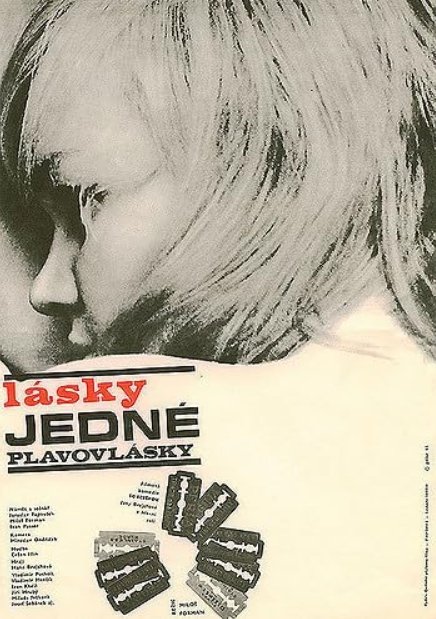
(Loves of a Blonde) (1965)
The result is one of the New Wave’s most piercing jokes: the system can organize a dance, but it cannot create intimacy.
Andula’s encounter with the pianist Milda unfolds through a combination of desire, miscommunication and fantasy. She wants the romance to mean more than it does. He wants the night to remain a night. Neither is presented as a monster. The pain comes from the ordinary imbalance between what two people hope for.
The film’s famous visit to Milda’s parents is a masterpiece of social discomfort. Andula arrives in Prague carrying the emotional consequences of the encounter, while Milda’s parents try to manage the situation through politeness, suspicion and embarrassment. The room becomes a battlefield without anyone openly declaring war. Forman observes faces and pauses until the comedy turns melancholy.
The film was internationally recognized; Criterion notes that it was nominated for an Academy Award for Best Foreign Language Film and calls it a balancing act between subtle social satire, adolescent romantic longing, despair and hope. Its influence lies partly in this balance. Loves of a Blonde shows how a film can be politically alert without reducing a woman’s emotional life to a political allegory. Andula is not merely a victim of a defective social system. She is a person with a body, a fantasy, a memory and a wish to be loved.
The Firemen’s Ball: When institutions lose control of the party
The Firemen’s Ball (1967) takes Forman’s method into a more openly allegorical space. A provincial fire brigade organizes a public ball with a beauty contest, a raffle and a presentation for a retired former chief. Almost everything goes wrong. Contestants disappear, prizes are stolen, the raffle becomes chaotic and the officials keep trying to preserve the appearance of order.
The film’s brilliance is that it never needs to announce what the firemen represent. They are not simply stand-ins for one political institution. They are a group of men whose authority depends on ceremony. Once the ceremony fails, they improvise excuses, blame one another and attempt to make disorder look like procedure.
The firemen’s hall is a miniature society because it contains hierarchy, public shame, bureaucracy, vanity and collective denial. The officials are not monsters. Many are petty, frightened or incompetent. That makes them more recognizable and, in a way, more dangerous. The film is not interested in the fantasy that power belongs only to evil people. It shows how ordinary people can preserve a failing system because they are too embarrassed to admit that it has failed.
The film was made with a light touch, but its political reception was serious. Britannica identifies Forman’s film as an exploration of social and moral issues through gentle satire, while the broader historical record places these films within a period when internationally acclaimed works could still face official disapproval and suppression at home. The movie’s movement from comedy to catastrophe is a lesson in how fragile public order can be. It begins with a party and ends with the exposure of a community that cannot care for its own members.
Forman’s later Hollywood films would often place unruly individuals against institutions: hospitals, psychiatric systems, courts, armies, aristocratic cultures. The Czech films show where that interest began. He had already learned that the funniest scene in a room may also be the scene that reveals the room’s rules.
Věra Chytilová: The film strip as a site of revolt
If Forman made social embarrassment political, Věra Chytilová made cinematic form itself rebellious. She was one of the few major women directors associated with the Czechoslovak New Wave and worked in an industry and film culture dominated by men. The BFI describes her as one of the movement’s most rebellious and boundary-breaking talents and emphasizes the central place of gender, individual freedom and resistance to social roles in her work.
Something Different: two women, two forms of discipline
Chytilová’s feature debut, Something Different (1963), is structured around two women: a professional gymnast training with punishing discipline and a housewife trapped in domestic repetition. The film does not offer an easy opposition between public achievement and private confinement. The gymnast’s body is celebrated, but also controlled. The housewife’s home appears ordinary, but its ordinary routines are a form of pressure.
The two narratives are connected not by conventional plot but by comparison. Chytilová asks us to notice how women are trained to perform. One woman performs athletic perfection for a public audience. The other performs domestic competence in a private space. Both are judged through expectations that were built before they entered the frame.
The film’s editing makes the comparison physical. Training, repetition, exhaustion and household routine begin to echo each other. Chytilová does not need a speech about patriarchy because the body is already speaking: stretching, cleaning, waiting, cooking, performing, failing and beginning again.
Daisies: Destruction as a refusal to behave
Then comes Daisies (1966), one of the great explosions in cinema history. Two young women, both named Marie, decide that since the world is bad, they will be bad too. The sentence is comic, childish and philosophically corrosive. It refuses the moral demand that the individual must remain good while the world around her is allowed to be corrupt, violent and hypocritical.
The Maries flirt, eat, lie, steal attention, abandon men, consume food and turn social rituals into games. They are not presented as models of political virtue. They are selfish, cruel, bored, funny, hungry and impossible to contain. That is precisely what makes them radical. They do not replace one official program with another. They attack the expectation that young women should be legible, useful, modest and grateful.
Formally, the film behaves like its protagonists. The image changes colour and texture. Editing fragments bodies and actions. Archival images of war and destruction collide with playful performances. The soundtrack refuses smooth psychological continuity. The film can jump from flirtation to violence, from appetite to boredom, from a realistic room to an abstract visual field.
The food fight is often treated as a climax of anarchic fun, but it is more complicated than that. The banquet suggests abundance, status and ritual. The Maries turn that display into waste. The authorities objected to the film’s destruction of food, and the film was banned, with the wastage treated as especially offensive. BFI’s account notes that the banquet was set out for party officials and that the ending’s dedication mocked the moral outrage directed at a “trampled-on trifle.”
The official objection reveals the film’s deepest provocation. Daisies makes a public spectacle out of the waste that polite society wants to hide. The Maries are not the only people consuming. They are simply the ones who refuse to consume quietly.
It is tempting to call Daisies a feminist film and leave the matter there. Its resistance to male control and its exposure of predatory sexual entitlement certainly make that description meaningful. But Chytilová herself resisted being reduced to a label and spoke instead about individual freedom. The film’s force comes from the fact that its rebellion is not tidy. The Maries do not ask for inclusion in an orderly system. They disrupt the system’s categories of good behaviour.
The film’s influence can be felt wherever directors use editing, colour, sound and performance to turn social disobedience into a formal event. It belongs to feminist cinema, avant-garde cinema, political cinema and comedy, but it is not exhausted by any one of those traditions. Every time it is revived, it appears newly dangerous because its central question remains unresolved: what if behaving properly is one of the ways a bad world reproduces itself?
The Fruit of Paradise: Desire, knowledge and the dream of escape
Chytilová’s The Fruit of Paradise (1969) carries the movement’s experimental impulse into a more symbolic and dreamlike register. Drawing loosely on the Garden of Eden, it uses fractured episodes, stylized bodies, expressive landscapes and abstract associations to explore temptation, suspicion, desire and knowledge.
The film is not as immediately accessible as Daisies, but that difficulty is part of its historical mood. After the brief opening of the Prague Spring and the invasion of 1968, the dream of liberation had become haunted by the knowledge that the world could close again. Chytilová does not translate that political disappointment into a simple plot. She makes uncertainty into an atmosphere.
The BFI notes that Chytilová’s surrealism often draws on nature, double exposure, sound and abstract pattern, and that her formal experimentation did not signal a retreat from social criticism. Her cinema demonstrates that political film need not always show an institution being confronted. Sometimes it shows perception itself refusing to settle into the official arrangement of reality.
Jiří Menzel: comedy with a wound inside it
Jiří Menzel’s cinema is often described as gentle, lyrical or warm. Those words are accurate, but they can make his films sound safer than they are. Menzel’s tenderness is not an escape from history. It is a way of showing how history enters bodies that are not prepared for heroism.
Closely Watched Trains: The small body inside the large war
Closely Watched Trains (1966), adapted from Bohumil Hrabal, follows Miloš Hrma, a young man working at a railway station during the Nazi occupation. He is inexperienced, sexually anxious and desperate to prove himself. The station is a place of military movement, but Miloš’s immediate crisis is personal: he has failed sexually and fears that he is not a complete man.
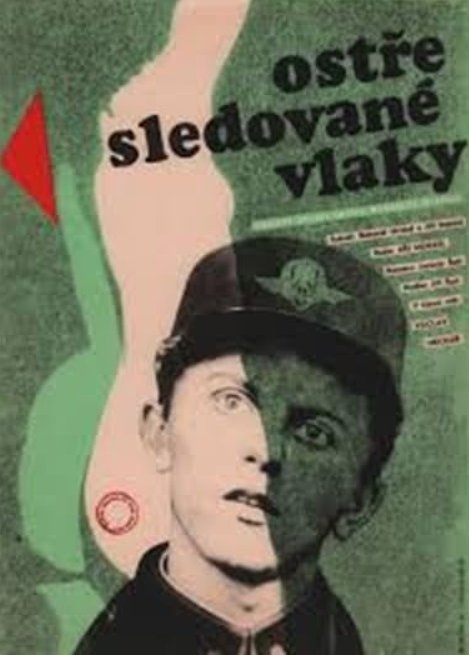
Ostre sledované vlaky (Closely Watched Trains)
This collision of war and sexual embarrassment is not a trick. It is the film’s moral structure. The young do not experience history in the order that textbooks provide. A national struggle may be unfolding, but a young person may still be consumed by the body, by shame and by the fear of being inadequate.
Menzel’s tone is astonishingly controlled. The film can move from erotic comedy to political danger without treating either as a betrayal of the other. The railway workers gossip, flirt and play at authority. The stationmaster cares about pigeons and status. The dispatcher conducts an affair. Miloš tries to enter adult life while military trains pass through the frame.
The film’s final movement reveals how this comic world has been surrounded by violence all along. Miloš’s private maturation becomes entangled with an act of resistance. His heroism is not the fulfilment of a conventional action plot. It arrives almost accidentally, through a chain of awkwardness, courage and circumstance.
The film won the Academy Award for Foreign Language Film at the 40th Academy Awards, honoring films released in 1967. The Academy’s official record lists Closely Watched Trains as the winner for Czechoslovakia. That recognition mattered internationally, but the award does not explain the film’s endurance. It endures because it refuses to separate the ridiculous from the tragic. Its characters can be funny without being foolish and brave without becoming statues.
Larks on a String: The film that waited
Menzel’s Larks on a String was made in 1969 and was suppressed for decades before being released after the political changes of 1989. It follows people sent to work in a scrapyard as punishment for their political or social status. Like The Firemen’s Ball, it finds absurdity inside an institution. But the laughter is more bruised. The film knows that a joke may survive a system, while a person may not.
Its long suppression is part of its meaning, but the film should not be reduced to a historical document. It is a lively, humane work about people trying to preserve dignity under arbitrary authority. Menzel’s gift is to find comedy in the survivors’ small acts of conversation, flirtation and mutual recognition. The political system wants to classify them. The film keeps returning them to their individuality.
Ivan Passer: the politics of a shared room
Ivan Passer’s Intimate Lighting (1965) is among the clearest examples of the New Wave’s ability to make apparent stillness dramatic. A musician visits an old friend in a small town. The visit is filled with food, music, memories, domestic interruptions, unfinished ambitions and the subtle competition of men who are trying to decide whether their lives have turned out well.
Nothing spectacular needs to happen because the film understands that friendship is made of comparison. One friend has a family, another has artistic ambitions, another has settled into routine. Their conversation moves between affection and discomfort. They remember the past differently. They perform success and conceal disappointment.
Passer’s achievement is to make social time visible. The film does not rush toward a revelation because the revelation is distributed across gestures. A person who interrupts a song, a child who enters the room, a meal that goes on too long, a story that is told for the third time: these details create a portrait of a society in which private feeling is both rich and difficult to articulate.
The influence of Intimate Lighting is easy to miss because its style is modest. Yet many later filmmakers have built entire careers on the idea that a gathering can contain a novel’s worth of emotional material. Passer shows that a film can be politically meaningful simply by taking ordinary people’s inner lives seriously.
Jan Němec: The image as a trap
Jan Němec’s cinema is harsher. Where Menzel finds resilience in human connection, Němec often asks what happens when social life becomes a mechanism of surveillance, humiliation and obedience.
Diamonds of the Night: Memory under pursuit
Diamonds of the Night (1964) follows two Jewish boys escaping from a transport during the Second World War. The film is less interested in conventional suspense than in the unstable experience of being hunted. Time fractures. Memory intrudes. The boys run through a landscape that becomes both real terrain and psychological space.
The film’s power comes from refusing to turn survival into a clean narrative. Hunger, exhaustion, fear and fantasy blur together. The camera stays close to bodies and faces, but the world around them remains uncertain. The escape is not an adventure. It is a condition of perception.
This approach connects the film to a larger European cinema of memory and trauma, but Němec’s treatment is distinct in its refusal of explanatory comfort. The viewer is not given a secure position from which to judge what is remembered, imagined or happening now. That uncertainty is not decorative. It approximates the mental life of people whose reality has been shattered by pursuit.
A Report on the Party and the Guests: Hospitality becomes coercion
In A Report on the Party and the Guests (1966), a group of people on a picnic encounter an authoritative host who gradually turns hospitality into a test of obedience. The guests are invited to remain, but the invitation becomes harder to refuse. A man who resists is isolated. The group is pressured to restore order by accepting the host’s terms.
The film is one of the New Wave’s clearest political parables, but its power lies in the social mechanics rather than in a one-to-one allegory. No one needs to shout “totalitarianism.” The situation becomes oppressive through politeness, peer pressure and the fear of disrupting the group. A person can surrender freedom while insisting that nothing serious has happened.
That insight has travelled far beyond the original political context. The film speaks to authoritarianism, corporate culture, nationalism, cults and any social environment where compliance is presented as good manners. Its nightmare is not simply that a dictator may appear. Its nightmare is that ordinary people may help the dictator maintain the picnic.
František Vláčil: History as physical experience
The Czechoslovak New Wave is sometimes imagined as a cinema of contemporary rooms and ordinary faces. Marketa Lazarová proves that this is too narrow. František Vláčil’s 1967 film is a historical epic, but it belongs to the same creative weather: distrust of simplified narratives, fascination with the body, formal invention and a willingness to make the past feel unstable.
Marketa Lazarová: The medieval world without museum glass
The film follows warring clans, nobles, religious authority, violence, desire and survival in a medieval landscape. But it does not present the Middle Ages as a sequence of clean historical illustrations. Vláčil makes the past tactile and dangerous. Snow, bark, mud, fur, blood, breath, animal movement and distant voices become as important as plot exposition.
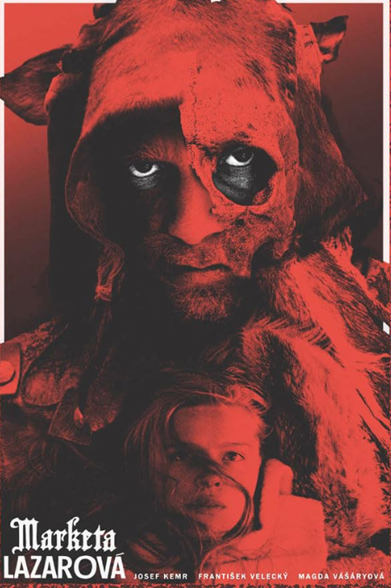
Criterion’s essay describes the film as a brutal and magical vision of the Middle Ages and emphasizes its abrupt shifts in tone, pace, sound and image. It connects Vláčil’s style to Czech literary modernism, Gothic imagination and the interwar avant-garde, while noting the film’s mobile camera, abrasive editing and sensory intensity.
The opening already tells us that ordinary historical orientation will not be provided. The landscape appears before the human story. Figures are distant. Voices seem to come from uncertain spaces. Animals watch. The soundtrack creates an archaic world without pretending to reproduce a stable historical reality.
Vláčil wanted historical cinema to make viewers feel that they had fallen back into another time. The effect is not achieved by explaining the past but by assaulting the senses with its material conditions. The film makes history bodily. We do not simply learn that the medieval world was violent; we feel the cold, the fear, the confusion and the proximity of death.
That is why the film belongs beside the New Wave’s contemporary dramas. Both are suspicious of official distance. Loves of a Blonde makes a provincial dance hall socially dense. Marketa Lazarová makes a medieval forest physically immediate. Both insist that cinema should not protect the audience from the texture of experience.
The film also expands the movement’s idea of influence. It shows how a national cinema can reach backward into its own literary and artistic traditions while remaining formally modern. It is not international because it erases its Czech identity. It becomes internationally legible by making that identity sensuous, complex and strange.
Juraj Herz and the horror of ideological transformation
If Daisies turns appetite into revolt, The Cremator turns social conformity into nightmare. Juraj Herz’s 1969 film follows Karel Kopfrkingl, a crematorium operator in Prague during the Nazi occupation. He presents himself as a sensitive man who wishes to relieve suffering, but his language of compassion gradually fuses with fascist racial ideology.
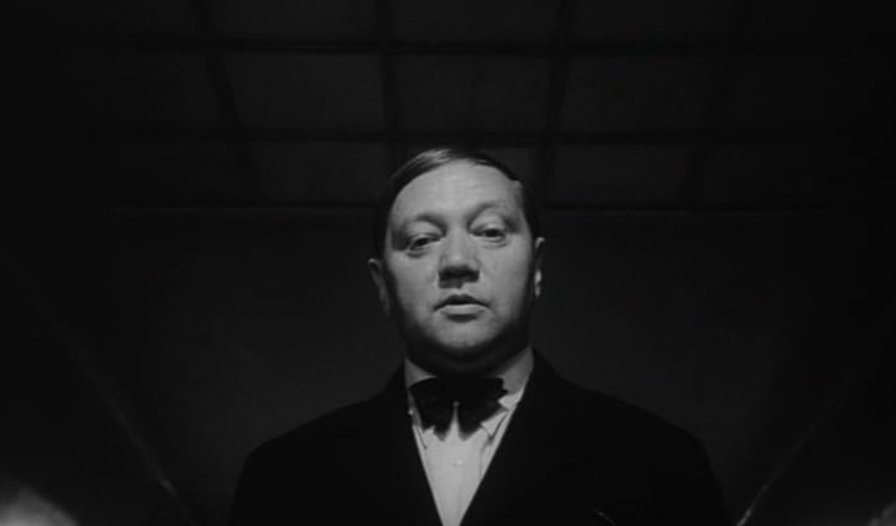
(The Cremator)
The film’s horror does not depend only on what Kopfrkingl does. It depends on how calmly he explains it. He turns murder into purification and genocide into a spiritual duty. The crematorium, a place associated with death and ritual, becomes an instrument through which he imagines himself as a liberator.
Criterion describes the film’s expressionistic cinematography and Gothic mise-en-scène, noting its ability to produce a distinctly morbid euphoria. The visual style is not a separate layer placed on top of the story. It reveals a mind that has already begun to aestheticize violence.
The film belongs to the New Wave because it understands that ideology is not only imposed from above. It can be absorbed through vanity, ambition, fear and the desire to feel morally superior. Kopfrkingl is horrifying partly because he does not experience himself as a villain. He is a man who wants to believe that his career, his family and his worldview form a coherent philosophy.
The film’s relevance extends across borders because it studies a recurring political danger: the transformation of cruelty into procedure. Its grotesque humour makes the process visible. A person does not wake up one morning with a fully formed fascist soul. He learns to repeat the language, enjoy the power and call the destruction of others a form of order.
The surreal and the macabre: A national cinema refusing one identity
The movement’s uniqueness also comes from its refusal to choose between realism and fantasy. Czech and Slovak cinema had strong traditions of literary absurdity, animation, puppetry, surrealism and visual invention. The New Wave did not treat these traditions as childish alternatives to serious cinema. It brought them into contact with politics and everyday life.
Valerie and Her Week of Wonders
Jaromil Jireš’s Valerie and Her Week of Wonders (1970) is a dreamlike coming-of-age film filled with vampires, desire, religious imagery, family secrets and unstable identity. It is not a realistic account of adolescence, but it is emotionally realistic in a different way. Puberty, fear and sexual awakening are experienced as a world in which adults become monstrous, attractive, ridiculous and incomprehensible.
The film’s poetic images do not soften its anxieties. They intensify them. The supernatural gives form to the confusion of a young person discovering that the institutions surrounding her—family, religion, sexuality and social authority—are not as stable as they pretend to be.
The End of August at the Hotel Ozone
Jan Schmidt’s The End of August at the Hotel Ozone (1967) imagines a post-apocalyptic world in which young women search through a devastated landscape. Its bleakness belongs to the movement’s darker strain. The film suggests that social collapse does not necessarily produce freedom. It may simply strip away the institutions that once concealed violence.
The Devil’s Trap and Valley of the Bees
Vláčil’s historical films likewise turn the past into a space of psychological and ideological pressure. The Devil’s Trap and Valley of the Bees explore belief, authority, religious discipline and the conflict between individual desire and communal structures. Their settings are historical, but their concerns are modern: who owns the body, who defines truth, and what happens when obedience is treated as virtue?
The existence of these films complicates the popular image of the New Wave as a collection of realistic comedies. The movement was not unified by realism. It was unified by a suspicion of false certainty. Reality could be captured through a hesitant conversation, a fractured memory, a surreal banquet, a medieval nightmare or a grotesque crematorium.
The political break: Prague Spring, invasion and normalization
The Czechoslovak New Wave did not float above history. It emerged during cultural liberalization and reached its peak in the years around the Prague Spring of 1968. Under Alexander Dubček, reformers spoke of “socialism with a human face.” The project was brief. Warsaw Pact forces invaded in August 1968, ending the reform period and beginning a process of political and cultural normalization.
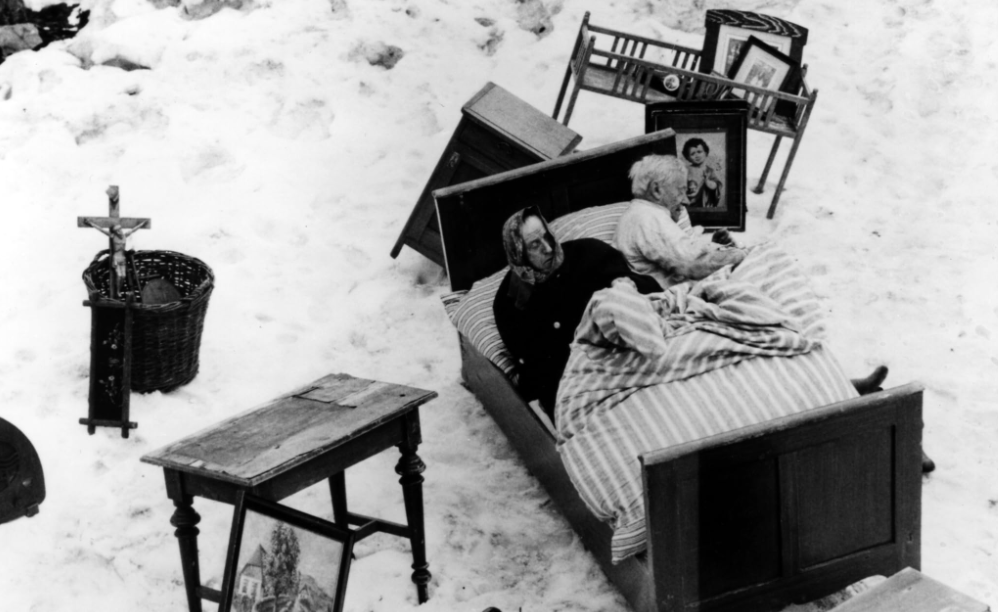
Cinema experienced the political change directly. Films could be shelved, banned, withdrawn from circulation or made impossible through funding restrictions. Directors who had been celebrated internationally could suddenly be treated as politically unreliable. Some left the country. Forman and Passer pursued careers in the United States. Chytilová stayed and struggled to continue working under an industry in which state approval remained decisive. The BFI notes that she sometimes resorted to directing television commercials under a pseudonym when falling out with authorities made film production difficult.
The invasion did not make every film released afterward a direct political statement. That would flatten the history. But it changed how the films were seen. A comedy about institutional incompetence could no longer be separated from the knowledge that institutions had recently demonstrated their power. A film about arbitrary authority could feel newly dangerous. A film about personal freedom could carry the memory of a public freedom that had been revoked.
This is also why the movement should not be romanticized as a perfect moment of unrestricted artistic liberty. The filmmakers worked within censorship, negotiation and compromise. Some projects were altered. Some metaphors passed where direct criticism would not. Some works were suppressed. The achievement was not that they operated outside power. It was that they found ways to make power visible from inside a system designed to control visibility.
How the New Wave influenced European cinema
The movement’s influence on Europe was not always a matter of direct imitation. It worked through festivals, critical writing, retrospectives, film schools, distribution and the example of what seemed possible. A filmmaker did not need to copy the look of Daisies to learn from its freedom. A director did not need to reproduce Menzel’s tone to understand that national history could be approached through comic intimacy.
A new model of the national cinema
Before the New Wave, “national cinema” was often associated with a country’s official image: historical epics, prestige adaptations, patriotic narratives or commercial genres. The Czechoslovak films offered another model. A national cinema could be local without being provincial. It could use regional speech, habits, architecture, literature and memory while addressing international audiences through precise human situations.
This was crucial for European film cultures that were negotiating their own relationship to state funding and cultural identity. The Czechoslovak example demonstrated that publicly supported cinema did not have to become bureaucratic cinema. A state film industry could produce art that questioned the state’s own habits of thought, at least during periods when institutional contradictions opened space for filmmakers.
The legitimacy of small stories
The New Wave helped legitimize films built from small social conflicts rather than monumental plots. Its protagonists are often not professional heroes. They are workers, students, clerks, spouses, musicians, soldiers, villagers and teenagers. Their problems may appear private, but the films show how private life is shaped by institutions.
This approach became part of a broader European art-cinema vocabulary: patient observation, non-professional or naturalistic performers, location shooting, open-ended narratives and an interest in people who do not know how to explain themselves. The Czechoslovak filmmakers did not invent all these techniques, but they combined them with a distinctive comic and literary intelligence.
Humour as a political weapon
The New Wave also expanded the political uses of humour. The films are not simply “dark comedies” in the contemporary marketing sense. Their humour does not decorate a serious message. It changes how seriousness is understood. A joke can reveal a hierarchy. A failed ceremony can expose an ideology. A ridiculous man can embody a terrifying system.
This lesson has been especially important in European cinemas that confront authoritarianism, bureaucratic absurdity and post-totalitarian memory. Humour allows filmmakers to show how people collaborate with power without presenting them as cartoon villains. It can reveal the social pleasure of conformity, the embarrassment of dissent and the way a group disciplines the person who interrupts its comfort.
The afterlife of the exile
The influence also moved through filmmakers’ later careers. Forman carried his interest in institutional absurdity into American cinema, where One Flew Over the Cuckoo’s Nest made the conflict between individual freedom and administrative authority internationally legible. Passer also worked in the United States. Their exile was not simply a successful export story. It was a consequence of political rupture, and their later films carried questions first formed in Czechoslovakia.
Menzel’s international reputation kept the movement visible, while Chytilová became a touchstone for filmmakers and critics interested in feminist avant-garde cinema. The restoration and circulation of films such as Daisies, Marketa Lazarová, The Cremator, Closely Watched Trains and Valerie and Her Week of Wonders have repeatedly renewed the movement’s reach.
How it influenced cinema beyond Europe
The global influence of the Czechoslovak New Wave is most convincing when described as a set of possibilities rather than a list of directors who openly copied it. Its films travelled through festivals and repertory cinemas. They were encountered by filmmakers, students, critics and audiences looking for alternatives to commercial narrative and official cultural certainty.
Forman and the institutional outsider
The clearest international line runs through Miloš Forman. His Czech films already contain the central concerns that would define his American work: the individual who cannot fit the institution, the group ritual that becomes absurd, the talented or damaged outsider, and the authority that reveals itself through rules. The scale changed, but the ethical question remained: what happens to a human being when an institution decides what kind of person he or she is allowed to be?
Chytilová and the expanded language of feminist cinema
Chytilová’s influence is less easily summarized because it is formal as well as thematic. Daisies showed that a film about young women could reject conventional likability, linear plot and respectful realism. The film did not ask permission to be politically important. It used colour, editing, costume, appetite, repetition and destructive play to make female agency impossible to contain within a polite story.
This opened a path for later filmmakers who understood that feminist cinema could be funny, grotesque, excessive and formally disobedient. The film’s political energy lies not only in what its characters say but in the fact that the film refuses to discipline the viewer’s attention in the usual way.
The influence on experimental and genre cinema
The movement’s darker works travelled into experimental, horror and genre traditions. The Cremator helped demonstrate that political horror could operate through psychology and style rather than through explicit historical reconstruction. Marketa Lazarová offered a model for historical cinema that feels physically immediate and formally dangerous. Valerie and Her Week of Wonders showed how fairy tale, erotic anxiety and religious symbolism could coexist in a modern coming-of-age film.
These works matter to contemporary genre filmmakers because they do not treat genre as an escape from history. Horror becomes a language for ideology. Fantasy becomes a language for puberty, repression and desire. The historical epic becomes a way to question the stories nations tell about their origins.
The importance of being strange
Perhaps the most international lesson is simply the permission to be strange. The New Wave did not assume that a film had to choose between accessibility and singularity. Closely Watched Trains is accessible because its characters are vivid, but its tone is unusual. Daisies is difficult because its form is unruly, but its appetite is immediately legible. Marketa Lazarová can confuse the viewer while making the body feel cold, threatened and alive.
That combination has influenced world cinema’s understanding of what a “national” film can do. A film does not need to flatten its cultural specificity to communicate. Sometimes the opposite is true. The more precisely a film observes its own language, rituals, histories and contradictions, the more distinctly it enters the world.
What makes the movement uniquely Czechoslovak?
Influence is only half the story. The Czechoslovak New Wave did not become important because it was a successful blend of Italian Neorealism and the French New Wave. It became important because those influences met a specific cultural inheritance.
One element was Czech literary humour: the ability to treat authority as ridiculous without pretending that ridicule makes it harmless. Another was the legacy of surrealism and avant-garde art. Another was the memory of occupation, war, political betrayal and shifting national borders. Another was the cultural importance of music, puppetry, animation, theatre and design. Another was a particular sensitivity to the absurd gap between grand historical language and the stubborn detail of daily existence.
Bohumil Hrabal’s influence is especially significant. His characters inhabit a world of stories, digressions, sexual embarrassment, work routines and lyrical nonsense. Menzel’s adaptations do not simply illustrate Hrabal. They discover a cinematic equivalent for his rhythm of attention. The apparently insignificant event may carry the emotional weight of a life.
Franz Kafka is often invoked in discussions of Czech culture, sometimes lazily. The real connection is not that every Czech film is “Kafkaesque.” It is that the region’s artistic traditions have repeatedly examined the individual confronted by opaque systems, strange rules and authority that may be both ridiculous and terrifying. The New Wave transformed that inheritance into cinema that could laugh while the door was closing.
The movement is also distinctive because its political critique is often sceptical of slogans, including liberating slogans. Chytilová’s characters do not become exemplary revolutionaries. Němec’s guests do not organize a successful resistance. Forman’s people often fail to understand the system they inhabit. Menzel’s heroes can be passive, vain or confused. This distrust of purity protects the films from becoming propaganda for an opposing ideology.
A practical viewing route for cinephiles
For viewers who know the earlier article but want to go deeper, the best approach is not to treat these films as a checklist. Watch them as different answers to the same problem: how can cinema show a person living inside a world whose official explanation is false?
Begin with Black Peter and Loves of a Blonde to see Forman develop the comedy of social discomfort. Follow them with The Firemen’s Ball, where the small-scale awkwardness becomes an institutional farce.
Then watch Daisies beside Something Different. The pairing reveals that Chytilová’s formal explosion did not appear from nowhere. Her concern with women’s bodies, labour, discipline and social performance is already present in the earlier film.
Watch Closely Watched Trains when you want the movement’s most elegant balance between comedy and tragedy. Watch Intimate Lighting when you want to understand how much drama can be found in a room where people are supposedly doing nothing.
Move to Diamonds of the Night and A Report on the Party and the Guests for the movement’s more disturbing political imagination. These films ask what happens when the social world becomes a trap.
Then take the plunge into Marketa Lazarová, not as a historical homework assignment but as a sensory experience. Let the film’s sound, landscape and fractured time work on you before demanding that every character and event become clear.
End with The Cremator and Valerie and Her Week of Wonders. They reveal how the New Wave’s political anxieties migrate into horror, Gothic fantasy and the unstable territory between desire and control.
This route also corrects a common misunderstanding. The movement is not only Daisies, not only Forman, not only charming Hrabal adaptations and not only a political footnote to the Prague Spring. Its identity lies in the collision of its modes. The funny films make the dark films more unsettling. The surreal films show what realism cannot contain. The historical films reveal the pressure inside contemporary ones.
The danger of turning the New Wave into a museum piece
There is a temptation to admire the Czechoslovak New Wave as a beautiful historical exception: a brief period when talented directors made daring films behind the Iron Curtain before politics shut them down. That story contains truth, but it is too neat. It risks turning living works into evidence of a vanished political climate.
The films deserve better than nostalgia.
Daisies is not merely a document of 1960s rebellion. It is still difficult, funny and irritating. The Firemen’s Ball does not require knowledge of Czechoslovak communism to make institutional failure recognizable. Closely Watched Trains speaks to anyone who has discovered that private anxiety does not disappear simply because history has become monumental. The Cremator remains frightening because the language of purification and efficiency has not disappeared from politics. A Report on the Party and the Guests remains uncomfortable because social coercion often arrives with a smile.
The films also complicate the idea that political cinema must be solemn. They insist that ordinary pleasure matters. Food, sex, music, dancing, gossip and laughter are not distractions from politics. They are where politics becomes intimate. A government can regulate what is shown in public, but a person’s desire, embarrassment or appetite may still produce meanings that official culture cannot fully control.
That is why the movement’s influence continues. It does not offer a style that can be copied like a filter. It offers a way of looking: suspicious of official explanations, attentive to marginal details, open to humour, alert to the body and willing to let form become unruly when reality itself is contradictory.
Conclusion: A cinema that kept the human scale
The Czechoslovak New Wave changed cinema not because it produced one definitive political image, but because it changed the scale at which history could be seen. It brought history into the dance hall, the family room, the railway station, the fire brigade, the picnic, the forest and the crematorium. It showed that systems are made of gestures and that freedom may first appear as a refusal to perform the correct emotion.
Its uniqueness came from the combination of local cultural memory, FAMU’s collaborative environment, a brief political opening, literary humour, surrealist imagination and an unusually serious respect for ordinary people. Its influence spread because the films were not sealed inside their national context. They made precise local experience emotionally and formally available to viewers everywhere.
The New Wave’s filmmakers did not agree on what cinema should look like. That disagreement is part of their achievement. Chytilová shattered continuity; Menzel refined the pause. Forman made embarrassment into social comedy; Němec made hospitality into menace. Passer found history in friendship; Vláčil found modernity in the medieval body. Herz turned ideology into Gothic horror; Jireš turned adolescence into a dream of unstable symbols.
Together, they proved that a national cinema could be intimate without being minor, experimental without becoming empty, political without preaching and funny without surrendering seriousness. They made films in a society that wanted art to confirm its official story. Instead, they returned cinema to uncertainty: to the face that hesitates, the body that desires, the crowd that laughs, the institution that loses control and the individual who, for one brief moment, refuses to behave as expected.
That is why the Czechoslovak New Wave still feels less like a closed chapter than a live current. Its films do not merely tell us that freedom once existed. They show what freedom looks like when it enters style, timing, appetite, silence and the dangerous pleasure of seeing the world clearly.
Pingback: FAMU: The Prague Film School That Taught Cinema to Breathe - deepkino.com