Why FAMU matters to Czech cinema, European film culture, and the rebellious spirit of the Czechoslovak New Wave
There are film schools that teach you how to operate a camera. There are film schools that teach you how to pitch, package and sell a project. And then there are film schools that become part of a country’s cinematic imagination.
FAMU belongs to the third category.
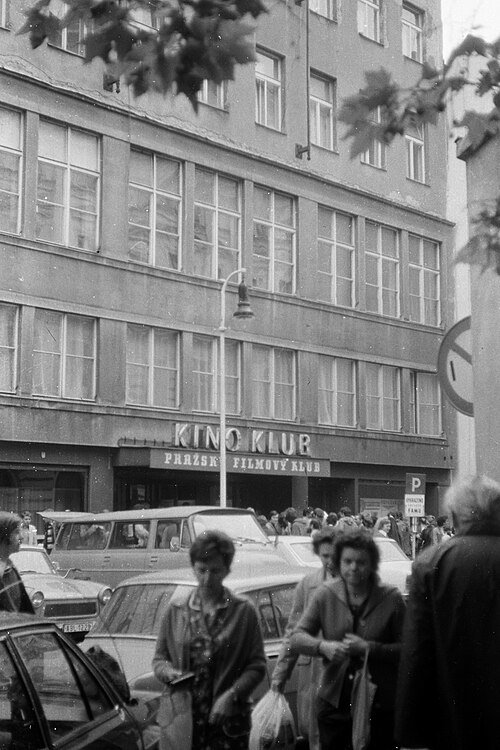
The Film and TV School of the Academy of Performing Arts in Prague was founded in 1946, at a moment when cinema was being reorganised as a national industry and Europe was trying to imagine its cultural future after the Second World War. Today, FAMU describes itself as the fifth-oldest film school in Europe. That age matters, but it is not the most interesting thing about the school. FAMU matters because generations of filmmakers learned there that cinema could be popular without being obedient, political without becoming a pamphlet, and unmistakably Czech without becoming provincial.
Its name is inseparable from the Czechoslovak New Wave of the 1960s. Miloš Forman, Věra Chytilová, Jiří Menzel, Jan Němec, Jaromil Jireš and Evald Schorm passed through its classrooms and corridors. But the school’s story is larger than a roll call of celebrated directors. FAMU offered a working culture: students from directing, cinematography, editing, sound, documentary, animation, production and theory saw one another’s films, argued about them, helped make them and slowly discovered that a national cinema could be rebuilt from the ground up.
That is why FAMU remains important. It is not merely a place that produced famous names. It is a place that made collaboration, experiment and artistic disagreement feel normal.
A film school born in a complicated moment
FAMU opened in 1946, one year after the Czechoslovak film industry was nationalised and two years before the Communist takeover of 1948. That timing shaped the school’s entire history. Cinema was understood as a serious art form, but also as a powerful public instrument. The state wanted films that could reach large audiences and carry ideological messages. At the same time, film culture offered young artists access to a huge world of ideas, images and forms.
This contradiction is essential to understanding FAMU. The school developed inside a system that wanted cinema to be useful to the state, yet it also gave students a deeper education than simple ideological training. FAMU’s structure brought together departments that covered screenwriting, directing, cinematography, documentary, sound, production and theory. Students were not trained as isolated auteurs who would only discover the rest of filmmaking after graduation. They were placed inside the whole organism of cinema.
The contradiction extended to what they watched. According to Criterion’s account of the Czech New Wave, FAMU students encountered films by directors such as Louis Malle, Jean-Luc Godard, Michelangelo Antonioni and Robert Bresson, even though ordinary audiences in Czechoslovakia could not necessarily see the same international cinema with ease.
That kind of education does more than fill a student’s head with references. It changes the sense of what is possible. A student who has seen Bresson, Antonioni, the French New Wave and the traditions of Czech comedy no longer believes that a film must explain everything in the approved way. A student who watches documentary, animation and experimental work alongside classical narrative cinema begins to understand that realism is not one fixed style. It can be quiet, absurd, poetic, ugly, funny or formally wild.
FAMU became a place where cinema was discussed as an art, but also tested as a craft. A student’s idea had to survive the practical realities of a set. A beautiful image had to work with sound, rhythm, performance and editing. A director had to understand what a cinematographer could contribute. An editor could change the meaning of a scene. A production decision could become an aesthetic decision.
This is one reason the New Wave was never only about directors. It was a network of writers, cinematographers, editors, designers, actors and producers. The most exciting Czech films of the 1960s did not emerge from one solitary genius. They came from an ecosystem of people who could challenge one another and who understood film as a collective art with room for a fiercely individual voice.
FAMU and the making of the Czech New Wave
The phrase “Czechoslovak New Wave” can make the period sound more organised than it really was. There was no single manifesto signed by every important filmmaker, no official headquarters and no uniform style. It was an informal network that came together during a brief period of political and cultural relaxation in the early 1960s. Criterion places the movement’s central flowering roughly between 1963 and 1968, when the Soviet-led invasion brought the Prague Spring to an end.
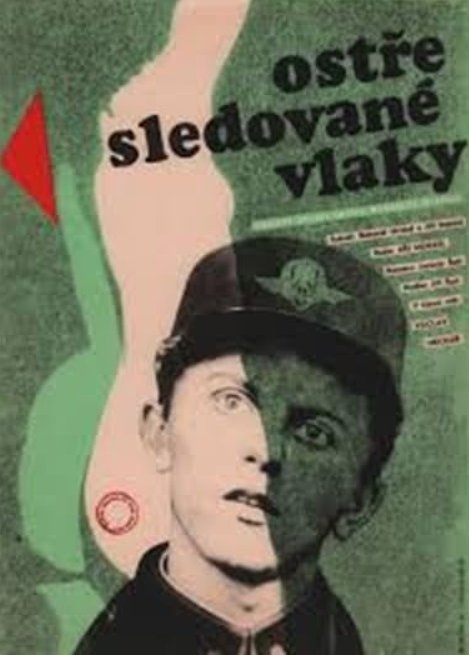
Ostre sledované vlaky (Closely Watched Trains)
FAMU was the meeting point that made this network unusually strong. Its students were close enough in age to share the feeling that something in Czechoslovak cinema was changing. They were also different enough in temperament to push the movement in several directions at once.
Miloš Forman brought a sharp eye for social embarrassment, deadpan behaviour and the comedy of people trapped inside institutions. His early films Black Peter and Loves of a Blonde looked at ordinary lives without the heroic polish demanded by socialist-realist convention. Loves of a Blonde went on to receive an Oscar nomination, while Black Peter won the Golden Leopard at Locarno. Forman would later become an internationally celebrated American director, but the emotional intelligence of his Czech films was already fully formed at FAMU.
Věra Chytilová pushed in a different direction. Her Something Different (1963) placed the disciplined body of a gymnast beside the frustrated routine of a housewife, questioning the roles assigned to women long before the language of contemporary feminist cinema became common. Her Daisies (1966) was louder, stranger and more explosive: a riot of colour, fragmentation, appetite, destruction and female mischief.
The authorities banned Daisies, pointing especially to its apparent waste of food. But the real problem was larger than a banquet being wrecked on screen. Chytilová’s film mocked the moral language of a society that demanded discipline from ordinary people while leaving larger forms of hypocrisy untouched. Its two Maries refuse to behave like useful citizens in a tidy ideological story. They eat, flirt, lie, laugh, break things and turn the logic of the world back against itself.
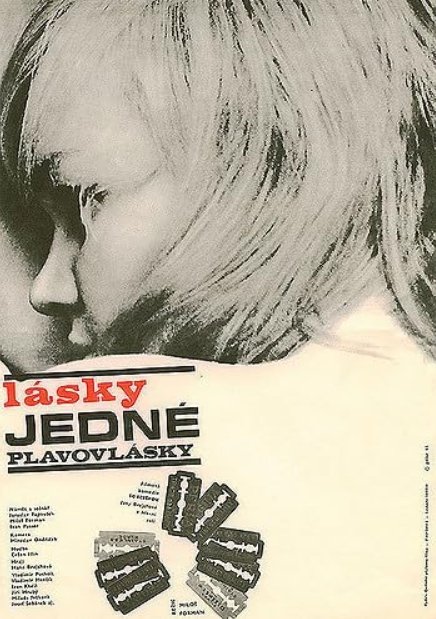
(Loves of a Blonde) (1965)
Jiří Menzel represented another possibility. His cinema was gentler on the surface, but gentleness did not mean political innocence. His first feature, Closely Watched Trains (1966), adapted from Bohumil Hrabal, follows a young railway apprentice during the Second World War. It is funny, awkward and full of sexual uncertainty, yet it ends in an act of courage and death. Menzel understood that an apparently modest comedy could carry history inside it.
The film won the Academy Award for Best Foreign Language Film, but its achievement cannot be reduced to the Oscar. Closely Watched Trains showed how a film could move from adolescent embarrassment to wartime tragedy without announcing every emotional transition. It trusted details, pauses, glances and the strange comedy of human behaviour. As the British Film Institute notes, Menzel’s collaboration with Hrabal combined human observation with wry and subversive humour.
Jan Němec took the New Wave toward psychological nightmare. Diamonds of the Night (1964), about two Jewish boys escaping from a train during the Holocaust, is not a conventional war film. Memory, fear and hallucination disturb the boundaries of the present. The film’s intensity comes partly from its refusal to make suffering comfortable or neatly dramatic.
Jaromil Jireš, Evald Schorm and others expanded the movement further. Jireš could move between intimate realism and surrealism. Schorm brought a moral seriousness and dramatic weight that prevented the New Wave from being mistaken for a fashionable game. The Czechoslovak film of the period could be funny, but it could also be brutal, mournful, erotic, absurdist or politically terrifying.
That range is important. The Czech New Wave was not just “realistic cinema about ordinary people.” It included social satire, poetic observation, surrealism, psychological horror, historical drama, animation, documentary and formally radical experiment. FAMU’s influence can be seen partly in this variety. A school that brings many cinematic departments and traditions into contact does not produce only one kind of film.
The school behind the school: Friendships, criticism and shared work
The most valuable thing FAMU gave the New Wave generation may have been less a specific theory than a community.
Criterion describes the students’ collaboration and assessment of one another’s work as a source of camaraderie and shared purpose. That detail is easy to overlook, but it explains much about the energy of the period. Young filmmakers were not developing in separate rooms. They were encountering one another’s experiments while their own ideas were still fragile. They could borrow, resist, provoke and encourage.
A film school can become bureaucratic very quickly. It can turn into a ladder of grades, applications and professional contacts. FAMU’s historical importance comes from the fact that, at its best, it functioned as a workshop of attention. Students learned to watch closely: to notice the false note in an official speech, the loneliness behind a joke, the social meaning of a costume, the violence concealed by good manners.
They also learned the value of the group. A film may carry one director’s name, but it is built by many sensibilities. The presence of cinematographers and designers was especially important to the New Wave’s visual identity. Ester Krumbachová is a crucial example. She co-wrote and designed the costumes for Daisies, worked on the design of The Ear, contributed to Diamonds of the Night and helped shape the movement’s strange, sensual and politically charged visual world.
Krumbachová’s career also exposes one of the weaknesses of the standard New Wave story. Film history often remembers the director and forgets the collaborators who made the film’s atmosphere possible. FAMU’s legacy should not be reduced to a parade of male auteurs. Its cinema was made by women and men working across departments, often with the designer, writer, editor or cinematographer supplying the element that later becomes the film’s most unforgettable feature.
This collaborative culture still appears in FAMU’s present-day international programmes. The school describes filmmaking as a team effort, with small classes, students helping on one another’s shoots and intensive mentoring. Its international programme also stresses practical production, not just classroom discussion. The principle is simple: you learn cinema by making it, by seeing what goes wrong and by solving problems with other people.
Politics without the lecture
The Czechoslovak New Wave emerged during liberalisation, but it should not be mistaken for cinema made in a free-market environment with no censorship. The political opening of the 1960s created new possibilities, but restrictions remained. Some films were banned before the Soviet invasion. Others were shelved, cut or circulated unevenly.
That pressure helped shape the movement’s language. Filmmakers used allegory, metaphor, absurdity, humour and indirectness because a direct political statement could be blocked. Yet the best films do not feel like coded editorials. They remain alive because they are about behaviour rather than slogans.
A corrupt or ridiculous institution becomes visible through a small embarrassment. A political system reveals itself through the way people talk to one another. A culture’s prejudices appear in a flirtation, a family dinner or a public ceremony. A character’s attempt to remain ordinary becomes a form of resistance.
This is why the New Wave still feels fresh. Its politics are embedded in texture. The films do not always tell us what to think. They show us how power enters daily life: through manners, work, desire, shame, language and the fear of being noticed.
Chytilová’s cinema is a particularly forceful example. Daisies does not deliver a conventional argument about women’s liberation. It attacks the structures that make women perform obedience, beauty and availability. Its anarchic form is part of the politics. The film does not merely represent rebellion; it makes the viewer experience a world in which order keeps breaking apart.
Menzel’s work reaches politics through comedy and moral ambiguity. Closely Watched Trains is not a speech about resistance. It is a story about a young man trying to become an adult in a world where history has made private life impossible to separate from public danger. The humour makes the final violence more devastating, not less.
Jan Němec’s work shows another route. His films often make history feel like a nightmare from which the characters cannot wake. The result is not propaganda in reverse. It is a cinema of uncertainty, where the viewer is forced to inhabit fear rather than simply identify its villains.
1968 and the long shadow of normalisation
The Soviet-led invasion of August 1968 ended the political opening associated with the Prague Spring and changed the conditions under which Czech filmmakers could work. Some artists emigrated. Miloš Forman built a major career abroad. Others stayed and faced bans, surveillance, professional isolation or pressure to conform.
Jiří Menzel’s Skylarks on a String (1969), a satire of Communist bureaucrats and the forced labour imposed on people labelled “bourgeois remnants,” was banned for two decades. When it finally reached the Berlinale in 1990, it won the Golden Bear. The film’s delayed life is a reminder that a national cinema is also shaped by absence: the films people could not see, the careers interrupted, the projects that never reached production.
Věra Chytilová also continued to work under difficult conditions. According to the BFI, the state-controlled funding system left very few alternatives when a filmmaker fell out of favour; at times, Chytilová made television commercials under a pseudonym. Her survival as an artist was not a smooth continuation of New Wave freedom. It was a struggle to preserve a voice inside a system that could withdraw the means of production.
Menzel and Chytilová helped maintain the reputation of Czech cinema during the period of normalisation, even as the country’s most celebrated generation was no longer able to work with the same freedom. Their persistence matters because film history often treats movements as if they end when the dates in a textbook end. In reality, artists carry the movement’s questions through compromised decades.
The New Wave did not vanish in 1968. It was broken, redirected and forced into new forms. Its memory survived in films, private conversations, screenings, banned prints and the international reputation of its directors. After 1989, restorations and retrospectives allowed a wider audience to see the scale of what had been interrupted.
FAMU’s European role: National cinema with the windows open
FAMU is deeply Czech, but it has never been culturally sealed off from Europe. Its importance lies partly in the way it connects a national film tradition to international cinema.
The New Wave generation absorbed influences from France, Italy, Britain and elsewhere, then transformed them through Czech language, history and humour. This is not the same as copying the French New Wave or Italian neorealism. It is closer to a conversation. FAMU students saw international cinema and found ways to make it speak to their own circumstances.
That is one of the defining functions of a European film school. It protects local identity without treating borders as artistic walls. It allows a filmmaker to study Bresson and Bohumil Hrabal in the same intellectual space; to understand Antonioni while looking at Prague, Brno or a provincial railway station; to learn the grammar of world cinema and then break it in a local accent.
FAMU’s international networks reinforce this position. The school identifies itself as a founding member of organisations including CILECT, the European League of Institutes of the Arts, the European Grouping of Film and Television Schools and the European Film Academy. These relationships place FAMU inside a larger European conversation about film education, professional practice and artistic exchange.
Its alumni also demonstrate how Czech film culture can travel. Forman moved from Prague to Hollywood without abandoning the observational intelligence of his early Czech work. Other filmmakers crossed borders through co-production, festival circulation, animation, teaching and international collaborations. The movement between local and global is not an exception; it is part of European cinema’s normal condition.
FAMU’s Prague location matters too. The city is not just a picturesque background for student films. It is a living archive of political history, architecture, theatre, music, literature and urban contradictions. Students work in a city where the Baroque, the modernist, the Communist and the commercial coexist within a short walk. That density creates cinematic possibilities, but it also places filmmaking inside a real social environment.
FAMU now: Tradition without turning into a museum
A historic film school faces an obvious danger: becoming a museum of its own reputation. If every student is encouraged to imitate Forman, Chytilová or Menzel, the tradition becomes a trap.
FAMU’s continuing relevance depends on resisting that trap. The school now includes departments and programmes in animation, game design, audiovisual studies and new media alongside the older disciplines. It maintains access to 16mm and 35mm film while also working with digital scanning and post-production. That combination is valuable because it treats technology as a tool, not a belief system.
The question is not whether film should be shot on celluloid or digitally. The question is whether the filmmaker understands why an image should look and sound the way it does. A school that preserves analogue practice while embracing digital production can teach students to think about materiality, rhythm and craft rather than simply chase the newest equipment.
FAMU’s contemporary achievements suggest that the school is still connected to the international film conversation. In 2023, two FAMU films were selected for Cannes’ La Cinef competition: Daria Kashcheeva’s animated Electra and Petr Pylypčuk’s Eighth Day. FAMU described the double selection as an unusual achievement, since it is rare for the competition to select two films from the same country, much less the same school.
Kashcheeva’s earlier film Daughter had won a Student Academy Award and reached the shortlist for the Academy Awards’ main competition. Her Electra drew on Greek mythology while exploring memory, the body, trauma and the unstable relationship between past and present. Pylypčuk’s Eighth Day addressed growing up inside a radical religious community, with themes of indoctrination, violence, sexuality and individuality. These are not nostalgic films trying to recreate the 1960s. They show a school whose students are still confronting power, identity and social pressure in new forms.
That continuity is more meaningful than a claim that FAMU has produced a certain number of prizes. Awards are useful evidence of visibility, but they are not the whole value of a film school. FAMU’s deeper contribution is to give emerging filmmakers a place where difficult subjects can be developed with serious craft and where a student film can enter a conversation larger than its country of origin.
What FAMU teaches us about cinema
FAMU’s history offers several lessons that remain relevant beyond Prague.
The first is that film culture needs institutions, even when great films appear to rebel against institutions. The New Wave looks spontaneous and anti-authoritarian, but its filmmakers benefited from training, equipment, colleagues, teachers, production structures and a place to show work. Artistic freedom does not grow only from individual courage. It also requires material conditions.
The second is that a national cinema becomes international by becoming more specific, not less. The films of Forman, Chytilová, Menzel and Němec did not travel because they removed all local detail. They travelled because their local detail carried emotions and conflicts that audiences elsewhere could recognise. A railway station, a village dance, a family argument or a bizarre public ceremony can cross borders when it is observed with precision.
The third is that humour can be a serious political instrument. Czech cinema’s black humour is not decoration. It is a way of surviving absurdity without surrendering to it. Laughter can reveal a system’s cruelty, but it can also reveal the compromises of the people living inside that system. The best Czech filmmakers understood both sides.
The fourth is that film history must widen its frame. The famous directors are essential, but the New Wave also depended on writers such as Hrabal, designers such as Krumbachová, cinematographers, editors, actors and producers. A school like FAMU makes that network visible because its training is organised around the fact that filmmaking is shared work.
Finally, FAMU reminds us that cinema education should protect curiosity. Technical competence matters. So do theory, history and professional discipline. But a filmmaker also needs permission to ask strange questions, to follow an uncommercial idea and to discover that a failed exercise contains the beginning of a real voice.
A cinephile’s route into FAMU and the Czech New Wave
If you want to feel FAMU’s importance rather than simply read about it, begin with a small sequence of films.
Start with Miloš Forman’s Black Peter and Loves of a Blonde for the comedy of social discomfort and the tenderness hidden inside awkward behaviour. Move to Věra Chytilová’s Something Different and Daisies to see how realism can explode into formal rebellion. Watch Jiří Menzel’s Closely Watched Trains for the meeting of erotic awkwardness, wartime history and humane comedy. Then go to Jan Němec’s Diamonds of the Night if you want the New Wave at its most psychologically severe.
After that, watch Pearls of the Deep (1966), the omnibus film associated with Chytilová, Jireš, Menzel, Němec and Schorm. It is one of the clearest expressions of the movement as a community rather than a collection of individual careers. The filmmakers adapted stories by Bohumil Hrabal, whose attention to ordinary absurdity and marginal lives gave the project its emotional and literary centre.
Then look beyond the most famous titles. Explore The Cremator, The Ear, Valerie and Her Week of Wonders and the work of Ester Krumbachová. This wider route reveals that the New Wave was not a single mood or formula. It was a cinematic culture capable of moving from affectionate comedy to political nightmare, from visual excess to quiet observation.
That range is the real reason FAMU matters. The school did not produce one house style. It produced filmmakers who believed that cinema could be remade from inside: through new rhythms, new faces, new subjects, new collaborations and new ways of looking at the everyday.
The lasting importance of FAMU
FAMU’s importance to Czech cinema is historical, but it is not only historical. It gave the Czechoslovak New Wave a community at the moment when a new generation was ready to challenge official habits of seeing. It helped create a cinema that could speak through humour, silence, awkwardness, surrealism and formal invention. It connected Czech filmmakers to European art cinema without dissolving their local identity.
Its story also contains a warning. Schools cannot guarantee freedom. State support can make ambitious cinema possible, but political control can also decide which films disappear. International recognition can preserve a reputation, but it cannot repair every interrupted career. Tradition can inspire new work, but it can just as easily become a burden if treated as a sacred template.
The best way to honour FAMU is therefore not to worship its past. It is to understand what made that past possible: serious training, access to world cinema, a culture of criticism, practical collaboration, institutional support and the courage to make films about people rather than slogans.
In the end, FAMU’s greatest lesson is beautifully simple. Cinema becomes alive when filmmakers are allowed to look closely at the world they have actually inherited—and then find the form bold enough to argue with it.