
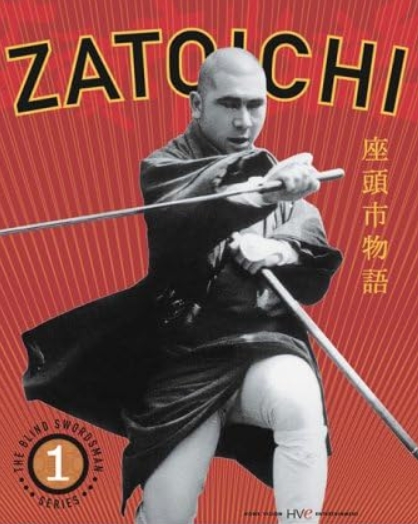
Among the great directors of Japanese cinema, some names are immediately recognized around the world. Akira Kurosawa transformed the samurai film into international art. Yasujiro Ozu perfected cinematic minimalism. Kenji Mizoguchi created some of the most elegant visual compositions ever captured on film.
Yet cinephiles who venture deeper into Japanese cinema eventually encounter another name—one perhaps less celebrated internationally but revered among devotees of chanbara: Kenji Misumi.
For many Western viewers (In this case, I can be considered a Westerner, even though geographically and mindfully I am certainly not), including those who grew up admiring samurai classics and perhaps first encountered the blind swordsman through Takeshi Kitano’s vibrant and unconventional Zatoichi (2003), the original Zatoichi films can seem intimidating. There are twenty-six entries starring Shintaro Katsu, spanning more than a decade. The sheer scale of the franchise often discourages newcomers.
But those who finally begin exploring the series quickly discover something remarkable: many of its greatest installments were directed by Kenji Misumi. Through his elegant visual style, profound understanding of Japanese culture, and astonishing ability to combine brutality with lyricism, Misumi elevated what could have been simple genre entertainment into something approaching cinematic poetry.
His films are not merely sword-fighting spectacles. They are meditations on loneliness, social exclusion, morality, fate, and human dignity. The sword is important, but the soul behind the sword matters even more.
For viewers fascinated by Japanese cinema yet relatively unfamiliar with the original Zatoichi saga, understanding Kenji Misumi is perhaps the best gateway into one of the richest chapters of chanbara history.
The Making of a Director
Kenji Misumi was born in Kyoto in 1921, a city whose centuries of cultural history would later resonate throughout his filmmaking.
Unlike some directors who entered cinema through literature or theater, Misumi emerged directly from the Japanese studio system. He joined the legendary Daiei Film, one of Japan’s major studios during the postwar era.
The studio environment of the 1950s and 1960s was often compared to Hollywood’s Golden Age. Directors worked rapidly, producing multiple films each year while developing technical mastery through constant practice. Misumi learned every aspect of filmmaking inside this demanding system.
Many modern filmmakers spend years crafting a single feature. Misumi often directed several films within the same year.
This relentless pace sharpened his instincts.
By the late 1950s and early 1960s, he had become one of Daiei’s most dependable directors, particularly within historical dramas and sword-fighting pictures.
At first glance, such assignments might seem restrictive. Yet Japan’s studio system frequently allowed gifted craftsmen to transform commercial projects into deeply personal works. Misumi belonged to this tradition.
He was never the loud revolutionary.
He was the master craftsman.
And master craftsmen often leave the deepest marks on cinema.
Understanding Chanbara: More Than Sword Fights
Before examining Misumi’s work, it helps to understand the genre he mastered.
Chanbara is often translated simply as “sword-fighting film,” but the term carries much broader cultural significance.
The genre emerged from Japanese theatrical traditions, historical narratives, and evolving cinematic techniques. While Western audiences frequently compare chanbara to Westerns, the comparison only goes so far.
Both genres feature wandering heroes, moral ambiguity, violence, and frontier-like settings.
Yet chanbara tends to place greater emphasis on duty, honor, social hierarchy, and Buddhist or Confucian ideas concerning human existence.
In classic chanbara films:
- Violence is often sudden rather than prolonged.
- Heroes are frequently outsiders.
- Society itself may be corrupt.
- Victory rarely brings happiness.
- Moral compromise is unavoidable.
These themes appear repeatedly throughout Misumi’s filmography.
His heroes often seem trapped between compassion and necessity.
They draw their swords reluctantly.
But once violence begins, it arrives with terrifying finality.
The Visual Language of Kenji Misumi
What distinguishes Misumi from countless genre directors is not merely storytelling but visual expression.
His films possess a distinctive aesthetic identity.
One of the most striking characteristics is his use of geometry.
Characters are frequently positioned within highly structured compositions:
- Narrow corridors
- Temple gates
- Bridges
- Roads stretching toward the horizon
- Symmetrical architectural spaces
The result creates a feeling that destiny itself is shaping events.
People appear trapped within invisible frameworks.
Their choices matter, yet larger forces seem to guide their lives.
Misumi also demonstrated extraordinary control of movement.
Unlike filmmakers who rely on frenetic editing, he often allowed scenes to breathe.
Characters walk.
Observe.
Wait.
Silence accumulates.
Tension builds gradually.
Then violence erupts in seconds.
The contrast becomes devastating.
This rhythm would become central to his greatest achievements.
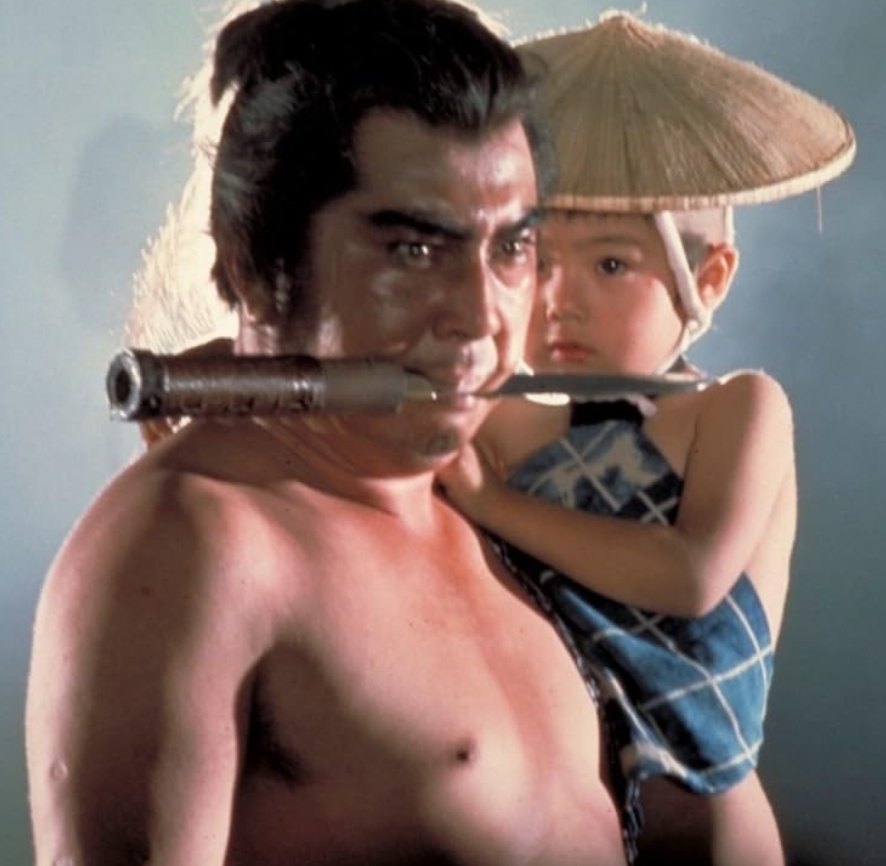
Violence as Sudden Revelation
One reason Misumi’s action scenes remain effective decades later is their restraint.
Modern action cinema frequently equates excitement with quantity.
More cuts.
More explosions.
More movement.
Misumi pursued the opposite philosophy.
Many of his most memorable confrontations unfold after lengthy periods of stillness.
A hand moves.
A blade flashes.
Several men collapse.
Silence returns.
The effect feels startlingly realistic despite the stylization.
Violence is never casual.
Every strike carries weight.
Every death alters the atmosphere.
This approach reflects broader traditions within Japanese aesthetics, where absence often becomes as important as presence.
The moment before the strike can be more powerful than the strike itself.
Few directors understood this principle better than Misumi.
Enter Zatoichi: The Blind Swordsman
To understand Misumi’s legacy, one must understand Zatoichi.
Zatoichi first appeared in Japanese popular culture as a fictional blind masseur and gambler.
The character eventually reached cinema through actor Shintaro Katsu, whose performance became one of the most iconic in Japanese film history.
At first glance, Zatoichi seems almost contradictory.
He is blind.
He appears humble.
He works as a masseur.
He wanders from town to town.
Yet hidden within his walking stick is one of cinema’s deadliest swords.
This contradiction forms the foundation of the character’s appeal.
People underestimate him.
Society dismisses him.
Powerful men mock him.
Then they discover—usually too late—that appearances deceive.
The character combines vulnerability and invincibility in a uniquely compelling manner.
He is simultaneously marginalized and extraordinary.
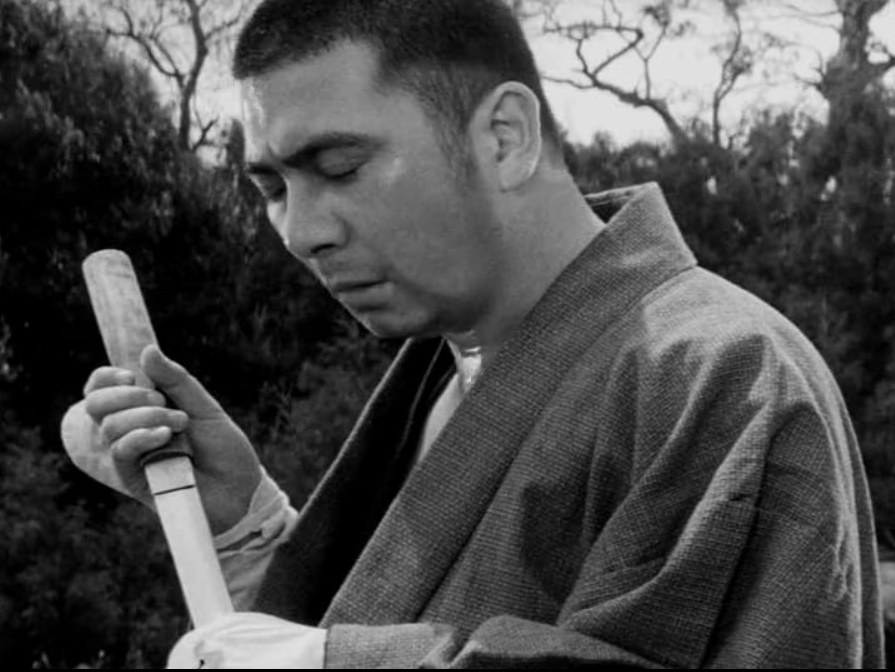
Why Zatoichi Endured
The series succeeded because it offered more than action.
Zatoichi occupies a fascinating social position.
Historically, blind individuals in Japan often worked as masseurs or musicians and belonged to specific social categories that placed them outside mainstream hierarchies.
As a result, Zatoichi exists on the margins.
He belongs nowhere.
He moves constantly.
He witnesses injustice everywhere.
This outsider status allows the films to examine Japanese society from an unusual perspective.
Corrupt officials.
Exploitative merchants.
Gangsters.
Hypocritical authority figures.
Zatoichi encounters them all.
His blindness becomes symbolic.
Although he cannot see physically, he often perceives moral truths more clearly than everyone around him.
Misumi understood these dimensions deeply.
His Zatoichi films emphasize not simply swordsmanship but humanity.
Kenji Misumi and the Zatoichi Series
Several directors contributed to the long-running franchise, but Misumi’s entries are generally considered among the finest.
His Zatoichi films include:
- The Tale of Zatoichi Continues
- New Tale of Zatoichi
- Fight, Zatoichi, Fight
- Adventures of Zatoichi
- Zatoichi and the Chess Expert
- Zatoichi’s Pilgrimage
- Zatoichi and the Doomed Man
Each film demonstrates a slightly different aspect of his artistry.
Collectively, they reveal why Misumi became arguably the defining visual architect of the franchise.
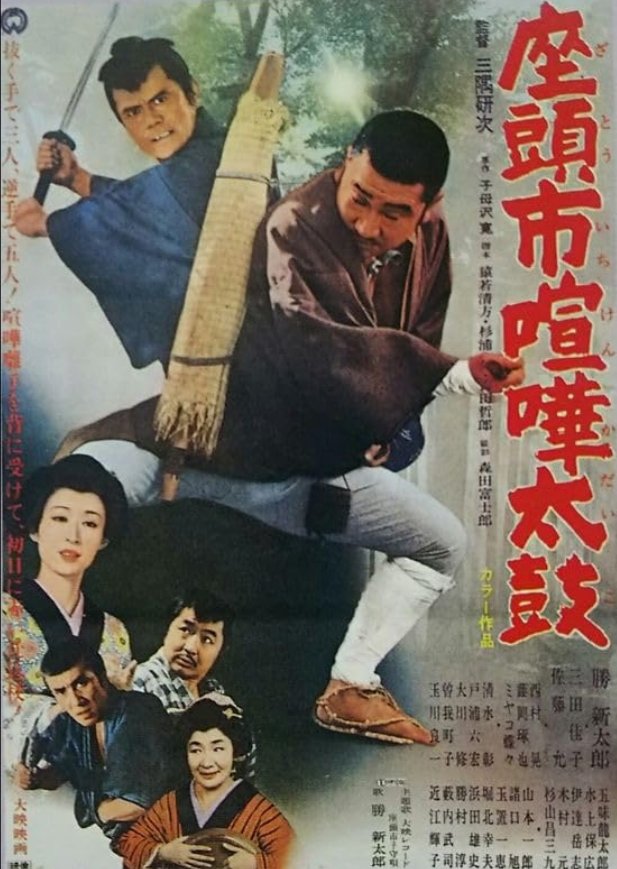
The Tale of Zatoichi Continues: Expanding the Myth
The Tale of Zatoichi Continues immediately established Misumi’s understanding of the character.
Rather than treating Zatoichi merely as an action hero, the film emphasizes emotional consequences.
Unlike many franchise sequels, it explores what happens after heroic violence.
Victories leave scars.
Enemies create new enemies.
The wandering life becomes increasingly lonely.
Misumi understood that a legendary figure remains compelling only if he remains human.
This humanity prevents Zatoichi from becoming a simple superhero.
He feels regret.
He experiences loss.
He suffers isolation.
These qualities deepen audience investment far beyond the action sequences.
New Tale of Zatoichi: A Masterpiece of Characterization
Among Misumi’s contributions, New Tale of Zatoichi stands as one of the most beloved.
The film presents Zatoichi in a more introspective mood.
His desire for peace repeatedly collides with a violent world unwilling to leave him alone.
What makes the film remarkable is its atmosphere.
Roads seem endless.
Landscapes appear melancholy.
Human connections feel temporary.
The wandering swordsman becomes almost existential.
Watching the film today, one senses influences that would later resonate through modern cinema’s fascination with lonely drifters.
The narrative is simple on the surface, yet emotionally rich beneath it.
This combination became a hallmark of Misumi’s best work.
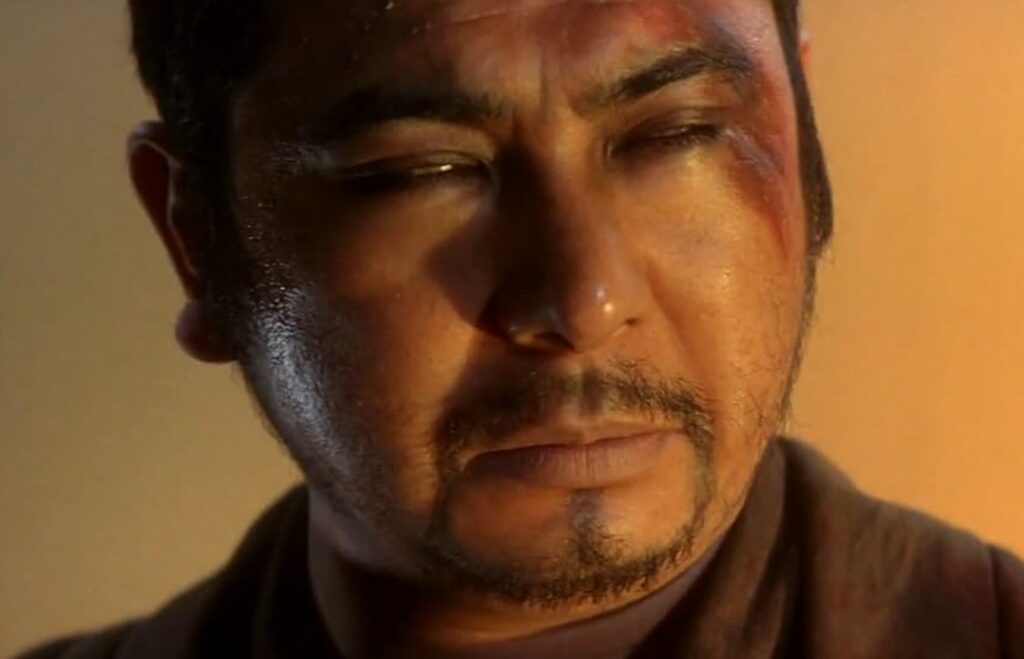
Fight, Zatoichi, Fight: The Human Heart Behind the Sword
Perhaps no Misumi-directed Zatoichi film better illustrates his compassion than Fight, Zatoichi, Fight.
The story involves an infant unexpectedly placed in Zatoichi’s care.
The premise sounds almost sentimental.
In lesser hands, it might have become manipulative.
Misumi transforms it into something profound.
The child exposes Zatoichi’s loneliness.
His tenderness emerges naturally.
His protective instincts reveal dimensions hidden beneath the swordsman persona.
The contrast between lethal warrior and reluctant caregiver creates extraordinary emotional depth.
For viewers accustomed only to Kitano’s version, this film demonstrates the surprising warmth embedded within the original character.
Zatoichi is not merely a fighter.
He is deeply compassionate.
That compassion often becomes the source of his suffering.
Zatoichi and the Chess Expert: Strategy and Destiny
Zatoichi and the Chess Expert exemplifies Misumi’s fascination with intellect and fate.
The film’s title hints at strategic thinking, but its deeper concerns involve perception and judgment.
Like a chess match, human interactions become contests of foresight.
Characters maneuver for advantage.
Plans unfold gradually.
Outcomes remain uncertain.
Misumi’s visual precision perfectly complements these themes.
Scenes feel carefully arranged, almost like pieces positioned upon a board.
The result is one of the franchise’s most intellectually satisfying entries.
Zatoichi’s Pilgrimage: Spiritual Dimensions
If one film reveals Misumi’s poetic sensibilities most clearly, it may be Zatoichi’s Pilgrimage.
The title itself suggests a spiritual journey.
The road becomes more than physical geography.
It becomes a path toward understanding.
Throughout the film, themes of guilt, redemption, memory, and mortality emerge repeatedly.
The landscapes feel contemplative.
The pacing becomes meditative.
Violence appears almost tragic rather than triumphant.
This capacity to transform genre cinema into philosophical reflection separates Misumi from ordinary craftsmen.
His films entertain, but they also invite contemplation.
The Essential Partnership: Kenji Misumi and Shintaro Katsu
No discussion of Misumi’s Zatoichi films can ignore Shintaro Katsu.
The actor’s performance remains one of cinema’s greatest long-running character portrayals.
What makes Katsu extraordinary is his refusal to romanticize Zatoichi.
The character can be crude.
Stubborn.
Impulsive.
Even selfish.
Yet he remains deeply sympathetic.
Misumi recognized these complexities.
Instead of flattening the character into heroic perfection, he emphasized contradictions.
This creative partnership produced some of the richest character work in the entire series.
Director and actor trusted ambiguity.
The audience was allowed to interpret.
No excessive explanation was necessary.
The character simply lived before the camera.
Beyond Zatoichi: Lone Wolf and Cub
Although Zatoichi dominates discussions of Misumi’s legacy, limiting him to that franchise would be unfair.
His work on the celebrated Lone Wolf and Cub: Sword of Vengeance series represents another monumental achievement.
Adapted from the famous manga by Kazuo Koike and Goseki Kojima, the films pushed chanbara toward greater visual stylization and operatic intensity.
Here Misumi’s talent for combining beauty and brutality reached astonishing levels.
Blood sprays across snow.
Warriors move through carefully composed landscapes.
Father and son travel through a hostile world governed by vengeance and duty.
Many modern filmmakers cite these works among the greatest action films ever made.
They demonstrate that Misumi’s mastery extended far beyond a single franchise.
Thematic Obsessions
Across his career, several recurring themes emerge.
Outsiders
Misumi repeatedly focused on marginalized individuals.
Blind wanderers.
Masterless samurai.
Social outcasts.
These characters reveal flaws within supposedly civilized society.
Loneliness
Even surrounded by people, Misumi’s protagonists often remain isolated.
They move through the world without true belonging.
Their journeys become emotionally poignant because connection always seems temporary.
Fate
Many narratives suggest forces larger than individual choice.
Characters struggle against destiny, yet rarely escape its influence entirely.
Compassion
Despite frequent violence, Misumi’s worldview remains fundamentally humane.
His films consistently defend dignity, empathy, and moral responsibility.
Influence on Later Cinema
Misumi’s influence extends far beyond Japan.
Elements of his style appear in contemporary action cinema across the world.
Directors admired:
- His economical storytelling
- His disciplined action staging
- His visual compositions
- His use of silence
- His emotional restraint
Modern audiences accustomed to hyperactive editing may initially find his pacing measured.
Yet many discover that this patience creates greater impact.
Action matters because character matters.
Violence shocks because tranquility precedes it.
The lessons remain relevant today.
Why Kenji Misumi Deserves Greater Recognition
For international cinephiles, Japanese cinema often begins with Kurosawa.
There is nothing wrong with that.
Kurosawa remains one of cinema’s giants.
But Japanese film history extends far beyond a handful of canonical names.
Kenji Misumi represents one of its most rewarding discoveries.
He combined artistic sophistication with popular entertainment.
He created images of extraordinary beauty without sacrificing narrative momentum.
He elevated genre filmmaking while respecting genre pleasures.
Most importantly, he understood people.
His heroes bleed.
They grieve.
They hope.
They fail.
Their humanity survives despite violence and hardship.
That humanity remains the source of the films’ enduring power.
Conclusion: The Poet of the Blind Swordsman
Approaching the original Zatoichi series after years of admiring Japanese cinema can feel overwhelming. Twenty-six films, countless sword fights, and decades of cultural history stand before the viewer.
Yet Kenji Misumi provides the ideal entry point.
His Zatoichi films reveal why the character endured for generations. They contain thrilling action, certainly, but also melancholy, compassion, humor, philosophy, and visual elegance. They remind us that the greatest samurai stories are never really about swordsmanship. They are about people navigating a flawed world while trying to preserve their humanity.
For viewers whose primary reference remains Takeshi Kitano‘s celebrated reinterpretation, exploring Misumi’s entries can be revelatory. One discovers a richer, gentler, and often more tragic version of Zatoichi—a wandering soul whose blindness allows him to perceive truths invisible to others.
In the end, Kenji Misumi’s greatest achievement was not directing sword fights, though few staged them better. His achievement was transforming popular entertainment into cinematic poetry. Through carefully composed images, sudden flashes of violence, and deep empathy for society’s outsiders, he created films that continue to resonate more than half a century later.
Among the masters of Japanese chanbara, Kenji Misumi stands not merely as a craftsman of action, but as one of the genre’s most profound artists. And for anyone willing to follow Zatoichi down those dusty roads stretching toward the horizon, his films remain among the finest treasures Japanese cinema has to offer.